English
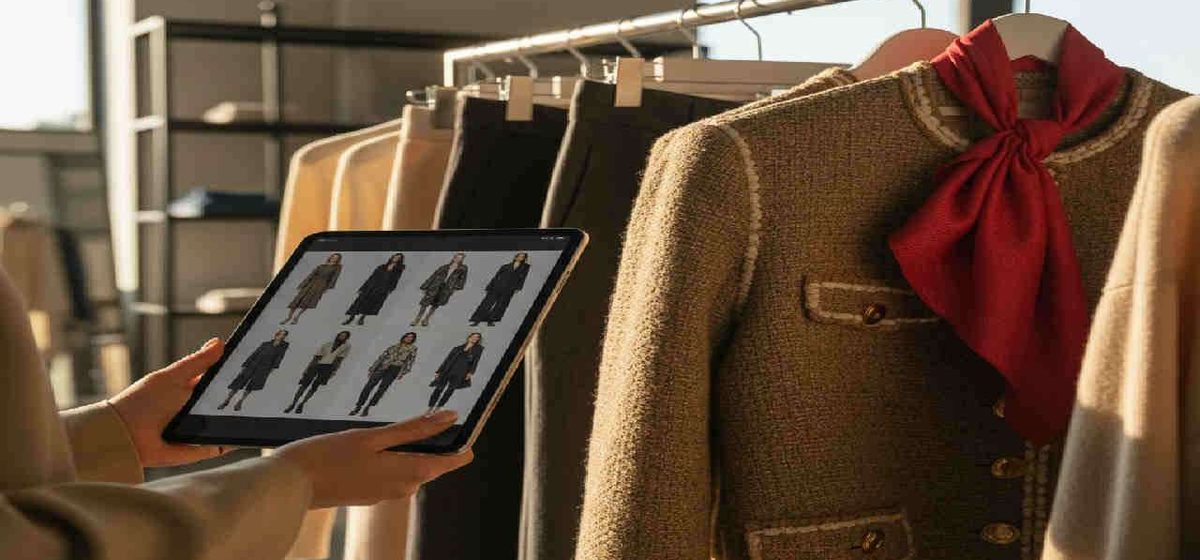
AI fashion merchandising and launch workflow connects assortment planning, tech pack readiness, and go-to-market timing. The F* Word gives merchandisers a live view of which styles are production-ready, so drop dates, pricing, and marketing assets line up with what factories can actually deliver.
An AI fashion merchandising and launch workflow helps brand teams turn approved product direction into a sellable range, pricing plan, demand view, launch calendar, marketing visuals, and campaign assets. This page is for merchandising leads and brand marketing managers who need clearer commercial planning before products go live.
The F* Word helps teams connect range planning, assortment, demand forecasting, pricing, visual planning, launch timing, and campaign asset preparation in one workflow. It solves a practical problem: commercial plans built in scattered spreadsheets, unclear product priorities, late visual direction, and launch calendars that do not match the actual collection story.
An AI fashion merchandising and launch workflow helps brands plan what to sell, how to price it, how much demand to expect, when to release it, and which campaign assets are needed. The F* Word supports range planning, assortment architecture, demand forecasting, pricing decisions, marketing visuals, launch calendars, and campaign asset preparation.

In 2025 and 2026, fashion brands are under more pressure to make sharper commercial decisions before products reach the customer. Teams are launching more often, testing smaller drops, and trying to read customer demand faster. A weak merchandising plan creates real problems: too many similar styles, unclear hero products, uneven price architecture, missing visuals, and rushed campaigns.
The old workflow often splits the work across spreadsheets, decks, folders, planning docs, and content calendars. Merchandising owns the range. Marketing owns the story. Founders approve priorities. Creative teams prepare visuals. By launch week, each team may be working from a slightly different view of the collection.
That is where AI can help. It can organize product direction into a clearer commercial workflow, so teams can compare assortment options, pressure-test pricing logic, estimate demand, prepare marketing visuals, and coordinate launch timing earlier. The F* Word helps merchandising and marketing teams move with more discipline before the selling window opens.
The workflow starts with the range plan. The team defines product categories, style count, color spread, price bands, hero products, supporting pieces, and channel priorities. The F* Word helps organize the range so merchandising leads can see whether the collection is balanced or overloaded. A good range plan gives the team a clear view of what each product is meant to do commercially.
Assortment planning turns product direction into a sellable structure. The team can map hero styles, entry price pieces, margin drivers, outfit builders, and limited-run items. The F* Word helps teams compare how the assortment works across categories, colors, price points, and customer use cases. This is where teams catch issues like too many similar tops, weak bottoms coverage, or no clear product anchor for the campaign.
The F* Word supports demand forecasting and pricing decisions by helping teams structure the inputs. Those inputs may include past sell-through, customer behavior, category performance, seasonality, planned channel, price sensitivity, and product priority. AI does not make pricing risk disappear. It gives the team a clearer way to compare assumptions before committing to a commercial plan.
Marketing visuals need to match the range strategy. The F* Word helps brand marketing managers prepare visual routes for product pages, emails, ads, social content, collection stories, and campaign concepts. The goal is to make the product hierarchy visible. Hero products need stronger storytelling. Supporting styles need clear use cases. The visual plan should help customers understand the range quickly.
The final step is launch coordination. The team connects product priorities to launch dates, channel plans, campaign assets, copy needs, content formats, and approval timing. The F* Word helps teams see what must be ready before each release window. This reduces last-minute asset gaps and keeps merchandising decisions tied to the customer-facing launch.
Traditional merchandising and launch work often happens across too many disconnected planning files. The range plan may be in one spreadsheet. Pricing notes may sit in another. Visual references may live in a deck. The launch calendar may sit with marketing. Campaign assets may be tracked in a separate tool.
The F* Word gives merchandising and marketing teams one workflow for commercial planning and launch preparation.
Speed
Teams rebuild range, pricing, visual, and calendar context across several files.
Teams plan assortment, pricing, demand view, visuals, and launch timing in one workflow.
Cost
Weak product priorities create wasted content, rushed campaigns, and poor inventory focus.
Clearer commercial logic helps teams focus spend on the products that matter most.
Output
Range plans, demand notes, pricing logic, visuals, and campaign assets can feel disconnected.
Commercial planning and customer-facing launch assets stay tied to the same product hierarchy.
Team
Merchandising, marketing, creative, and founders may work from different versions of the plan.
Teams align around one view of the range, launch calendar, and campaign asset needs.
The practical gain is sharper launch control. A collection can look strong internally and still fail commercially if the range lacks hierarchy. Customers need to understand what is new, what matters, how products connect, and why the offer is worth buying now.
use The F* Word to plan the range, shape the assortment, pressure-test pricing, and define product priority. They need to see whether the collection has enough balance across categories, price points, color, and customer use cases.
use it to connect the commercial plan to the customer-facing story. They can prepare campaign assets, product page visuals, email concepts, paid content routes, and social content based on the actual product hierarchy.
use it to make cleaner launch decisions. They can review hero products, price logic, demand assumptions, and launch timing without pulling context from several places. This helps them approve the commercial direction faster.
use it to understand which products need the strongest visual support. A hero product may need more campaign energy, while supporting products may need clearer styling, PDP visuals, or category education.
use it to prepare site flow, product storytelling, collection pages, launch sequencing, and content needs. This helps the selling environment reflect the merchandising plan instead of becoming a last-minute upload task.
The F* Word is best for merchandising leads, brand marketing managers, ecommerce teams, founders, and creative teams that need a clearer workflow for range planning, assortment, demand forecasting, pricing, marketing visuals, launch calendars, and campaign assets. It is especially useful for brands managing multiple drops, seasonal collections, capsule launches, or product stories across several channels.
It is less useful for teams that only need manufacturing tools, technical garment review, factory coordination, or development-stage approval tracking. This workflow is strongest when a product direction is ready to become a commercial plan and customer-facing launch.
Need to nail the sample first? Start with the Pre-Production Workflow for Fashion.
More questions? See all FAQs
The F* Word helps merchandising and marketing teams plan assortment, demand, pricing, launch timing, marketing visuals, and campaign assets in one connected workflow.