English
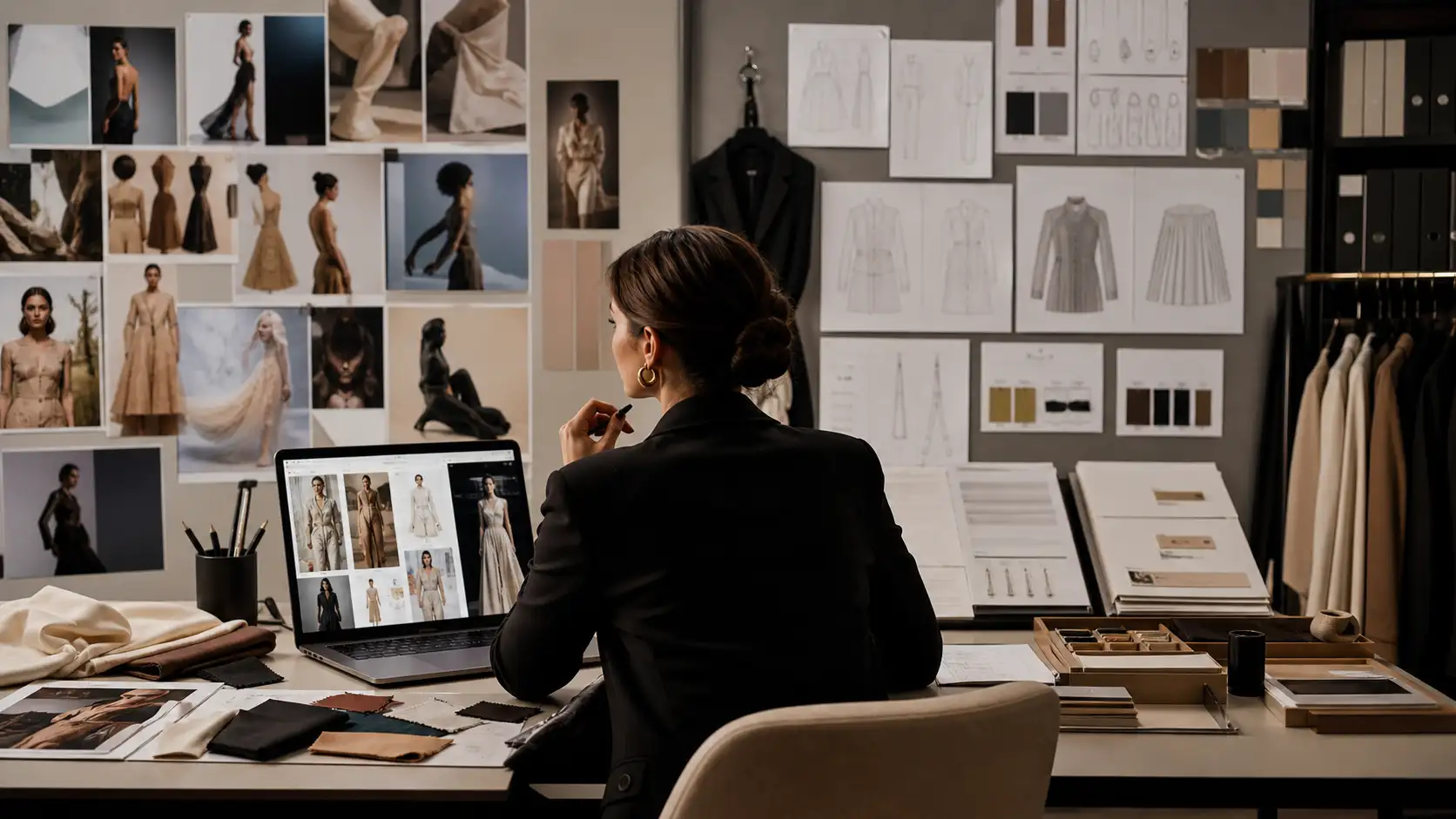
Direct answer: AI image generators create visuals. AI fashion workflow software manages the product work around the visual: briefs, brand constraints, design variants, 3D validation, tech packs, BOMs, POMs, approvals, vendor clarification, and launch assets. Fashion brands need images, but images alone do not produce, cost, sample, approve, or launch a garment.
Buyer summary: Choose an AI image generator when the task is quick visual exploration, moodboard expansion, campaign-style concepts, or early ideation. Choose The F* Word when the task must move into product execution: structured briefs, validated concepts, factory-ready tech packs, BOMs, POMs, grading, launch assets, and team approvals.
Your team needs more than a beautiful garment image. You need the brief, the spec logic, the production document, the launch asset, and the approval trail to move together.
Your team only needs fast inspiration and has another workflow for technical design, production documents, vendor clarification, and launch operations.
Production risk section: The risk with image-only tools is translation loss. A visual may look good, but the team still needs to define fabric, construction, measurement points, trims, grading, labels, packaging, and revision status. Every missing field becomes a question later.
Are AI image generators useful for fashion teams?
Yes. They are useful for ideation and visual exploration, but they do not solve production handoff alone.
Why does workflow matter more than the image?
Fashion production depends on specs, BOMs, POMs, grading, approvals, and vendor communication. A good image is only one artifact.
Can The F* Word generate images?
Yes. The difference is that image creation sits inside a broader fashion workflow, not as a disconnected endpoint.
Who should use workflow software instead of a pure image generator?
Brands that need to move from concept into sampling, factory handoff, merchandising, and launch should use workflow software.