
English
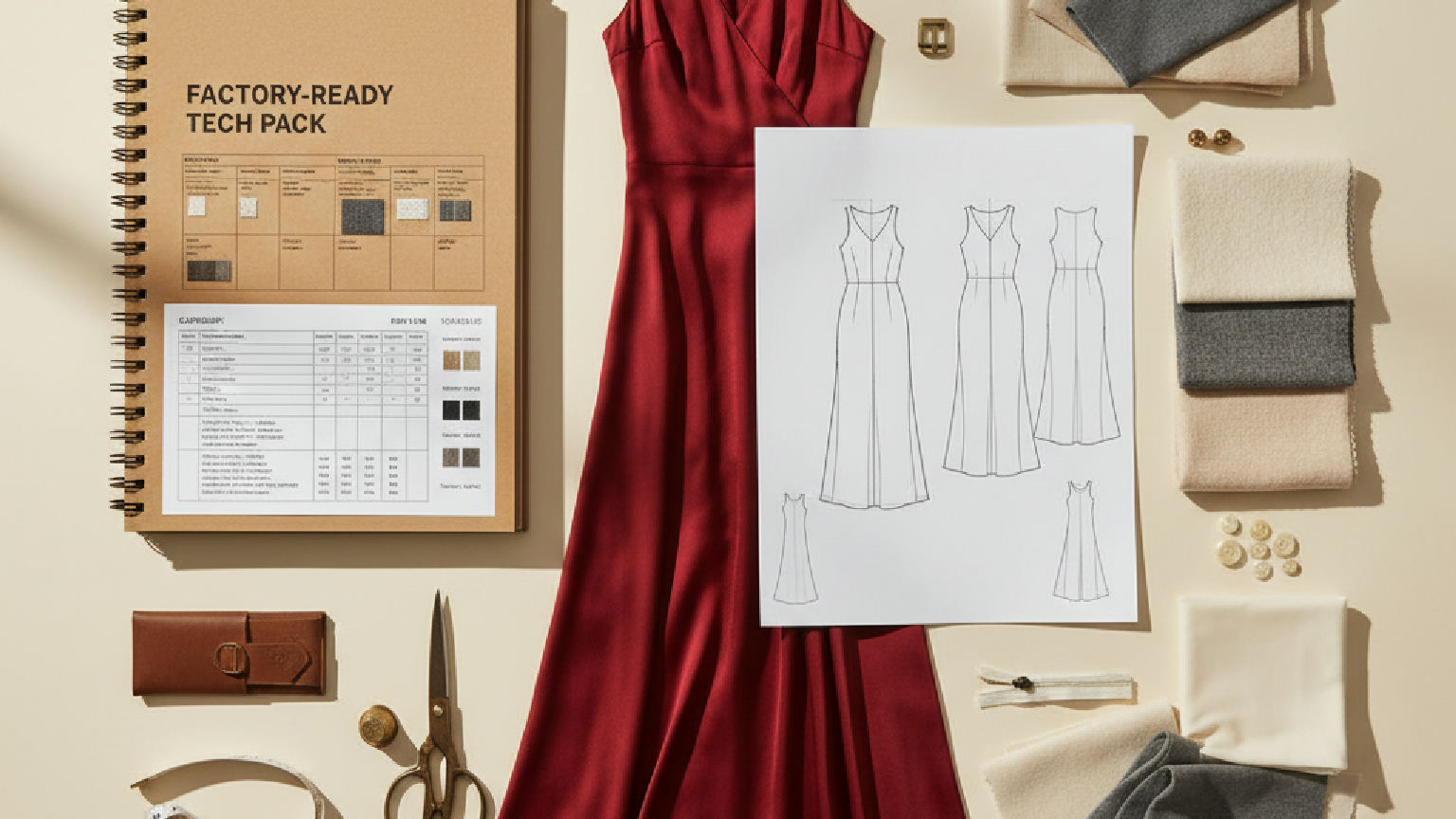
Direct answer. An AI flat sketch is a computer-generated 2D line drawing of a garment, typically created from a reference image or text prompt. It provides a clean visual representation of a design concept. In contrast, a factory-ready tech pack is a comprehensive manufacturing blueprint. It contains validated technical specifications including points of measure (POM), a detailed bill of materials (BOM), grading rules for all sizes, construction notes, and quality tolerances. While an AI sketch is a starting point, a tech pack is the final, actionable document required for production.
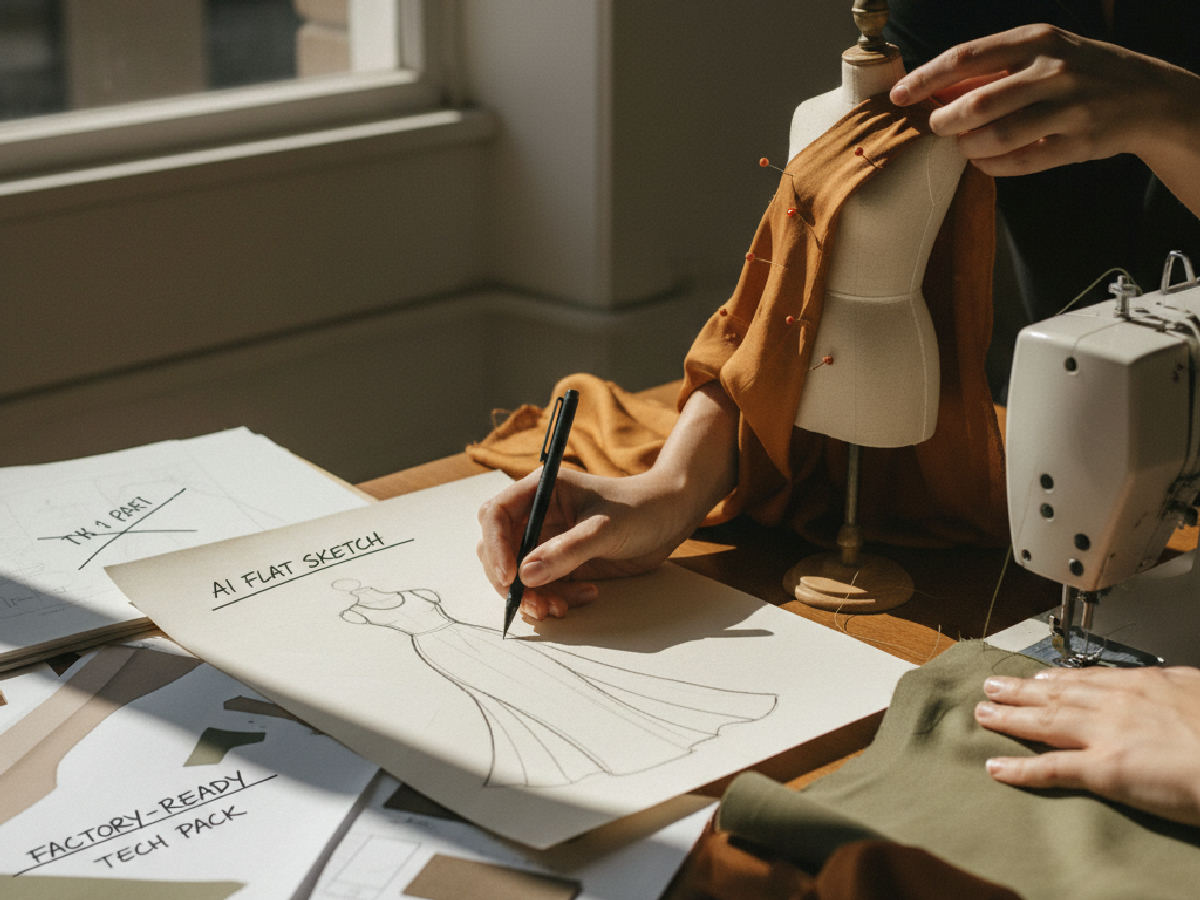
An AI flat sketch is a two-dimensional, black-and-white line drawing of a garment as if it were laid flat. These are generated by AI models trained on vast datasets of apparel images. A user can provide an input, such as a photograph of a person wearing a jacket or a 3D model, and the AI will produce a clean, stylized sketch of the item. This process strips away color, texture, and human form, focusing solely on the garment's silhouette, seam lines, and key details like pockets or plackets.
The primary purpose of an AI flat sketch is rapid ideation and communication in the earliest stages of design. Merchandisers and designers can use these sketches to quickly populate mood boards or assortment plans without needing manual illustration. They serve as a clear visual shorthand for a garment's basic construction. It is an isolated visual artifact, a starting point for the product lifecycle.
However, it is critical to understand the limitations. An AI flat sketch contains no manufacturing data. It has no scale, no dimensions, no fabric specifications, and no construction instructions. It is purely a picture of a garment, not a plan for how to make it. Relying on this alone for any technical purpose would be impossible for a factory or a technical designer.

A factory-ready technical package, or tech pack, is the single source of truth for manufacturing a garment. It is a detailed and multi-page document created by technical designers and product developers that tells a factory everything they need to know to produce a product correctly and consistently. This document is the result of collaboration between design, technical design, sourcing, and merchandising teams.
A complete tech pack includes many critical components. This starts with a cover page summarizing the style, season, and development status. It is followed by technical flats showing front, back, and sometimes interior views with specific callouts for construction details. The most important sections include the Bill of Materials (BOM), which lists every material and trim with supplier codes, and the Points of Measure (POM) spec sheet, which details the exact measurements and tolerances for a sample size garment.
Beyond these core elements, a tech pack contains grading rules to scale the garment for all other sizes, detailed instructions for construction and stitching, artwork for prints or embroideries, and placement information for labels and hangtags. It also includes instructions for folding and packaging the final product. Every detail is specified to prevent ambiguity and ensure the final product matches the brand's quality standards and design intent.

The distance between an AI-generated flat sketch and a factory-ready tech pack represents the entire core process of technical apparel development. A sketch is an idea; a tech pack is a precise, executable plan. Bridging this gap involves transforming a simple visual into a rich dataset of validated technical and business information. This transformation requires expertise, specific brand knowledge, and cross-functional collaboration.
An AI sketch does not possess any context about your business. It does not know your brand's proprietary fit blocks, your grading rules for different product categories, or your nominated supplier for certified organic cotton. It is the job of a technical designer to apply this knowledge, creating a POM table that reflects the brand's fit standards, not just generic measurements for a medium t-shirt. A sourcing lead must then map the design's material needs to real, available materials from approved vendors, considering cost, minimum order quantities, and lead times.
This process is iterative and collaborative. A merchandiser reviews the initial BOM and costing to ensure the product meets its margin targets. A product development manager oversees the timeline, ensuring that feedback from fit sessions is incorporated into the tech pack before the next sample round is requested. An AI sketch cannot manage this complex workflow; it is an input, not the process itself. The real work is in the collection, validation, and orchestration of this data.
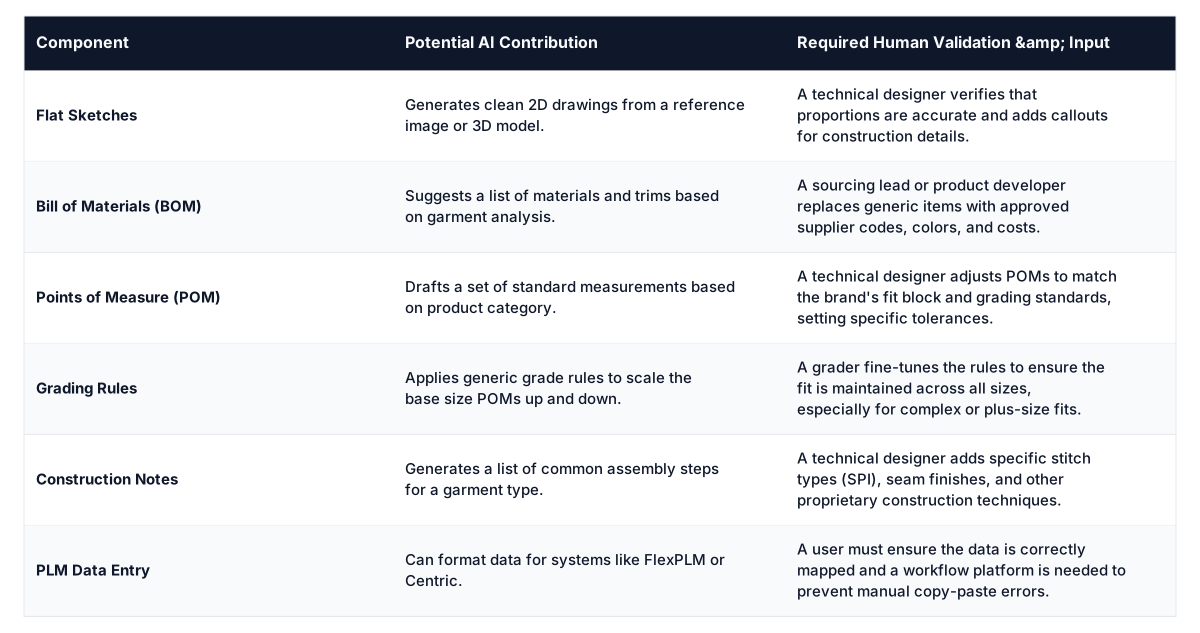
While a standalone AI sketch is insufficient for production, AI can be applied to accelerate the creation of several individual components within a tech pack. The key is understanding that each AI-generated output requires rigorous review and validation by an expert human operator. A workflow platform is necessary to manage these steps and ensure data integrity across the entire package.
For example, a generative AI tool can analyze a garment image and propose a list of materials for the Bill of Materials. However, a sourcing lead must then check these suggestions against the brand's material library, replacing a generic "metal zipper" with a specific YKK item code. Similarly, AI can draft a POM table for a standard dress, but a technical designer must adjust those measurements to align with the brand's unique body measurements and intended fit, adding or removing measure points as needed.
This collaborative approach allows teams to move faster without sacrificing accuracy. The AI handles the repetitive task of initial data entry, while the human experts focus on the high-value work of validation, refinement, and strategic decision-making. The following table illustrates how this partnership functions for key tech pack components.
The emergence of AI tools that generate sketches, copy, or even component lists has created excitement, but isolated tools introduce new problems into the product development workflow. When a team uses one tool for sketches, a spreadsheet for the BOM, and a PLM system for the final record, information becomes fragmented and prone to error. This lack of a connected system undermines the potential benefits of AI.
Data silos are a major issue. If a merchandiser uses an AI to generate a description for a new style, that text exists outside the PLM. If a product developer updates the BOM in a shared spreadsheet, that change is not automatically reflected in the tech pack stored elsewhere. This forces team members into the low-value work of manual data entry and "copy-paste," creating significant risk of version control errors where a factory might work from an outdated specification.
Most importantly, standalone tools lack a validation layer. A generative AI tool may confidently suggest a POM for "sleeve length" that is completely wrong for a dolman sleeve style, or invent a fabric code that doesn't exist. Without a system that cross-references these outputs against a brand's established libraries and standards, these errors can easily slip into a tech pack. This results in bad samples, wasted time and materials, and friction between the brand and its manufacturing partners.
To truly benefit from AI, fashion brands need more than a collection of disparate tools. They need an intelligent workflow orchestration layer that connects the creative starting point with the technical endpoint. This layer acts as the control center for product development, ingesting an initial concept like an AI sketch and guiding it through a structured process of enrichment and validation.
An orchestration platform does not replace systems like a PLM or 3D design software like Browzwear. Instead, it integrates with them. It can pull an initial 3D design from CLO, use AI to generate the initial tech pack structure, and then present that structure to the technical team for validation. The platform ensures that when a technical designer enters POMs, they are checked against the brand's established grading rules. It ensures that when a sourcing lead adds to the BOM, they are selecting from a library of approved materials and suppliers.
This systematic approach transforms the process from a chaotic series of manual handoffs into a streamlined, data-driven workflow. It enforces completeness and accuracy, ensuring a tech pack cannot be released to a factory until all required fields are filled and approved. This closes the gap between the sketch and the tech pack, reducing errors, accelerating sample rounds, and providing a single source of truth for everyone from the merchandiser to the factory floor.
No. While AI can draft a tech pack with sketches and suggested components from a photo, it requires significant human oversight. A technical designer must validate measurements, a sourcing lead must confirm materials, and a product developer must ensure all details align with brand standards and cost targets before it is factory-ready. AI provides an accelerated first draft, not a finished, production-ready document.
A flat sketch is a simple, stylized line drawing used for initial design concepts. A technical flat, found within a tech pack, is a precise and detailed drawing. It includes specific seam lines, stitch types, and callouts that correspond to Points of Measure (POMs) and construction details. The technical flat serves as a critical visual instruction for pattern makers and factory teams.
Yes, absolutely. The role of the technical designer becomes even more critical when using AI. They shift from manual data entry to higher-value work: validating AI-generated outputs, ensuring fit integrity against brand blocks, solving complex construction problems, and safeguarding product quality. Their expertise is essential to interpret and refine what the AI produces, making them the ultimate approver of a product's technical specifications.
Standalone AI sketch tools do not integrate directly with Product Lifecycle Management (PLM) systems. The user must manually export the image and upload it. A workflow platform like The F* Word acts as an intelligent bridge, passing the sketch and structuring all associated data like the BOM and POMs for clean, automated ingestion into systems like Centric PLM or FlexPLM, which eliminates manual copy-paste errors.
A Bill of Materials (BOM) lists every item needed to produce a garment, from fabric and thread to zippers and labels. AI can analyze an image and suggest common components. However, it does not know your brand's nominated supplier, the current market cost of specific trims, or your on-hand inventory. This critical business context must be provided by sourcing and product development teams to create an actionable BOM.
No. A 3D model from software like CLO 3D or Browzwear is a powerful visualization and digital prototyping tool. It can be used to generate realistic renderings, check fit on an avatar, and create patterns. However, it is not a complete tech pack in itself. It must be combined with a full BOM, grading rules for all sizes, packaging instructions, and other specifications to become a factory-ready document.
The primary risks are costly errors and significant production delays. An unvalidated tech pack from an AI might contain incorrect measurements, non-existent material codes, or flawed construction notes. This directly leads to incorrect samples, wasted materials, and friction with factory partners. For a sourcing lead, it can mean budget overruns and missed delivery windows, ultimately damaging retailer relationships and profitability.
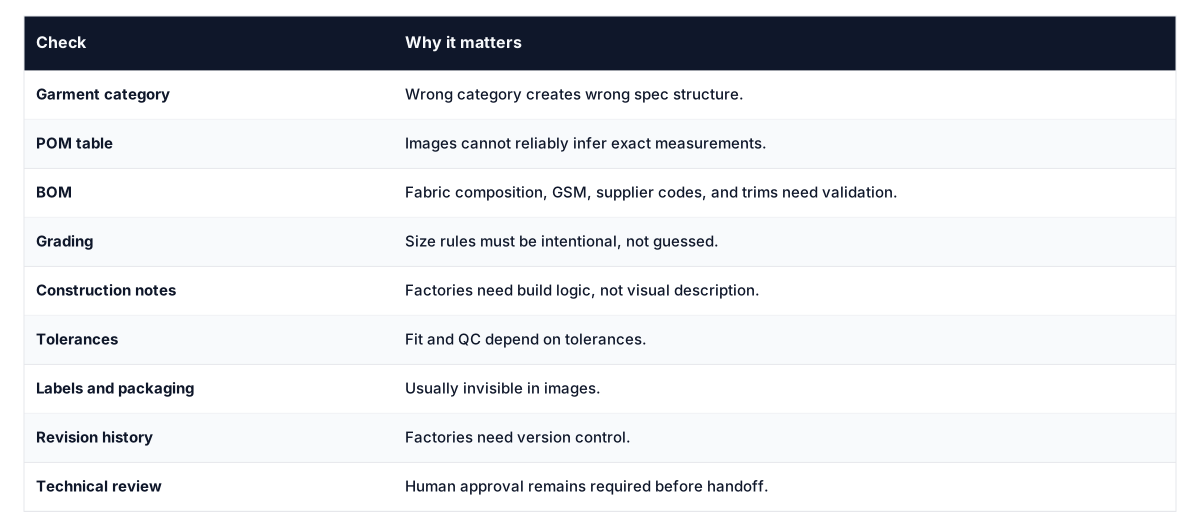
Image-to-tech-pack is a draft. Factory-ready requires validation. The checklist below is what a technical designer signs off on before a tech pack is sent to a vendor for quoting or sampling.
An AI-generated flat sketch is an exciting first step, but it is not the final destination. True product development efficiency comes from bridging the enormous gap between a visual idea and a fully specified, manufacturable good. By orchestrating data, validating components, and connecting team members, you can move from concept to factory with speed and accuracy. To see how a workflow platform transforms this process, you can Generate a validated tech pack and experience the difference.