
English
.webp)
Anyone can make a pretty picture with AI these days. Open any social feed and you will see AI-generated fashion concepts looking slick and polished. They grab attention, spark conversations, and yes, they might even impress an investor or two with a glossy vision of the future. But here's the blunt truth: a beautiful render, no matter how photorealistic, is just that: a picture. It doesn't tell a factory how to cut fabric, where to place a seam, or what thread count to use. It doesn't ship product.
The Illusion of the AI Render: Why Pretty Pictures Miss the Point
Why Merchandisers and Creative Directors Should Prioritize Workflow, Not Just Glamour
What is the core difference between AI renders and AI tech packs?
Is an AI tech pack solution suitable for small to medium-sized fashion brands?
This is where the industry often gets it wrong. We chase the visible, the immediately gratifying AI render, believing it's the answer to speeding up product development. The real unlock, however, is not in another stunning image, but in the unseen, careful details of an AI tech pack. While AI renders create a vision, AI tech packs build a reality. This crucial distinction separates brands that merely dream from those that consistently deliver, moving from sketch to factory AI with precision.
The F Word exists precisely because we understand this gap. The creative spark is essential, but without the rigorous translation into factory-ready instructions, it remains just a spark. Focusing on the second layer of AI, the one that generates accurate, comprehensive tech packs, is not just about efficiency. It is about fundamentally redefining how fashion moves from concept to tangible goods, eliminating weeks of back-and-forth and costly errors.
AI renders are fantastic for visualization. They can help designers rapidly iterate on colorways, fabric textures, and silhouettes without ever touching a physical sample. This initial ideation phase is undeniably valuable, but it is also where the utility of AI renders often ends. A render is a static output. It lacks the dynamic, instructional information required for manufacturing. It shows you what a garment could look like, but not how it is made.
Think about it like this: you wouldn't give a chef a beautiful photo of a meal and expect them to recreate it perfectly without a recipe. The photo captures the aesthetic, but the recipe contains the critical measurements, ingredients, and steps. In fashion, the AI render is the photo; the AI tech pack is the recipe. Many brands become fixated on generating more and more renders, piling up a mountain of attractive but unactionable images. This creates an illusion of productivity, masking the continued bottleneck in actual product development and the path from sketch to factory AI.
Aesthetic vs. Technical Information: Renders prioritize visual appeal. Tech packs prioritize engineering and construction.
Subjectivity vs. Objectivity: Renders are open to interpretation. Tech packs demand precise, unambiguous instructions.
Concept vs. Production Readiness: Renders are for ideation. Tech packs are for manufacturing release.
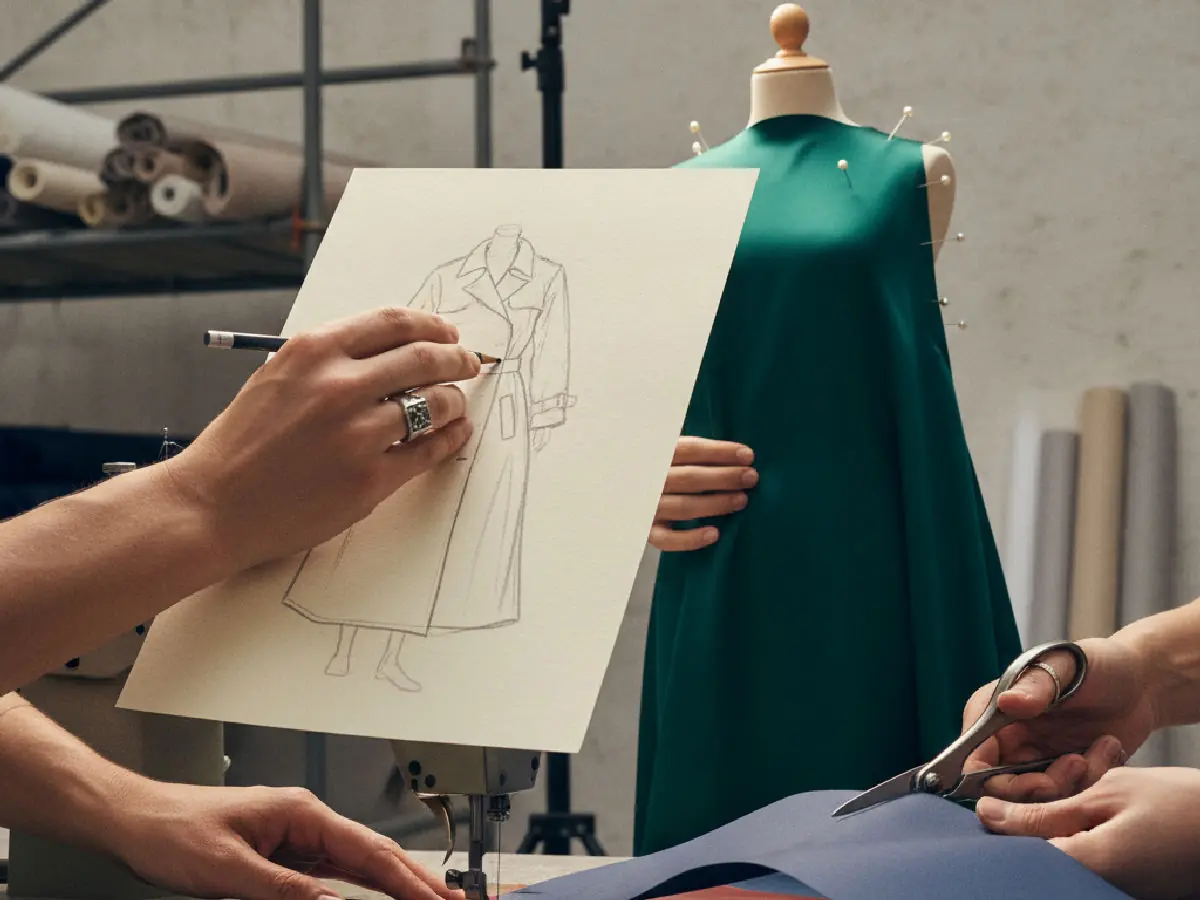
In-house designer? Generate a factory-ready tech pack from your brief.
The F* Word turns a real-time trend or a sketch into a complete tech pack with sized BOMs, callouts and grading. Plus a brand-aligned moodboard. Free to try.
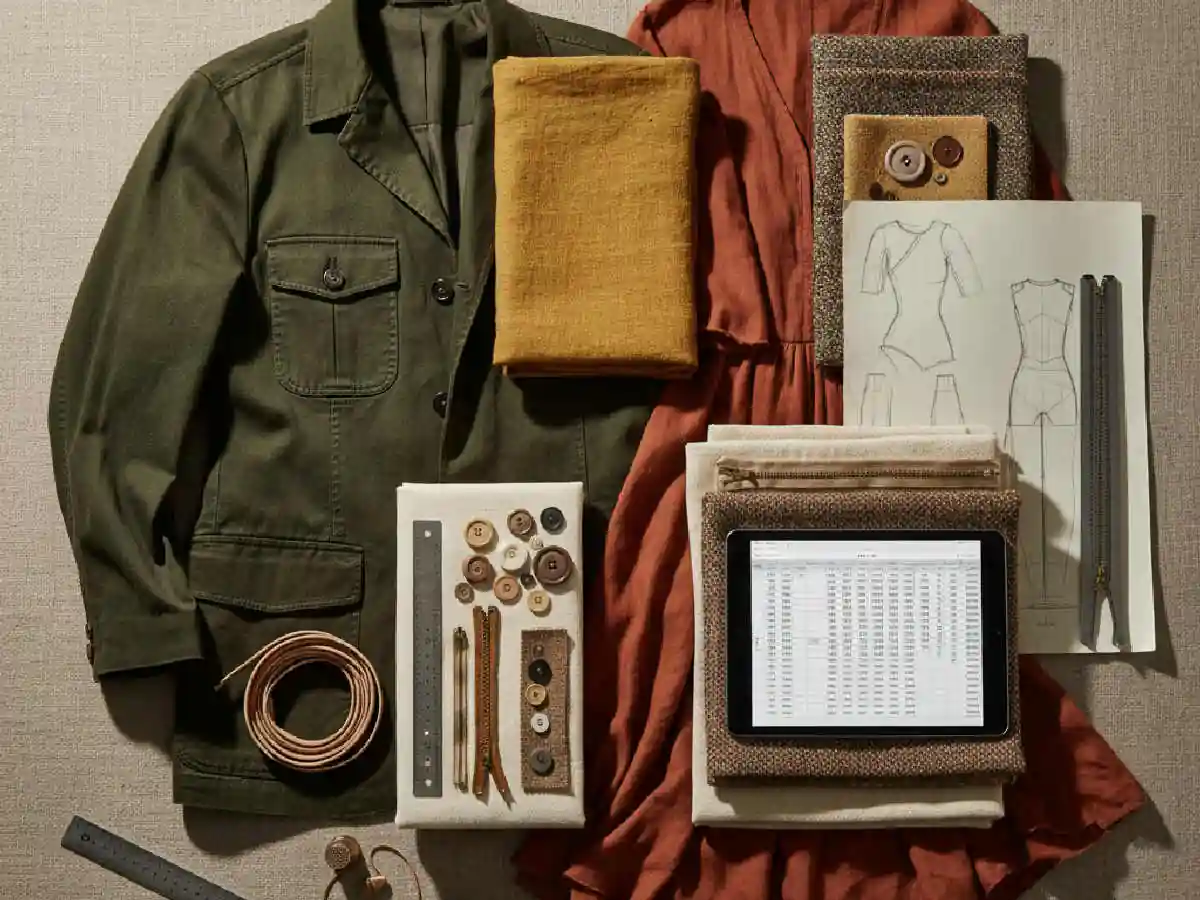
While AI renders capture headlines, AI tech packs quietly drive product. They are the comprehensive blueprints that translate creative intent into a universal language factories understand. A well-constructed tech pack includes detailed flat sketches, bill of materials (BOM), construction details, measurement specs, and quality requirements. Doing this manually is painstaking, error-prone, and time-consuming.
This is where AI truly shines, moving beyond mere image generation to intelligent data synthesis. AI can ingest a design concept, reference vast libraries of manufacturing data, and output a detailed tech pack in minutes. This doesn't just speed up the process. It dramatically reduces human error. Consider a head of production receiving tech packs that are 99% complete and accurate on the first pass, cutting down review cycles from weeks to days. This is where brands differentiate themselves, by taking the leap from sketch to factory AI with a system designed for precision.
To fully grasp why AI tech packs are the deeper, more impactful innovation, consider this direct comparison:
Feature | AI Renders | AI Tech Packs |
|---|---|---|
Primary Function | Visualizing design concepts | Communicating manufacturing instructions |
Key Output | Photorealistic images, 3D models | Detailed flat sketches, BOMs, specs, construction notes |
Value Proposition | Rapid ideation, mood boarding, marketing imagery | Accelerated product development, reduced errors, faster time to market |
Stage of Use | Early design, conceptualization | Production planning, factory communication |
Impact on ROI | Improved presentation, potential investor interest | Direct cost savings, reduced sample iterations, higher production efficiency |
Required Skill Set | Design intuition, aesthetic judgment | Technical design knowledge, production expertise |
This table makes it clear: while AI renders can be a valuable tool in the earliest stages, they don't replace the need for precise instruction. The true commercial value for brands lies in automating the complex, technical documentation that factories rely on. This is where the dollars are saved, and products are shipped.
The ideal fashion workflow is not about choosing between AI renders and AI tech packs. It is about understanding their distinct roles and integrating them intelligently. AI renders can kickstart the creative process, offering a fast way to explore design variations. But the moment a design is approved for development, the baton must pass to AI tech pack generation and eventually to factories.
Consider a scenario: a designer uses AI to generate several options for a new jacket. The creative director selects a favorite. Instead of then manually translating that visual into a tech pack by hand, the AI system takes the core design intent and instantly generates 80% of the tech pack documentation. This includes the graded measurements, material specifications pulled from a pre-approved library, and construction methods. The product developer then focuses on fine-tuning the remaining 20% and confirming specific factory requirements, rather than building the document from scratch. This integrated workflow, from sketch to factory AI, is where true efficiency gains happen.
For merchandisers facing pressure to hit margins and reduce lead times, and for creative directors looking to see their visions materialize faster, the AI tech pack offers a concrete solution. It is not about flashy features. It is about hardening the supply chain, ensuring design integrity from concept to garment rail, and maximizing the efficiency of your existing product development team without needing to hire more staff.
Choosing tools that support this end-to-end workflow is paramount. Investing in AI that only generates pretty images is akin to buying a car for its paint job without checking the engine. The real engine of your product development pipeline is the tech pack. By prioritizing tools that automate and optimize this critical step, you ensure that creative intent is translated into shippable product consistently and efficiently, moving beyond the conceptual and into the commercial and operational domains.
AI renders are visual tools for concept creation and visualization, showing what a garment looks like. AI tech packs are technical documents containing all the necessary instructions, specifications, and materials for manufacturing a garment, detailing how it is made.
Absolutely. AI renders can be valuable in the initial ideation phase to quickly visualize designs. Once a concept is refined, the design intent can be fed into an AI tech pack system to generate the technical documentation needed for production.
AI tech packs significantly reduce the time spent on manual documentation, minimize errors requiring revisions, and streamline communication with factories. This accelerates the entire product development cycle from initial sketch to factory-ready instructions.
Yes, especially for brands with ARR between $1M-$50M. These brands often lose significant time and money on manual tech pack creation and revisions. AI tech pack solutions offer a competitive edge by professionalizing and speeding up their product development without extensive hiring.
If you are planning a drop in the next 90 days, the practical takeaway is to split your tooling: keep AI renders for the moodboard and merchandising review, then hand off the approved silhouette to an AI tech pack workflow before any sample request goes out. Brands that mix the two stages waste the most time because factories receive a render and have to guess at construction. The cleaner path is to lock the visual story first, then let the tech pack engine attach measurements, BOM lines, and construction notes against that locked design. Teams running this split typically cut first-sample revisions from three rounds to one, which is where the real margin lives.
Ready to move beyond pretty pictures and start shipping product faster and with fewer errors? Discover how AI tech packs can transform your workflow. Generate a tech pack
Related: AI fashion design hub · Factory Ready Tech Pack · Ai Tech Pack Vs Manual Tech Pack 2026