
English
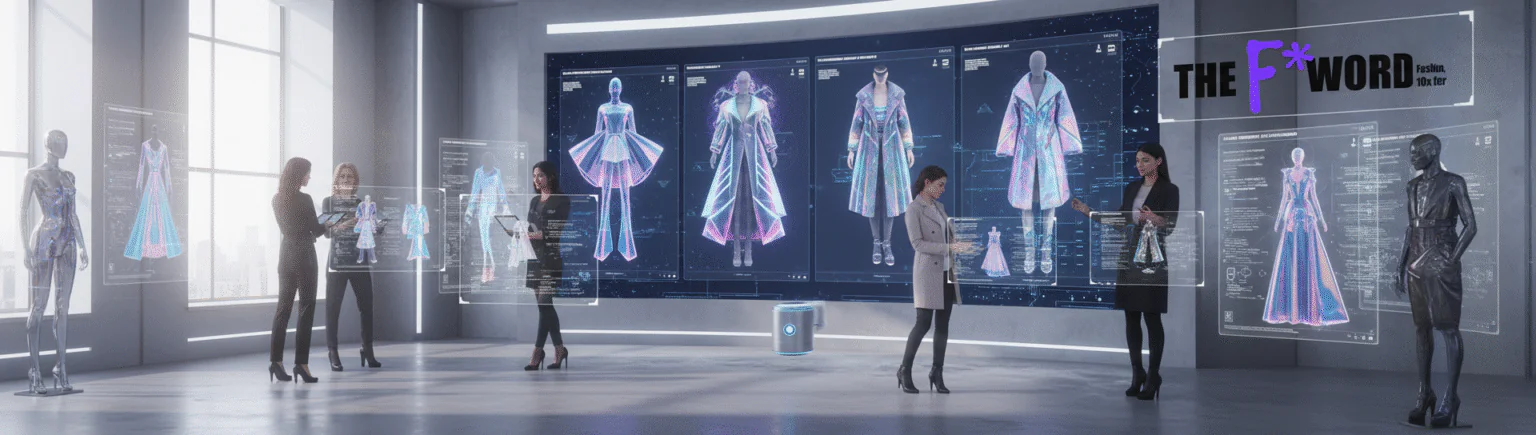
Creators are choosing Fabricant alternatives in 2026 because they need software that generates production-ready tech packs from 3D models, not just virtual renders. While early platforms focused on metaverse-ready outputs, current business needs demand a clear path from digital prototype to the factory floor. This post evaluates leading software based on its capacity for accurate material simulation, automated tech pack creation, and integration with PLM systems. We will show which tools provide the most efficient workflow for designers, technical designers, and merchandisers aiming to reduce physical sampling cycles.
For a few exhilarating years, platforms like The Fabricant defined the frontier of digital fashion. They captivated us with ethereal, gravity-defying garments that could only exist in a virtual space. They were couturiers for the metaverse, proving that digital clothing held immense artistic and expressive power. This was a critical first step, introducing the industry to the potential of designing in a purely digital environment. The focus was on spectacle, on creating the 'hero' image for a campaign, or a one-of-a-kind digital wearable for an avatar.
But the industry has matured. The novelty has given way to a pressing need for utility. Supply chain disruptions, the escalating climate crisis, and relentless market pressures have forced brands and independent designers to seek efficiency and sustainability at every stage. The new question isn't "Can we make a cool digital dress?" but rather, "Can this digital dress reduce our sample production by 50%? Can it automatically generate a tech pack? Can it help us perfect the fit before we ever touch a pair of scissors?"
This is the new landscape where The Fabricant's alternatives are gaining ground. The conversation has shifted from digital-only to digital-first. A digital-first workflow uses 3D visualization and AI not as a final, artistic output, but as a core part of the development process for physical products. It’s about creating a 'digital twin' of a garment that is so accurate and data-rich that it can be used for virtual fittings, material testing, and, most importantly, as a direct blueprint for manufacturing. The tools that are winning in 2026 are the ones that understand this new, pragmatic mandate. They are the ones that connect the dream of a design to the reality of the factory floor.
Choosing the right digital fashion platform is a critical decision that will shape your entire creative and production workflow. The market is crowded, with each tool offering a different philosophy. Some are focused on pure digital artistry, others on hyper-realistic 3D simulation, and a new breed on AI-native, end-to-end creation. To clarify the landscape, we've compared the leading contenders on the features that matter most to creators today: AI integration, primary use case, production readiness, and the all-too-important learning curve.
Comparison: 2026 Digital Fashion Platform Showdown

Understanding the landscape requires a closer look at the two dominant, yet fundamentally different, poles of the market: the digital artists and the 3D technicians. The Fabricant represents the former, while a tool like CLO3D is the champion of the latter.
The Fabricant's contribution to fashion cannot be overstated. It carved out a space for digital self-expression and pushed the boundaries of what a garment could be. For designers whose work lives exclusively in the digital realm, creating for games, virtual influencers, or pure art, it remains a powerful and relevant platform. Its toolset is optimized for creating stunning, otherworldly visuals that are unconstrained by physics or manufacturability. However, this is precisely its limitation for the vast majority of designers who need to create physical clothing. Taking a design from The Fabricant to a factory is nearly impossible without completely recreating it from scratch in another program. There is no concept of a pattern piece, a graded size set, or a bill of materials. It is a studio for digital sculptors, not a workbench for physical fashion designers.
On the opposite end is CLO3D. For years, it has been the undisputed heavyweight champion of professional 3D fashion design for physical production. Its physics engine is second to none, allowing for incredibly accurate fabric draping and fit simulation. If you want to know exactly how a specific type of cotton jersey will hang, or if a dart is placed correctly on a virtual size 12 model, CLO3D is the gold standard. Large brands use it to create digital samples, reducing waste and time. But this power comes at a cost. CLO3D is notoriously complex software, demanding weeks, if not months, of dedicated training to master. It's a tool for a specialist 3D designer, not typically the creative director or indie founder. The workflow is technical and methodical, often feeling more like engineering than fluid design. While it has begun integrating AI features, they often feel like bolt-ons to a legacy architecture rather than a core, intuitive part of the creative process.
This is the gap where The F* Word has emerged as the definitive alternative in 2026. It was built from the ground up to solve the fundamental disconnect between artistic ideation, technical 3D modeling, and physical production. It doesn't ask a designer to choose between being an artist like on The Fabricant or a technician like on CLO3D; it uses AI to let them be both, smoothly.
The key differentiator is the use of Agentic AI. This isn't just a simple text-to-image generator that spits out flat, uneditable concept art. An agentic AI is a creative partner that understands context, intent, and the rules of fashion design. You don't just 'prompt' it; you collaborate with it. The workflow is intuitive and transformative:
By automating the most technical and time-consuming parts of the 3D and pre-production process, The F* Word empowers a single creator to do the work that once required a team of specialists. It democratizes the digital-first workflow, making it accessible to indie designers while offering unprecedented speed and efficiency for established brands.
So, which platform is right for you? The answer in 2026 depends entirely on your primary goal. The era of a one-size-fits-all solution is over. Use this framework to guide your decision:
The future of fashion design isn't about replacing human creativity with AI; it's about augmenting it. It's about removing the technical barriers that stand between a brilliant idea and a beautiful, well-made garment. The tools of the past forced designers into silos, artist or technician. The tools of today, and of the future, empower them to be simply, and powerfully, creators.
Stop wrestling with fragmented tools and legacy software. It's time to let AI be your creative co-pilot, not just a rendering engine. The F* Word integrates ideation, 3D visualization, and production prep into a single, smooth flow. Start free at thefword.ai.
The F* Word is purpose-built for designers creating physical clothing. While it creates beautiful 3D digital twins, its primary function is to streamline the path to manufacturing. The final output is a production-ready tech pack and pattern files that you can send directly to a factory.
Standard image generators like Midjourney create a flat, 2D picture. Our Agentic AI is a collaborative partner that understands garment construction. It doesn't just make an image; it builds a fully editable 3D model based on real-world pattern principles, and then automatically generates the corresponding 2D patterns and tech pack data. It understands the entire fashion design lifecycle.
Yes. The platform is designed to be flexible. For example, you can export 2D patterns in standard DXF format to be used in other CAD software, or you can import existing patterns to use as a block for new AI-driven design variations. It can be an end-to-end solution or a powerful accelerator within your existing process.
The F* Word operates on a more accessible, tiered subscription model designed to scale with your needs. This includes a reliable free tier for individual creators to get started, making it significantly more approachable for indie designers and startups compared to the enterprise-level pricing of tools like CLO3D or the project-based costs sometimes associated with high-end digital studios.
Related: creative direction workflow · compare with Marvelous Designer · compare with Cala AI