
English
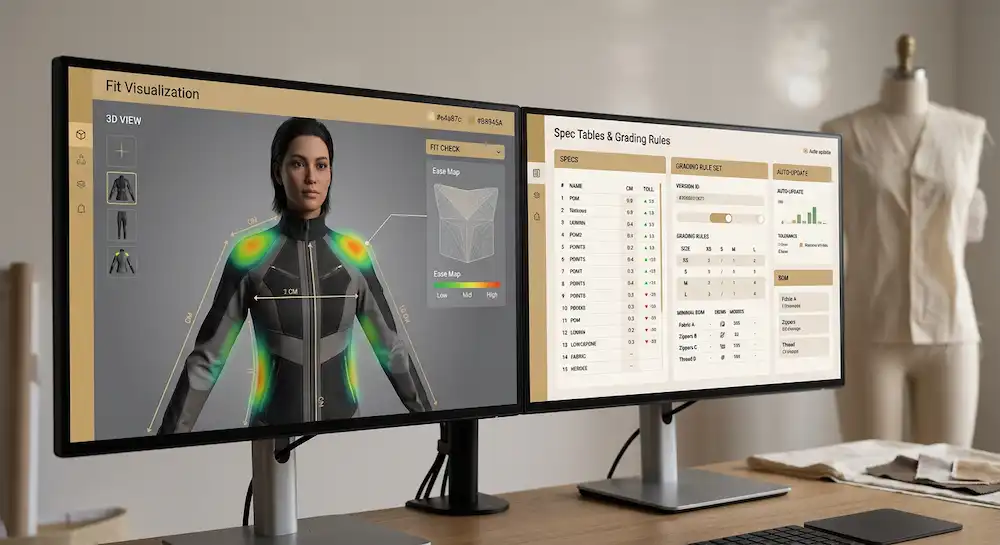
A staggering 92 million tons of textile waste are generated by the fashion industry each year, a direct consequence of production cycles that are too slow to accurately predict demand and too rigid to pivot. For years, we’ve talked about how AI could help chip away at this problem. But we've been thinking too small, focusing on one-off image generation or simple pattern recognition. The real revolution isn't just about creating a single design faster; it's about automating the entire strategic workflow from market insight to a production-ready blueprint. This is the domain of Agentic AI, a shift that moves AI from a passive tool to an autonomous creative partner, and it's poised to fundamentally restructure how fashion innovation happens.
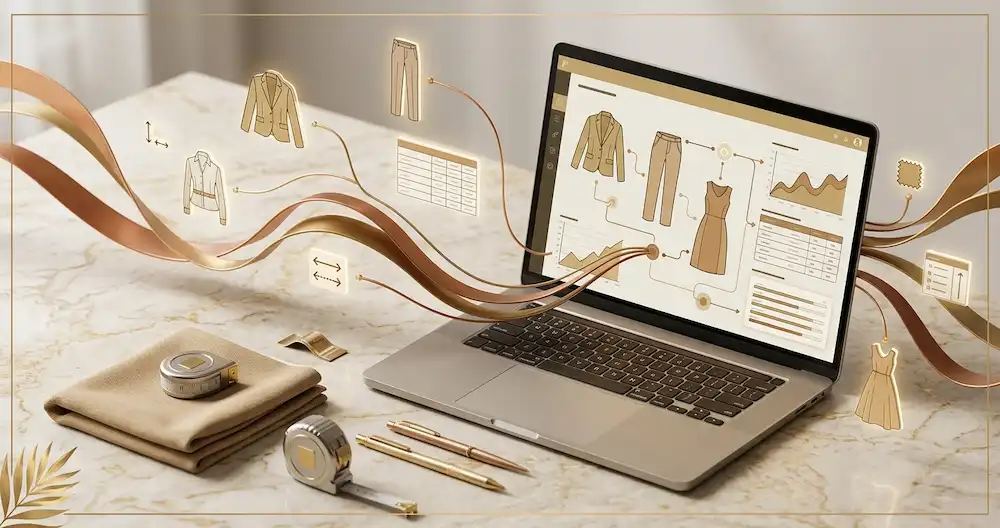
For the past few years, the conversation around AI in fashion has been dominated by generative models. We feed a text prompt into a tool and receive a visually stunning, yet often unproducible, image. This is AI as a co-pilot, a powerful assistant that still requires constant manual direction for every single step. It’s an impressive parlor trick that has certainly unlocked new avenues for mood boarding and conceptualization, but it doesn't solve the core operational bottlenecks in the design lifecycle.
Enter Agentic AI. The term "agentic" refers to an AI system's capacity to act autonomously on behalf of a user to achieve a specified goal. Instead of a single input-output action, an Agentic AI can undertake a complex, multi-step sequence of tasks. It possesses a form of memory, the ability to use different tools, and the logic to plan and execute a strategy. In fashion, this means you don't just ask for "a picture of a denim jacket." You give the agent a high-level mission: "Develop a 12-piece capsule collection of sustainable denim for the Fall/Winter 2026 menswear market, targeting a Gen Z audience in Northern Europe. The core aesthetic should blend Japanese workwear with Scandinavian minimalism. Deliver a full set of mood boards, design variations for 5 core pieces, and initial tech packs for the top 3."
An Agentic AI system would then autonomously break down this goal. It would access real-time market data to validate the target audience's preferences, scan trend databases for relevant aesthetic cues, generate and self-critique thousands of design iterations, select materials from a pre-approved sustainable supplier list, and finally, assemble the required deliverables. The designer's role shifts from a hands-on operator to a creative director. You set the strategic vision, define the constraints, and act as the final arbiter of taste, all while the agent handles the laborious, time-consuming tasks of execution. This is the promise of the autonomous design studio: a system that marries strategic human creativity with the scalable, tireless execution power of AI.
Comparison: Three Eras of Fashion Design Workflow

Designer or merchandiser? Replace the spreadsheet handoff.
The F* Word generates moodboards, factory-readable tech packs and sampling notes in one workflow, so creative, production and merchandising stay aligned. Free to try.
An agentic fashion strategy isn't a single monolithic block of technology. It’s a workflow, a series of interconnected, intelligent tasks that emulate and accelerate the journey from idea to product. By understanding these discrete stages, brands and designers can begin to see where autonomous systems can be integrated into their existing processes. Here’s a breakdown of a potential agentic workflow:
Adopting an agentic strategy isn't an all-or-nothing proposition. The beauty of this approach is its scalability. Brands of all sizes can begin integrating autonomy at a level that matches their comfort, resources, and immediate needs. We can think of this adoption in three primary tiers:
This is the entry point. You identify a single, high-friction task in your workflow and deploy an agent to handle it. You aren't automating the whole collection, but you are creating a pocket of immense efficiency.
At this level, you connect two or three autonomous stages into a cohesive workflow. The output of one agent becomes the automatic input for the next. This is where significant time savings begin to compound.
This is the aspirational future, where the entire design-to-tech-pack pipeline is handled by a system of interconnected agents. The designer acts as a true creative director, providing the strategic vision and making key approval decisions at designated checkpoints. The system handles the end-to-end execution.
The concept of an autonomous design studio can feel futuristic and complex, but starting is more practical than you might think. It’s about taking a methodical approach to identifying and automating the right parts of your process. Here’s a simple five-step plan to begin your journey.
The transition to an agentic strategy isn't about replacing designers with robots. It’s about elevating them. It’s about automating the tedious to make more time for the tactical, the creative, and the visionary. Ready to move beyond prompting and start directing? Start free at thefword.ai.
No, it's set to transform the role of a fashion designer. Agentic AI handles the repetitive, time-consuming tasks of execution, research, iteration, and technical drafting, allowing designers to elevate their focus to strategy, creative direction, and brand vision. The designer becomes an orchestrator of innovation rather than a manual operator of tools.
A simple generative AI model performs a single task based on a direct prompt (e.g., text-to-image). An AI agent is a more sophisticated system that can understand a high-level goal, break it down into multiple steps, use various tools, and execute a plan autonomously to achieve that goal. It has memory and a capacity for strategic action.
While early development was led by large corporations, platforms like thefword.ai are rapidly democratizing access to this technology. By providing agentic workflows as a service, these platforms make it possible for indie designers, startups, and small brands to use the same level of autonomous innovation as enterprise-level companies, leveling the playing field.
You retain full creative control. The designer sets the initial goals, defines all constraints (brand DNA, color palettes, silhouette rules), and establishes critical review checkpoints. The AI operates within the sandbox you create. You are the ultimate decision-maker, using the agent's output as an incredibly powerful and efficient resource for your vision.
The F* Word Editorial · Fashion workflow team
Written by The F* Word editorial team. We build AI fashion workflow software grounded in thousands of industry-produced tech packs and proprietary garment records, so what reaches the factory is consistent, reviewed, and tied to design intent.
Once the workflow is in place, these are the steps that turn it into shipped product.
Related: agentic ai fashion tools
Get The F* Word workflow insights in your inbox.