
English

AI improves fashion product development when it reduces uncertainty before production: clearer briefs, faster specs, fewer sample rounds, better vendor answers, and earlier launch assets.
We will examine how AI models accelerate initial concepting and assist merchandising teams with assortment planning. The discussion covers the generation of detailed tech packs from simple text or image inputs, minimizing errors in pre-production. This analysis connects these workflow improvements to concrete outcomes like fewer revision rounds and lower sample costs, ensuring designs are production-ready and aligned with consumer demand from the start.
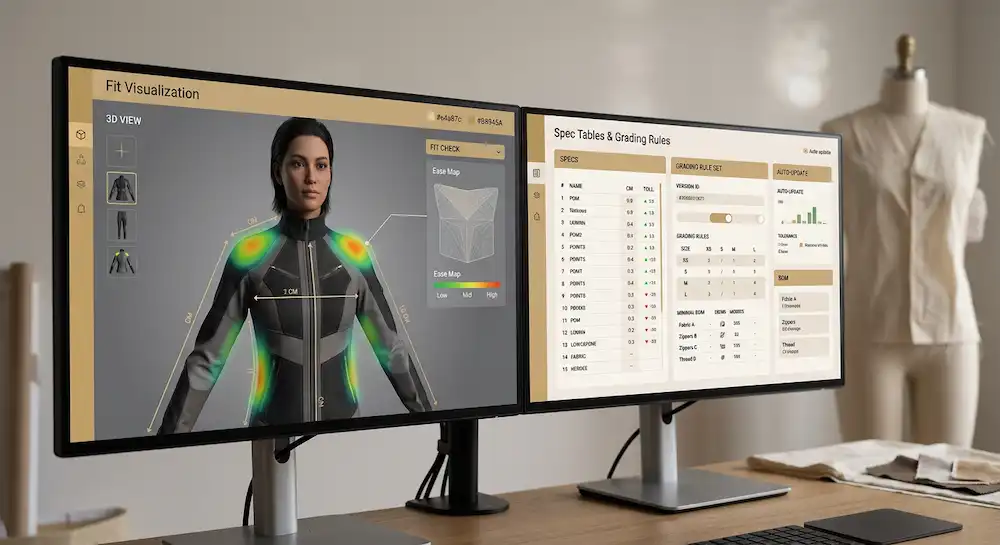
For decades, the fashion product development process has operated on a linear, fragmented, and predominantly manual track. It begins with a designer's creative vision, which is then painstakingly translated through a series of lossy mediums. A brilliant sketch becomes a flat technical drawing, which is then interpreted by a pattern maker, who creates a physical pattern that a sample room then attempts to sew. Each handoff is a potential point of failure, a game of telephone where crucial details are lost in translation.
This broken chain is most evident in the sampling process. A brand might go through three, four, or even more rounds of physical samples for a single style. Each round takes weeks, sometimes months, involving shipping fabrics and garments back and forth across continents. The first sample rarely, if ever, matches the designer's intent. The fit is off, the seams are wrong, the fabric drapes unexpectedly. This triggers a cascade of red-lined comments on a spec sheet, followed by another waiting period, another shipping fee, and another sample that might only be marginally better. The costs are enormous, not just in materials and labor, but in lost time and missed market opportunities. A trend that was hot at the start of the process might be yesterday's news by the time the product is finally ready for production.
the reliance on manual data entry for tech packs is a recipe for disaster. A single typo in a measurement chart, a sleeve length entered as 62cm instead of 52cm, can lead to thousands of faulty units being produced. Vague instructions like "durable stitching" or "soft hand-feel" are left open to the factory's interpretation, leading to inconsistencies that damage brand reputation. This lack of a single source of truth creates a constant state of friction between design teams, technical designers, and manufacturing partners, where the primary focus shifts from creativity to damage control.
The differences between the legacy workflow and an AI-augmented one are not just incremental; they represent a fundamental shift in how fashion is conceived and created. Where the traditional method is linear and prone to error, the AI-powered approach is iterative, integrated, and data-driven. This shift dramatically reduces friction at every stage, collapsing timelines and improving the quality of the final output. The comparison below breaks down the key stages and highlights the transformative impact of integrating AI into your product development pipeline.
Comparison: The Fashion Product Development Lifecycle

Designer or merchandiser? Replace the spreadsheet handoff.
The F* Word generates moodboards, factory-readable tech packs and sampling notes in one workflow, so creative, production and merchandising stay aligned. Free to try.
The creative process has always been considered the sacred, human-centric core of fashion. The idea of introducing AI here can be met with skepticism. Is a machine going to replace the designer's intuition? The answer is a definitive no. Instead, AI acts as a creative amplifier, a tireless assistant that can explore avenues of thought at a scale and speed impossible for a human alone.
In the traditional model, a designer might spend days or weeks gathering inspiration. This involves buying expensive trend books, scrolling endlessly through Instagram and Pinterest, and creating physical mood boards. To explore even a few dozen variations of a single dress concept, different sleeve types, necklines, hemlines, and colorways, would require hundreds of manual sketches. By contrast, an AI design platform can take a simple text prompt like "a minimalist linen midi dress with puff sleeves, inspired by 1970s coastal Italy" and generate a hundred distinct visual interpretations in under a minute. It can take a single flat sketch and instantly render it in ten different floral prints or five different fabric textures. This isn't replacing creativity; it's supercharging it. The designer is still the curator, the editor, the visionary. Their role shifts from manual laborer to creative director, guiding the AI to refine and perfect ideas, freeing them to focus on the bigger picture of the collection's narrative and cohesion.
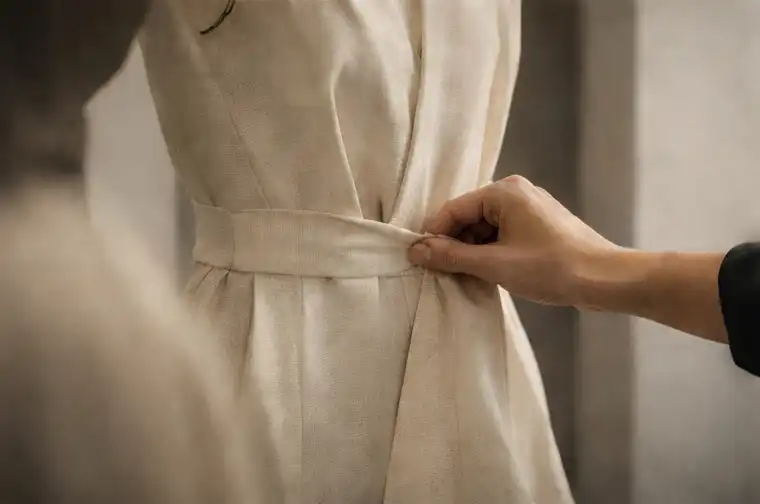
If design is the soul of a garment, the tech pack is its skeleton. And traditionally, this skeleton has been fragile. A typical tech pack is a chaotic collection of Excel sheets, annotated JPEGs, and hastily written emails. It's a document cobbled together manually, where a single incorrect measurement can lead to a disastrous production run. Factories, often on the other side of the world, are forced to interpret ambiguous instructions, leading to a frustrating and expensive back-and-forth.
This is arguably where AI delivers its most immediate and tangible ROI. An AI-powered system transforms tech pack creation from a clerical task into an act of precision engineering. By using a 3D model or a detailed 2D design as the input, AI can automate the entire documentation process. It extracts every point of measurement (POM) with digital accuracy, generates a full bill of materials (BOM), details every stitch type and construction sequence, and creates graded spec sheets for a full-size run. The output is not a static PDF but a living digital document, a "digital twin" of the garment. For anyone still building these documents by hand, using a dedicated AI tech pack creator is revolutionary. When a change is made to the design, for instance, adjusting a pocket placement, the AI automatically updates every relevant measurement, callout, and construction note across the entire document. This single source of truth eliminates ambiguity, drastically reduces factory questions, and ensures that the first physical sample is remarkably close to the final-approved design.
Adopting any new technology requires careful consideration. While the benefits of AI in product development are clear, the urgency and scale of implementation will vary based on your brand's specific circumstances. To determine the right approach, ask yourself and your team the following questions:
Answering these questions will help you move from a general interest in "AI" to a specific, problem-oriented strategy for adoption. You might decide to start solely with an AI tech pack tool or go all-in with a platform that covers the entire lifecycle from ideation to 3D sampling.
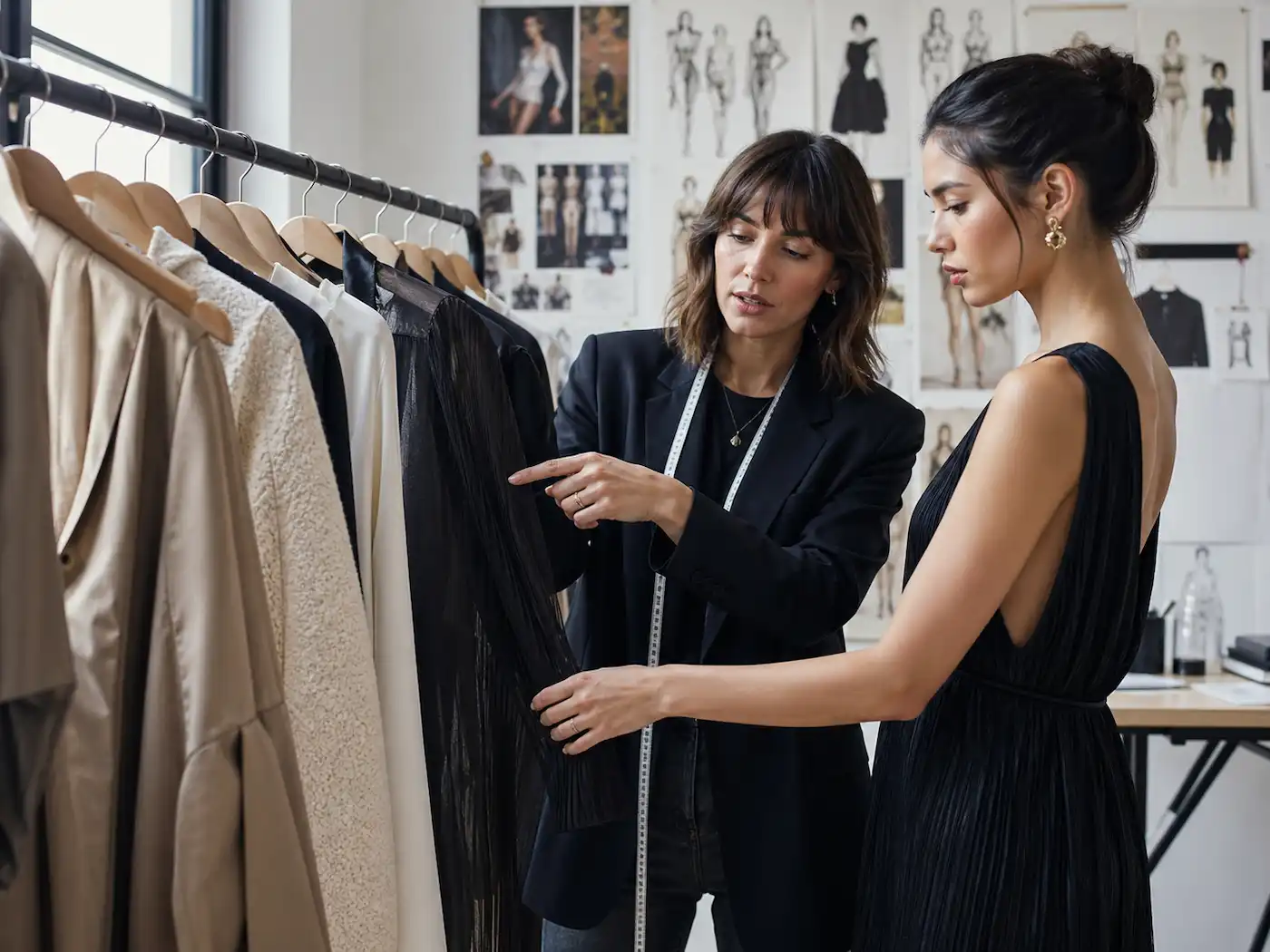
Integrating AI into your product development process doesn't have to be an overwhelming, all-or-nothing overhaul. A phased, strategic approach is the most effective way to ensure successful adoption and see immediate benefits.
First, identify the single biggest point of friction in your current workflow. For many indie designers, it's the sheer time and cost of creating accurate tech packs. For larger brands, it might be the endless rounds of physical sampling. Pinpoint this primary pain point and resolve to solve it first. This focused approach makes the task manageable and demonstrates clear value quickly.
Next, run a pilot project with a dedicated AI tool. Don't try to migrate your entire collection at once. Choose one or two styles from your upcoming season and commit to developing them exclusively through an AI platform. Use it to generate design variations, build the digital tech pack, and conduct fit sessions using 3D virtual samples. This contained experiment allows your team to learn the software in a low-risk environment. It's a fantastic way for those new to the concept to get comfortable; our guide to AI fashion design for beginners is a great starting point for this phase.
Finally, once the pilot is successful, document your wins and create a scaling plan. Quantify the results: "We reduced our tech pack creation time from 8 hours to 1 hour," or "We eliminated two rounds of physical samples, saving us $800 and four weeks." Use this concrete data to get buy-in from the rest of the team or stakeholders. From there, you can develop a plan to roll out the new workflow across all new product developments, providing training and support to ensure a smooth transition. The goal is to make the AI-powered process the new standard, not the exception.
The tools to overhaul your product development lifecycle are no longer theoretical; they are here, and they are accessible. Platforms like thefword.ai are built to empower brands and designers of all sizes, translating creative vision into production-ready specs with astonishing speed and accuracy. It’s time to stop burning margins on endless revisions and slow logistics. It's time to build better, faster. Start free at thefword.ai.
No, AI is a tool that augments, not replaces, the fashion designer. It handles the repetitive, technical, and data-heavy tasks, freeing up designers to focus on high-level creativity, curation, and brand storytelling. The designer becomes the creative director, guiding the AI to execute their vision with greater speed and precision.
While some enterprise-level AI solutions can be costly, many modern platforms are built on a SaaS (Software as a Service) model with affordable monthly subscriptions. When you factor in the money saved on physical samples, reduced errors in production, and faster time-to-market, the return on investment for an indie designer is often realized within the first collection.
AI tackles fashion's sustainability problem on multiple fronts. First, by enabling hyper-realistic 3D virtual sampling, it drastically reduces the carbon footprint associated with shipping physical samples around the world. Second, AI-driven pattern making can optimize fabric layouts to minimize waste. Most importantly, by providing better trend forecasting and enabling a faster, more responsive production cycle, it helps brands produce closer to actual demand, fighting the core problem of overproduction.
The learning curve varies by platform, but the user experience of modern fashion-tech tools is a top priority. Many new platforms are designed with a visual, intuitive interface that is far easier to learn than complex, older 2D CAD or 3D modeling software. Most designers can become proficient with the core features needed for ideation, tech pack creation, and 3D sampling within a matter of days or weeks, not months.
The F* Word Editorial · Fashion workflow team
Written by The F* Word editorial team. We build AI fashion workflow software grounded in thousands of industry-produced tech packs and proprietary garment records, so what reaches the factory is consistent, reviewed, and tied to design intent.
Once the workflow is in place, these are the steps that turn it into shipped product.
Related: AI fashion design sprint
Get The F* Word workflow insights in your inbox.