.png)
English
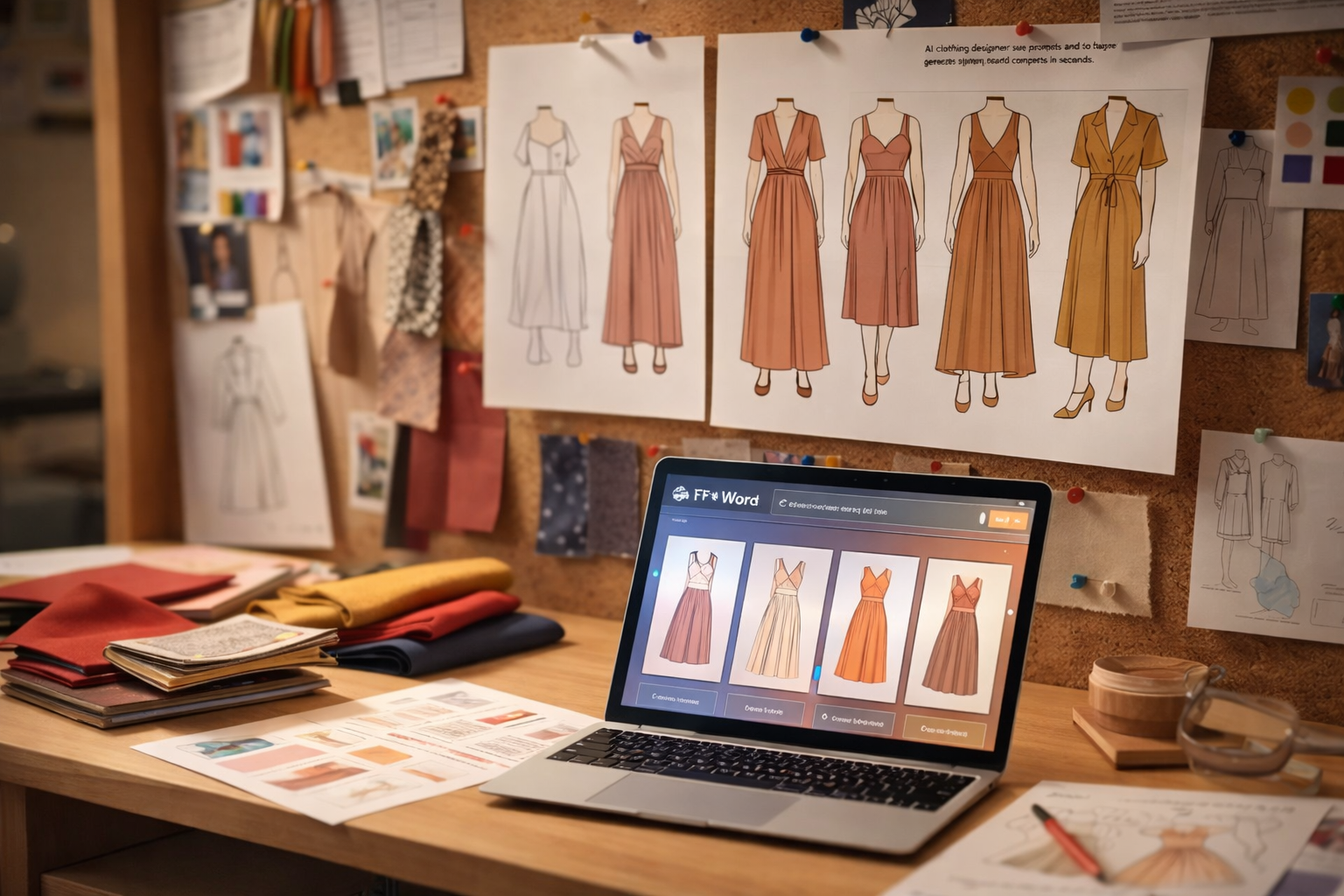
AI clothing designer tools are reshaping how fashion is imagined, created, and sold in 2025. Instead of starting from a blank sketchbook, designers can now use AI fashion design software to generate concepts, refine silhouettes, and test colorways in minutes. From independent creators to global brands, more people are experimenting with AI powered platforms, including newer tools like The F* Word, to speed up workflows, reduce costs, and explore creative directions more efficiently.
This shift matters because fashion is under pressure to move faster, become more sustainable, and respond to customers who expect personalization. AI generated clothing designs can react to trends more quickly, help reduce waste, and allow non-experts to experiment with professional looking outputs. Whether you are looking for the best AI clothing designer for your brand, an AI clothing designer free tool to explore ideas, or a more advanced AI fashion generator to support digital collections, understanding how this technology works has become increasingly important.
According to a 2025 report by McKinsey, 78 percent of fashion designers now rely on digital tools in their workflow. This highlights the growing role of AI across the industry. For broader context, readers can explore our AI in Fashion resources and established platforms such as Browzwear.
An AI clothing designer is a digital system that uses algorithms and machine learning to assist in designing garments, outfits, and collections. Rather than drawing every idea by hand, designers can provide prompts, reference images, or brand guidelines to an AI fashion designer and receive multiple visual concepts in return. These systems typically rely on image generation models, pattern recognition, and recommendation engines trained on large datasets of fashion imagery and product data.
Common use cases include generating new prints and silhouettes, refreshing existing styles, building mood boards, and creating AI generated clothing designs for lookbooks or marketing assets. Some tools can also suggest fabrics, trims, or color palettes based on trend insights. In most workflows, AI does not replace the designer. Instead, it acts as a fast ideation partner, while humans make final creative and strategic decisions.
Platforms such as Browzwear and Fashwell focus heavily on technical visualization and data driven insights. The F* Word, by comparison, places more emphasis on generative creativity and end to end visual exploration, particularly for early concepting and digital content creation.
In 2025, AI clothing designer online platforms range from lightweight apps for quick visuals to enterprise grade AI fashion design software integrated with production pipelines. Some tools specialize in 3D fit and simulation, while others focus on generative imagery, virtual fashion, or marketing assets. The best AI clothing designer depends on whether your priority is concept development, technical accuracy, or speed to market.
Free and freemium options like The F* Word make it easier to test an AI clothing designer free before committing to paid plans that unlock higher resolution outputs, commercial rights, and collaboration features. Advanced platforms often combine AI with 3D tools, fabric simulation, or workflow management, which are commonly used by established brands.
Most AI fashion generator platforms follow a similar process. Users typically begin by creating an account and selecting a category or template, such as dresses, streetwear, or full collections. Inputs may include text prompts, style references, images, or brand guidelines. The AI then generates several design options, usually as images or simple 3D representations.
From there, designers refine the outputs by adjusting colors, fabrics, silhouettes, or styling details. Some platforms allow exports to other design tools or formats for further development. Over time, users can adapt their prompts and workflows so the AI clothing designer aligns more closely with their aesthetic.
The F* Word fits naturally into this process, particularly for teams that want to move quickly from idea to visual asset. It is often used alongside other tools rather than instead of them.
AI clothing designers offer clear benefits, including faster ideation, lower sampling costs, and easier exploration across multiple styles and concepts. Teams can test more ideas before committing to physical samples, supporting more sustainable and informed decisions. For smaller brands and solo creators, AI clothing designer online tools can provide capabilities that previously required larger teams.
At the same time, challenges remain. Concerns around originality, copyright, and data privacy are still evolving. There is also a creative risk of over relying on default outputs, which can lead to similar looking designs if users do not actively curate and push concepts further.
A 2024 study by the Fashion Institute of Technology reported that brands using AI saw a 30 percent reduction in design time and a 25 percent increase in customer satisfaction. These gains suggest strong potential, provided AI is used thoughtfully and transparently.
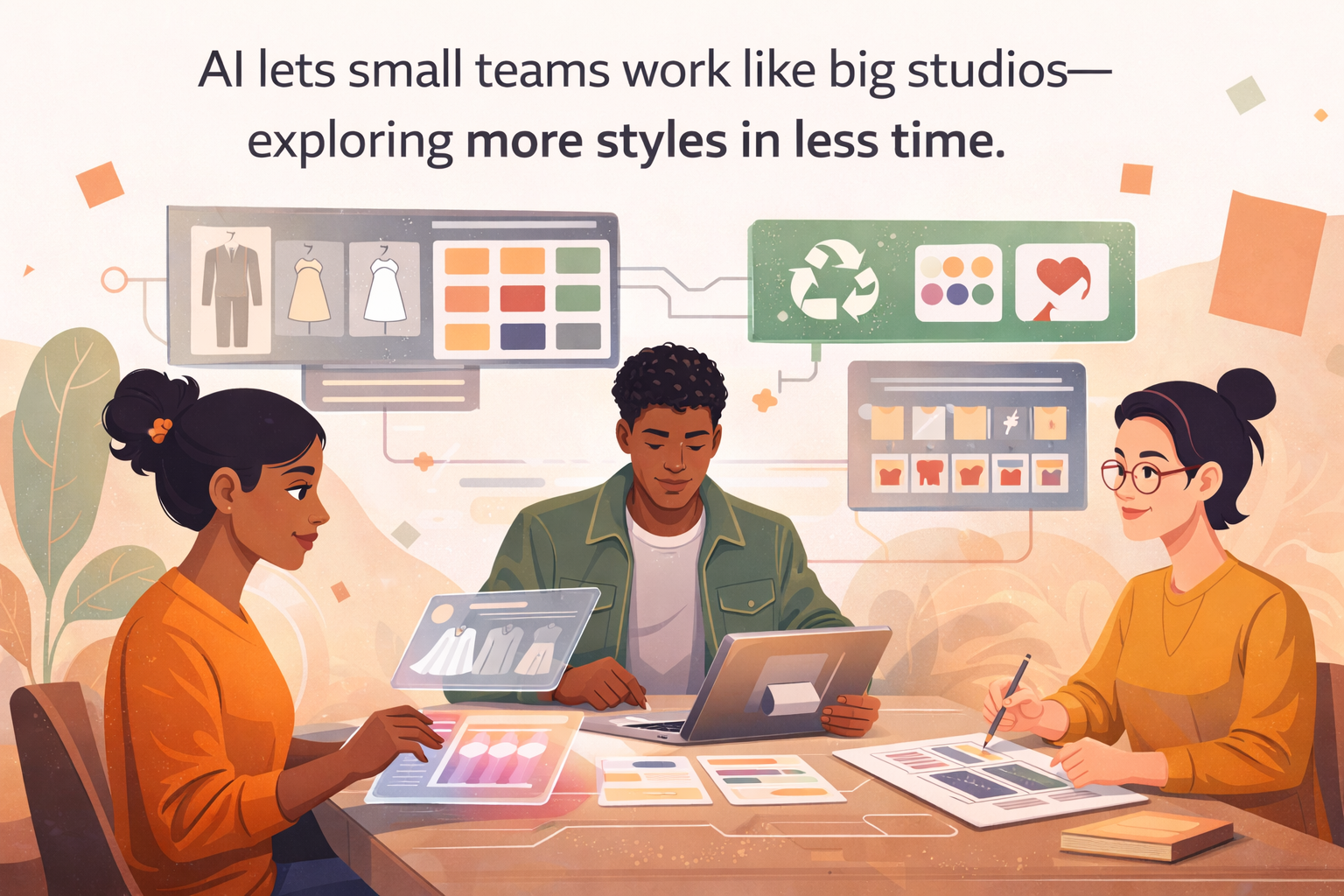
Looking ahead, AI fashion design is expected to integrate more deeply with 3D, AR, and VR technologies. Virtual try-ons, made to measure garments, and real time collaboration between designers and AI systems are likely to become more common. AI tools may also connect more closely with supply chain and merchandising data, helping teams make smarter decisions earlier in the design process.
Personalization is another key trend, including micro-collections, on demand design variations, and clearer attribution of human and AI contributions. Platforms like The F* Word are part of this shift, particularly in how they support rapid experimentation and digital first fashion workflows.
AI clothing designers are becoming everyday tools in fashion studios, startups, and creative teams. By combining fast, data assisted idea generation with human judgment and brand vision, these systems can support greater creativity, efficiency, and sustainability. Whether experimenting with an AI clothing designer free plan or integrating more advanced platforms into your workflow, learning how to work with AI is increasingly important.
Tools like The F Word*, alongside more established technical platforms, each play a role in the evolving fashion technology landscape. Brands that understand how to combine these tools effectively will be better positioned to adapt, innovate, and meet changing customer expectations.
For more insights on AI in fashion, visit our AI in Fashion page.
Related reads: AI in Fashion
101 People Reading our Newsletter Right Now!
