
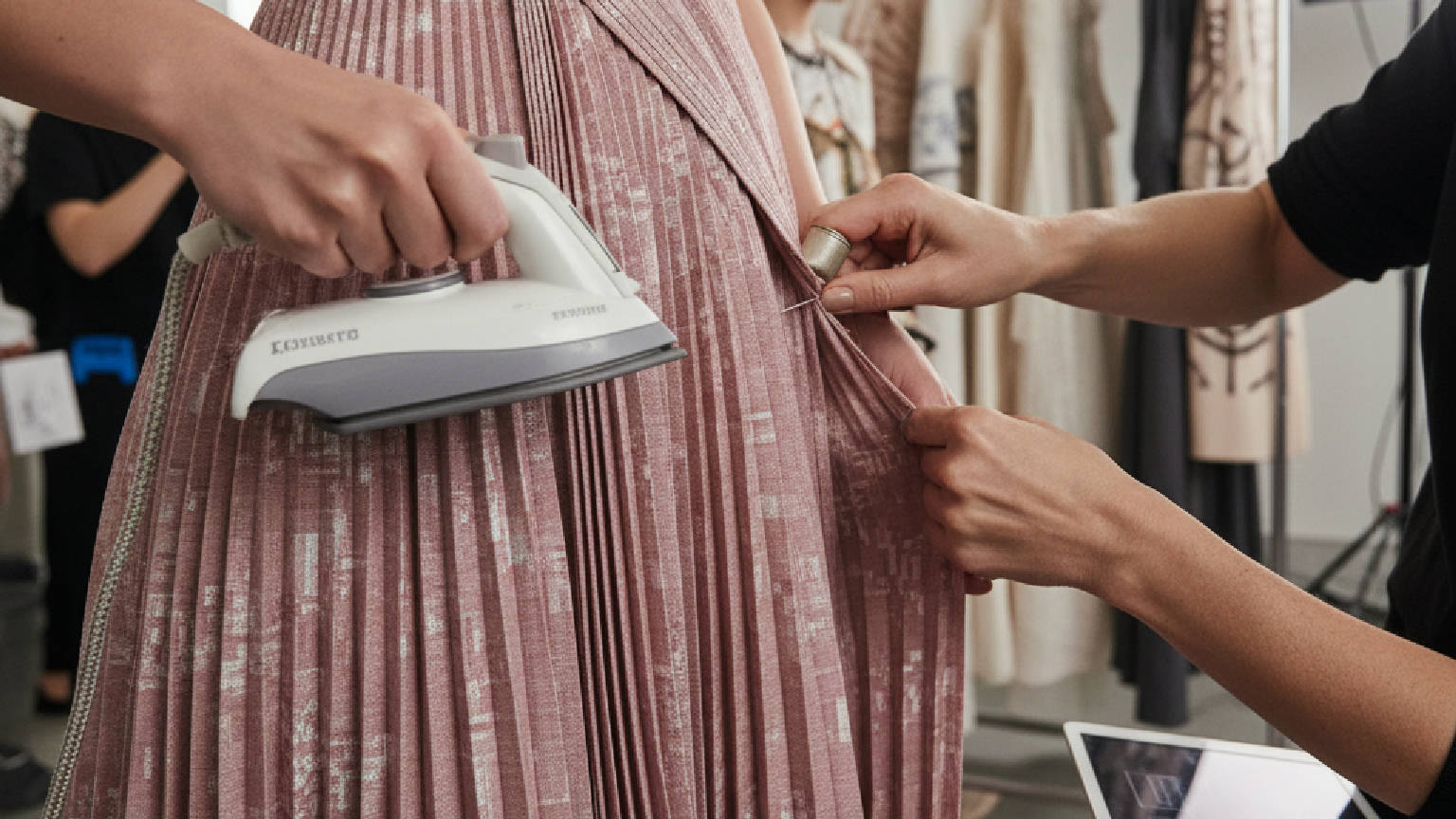
More than 95% of AI fashion design concepts generated by popular tools today will never become physical garments. While the internet is flooded with stunning, AI-generated lookbooks, these images represent a creative starting point, not a business solution. The fashion industry's core challenge has never been a lack of ideas. The real, costly bottleneck is the laborious path from a creative concept to a production-ready specification. The focus on generating endless visual options misses the point entirely. The true value of AI in fashion is not in creating more noise, but in building a clear, efficient, and data-driven signal from design intent to factory floor.
The current conversation around the AI fashion design generator is dangerously misleading for brands and merchandisers. It frames AI as a magical image creator, where a clever prompt instantly produces a novel design. This narrative appeals to our desire for creative novelty, but it ignores the operational realities of the apparel industry. An AI-generated image of a "deconstructed trench coat in Japanese denim with asymmetrical closures" is just a high-fidelity mood board image. It contains zero actionable data.
This focus on aesthetics creates several problems. First, it encourages a glut of unvetted ideas. Your designers can already generate hundreds of sketches. Generating thousands of AI images without a clear path to execution simply adds more noise to the front end of your process. Second, it creates a "handoff" problem. A designer hands an image to a technical designer, who then must start from scratch, painstakingly interpreting the visual data into concrete specifications. This is not innovation; it is the same old workflow with a fancier, more expensive first step. The process of translating a 2D image into a 3D product with correct fit, fabric behavior, and construction methods remains a manual, error-prone, and time-consuming task.
Finally, this framing completely decouples design from commercial viability. The AI image generator does not know your target margin, your supplier's capabilities, or the cost of the specified raw materials. It operates in a commercial vacuum. A merchandiser cannot use a.png file to build a costing sheet. Pursuing these concepts without integrated data from the start leads to expensive dead ends, killed samples, and blown development calendars. The industry needs to shift its focus from AI for inspiration to AI for execution.
Not all AI tools are created equal. The distinction between a concept-focused AI clothing design generator and a production-ready AI workflow platform is critical for any team evaluating new software. The former creates images; the latter creates the foundational assets for manufacturing. Understanding this difference is key to making a sound investment.
Table 1: Concept-Only AI Generators vs. Production-Ready AI Workflows

In-house designer? Make AI fashion design survive the factory.
The F* Word turns a real-time trend into a brand-aligned moodboard and a factory-readable tech pack. What you design is what the factory makes. Free to try.
A "production-ready" output is not a pretty picture. It is a set of integrated, highly-structured data that enables the physical creation of a garment. An effective AI workflow platform must address the core components of the product development lifecycle, moving far beyond simple image generation.
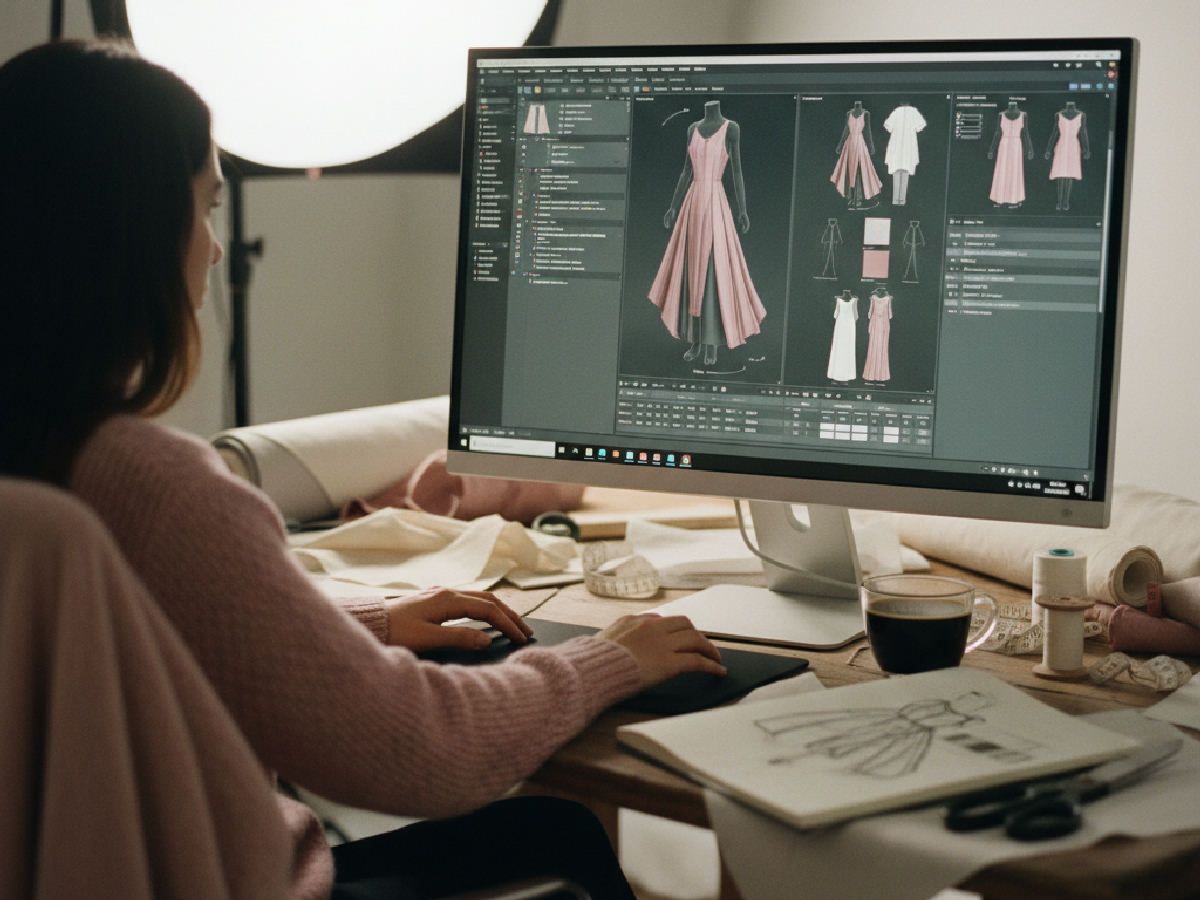
First is the technical specification. This is the blueprint of the garment. It involves translating a visual idea into precise measurements for every pattern piece, defining seam types, specifying stitch counts per inch, and detailing construction methods. A production AI must be able to take a design and, using a brand's established fit blocks, generate a near-complete technical drawing and points of measure (POM) chart. This is the single most time-consuming task for technical designers, and automating the initial 80% of it is a massive accelerator.
Next comes material and trim management. A design is inseparable from its materials. A production-ready AI does not just render a "cotton" texture. It connects to your brand's digital materials library. When a designer selects a "12 oz indigo denim," the system pulls the actual supplier, item number, cost per yard, width, and composition data. This ensures that from the very first step, the design is tethered to reality. The same applies to trims: zippers, buttons, and labels are not just visual elements but line items in a database with real costs and suppliers.
This data feeds directly into preliminary costing and the Bill of Materials (BOM). By understanding the pattern pieces and the specified material, the system can calculate an initial yield and material cost. By recognizing construction details like welt pockets or topstitching, it can estimate labor. This gives a merchandiser a viability check within minutes of the design's creation, not weeks later after a tech pack has been manually built and costed. This front-loads commercial decisions and prevents wasted effort on styles destined to be dropped for margin reasons.
Finally, a production-ready system functions as a collaborative hub. Product development is a team sport. Designers, merchandisers, pattern makers, and technical designers must work from a single source of truth. A workflow platform provides this. When a designer adjusts a sleeve length, the system automatically updates the POM chart and the 3D model, and notifies the merchandiser of any potential cost impact. This connected environment prevents the endless back-and-forth and version control errors that plague email and spreadsheet-based workflows. It is this integration that truly defines a professional AI solution for fashion design.
Evaluating AI tools requires a shift in mindset from creative exploration to operational efficiency. For founders and heads of design, adopting the right tool is a strategic decision that impacts your entire product pipeline. Use this framework to cut through the hype and make a choice that drives business results.
Adopting a production-oriented AI platform is not about replacing your team; it is about augmenting their expertise and removing administrative drag. Start small and targeted. Choose a single product category that is core to your business and has a well-understood development process. Onboarding your library of basic blocks, common materials, and standard construction details for this category is the first critical step.
The goal is to build a proprietary data asset. The AI becomes more valuable as it learns from your brand's specific DNA: your fits, your fabrics, your costs. Unlike a generic AI clothing design generator that pulls from public internet data, a workflow platform becomes a private, intelligent system trained on your business. Focus on data integrity from day one. By centralizing this information, you create a compounding advantage, enabling faster, more accurate, and more brand-aligned product development with every new season.
Our platform is designed to bridge the gap between creative vision and production reality. It is built for operators who measure success in weeks saved, samples reduced, and margins hit. If you are ready to move beyond pretty pictures and implement an AI workflow that impacts your bottom line, we can show you how. Start free at thefword.ai or book a demo.
Yes, image generators are excellent for initial mood boards and brainstorming the first 1% of an idea. However, their value is limited without a clear path to production. Think of them as a digital sketchbook, not a development tool. True workflow platforms often include this inspirational component but connect it directly to executable next steps.
Today, no AI can create a 100% perfect, factory-ready tech pack without human oversight. A production-grade AI system aims to generate a 70% to 80% complete draft. It handles the repetitive data entry, allowing your technical designer to focus on refinement, complex construction details, and quality control, saving them hours or even days of work per style.
Professional workflow platforms are designed as private, secure systems. You onboard and train the AI on your brand's specific assets, including graded fit blocks, your library of tested materials with supplier data, and historical cost information. This ensures the AI's outputs are aligned with your brand standards and supply chain, not generic public data.
An image generator offers a soft return on investment related to creative inspiration, which is difficult to measure. A production workflow tool delivers a hard, measurable ROI. It comes from reduced sampling costs, faster speed to market by weeks or months, lower error rates in factory communication, and improved product margins from early and accurate costing.
Related: how to launch fashion brand with ai founder methodology 2026
Get The F* Word workflow insights in your inbox.