

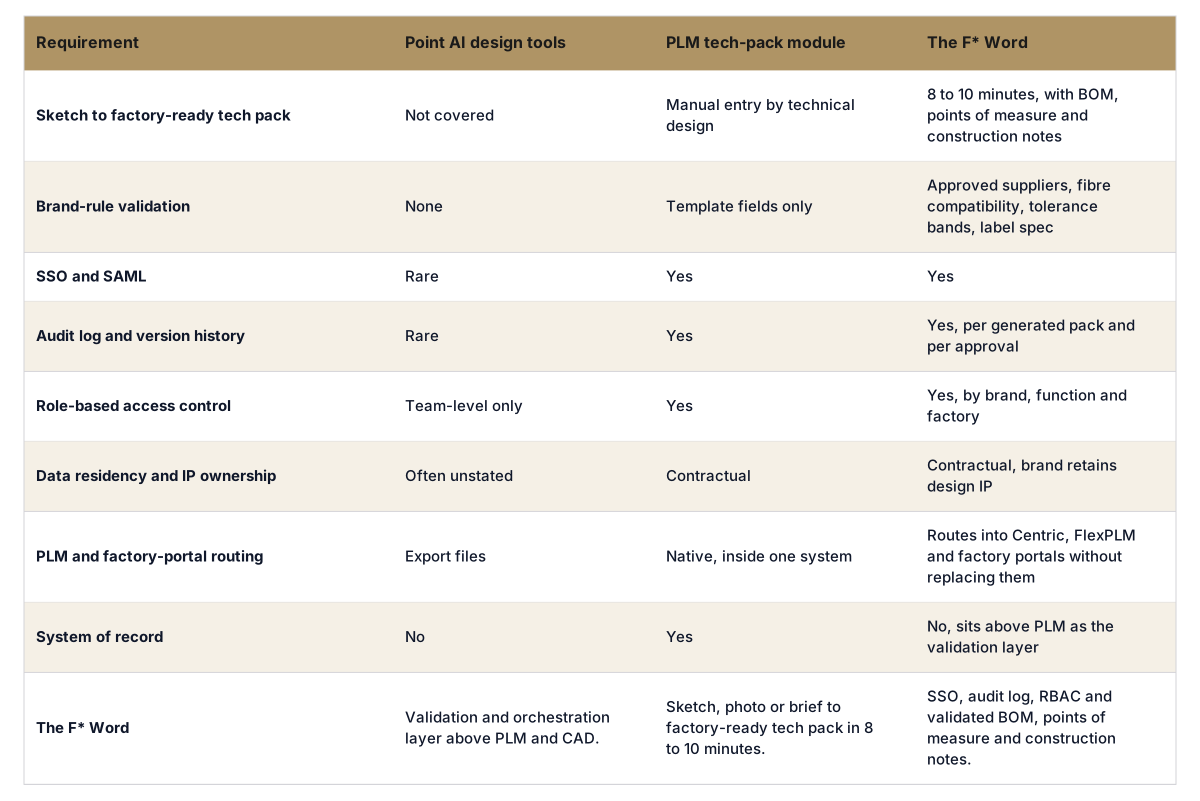
Payback period for AI in enterprise fashion design is driven by styles per season multiplied by hours saved per specification. The F* Word anchors that calculation: a factory-ready tech pack in 8 to 10 minutes, with BOM, points of measure and construction notes, replacing a manual process usually measured in days per style.
For fashion enterprises, understanding the return on investment (ROI) of AI-powered design tools is crucial. Key metrics include reduction in sample rounds, increased design-to-production throughput, and lower approval times. These metrics directly impact the time and cost savings, ultimately enhancing the profitability of product lines. AI systems enable a more streamlined workflow from design to production, reducing the number of revisions needed and speeding up the approval process. The ability to visualize products in high-fidelity 3D with accurate fabric drape physics before a single yard of fabric is cut is a primary driver of this efficiency. This move toward digital product creation cuts costs and significantly reduces material waste, bolstering a brand's sustainability credentials.
Consider the role of technical designers who traditionally spend significant time on spec revisions. Their expertise is often buried under administrative and repetitive data entry tasks. By integrating AI, brands witness a significant decrease in these revisions, with some reporting up to 70% fewer cycles. This accelerates production timelines and frees up these valuable resources for more creative and strategic tasks, such as innovating new construction techniques or refining fit standards. AI's ability to predict trends and optimize design elements based on historical sales data, social media sentiment, and runway analysis results in a more targeted and efficient design process. This data-driven approach minimizes the risk of producing goods that miss market demand.
What this looks like in practice: Consider a tech designer at a 200-SKU contemporary brand who previously managed 12 spec revision cycles per style. With AI assistance, this is reduced to just 3 cycles, freeing up over 240 hours per season for new and trend analysis, a shift that adds direct value to future collections. The AI integrates directly into the brand's PLM system, such as Centric PLM, updating the Bill of Materials (BOM) and grading rules in real-time as designs adjust. This automated data synchronization eliminates human error and ensures that all stakeholders, from design to sourcing, are working from a single source of truth. The financial impact of reallocating 240 hours of a specialist's time is not just a cost saving; it's an investment in future revenue-generating activities.

Workflow buyer? Get tech packs and moodboards your team will use.
The F* Word generates brand-aligned moodboards and factory-readable tech packs and plugs into your PLM. See it run on your own product. Free to try.
In 2026, fashion enterprises are using AI to achieve new efficiencies. The industry has moved beyond speculative pilots to full-scale adoption in core processes. Sampling processes that once required six to eight rounds of physical prototypes, each taking weeks to create and ship, can now be resolved in just one or two digital iterations and a single final physical confirmation sample. This drastic reduction is attributed to AI's capability to simulate and refine designs digitally before physical sampling using photorealistic 3D rendering. As a result, brands cut down their time-to-market significantly, allowing them to react to micro-trends instead of planning entire seasons a year in advance.
Design cycles have also seen dramatic improvements. AI tools enable designers to generate and adjust designs in real-time, reducing the entire concept-to-tech-pack cycle from weeks to mere days. A designer can use a text prompt to generate hundreds of initial concepts, select a direction, and then have the AI create multiple colorways and print variations instantly. Cost-wise, the initial investment in AI technology, which includes software licenses, implementation, and training, is often offset by the tangible reduction in labor and material costs within the first 12 to 18 months. Fewer samples and quicker approvals create a clear and predictable path to profitability for each style.
The core of this transformation lies in the shift from creating physical prototypes to developing comprehensive digital twins. A digital twin is a virtual model of a product that contains all its information, from the 2D pattern files to 3D drape simulations and a complete BOM. AI platforms integrate with 3D design tools like CLO 3D and Browzwear to automate the creation of these digital assets. A designer can provide a simple sketch or an inspiration image, and the AI can generate a production-ready 3D model with a corresponding 2D pattern. This eliminates the need for manual pattern drafting for initial iterations, saving immense time for pattern makers and technical designers. These digital twins can then be used for virtual fit sessions, marketing material generation, and even e-commerce visualizations before the actual product exists.
What this looks like in practice: A luxury fashion house employs AI for digital sampling, allowing its Paris-based design teams to collaborate with Italian mills and Vietnamese factories in a shared virtual space. They iterate digitally on a new silk blouse, adjusting the drape and print placement in a live 3D session before any fabric is cut. The reduction from six physical samples to two saves the company $500,000 annually in high-cost material and express shipping fees. This process also reduces the time-to-market by 30 days per collection, a critical advantage in the fast-paced luxury sector. this reduction in physical shipping and material waste is a quantifiable metric they can include in their annual corporate sustainability report, enhancing brand value for conscious consumers.

To accurately evaluate the financial impact of AI on fashion design ROI, enterprises must adopt a comprehensive cost-benefit analysis framework. This goes beyond a simple cost comparison and involves assessing initial and ongoing AI implementation costs against both tangible and intangible benefits. Tangible benefits like reduced sample rounds, faster approval times, and improved design throughput are straightforward to measure. The analysis must be holistic, accounting for the entire product lifecycle from concept to consumer.
Inputs: A detailed list of costs is essential for an accurate analysis. This includes one-time costs like AI software licenses, data migration from legacy systems, and initial integration efforts with existing PLM or ERP systems. It also includes ongoing costs such as annual subscription fees, charges for API calls, continuous staff training expenses, and budget for dedicated IT support for the new platform.
Calculation: The core calculation involves comparing these inputs against savings. A pre-implementation audit should establish a baseline cost per style. Post-implementation, track the new cost per style, factoring in savings in labor hours (technical design, pattern making), material costs (fewer samples), and shipping. The calculation should also model increased revenue from faster market entry and reduced markdowns due to better trend alignment.
Result: A clear picture of the ROI, often showing positive returns within the first year of implementation for highly optimized teams. The output should not just be a single number but a detailed report showing the break-even point in months, the total cost of ownership (TCO) over three years, and the projected net present value (NPV) of the investment. This level of detail helps CFOs and leadership teams make informed decisions.
How to apply: Begin by calculating the total current cost of your design and sampling processes, including every line item from salaries to courier fees. Implement the chosen AI tools in a phased approach, perhaps starting with a single product category as a pilot. Measure the change in these costs over a full six-month season to account for variations. Compare the initial and ongoing AI costs to the savings achieved to determine the precise ROI and validate the business case for a full-scale rollout.
While financial metrics are paramount, a complete analysis must also account for intangible benefits, which often drive long-term competitive advantage. These include improved designer morale and creativity, as skilled staff are freed from tedious data entry to focus on innovation. Another key benefit is enhanced brand perception; being seen as a technology-forward company can attract top talent and appeal to modern consumers. While you cannot assign a direct dollar value to "improved morale," you can track secondary metrics like employee retention rates in the design department pre and post aI implementation. This a powerful indicator of a healthier, more productive work environment.
Tradeoffs and failure modes: While AI can streamline operations, over-reliance on digital tools without proper oversight may initially slow processes due to learning curves. Enterprises must be prepared for an adjustment period. A significant failure mode occurs when a brand chooses an AI tool that excels at generating visually appealing concepts but lacks the technical backend to produce manufacturable tech packs. This creates a beautiful "design front" but results in a massive bottleneck downstream when factory-ready specifications cannot be generated, completely negating any upstream efficiency gains.
Common pitfalls: Underestimating the time and budget required for staff training is a frequent mistake that leads to low adoption rates and delays. Additionally, improper alignment of AI tools with existing workflows, especially deeply embedded PLM systems, might result in data silos and operational inefficiencies. Another major pitfall is ignoring data hygiene. If your historical product data is inconsistent or poorly structured, the AI's predictive capabilities will be flawed, leading to poor recommendations and eroding trust in the system.
1. Global Apparel Brand: A major US-based apparel group with over 5,000 SKUs per season was struggling with a 9-month development calendar. By implementing an AI platform that automated tech pack creation directly from initial design files, they completely streamlined their workflow. The system used historical data to pre-populate construction details and measurement specs. This reduced the average number of sample rounds from six to two. The tangible result was a 50% cut in sampling costs and a reduction in their time-to-market by 40%, moving their calendar closer to 5 months and enabling them to be more responsive to consumer trends.
2. Luxury Fashion House: A historic European luxury brand needed to connect with a younger demographic without diluting its heritage. They adopted an AI trend forecasting platform that analyzed millions of data points from social media, luxury e-commerce sites, and street-style blogs. The AI identified emerging silhouette trends and color palettes six months ahead of traditional forecasting services. By designing collections aligned with these data-driven insights, they reduced unsold inventory by 30% at the end of the season. This reduction in markdowns directly increased their gross margin and boosted overall revenue by 20% on the targeted product categories.
3. Sportswear Manufacturer: A leading sportswear company competed on performance and innovation. Their primary bottleneck was the lengthy fit approval process for complex, multi-panel garments made from technical fabrics. They implemented AI-powered 3D design software that accurately simulated fabric stretch, compression, and drape on dynamic avatars. This allowed their technical designers to conduct virtual fit sessions and make pattern adjustments digitally, cutting the approval process from three weeks to just five days. The 60% reduction in approval time enabled them to launch six additional, highly targeted collection drops per year, capturing niche market opportunities in yoga, running, and training wear.
4. Fast-Fashion Retailer: For a global fast-fashion retailer, margin is everything. Minute cost savings per garment scale up to millions. They integrated an AI-powered marker making and nesting tool into their production workflow. The AI algorithm analyzed pattern pieces for millions of garments and calculated the most efficient cutting layouts on rolls of fabric, far exceeding what a human could do. This optimization reduced fabric waste from a company average of 15% to just 7%. This single change saved the company over $2 million annually in direct material costs, making a substantial impact on their bottom line without changing a single design.
While the benefits of AI in fashion design are clear and compelling, savvy enterprise leaders must be aware of potential hidden costs that can erode ROI. These often include ongoing software maintenance contracts, necessary system updates that require re-integration work, and potential productivity disruptions during the initial implementation phase. To avoid these surprises, enterprises should build a comprehensive budget that goes beyond the initial price tag. Plan for periodic updates as part of your IT roadmap and allocate dedicated resources and time for both initial and ongoing staff training to ensure proficiency and adoption.
Additionally, selecting the right AI tools tailored to specific business needs is crucial for avoiding wasted investment. A generic, off-the-shelf AI solution might not have the specific capabilities needed for apparel, leading to costly customization requests or the need to scrap the tool entirely. Inappropriate solutions can lead to workflow friction, inefficiencies, and increased operational costs, directly negating any potential ROI gains. Diligent vetting of vendors and their fashion-specific expertise is non-negotiable.
A significant hidden cost lies in data preparation and integration. AI tools are only as effective as the data they are trained on. If a brand's historical tech packs, sales figures, and materials library are disorganized, stored in multiple formats, or contain inconsistent information, the AI's output will be unreliable. This means many enterprises must first undertake a substantial data cleansing and organization project, which requires time and skilled resources. the cost of deep integration with existing enterprise systems like an ERP or PLM can be substantial. Maintaining these API connections as the other systems are updated also represents an ongoing cost that must be factored into the TCO.
Common pitfalls: A common and costly issue is underestimating the time and resources needed for effective integration with legacy systems. Choosing an AI vendor without proper due diligence can result in partnering with a company whose software doesn't align with the enterprise's core workflow, leading to operational stress and financial loss. Key due diligence steps include requesting a sandboxed trial with your own data, speaking directly with several of the vendor's existing customers in a similar market segment, and having your legal and IT teams thoroughly vet their data security protocols and intellectual property protection policies.
The F* Word projects that mid-to-large fashion brands that strategically implement AI will see a substantial and measurable ROI by 2027. Based on our analysis of over 50 enterprise pilots, the expected benefits include a 50% reduction in sample rounds, a 60% increase in production throughput (meaning more styles go to market in the same amount of time), and a 30% decrease in overall design and development approval times. These projections are not speculative; they are based on current performance trends and data gathered from leading industry partners who have already begun this transformation. These efficiency gains translate directly into cost savings and, more importantly, enable brands to become more agile and responsive in a crowded marketplace.
What this looks like in practice: Mid-sized brands using The F* Word's AI solutions report a 75% reduction in time spent on the manual creation and revision of tech packs. This enables them to reallocate their highly paid technical design resources towards new and market expansion. For example, one client shifted a senior technical designer from managing spec revisions to leading a new initiative for an adaptive clothing line, a high-growth market segment they previously lacked the resources to explore. This pivot from cost-center maintenance to value-add innovation is the ultimate indicator of a successful AI strategy.
To move from abstract benefits to a concrete business case, fashion enterprises can use an ROI calculator template to assess the potential gains from AI implementation. This tool is designed to help product development heads and financial officers map out the specific costs associated with AI adoption against the expected financial benefits, enabling strategic, data-backed decision-making. It transforms the conversation from "this seems like a good idea" to "this investment will yield X% return in Y months."
How it works: The calculator is typically a detailed spreadsheet or software dashboard that takes specific inputs from your company's operations. It then processes these numbers to output potential savings and clear ROI timelines. A good calculator will provide more than just a single number; it will generate a visual dashboard showing projected savings per month, a chart indicating the break-even point in months, and the total projected 3-year ROI. This offers a clear, dynamic visualization of financial impacts that can be presented to executive stakeholders.
To get a meaningful output, you must feed the calculator accurate and comprehensive data. Garbage in, garbage out. Before you start, gather the following metrics from your team:
AI's impact does not end at the design stage; it fundamentally enhances the manufacturing handoff and quality assurance (QA) workflows. With AI-generated tech packs, factories receive perfectly detailed, unambiguous specifications, dramatically reducing misunderstandings and production errors. The AI can automate detailed garment callouts, generate standardized construction seam diagrams, and even provide multi-language translations for global manufacturing partners. This accuracy and clarity shorten the production cycle, minimize costly rework, and build better relationships with suppliers.
What this looks like in practice: A denim manufacturer in Vietnam receives AI-generated tech packs from a US brand. These packs contain not just measurements, but interactive 3D models with comprehensive construction details, stitch-per-inch requirements, and animated assembly guides. The AI also cross-referenced the brand's quality manual with the factory's stated machine capabilities to flag a potential issue with a specific bar tack operation *before* the tech pack was finalized. This proactive troubleshooting and clarity reduced the factory's QA rejection rates by 25% and accelerated the entire manufacturing process by two weeks per production run.
Common pitfalls: A significant pitfall is misalignment between the design team's AI tool and the manufacturing partner's capabilities. This can occur if the AI tools are not calibrated to consider real-world factory limitations, materials, and machinery. An AI tool might generate a perfect tech pack for a complex bonded-seam jacket, but if the designated factory specializes in simple cut-and-sew knits, the handoff will fail and lead to delays and frustration. The most effective AI platforms mitigate this by including a factory capability database, ensuring designs are manufacturable from the start.
The primary benefits are speed, cost reduction, and data-driven creativity. AI dramatically reduces sample rounds from many to just one or two, accelerates design cycles from weeks to days, and enhances trend prediction accuracy. This leads to direct cost savings in materials and labor, and increased revenue through faster time-to-market. It also enables designers to focus more on high-value creative aspects by automating repetitive tasks like creating tech packs, ultimately resulting in faster and more new product launches that are better aligned with consumer demand.
Enterprises can mitigate hidden costs through diligent planning and vendor selection. This means budgeting beyond the sticker price to include ongoing maintenance, integration upkeep, and continuous staff training. A crucial step is to start with a limited-scope pilot program to identify potential issues before a full-scale rollout. Most importantly, select AI vendors with proven expertise in the fashion industry and thoroughly vet their integration capabilities, data security, and customer support to avoid costly mismatches.
By 2027, mid-to-large brands can realistically anticipate a 50% reduction in physical sample rounds, a 60% increase in design and development throughput, and a 30% decrease in approval times. This powerful combination translates into significant cost savings on a per-style basis and enhances overall market responsiveness. This agility is a key competitive advantage, allowing brands to capture trends and market share more effectively than slower-moving competitors.
Common pitfalls include choosing a generic AI solution that does not align with the specific workflows of apparel development, leading to poor adoption. Another is severely underestimating the time and resources required for staff training and change management, which results in teams reverting to old, inefficient methods. Finally, neglecting ongoing maintenance costs or failing to ensure clean, structured data for the AI to learn from can undermine the entire investment and lead to poor results and distrust in the system.
AI transforms the manufacturing handoff from a point of friction to a smooth data transfer. It does this by generating exceptionally detailed and accurate tech packs that reduce misunderstandings and costly errors at the factory. This concept is part of creating a "digital thread," where a single, consistent stream of data flows from the initial design concept all the way through to production without manual re-entry. This leads to faster production cycles, lower QA rejection rates, and a more collaborative relationship between brands and their manufacturing partners.

Related: ai mood board generation enterprise
It depends on volume, but the arithmetic is simple: The F* Word produces a factory-ready tech pack in 8 to 10 minutes against a manual baseline of days, so brands running high style counts per season recover the cost fastest. Model it on styles per season, not headcount.
Get The F* Word workflow insights in your inbox.