.png)
English
.png)
An ai fashion designer assistant is no longer a sci‑fi concept reserved for luxury megabrands. In the last few years, accessible fashion design AI tools have started showing up in independent studios, remote freelancer workflows, and even fashion schools. These assistants use a mix of machine learning, computer vision, and large fashion datasets to support everything from early mood boards to final production decisions. They can analyze past collections, runway shows, social media trends, and sales data to suggest silhouettes, color palettes, and materials that are more likely to resonate with specific audiences.
Industry data shows why this shift is happening. McKinsey’s State of Fashion report (2024) found that brands investing in AI design and merchandising capabilities achieved up to 50% faster time‑to‑market and 10–15% improvements in sell‑through on new collections compared with peers that relied only on traditional processes. At the same time, a 2023 survey by the British Fashion Council reported that 7 in 10 emerging designers were already experimenting with at least one ai fashion design tool for ideation or trend research. The result is a new creative norm where designers sketch, drape, and test digitally with an AI partner at their side.
As fashion becomes more digital, fast‑paced, and data‑driven, the idea of an AI assistant in the design studio is moving from novelty to necessity. Designers can offload repetitive, technical, or analytical work to an AI system and focus more on storytelling, craftsmanship, and brand identity. At the same time, brands can use AI design assistants to improve sustainability, reduce sampling waste, and personalize products at scale. Early adopters report cutting physical sample rounds by 20–30% thanks to accurate 3D previews and virtual fit tests (Fashion for Good, 2023), which has a direct environmental and cost impact.
In this article, we’ll outline what an AI Fashion Designer Assistant is, how it fits into the workflow, the main benefits, and how to get started. We’ll also touch on ethics and best practices so that AI for fashion designers remains a tool that enhances, rather than replaces, human creativity. For a broader primer on intelligent tools in the industry, you can also explore our in‑depth guide to the AI Fashion Designer landscape.
An AI Fashion Designer Assistant is a software tool that helps with the fashion design process using artificial intelligence. It combines technologies like trend analysis, image generation, and pattern recognition to support designers from concept to collection. Instead of manually searching through thousands of references, the designer can prompt the AI with a theme, target audience, or season, and get instant visual and textual suggestions. In practice, this looks like typing a prompt such as “summer streetwear capsule for Gen Z, oversized tailoring, coastal color story” into an ai fashion designer assistant online dashboard and receiving dozens of looks, colorways, and fabric ideas in seconds.
These tools are typically trained on large datasets of runway images, lookbooks, ecommerce catalogs, and sometimes proprietary brand data. Based on this, they can propose new looks, recommend compatible fabrics, suggest color combinations, and even predict which designs are most likely to sell. Some assistants plug directly into 2D/3D design software or PLM systems, creating a connected pipeline from idea to production. For instance, a designer might generate silhouettes in an AI sketch tool, send shortlisted designs into CLO 3D for draping, and then export tech packs for manufacturing—without redrawing anything from scratch.
In practical terms, the AI assistant becomes a smart collaborator: it doesn’t make final creative decisions, but it can generate options, challenge assumptions, and surface trends that might otherwise be missed. This makes it relevant not only for luxury houses but also for indie labels, DTC brands, and even student designers. Many ai fashion designer assistant free tiers give emerging designers limited credits or watermarked exports so they can learn the workflow before committing to paid plans, similar to how creative communities adopted freemium graphic design tools.
On the market today, you’ll find a spectrum of solutions: pure ai fashion design tools that focus on generating sketches and prints; broader product‑lifecycle platforms that embed AI into trend forecasting and assortment planning; and niche apps for ai clothing design that specialize in categories like sneakers or athleisure. For deeper context on how these systems work, see this industry breakdown of AI in Fashion Design, which explains how computer vision, recommendation engines, and generative models are being blended in current tools.
The most obvious benefit of an AI Fashion Designer Assistant is time savings. Tasks like researching trends, compiling inspiration boards, testing colorways, or adjusting minor pattern details can be handled or accelerated by AI. This reduces design cycle time and lets teams react faster to shifting market demand. Internally, this supports agile or drop‑based release calendars rather than long static seasons—critical for social‑first brands that want to respond to viral moments within weeks, not months.
Time savings quickly convert into measurable business value. A European streetwear label that piloted a fashion design AI assistant across two seasons reported a 35% reduction in time spent on trend research and concept development, plus a 12% increase in full‑price sell‑through on AI‑supported capsules, compared with prior collections. While results will vary, case studies like this—summarized in recent AI in Fashion Design reports—illustrate how even small teams can punch above their weight with the right digital tools.
AI assistants also help designers make more informed decisions. By combining design suggestions with sales data, customer reviews, and social metrics, the tool can highlight which styles are under‑ or over‑performing. This supports better assortment planning, more accurate demand forecasts, and fewer dead‑stock items. From a sustainability angle, this can translate into smaller, smarter runs and less waste. The Ellen MacArthur Foundation has estimated that over 30% of garments produced globally are never sold at full price; even a modest reduction in that figure through better forecasting has a huge environmental and financial upside.
Personalization is another major advantage. AI can help create capsule collections for specific regions, micro‑communities, or even individual customers by analyzing their preferences and purchase history. For ecommerce brands, the same system that assists designers can also power personalized product recommendations and styling suggestions. Imagine a customer who frequently buys wide‑leg trousers and muted palettes: the ai fashion assistant can surface tailored looks for them, while simultaneously feeding those insights back into the design studio so next season’s cuts and color stories align with real demand.
AI also supports sustainability and sampling reduction. Virtual prototyping and 3D fit allow brands to test silhouettes digitally before committing to physical samples. A mid‑size womenswear brand featured in a 2023 Fashion for Good case study cut physical samples by 28% after implementing a 3D‑enabled AI design pipeline, saving both fabric and transportation emissions. For more on this angle, see our resources on sustainable design and how an ai fashion designer strategy can reduce overproduction.
An AI Fashion Designer Assistant can plug into multiple points in the fashion workflow. At the inspiration stage, designers might use generative AI to explore silhouettes, textures, or themes based on a short creative brief. The system can generate dozens of variations, which the designer then curates and refines. This is especially useful for pre‑collection ideation or when exploring a new category, such as moving from casualwear into performance gear or launching a footwear line for the first time.
During design development, the assistant can help test different colorways, materials, or trims, and quickly visualize alternatives. In some setups, the AI connects to 3D design tools so designers can see how garments drape or move on virtual models. Later, as tech packs and patterns are finalized, AI can flag inconsistencies, suggest grading adjustments, or optimize layouts to reduce fabric waste. A typical workflow might look like this:
1. Research & moodboard. The designer enters a high‑level direction into the best ai fashion designer assistant platform (season, customer profile, price point). The system surfaces relevant runway looks, street‑style photos, and color trend reports.
2. Concept generation. Using text‑to‑image or sketch‑to‑image features, the assistant proposes silhouettes and outfit combinations. Designers pin favorites into digital moodboards for internal reviews.
3. 3D prototyping. Shortlisted concepts are pushed into 3D tools. Here, fashion design AI helps refine fit, fabric behavior, and styling details, reducing the need for early physical samples.
4. Tech packs & production. The assistant auto‑fills bills of materials, measurements, and color codes where possible, and flags missing information before handoff to factories.
5. Launch & feedback loop. Once products are live, the same AI stack analyzes sell‑through, returns, and social buzz, feeding insights back into the next design cycle.
Visualizing this as a loop—brief → AI concepts → designer curation → 3D sampling → production → data feedback—helps teams see where internal tools or services can plug in. If you offer AI trend dashboards, virtual fitting, or data‑driven merchandising, each module can be linked contextually from this workflow narrative.
To illustrate the assistant in action, consider the following moment in the process:
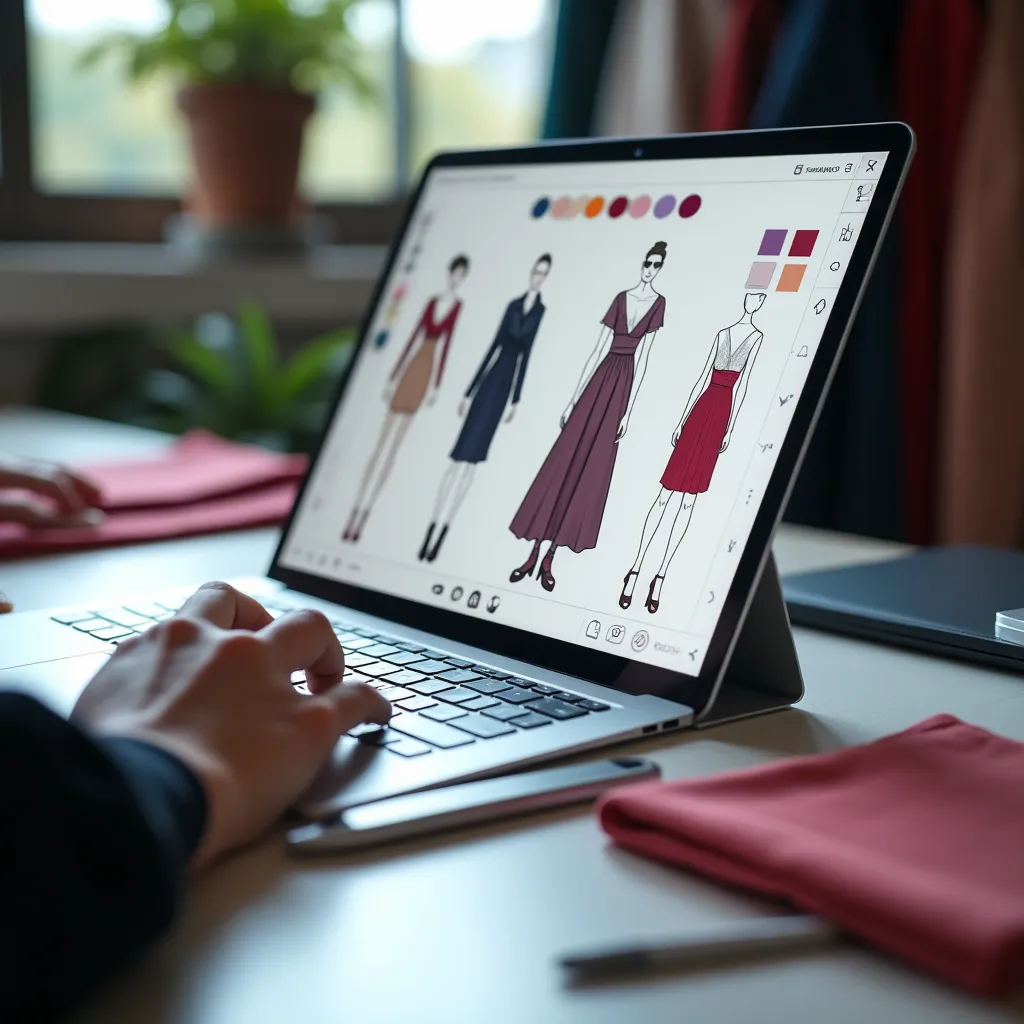
Adopting an AI assistant doesn’t require replacing your entire design process overnight. Most brands start with a pilot focused on one or two use cases, such as trend research or concept generation. The first step is choosing a platform: some tools are built for enterprise fashion houses, while others target small studios or freelancers with simpler interfaces and subscription pricing. Reading an in‑depth ai fashion designer assistant review can help you quickly compare strengths and limitations across tools.
1. Clarify your goals. Decide whether you want to speed up research, cut samples, test more ideas, or all three. Clear goals help you choose the right ai fashion design tool and measure impact.
2. Shortlist platforms. Compare 3–5 tools based on features (generative design, 3D, analytics), integrations (Adobe Illustrator, CLO 3D, PLM, ecommerce), ease of use, and pricing.
3. Prepare your assets. Gather past collections, line sheets, fit blocks, brand guidelines, and color libraries. Uploading these into the assistant ensures the system reflects your brand DNA instead of generic internet trends.
4. Define pilot scope. Choose one product category and one season. Assign a small cross‑functional team (design, merchandising, maybe production) and set a clear timeline—often 8–12 weeks—for your initial test.
5. Run structured experiments. Encourage designers to test different prompt styles and workflows. For example, start each collection with 20–30 AI‑generated options and track how many reach sample stage versus fully manual concepts.
6. Measure impact. Track metrics like time saved in design, reduction in sample rounds, improved sell‑through, and speed of response to new trends. Even small percentage gains compound over multiple seasons.
Pricing varies widely. Some ai fashion designer assistant online tools offer generous free tiers aimed at students and emerging designers, with limited resolutions or export formats. Mid‑range SaaS platforms might charge a monthly seat fee, while enterprise solutions are typically priced via annual contracts that bundle design, merchandising, and data modules. When comparing, look beyond list price to onboarding support, training, and roadmap alignment with your long‑term needs.
While AI Fashion Designer Assistants offer clear benefits, they also raise questions. One concern is originality: if a model is trained on existing fashion imagery, how do brands ensure that outputs are not too derivative or close to another designer’s IP? Clear governance, human review, and legal checks are essential. Some brands now include explicit AI clauses in their creative guidelines and review processes, especially when using AI‑generated prints or graphics at scale.
Another issue is bias: training data that skews toward certain body types or cultural aesthetics can limit inclusivity in the designs AI proposes. Left unchecked, an assistant might consistently suggest narrow size ranges, Eurocentric beauty standards, or culturally insensitive motifs. Ethical frameworks such as the OECD AI Principles (2019) emphasize transparency, diversity in training data, and human oversight as best practices.
There are also operational challenges. Designers may initially resist tools that feel like creative “black boxes,” and IT teams must ensure data security and compliance. To address this, best practice is to treat the AI assistant as a collaborator, not an authority. Designers remain in control, using AI suggestions as sparks rather than final answers. Internal training sessions, side‑by‑side comparisons of AI‑assisted and fully manual designs, and open conversations about fears and expectations all help build trust.
On the positive side, AI can help brands design more inclusive and accessible collections by explicitly targeting diverse body types, abilities, and cultural contexts when configuring training data and prompts. For example, one global denim brand used an AI assistant to analyze fit feedback across millions of customers and discovered consistent issues for petite plus‑size shoppers. The resulting pattern adjustments and expanded size runs led to a reported 18% reduction in returns in that segment over two seasons. This is a powerful example of AI supporting—not undermining—equity in fashion.
AI Fashion Designer Assistants are reshaping how fashion is imagined, developed, and delivered. By combining data, automation, and generative capabilities, they free designers from repetitive tasks and give brands a clearer view of what customers actually want. Used well, these tools can shorten design cycles, increase hit rates, and support more sustainable and inclusive collections. Early adopters are already using ai for fashion designers to test hundreds of variations virtually before a single sample is cut.
However, the most successful implementations keep humans firmly at the center. The AI assistant is there to extend the designer’s reach, not replace their vision. Brands that start small, stay transparent, and build thoughtful workflows will be best positioned to turn AI design support into a long‑term competitive advantage. Balancing efficiency with originality, and automation with ethics, is key.
• AI assistants accelerate research, ideation, and prototyping while keeping human designers in control.
• Data‑driven feedback loops improve assortment planning, reduce waste, and support better sell‑through.
• Personalization becomes scalable, enabling micro‑collections and customer‑level styling recommendations.
• Ethical and inclusive configuration of tools is essential to avoid IP issues and bias.
If you’re ready to explore how an AI Fashion Designer Assistant can fit into your workflow, start by mapping one pilot use case and testing a small set of tools. For a broader overview of the technology and hands‑on demos, visit our AI Fashion Designer hub and book a guided walk‑through with our team.
Yes. Many platforms are designed with non‑technical users in mind and offer templates, tutorials, and drag‑and‑drop interfaces. Students and emerging designers can start with free or low‑cost plans to learn the basics before integrating AI into professional workflows.
Current tools are best understood as collaborators rather than replacements. They excel at pattern recognition, rapid iteration, and data analysis, while humans still lead on storytelling, cultural sensitivity, and brand vision. Most experts expect hybrid teams—not fully automated studios—to define the next decade of fashion.
Start by clarifying your goals, then compare tools based on features, integrations, pricing, and available case studies. Look for transparent documentation, responsive support, and clear options for controlling training data. Independent ai fashion designer assistant review articles and peer recommendations are valuable inputs during selection.
Related reads: AI Fashion Designer
101 People Reading our Newsletter Right Now!
