.png)
English
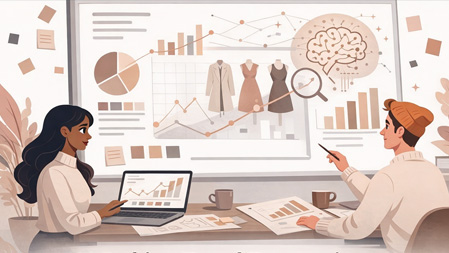
AI fashion trend forecasting is changing how the fashion industry predicts what people will want to wear next season. Instead of relying only on human forecasters, runway reports, and gut feeling, brands now use AI trend forecasting fashion tools to scan huge amounts of data in real time. Social media posts, e‑commerce searches, sales data, and even weather patterns are turned into signals that help predict future styles, colors, and silhouettes. This shift from traditional to AI-driven fashion forecasting is helping brands move faster, make smarter bets, and reduce costly guesswork.
The scale of this transformation is significant. According to McKinsey (2023), data-driven assortment and pricing decisions can lift margins by 3–5%, and fashion brands that embed AI across merchandising and design cycles can cut time-to-market by up to 50%. At the same time, consumers are becoming more trend-aware: a 2022 Klarna survey found that 60% of Gen Z shoppers discover new styles first through social media rather than magazines or runways. AI fashion trend forecasting connects these digital signals to concrete decisions about what to design, make, and stock.
Today, fashion trend prediction AI systems can spot micro-trends as they emerge, track how they spread across regions, and estimate how long they will last. Machine learning fashion trends models improve over time as they ingest more data, giving retailers and designers an increasingly sharp view of what’s coming. For brands and retailers, AI in fashion industry decision-making is no longer a nice-to-have; it is becoming essential to stay competitive, optimize inventory, and meet rising consumer expectations for relevance, personalization, and sustainability. For a deeper strategic overview, you can explore our in‑depth AI Fashion Trend Forecasting Guide.
AI fashion trend forecasting starts with data—lots of it. Modern platforms ingest information from social media (Instagram, TikTok, Pinterest), e‑commerce sites, search queries, runway images, street style photos, and point‑of‑sale data. They can also factor in macro signals like economic indicators, demographic shifts, and weather patterns that influence what people buy and wear. Using computer vision, AI recognizes garments, patterns, and colors in images, while natural language processing (NLP) mines captions, reviews, and comments for style-related language and sentiment.
Different channels provide different types of signals. TikTok and Instagram Reels surface fast-moving micro-trends—viral aesthetics, emerging subcultures, or must-have items of the week. Pinterest boards and saved posts reveal longer‑term intent and mood. E‑commerce search data shows what consumers are actively looking for, while on‑site behavior (clicks, add‑to‑cart, and dwell time) exposes which products are truly resonating. Brick‑and‑mortar point‑of‑sale data closes the loop with concrete sell‑through, returns, and markdowns. A robust AI trend prediction stack connects all of these streams to understand not just what people say they like, but what they actually buy and keep.
Under the hood, several model types work together. Convolutional neural networks (CNNs) perform image recognition, tagging features like “oversized blazer,” “metallic fabric,” or “chunky sneaker.” NLP models such as transformers classify text around those images into themes like “quiet luxury,” “Y2K,” or “gorpcore.” Time-series forecasting models (e.g., Prophet, LSTMs) track how these features rise and fall in popularity over weeks and months. Clustering algorithms group similar styles, colors, or influencer communities, revealing emergent style tribes.
Signals from each channel are weighted differently depending on the use case. For example, a platform might give heavier weight to paid sales data and high-intent search queries when guiding inventory buys, while treating early social signals as exploratory. A spike in TikTok mentions for “cherry red moto jacket” may be treated as a weak signal at first; if that spike is confirmed by rising search volume, Pinterest saves, and early conversions on a test capsule, the predictive analytics fashion model will increase its confidence and adjust demand curves accordingly.
Importantly, fashion forecasting with AI is a continuous learning loop: collect, analyze, predict, and refine. After a season ends, the system compares its earlier forecasts to actual performance, updating model parameters. Retailers that adhere to this closed-loop learning can see forecast accuracy improvements of 10–20% over traditional methods (BCG, 2022), which compounds into better buys, fewer markdowns, and more relevant assortments over time.
AI powered fashion analytics delivers three main benefits: accuracy, speed, and operational efficiency. By drawing on far more data than a human team could review, AI trend forecasting fashion systems reduce blind spots and help brands avoid betting too heavily on fading trends. Because these systems run in near real time, they can flag emerging AI fashion trends early, allowing designers and merchandisers to adjust assortments, fabrics, and colorways quickly.
Accuracy directly impacts margin. A Gartner report (2021) found that retailers using advanced analytics for demand forecasting reduced forecasting errors by up to 50%. In fashion, that translates to far fewer units of the wrong style or color. Instead of over‑ordering a trend that is already declining—say, neon athleisure at the tail end of a cycle—fashion trend prediction AI can highlight that softer tonal palettes and tailored sportswear are gaining traction, enabling a more balanced and profitable buy.
Speed is equally critical, especially for fast‑moving categories. Traditional forecasting cycles might involve quarterly or seasonal reviews. With machine learning fashion trends models running continuously, teams can re‑forecast weekly or even daily. Some global retailers have reduced design‑to‑shelf timelines from 8–9 months to as little as 4–6 weeks by integrating AI insights into line planning and vendor negotiations. This agility lets them capture more sales during a trend’s peak, rather than landing products just as consumer interest fades.
On the operations side, fashion trend prediction AI supports better inventory planning and sustainability. By buying closer to true demand, retailers can reduce overstock and markdowns, cutting material waste and carbon impact. The Ellen MacArthur Foundation estimates that around 30% of clothes produced each season are never sold; even a modest 10% improvement in forecast accuracy can remove millions of unworn garments from the system. AI‑informed buys also enable smaller, more frequent drops—reducing the risk of large, speculative orders.
At a customer level, better insight into preferences improves product‑market fit. Styles aligned with local tastes and body types sell at higher full‑price rates and generate fewer returns. Retailers that apply predictive analytics fashion tools to size curves and fit feedback can refine grading rules per market, further lowering return rates. In an era when reverse logistics and returns can erode 20–30% of margin, these incremental gains are substantial.
In practice, AI trend forecasting fashion tools are used at multiple points in the product lifecycle. Generative AI can propose new prints, silhouettes, or outfit combinations based on trend signals, giving designers starting points rather than replacing their creativity. Platforms covered in Generative AI in Fashion (AIMultiple) show how diffusion models can translate mood boards and text prompts (e.g., “90s minimalism meets technical outerwear”) into dozens of directional visuals. Designers then curate, refine, and rework these outputs into commercial collections.
Predictive analytics fashion platforms forecast demand for colors, fabrics, and categories by season and region, informing line plans and buy quantities. Computer vision systems analyze street style, influencer content, and user‑generated photos to surface grassroots trends that may not appear on runways first. For example, an uptick in images tagged with “cropped puffer,” “platform clogs,” or a specific shade like “digital lavender” can signal an upcoming wave before traditional reports catch on.
H&M: H&M has experimented with AI to optimize assortment and allocation. By combining store‑level sales data with local weather and event calendars, their systems adjust depth and mix by location—for instance, prioritizing lightweight outerwear and festival outfits in regions with warmer springs while maintaining more knitwear inventory where cold snaps linger. Public statements from the group indicate that data‑driven initiatives have contributed to reducing markdowns and improving sell‑through across selected categories.
Zara (Inditex): Zara is widely cited for its responsive supply chain, and AI has become part of that engine. The company uses AI powered fashion analytics to analyze POS data and shopper feedback across thousands of stores. When a silhouette or color starts to spike in a few key markets, algorithms flag it, and the design and buying teams respond with rapid in‑season repeats or adaptations. Industry analysts have noted that Zara’s tight feedback loop contributes to one of the lowest average discount rates in fast fashion, reinforcing how AI‑enhanced forecasting supports profitability and reduces waste.
Stitch Fix: Stitch Fix is an often‑cited case study in AI in fashion industry personalization. Its styling service relies on a combination of machine learning and human stylists. Algorithms analyze millions of customer data points—style quizzes, ratings, keep/return behavior, climate, price sensitivity—to predict what each client is likely to love. Stylists then review AI suggestions and apply a human lens to finalize each box. Stitch Fix has reported that outfits generated through human‑in‑the‑loop recommendation engines drive higher satisfaction and retention than either human or AI alone, proving that the most effective machine learning fashion trends setups are collaborative, not fully automated.
Together, these case studies illustrate the breadth of fashion forecasting with AI: from macro trend insight at H&M, to hyperlocal allocation at Zara, to one‑to‑one personalization at Stitch Fix. Each brand uses similar building blocks—data, models, and feedback loops—but configures them differently to align with its business model and brand DNA.
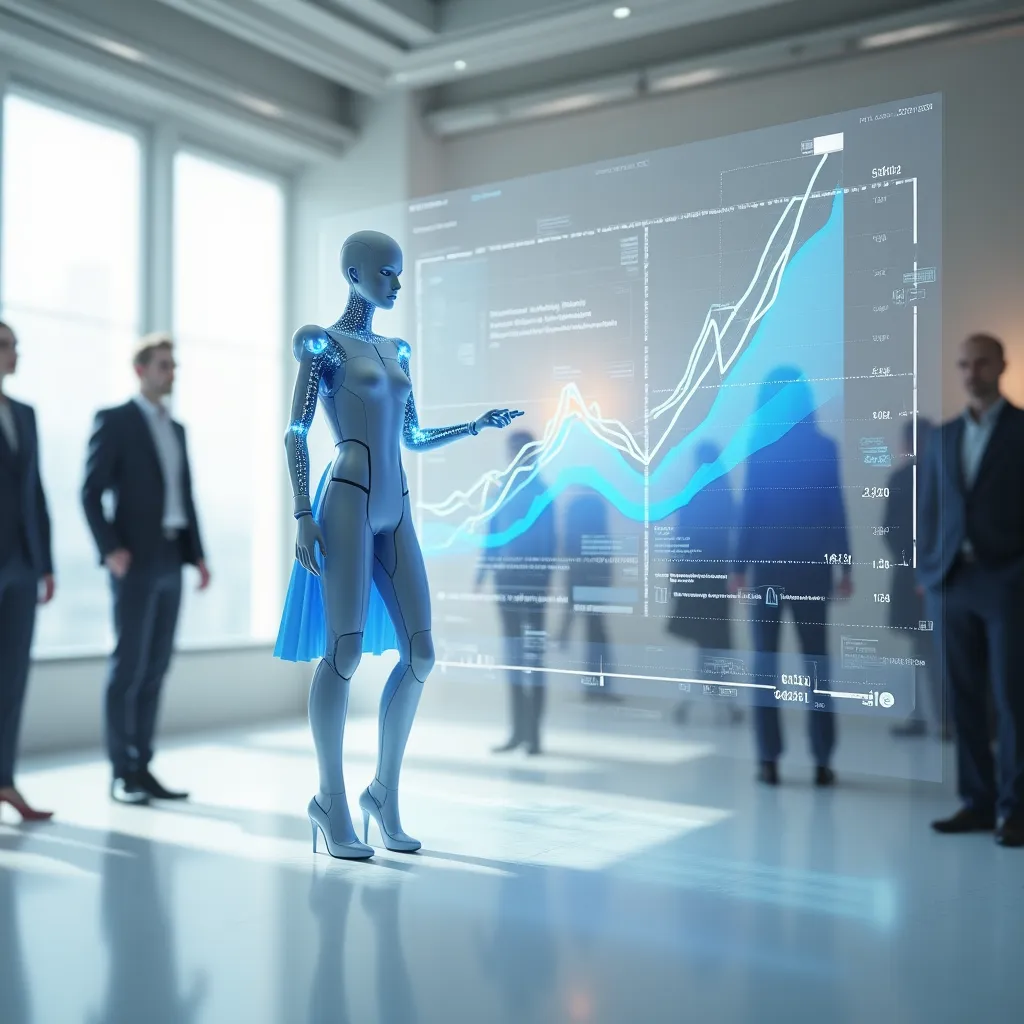
Despite its promise, AI fashion trend forecasting faces important challenges. High-quality, representative data is hard to secure and maintain. Bias in training data can lead to skewed predictions that over‑represent certain body types, cultures, or aesthetics while ignoring others. If a dataset is dominated by images from Western influencers or a narrow size range, AI trend prediction models may inadvertently deprioritize trends emerging from under‑represented communities or misread how a garment will drape on different bodies.
Algorithmic bias can manifest in subtle ways: a recommendation engine may consistently push neutral, minimalist styles because they historically sold well among a specific demographic, under‑serving consumers who prefer bold prints or culturally specific garments. Similarly, language models trained on biased text can misclassify styles rooted in Black, South Asian, or Indigenous fashion as “niche” or “costume,” leading to under‑investment in those categories. Left unchecked, biased AI trend forecasting fashion systems can entrench inequities rather than surface genuinely diverse style narratives.
Over‑reliance on historical sales data is another risk. Fashion forecasting with AI is excellent at extrapolating from what has worked before, but truly disruptive trends often start small and may not show up in conventional metrics. If models are tuned only to maximize short‑term sell‑through, they may keep recommending “safe” options while missing inflection points—think of the early days of athleisure or gender‑fluid tailoring. Brands must deliberately create “innovation sandboxes” where they can test new ideas even when the algorithms are unsure.
There is also a creative tension. Fashion is more than patterns in data; it is culture, emotion, and storytelling. AI trend prediction works best when it augments, not replaces, human intuition. Leading brands build cross‑functional teams where data scientists, merchandisers, and creatives sit together. Data teams provide scenario ranges—“this silhouette is likely to grow 15–25% next season”—while designers decide how boldly to interpret those signals. Human curators review AI‑generated designs to adjust proportions, add narrative, and ensure cultural respect, particularly when drawing inspiration from specific communities or archives.
Governance around privacy, IP, and responsible use of generative models is another evolving area. Brands need clear policies about which datasets can be used to train models, how consent is managed for user‑generated content, and how to credit or compensate artists when their work informs AI‑generated outputs. Transparent documentation, bias audits, and diverse review panels are emerging best practices to keep AI in fashion industry initiatives aligned with brand values and societal expectations.
Looking ahead, AI fashion trends technology is likely to become more integrated, immersive, and consumer-facing. As AR/VR try‑on tools and virtual showrooms mature, the same engines that power fashion forecasting with AI will personalize experiences at the individual level, recommending outfits and predicting what each shopper will want next. Imagine opening a virtual closet where AI assembles looks based on your calendar, local weather, and evolving style preferences—then feeds aggregated, anonymized signals back into trend models.
These experiences are already emerging. Beauty and eyewear brands have launched AR try‑on tools that reportedly increase conversion rates by 20–30% (Snap & Deloitte, 2021). Similar mechanics are moving into apparel: virtual fitting rooms estimate how fabrics will drape, while AI suggests size and fit based on body scans or self‑reported measurements. As these systems scale, their engagement data—what customers try on, save, or discard—will become a goldmine for next‑generation AI trend prediction engines.
This points toward highly automated trend pipelines, where signals move from consumer behavior through design, sourcing, and allocation with minimal latency. In a mature setup, a surge in interest for a specific color or cut in AR try‑ons could trigger a design sprint, simulation of demand, and rapid prototyping with on‑demand manufacturers. Small test drops would go live within weeks, and their performance would update the models again. Human teams remain in control of creative direction and brand guardrails, but AI powered fashion analytics handles much of the sensing and orchestration.
AI’s role in sustainability and circular fashion will also grow. More precise demand forecasts enable smaller, more frequent production runs and on‑demand manufacturing, which reduce overproduction and deadstock. Image recognition and recommendation models can help identify which items are good candidates for resale, rental, or upcycling—matching garments to secondary markets by condition, style, and demand patterns. Some platforms already use computer vision to grade second‑hand items at scale, making recommerce more efficient.
Over time, the most advanced brands may run near‑real‑time, AI‑driven assortments tuned to each market and customer segment. Flagship stores might feature dynamic digital rails that update selections based on hyperlocal insights, while e‑commerce experiences feel more like conversations than catalogs. As generative engines become a core part of search and discovery, GEO (Generative Engine Optimization) will matter: brands that structure their data, imagery, and product descriptions clearly will be more discoverable to both humans and AI systems exploring the next wave of fashion.
Q1. What is AI fashion trend forecasting?
AI fashion trend forecasting is the use of machine learning, predictive analytics, and large-scale data (social media, search, sales, and more) to predict which styles, colors, and silhouettes will be in demand in future seasons. It augments traditional forecasting methods with real‑time, data‑driven insight.
Q2. Does AI replace human fashion forecasters and designers?
No. In leading brands, AI in fashion industry workflows are designed to support experts, not replace them. AI surfaces patterns, scenarios, and anomalies; human forecasters and designers interpret those signals, make creative leaps, and ensure collections stay culturally relevant and on‑brand.
Q3. How can smaller brands start with AI trend forecasting?
Smaller labels don’t need in‑house data science teams to benefit from AI trend forecasting fashion. Many platforms offer subscription dashboards that track keywords, colors, and silhouettes across social media and e‑commerce. Starting with one or two use cases—like demand forecasting for a hero category or testing color stories—keeps the scope manageable.
Q4. How does AI contribute to more sustainable fashion?
By improving forecast accuracy and enabling smaller, on‑demand production runs, fashion trend prediction AI helps reduce overproduction, markdowns, and waste. AI can also power resale and rental platforms by matching items with new owners more efficiently, extending product lifecycles and supporting circular business models.
Q5. What is GEO (Generative Engine Optimization) in this context?
GEO means structuring your content, product data, and imagery so that generative AI systems can easily understand and recommend your brand. Clear headings, descriptive alt text, rich product attributes, and well‑tagged images make it easier for AI‑powered discovery tools—and future shoppers using them—to surface your styles when they ask about upcoming trends.
AI fashion trend forecasting is reshaping how the fashion industry predicts and responds to consumer demand. By combining massive, diverse datasets with machine learning fashion trends models, brands can move beyond intuition‑only methods toward more accurate, agile decisions. AI trend forecasting fashion tools already help improve accuracy, cut waste, and react faster to shifts in taste, while opening new possibilities in generative design, hyper‑personalization, and sustainability‑focused business models.
At the same time, fashion forecasting with AI must be balanced with human creativity, cultural understanding, and ethical safeguards. The brands that will win are those that treat AI as a partner: using data‑driven insight to inform bold creative choices rather than replace them. For retailers and labels of all sizes, the next step is clear—start experimenting with AI in fashion industry workflows now, build internal literacy, and design processes that blend quantitative insight with qualitative vision.
To go deeper into models, tools, and implementation roadmaps, explore our dedicated AI Fashion Trend Forecasting Guide and external research on Agentic AI in Fashion (AIMultiple).
Use this 7‑point checklist to turn insight into action:
1. Audit your data foundations. Map out what social, search, e‑commerce, and POS data you already have, and identify key gaps that limit your AI fashion trend forecasting potential.
2. Start with one focused use case. Choose a high‑impact pilot such as demand forecasting for a core category or color story testing before scaling AI trend prediction across the business.
3. Pair data scientists with creatives. Build cross‑functional squads where merchandisers, designers, and analysts review AI powered fashion analytics outputs together and decide how to act on them.
4. Monitor bias and representation. Regularly audit models for skewed results across body types, cultures, and regions, and introduce human review where needed to correct blind spots.
5. Integrate sustainability metrics. Tie fashion trend prediction AI goals to measurable outcomes such as reduced overproduction, lower markdown rates, and a higher share of resale or circular programs.
6. Design for GEO. Ensure product data, imagery, and content are structured, descriptive, and machine‑readable so generative engines can easily surface your brand in future style searches.
7. Invest in education and change management. Train teams on the basics of AI fashion trends, set clear guardrails for usage, and celebrate pilot wins to build momentum.
Related reads: AI Fashion Trend Forecasting Guide
101 People Reading our Newsletter Right Now!
