

Fashion and apparel enterprises face unique challenges where even a minor oversight, like a missing trim detail or an outdated tech-pack version, can cause significant delays. Across a portfolio of thousands of SKUs, these small frictions accumulate into millions of dollars in excess sample costs, air freight charges, and lost sales from delayed market entry. This article targets enterprise buyers who must evaluate AI tools with an emphasis on workflow fit, governance, auditability, and ROI. These buyers are aware that real fashion workflow friction stems from sampling loops, drifting specs, excessive handoffs, and outdated tools. Product data spread across PLM systems, spreadsheets, PDFs, and emails adds to this complexity, creating a disorganized and inefficient environment. This article offers a strategic approach to piloting AI in fashion, ensuring that promises of efficiency translate into measurable, reportable results that satisfy procurement and the C-suite.
What this looks like in practice: Consider a technical designer at a 200-SKU contemporary brand. They spend countless hours ensuring that product specifications are communicated clearly across teams. When tech packs are outdated, it results in miscommunication with vendors, leading to costly delays and rework. By implementing AI tools, the designer can streamline the flow of information, reducing the potential for errors and improving time-to-market. The goal is not to replace the designer, but to amplify their expertise by automating the repetitive, low-value tasks that consume a majority of their day, freeing them to focus on fit, quality, and innovation.
Many AI fashion pilots falter before they can demonstrate real value. They often set overly broad goals, lack clear success metrics, and are treated as mere experiments rather than operational tests. Teams may generate concepts, share screenshots, and label it new. However, when procurement, technical design, and sourcing departments demand ROI, usability, and vendor collaboration, the responses are often ambiguous. A poorly designed pilot attempts to test too many variables at once, leading to diluted results and missed opportunities for meaningful integration. The pressure to appear innovative can lead teams to pursue flashy, front-end creative tools while ignoring the foundational, back-end workflows where the most significant financial gains are found.
Another primary reason for failure is the chasm between innovation hubs and operational departments. An innovation team might champion an AI tool for its ability to generate thousands of design variations, presenting this as a breakthrough. Yet, they fail to answer how these designs connect to block libraries, material databases, or cost models. When the Head of Technical Design asks how the AI handles grade rules for a complex jacket or how it specifies a particular type of welt pocket, the innovation team often has no answer. The pilot is celebrated for its creative output but dies when it meets the practical requirements of making a physical garment at scale. This disconnect ensures the "pilot" remains a PowerPoint presentation instead of a scalable business process.
Common pitfalls: A frequent misstep is the lack of alignment on success metrics across departments. For instance, a design team might focus on creativity, while procurement is more concerned with cost efficiency and speed. This misalignment can lead to conflicting objectives and a lack of unified measurement standards, ultimately causing the pilot to fail to meet enterprise expectations. The pilot ends with different teams telling different stories, with no single, quantifiable narrative of success. This makes it impossible for an executive sponsor to approve a wider rollout, as there is no clear business case.
What this looks like in practice: Consider a pilot at a heritage brand known for its artisanal craftsmanship. The design team uses AI to create digital fabric swatches, but without clear metrics, the sourcing team struggles to quantify the cost benefits. The sourcing team needs to know if the digital swatch reduces the need for physical sample shipping, a measurable cost. The design team, on the other hand, measures success by the aesthetic quality of the render. The pilot ends with no clear data on whether AI improved material selection efficiency or reduced waste, leaving the brand hesitant to invest further. The initiative is shelved as an "interesting experiment" rather than a validated workflow improvement.
Running pilots in silos is a common pitfall in enterprise settings. These pilots may seem successful within a limited scope but fail to deliver value across the broader operational chain. Fashion relies on interconnected workflows where creative direction, design, technical specs, merchandising, and vendor coordination are deeply intertwined. A pilot focused only on design may yield impressive concepts but falter when it comes to commercial viability. Similarly, a 3D visualization pilot might enhance visuals but fail if it does not integrate with tech specs and vendor handoff processes.
A siloed pilot creates a dead end. For example, if a 3D design team generates a hyper-realistic virtual garment, but the data is not structured to flow into a tech pack, the technical design team must manually re-enter all information. The "efficiency" gained in 3D is immediately lost in data re-entry, creating new bottlenecks and user frustration. This is why enterprise buyers must look for solutions that treat the product development lifecycle as a continuous flow of data, not a series of disconnected steps. A successful pilot must prove it can receive data from an upstream process and hand off structured, usable data to a downstream process.
What this looks like in practice: In a large sportswear company, the design department runs a siloed AI pilot to generate 3D models for new sneaker designs. While the models are visually appealing, the lack of integration with the technical design team means that key production specifications are missing. The 3D model does not contain the specific stitch per-inch count for the upper, the durometer of the EVA foam in the midsole, or the Pantone color codes for the logo embroidery. Consequently, the technical designers have to manually inspect the 3D files and create a traditional tech pack from scratch, negating any speed benefits. The pilot, though successful in design, fails to deliver on cross-departmental goals and is rejected by the product development organization.
AI tech packs offer a strategic entry point for enterprise AI adoption. They provide a controlled environment for testing with clear KPIs, ownership, and scalability potential. The tech-pack workflow is the central nervous system of product development, touching every critical function. It covers design intent, technical specifications, BOM logic, POM tables, grading, approvals, vendor queries, sampling, and change logs. This focus is cross-functional and cost-oriented by nature, making it an ideal starting point for proving tangible ROI. A successful wedge is defined by its narrow scope, clear accountability, and alignment with existing roles and tools. It also establishes a foundation for broader AI integration across the enterprise.
Focusing on the tech pack as the "wedge" de-risks the entire AI adoption process. Instead of a massive, multi-year digital transformation project, it becomes a focused, 30-day operational test. The inputs are known (a design concept, a reference garment, or a fit sample) and the outputs are clearly defined (a vendor-ready tech pack). The impact is directly measurable in terms of time, cost, and quality. This approach resonates with pragmatic operational leaders at large organizations like PVH or Mix, who are skeptical of vague promises of "creativity enhancement" but are highly receptive to solutions that address concrete bottlenecks like reducing tech pack creation time from 40 hours to 4.
What this looks like in practice: A mid-sized luxury brand initiates its AI adoption by focusing on tech-pack automation. The technical design team, working closely with sourcing and production departments, uses AI to auto-generate tech packs from initial design sketches and textual prompts. The AI is trained on the brand's past seasons' data, learning its specific block patterns, material preferences, and construction standards. This approach speeds up the tech pack creation process from weeks to days and ensures accuracy in specifications, reducing the likelihood of costly errors and misunderstandings during sampling with their factories in Portugal and Italy.
A 30-day pilot should target a specific, measurable production workflow. The aim is to address current pain points, such as the slow and error-prone process of shifting approved concepts into vendor-ready documentation. The pilot should assess whether AI can accelerate the initial draft, enhance completeness, reduce vendor clarifications, cut down on rework, and boost team effectiveness without undermining technical expertise. The goal is to generate statistically relevant data, not just anecdotes.
Choosing the right scope is critical. Too broad, and the data is noisy. Too narrow, and the results are not compelling. The selection of styles and categories should be strategic. It should be a core category for the business, one where the process is well-understood and the baseline metrics are readily available. This allows for a clean before-and-after comparison. The pilot is not the time to test on a completely new, experimental product line where the development process itself is still in flux.
What this looks like in practice: At a leading denim brand, the pilot focuses on shifting fit samples into production-ready tech packs within 30 days. By narrowing the scope to 15 styles of women's denim jackets, the team can apply specific material and fit knowledge. They test the AI's ability to correctly specify details like shank button placements, rivet types, wash abrasion patterns, and graded measurements for a notoriously complex product. This ensures that the AI-generated tech packs meet their rigorous quality standards, directly measuring the reduction in time spent on manual data entry and sample revisions.
For a pilot to be successful, it should address these critical questions with quantitative data, not just qualitative feedback. The final report should lead with the answers to these questions, forming the core of the business case for expansion.
What this looks like in practice: A multinational activewear brand conducts a pilot to understand if AI can reduce the tech-pack creation time by 50%. By comparing pre- and post-pilot data from their PLM and email logs, they identify a 60% reduction in tech pack creation time. They also note a 40% drop in vendor questions related to missing information and a 75% reduction in internal rework cycles, verifying AI's potential to enhance productivity across their global design teams and build a strong business case for a global rollout.
Capturing baseline metrics is crucial for assessing the pilot's impact. Without a clear "before" picture, the "after" picture has no meaning. Subjective perceptions like "it feels faster" can overshadow objective results, making it impossible to build a solid ROI case. These metrics should be gathered from historical data of a comparable season or collection from the last 6-12 months. This data exists within your PLM, ERP, spreadsheets, and vendor communication platforms.
The process of gathering baselines also forces a critical pre-pilot conversation among stakeholders. It aligns the team on what the current problems are and what "good" looks like. It surfaces hidden inefficiencies and establishes a shared understanding of the workflow you aim to improve. This step alone is a valuable exercise in process mapping, even before the AI tool is implemented.
What this looks like in practice: At a high-volume fast-fashion retailer, the pilot involves capturing data from the last two seasons to set a baseline. The product operations team pulls reports from their PLM system and cross-references them with sourcing team spreadsheets to establish an average tech-pack cycle time of 8 days and an average of 3.5 sample rounds per style for their knit tops category. This historical data is critical to measure improvements post-pilot and demonstrate tangible benefits to stakeholders, translating pilot results into projected annual savings.
The following figure illustrates typical KPI improvements expected from a successful pilot:
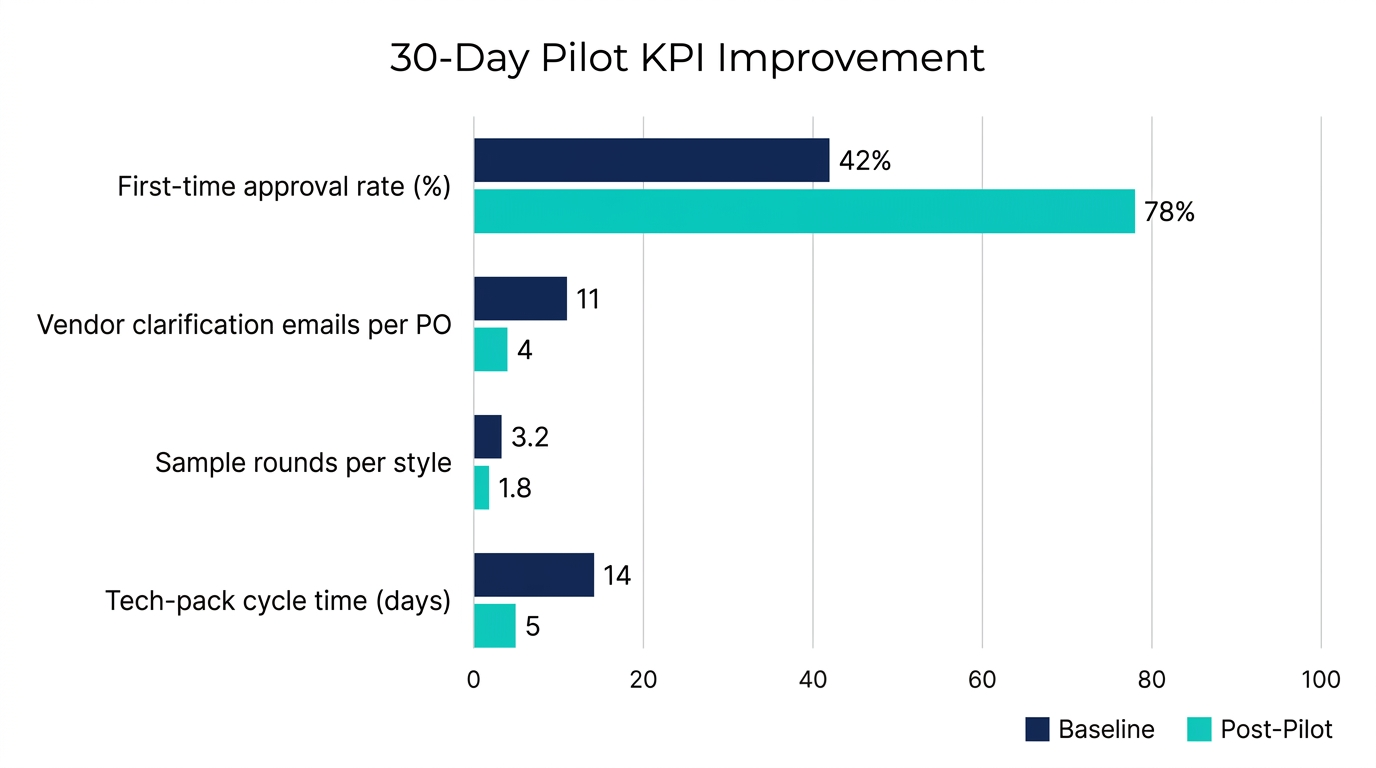
Figure 1. Baseline vs post-pilot KPI movement across four operational metrics.
The prioritization matrix assists in identifying the most impactful and feasible AI workflows for initial pilots. AI tech packs often score highly due to their clear inputs, outputs, and measurable friction points, placing them in the high-impact, high-feasibility quadrant. Workflows like "fully autonomous design" would be high-impact but low-feasibility, making them poor choices for an initial pilot.
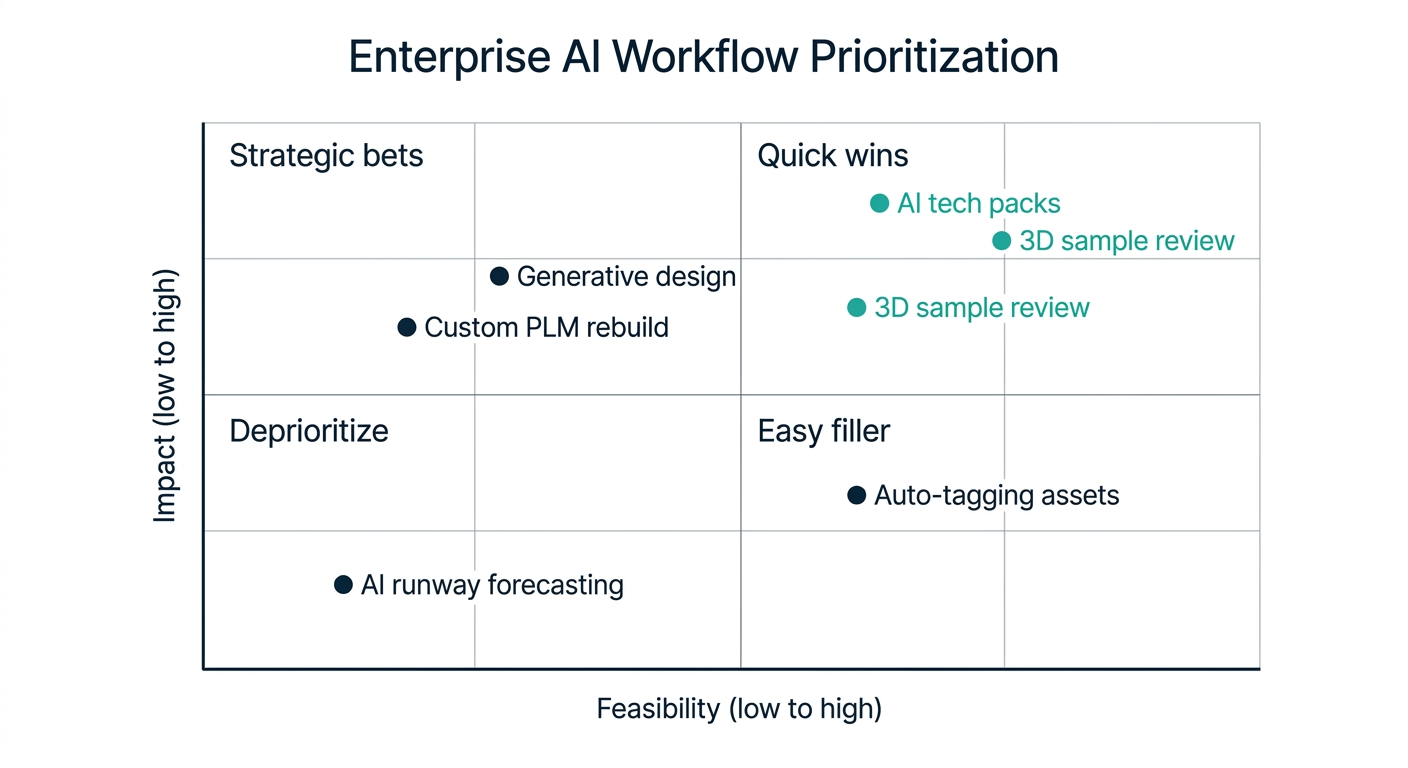
Figure 2. Enterprise AI workflow prioritization matrix.
Implementing a 30-day AI fashion design pilot requires a structured, phased approach to manage change and ensure meaningful data collection. Each week has a specific focus and set of deliverables, keeping the team on track and building momentum toward the final evaluation.

What this looks like in practice: In a multinational luxury brand, the pilot is broken down weekly, with each phase producing distinct outputs. Week one involves stakeholder meetings with VPs of Product and Design to ensure alignment on objectives, and a data-gathering workshop with the IT and Product Operations teams to establish the baseline scorecard. Week two focuses on hands-on user training and generating the first 5-10 AI tech packs, with daily check-ins to ensure initial outputs meet quality standards. Subsequent weeks are dedicated to refining AI prompts or templates based on user feedback and compiling the comprehensive final report that highlights the pilot's ROI and operational outcomes.
This figure highlights the operational improvements post-AI workflow deployment, focusing on reduced sampling, decreased vendor questions, less rework, and faster approval times. This visualizes the direct impact on the product creation lifecycle that executive sponsors want to see.
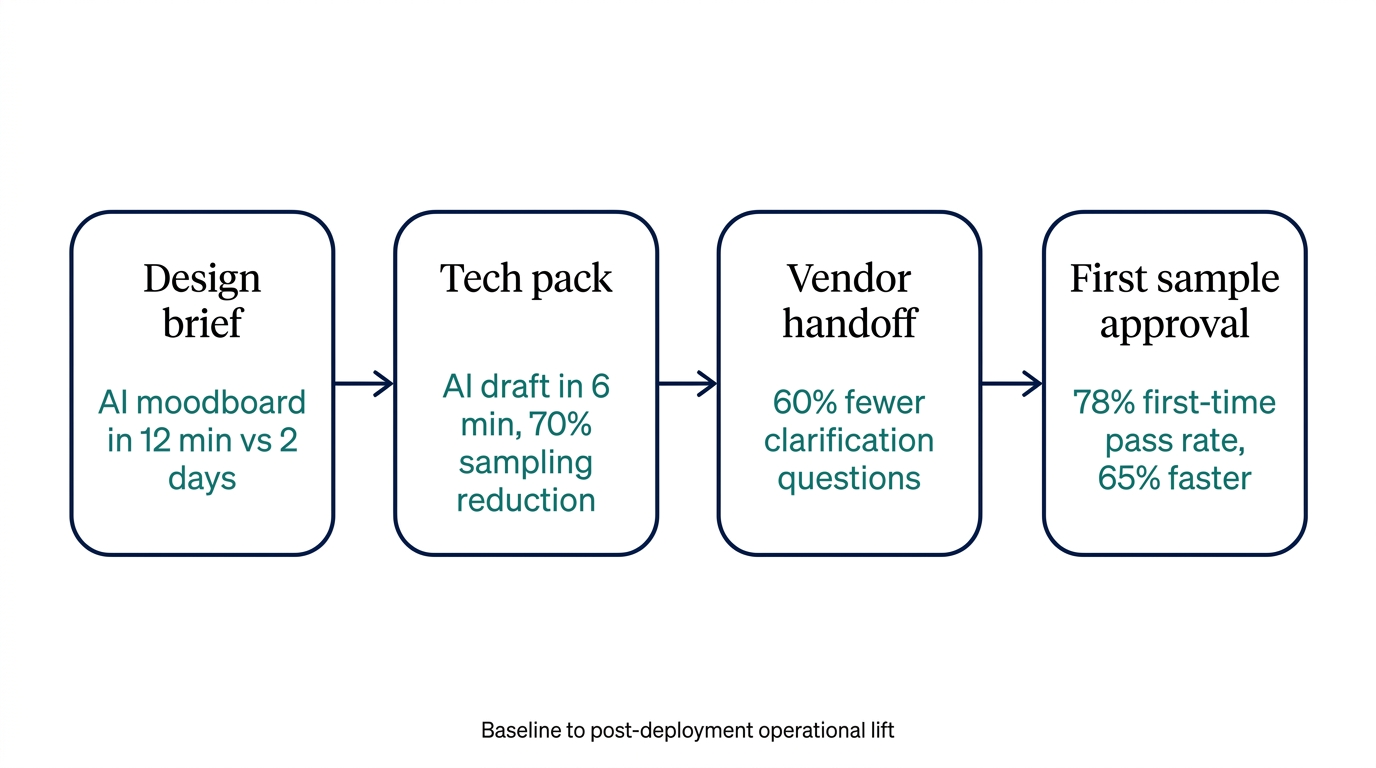
Figure 3. Operational KPI improvement after AI workflow deployment.
Clear success criteria should be established prior to the pilot launch. These are not goals, they are objective, pass-fail thresholds. Subjective opinions are insufficient for justifying an enterprise rollout. The pilot must deliver quantifiable improvements against the agreed-upon baseline metrics. Meeting these targets provides the go/no-go decision for expansion.
Before the pilot begins, the executive sponsor and pilot owner must agree on the final decision criteria. This framework prevents "pilot purgatory," where results are ambiguous and no decision is made. A simple go/no-go structure based on the success criteria is effective. For example, a "Go" decision for full rollout requires that at least four of the six criteria are met, including the mandatory user adoption and governance fit targets. A "No-Go" might be triggered if tech-pack cycle time reduction is less than 20% or if major security flaws are found. An intermediate "Revise and Retest" decision could be made if results are promising but fall just short, pending specific improvements from the AI vendor.
What this looks like in practice: At a global apparel manufacturer, success criteria are defined with input from across departments. The pilot charter explicitly states that a "Go" decision for expansion into the next product category requires a minimum 40% reduction in tech-pack cycle time and an 80% user adoption rate. This ensures that the pilot's success is measured against comprehensive, agreed-upon metrics, removing ambiguity from the final review and providing a clear path forward.
A 30-day pilot should maintain a sharp focus and not become a catch-all for every AI ambition. The goal is to prove value in one specific area, creating a strong foundation for future expansion. Overloading the pilot with too many variables is the fastest way to get inconclusive results and stakeholder fatigue. Avoid testing every workflow, integrating every system, or onboarding every region.
The temptation to "do everything at once" is high, often driven by excitement about the technology's potential. However, this dramatically increases the risk of failure. Each new variable adds complexity, making it difficult to isolate what is working and what is not. Is the low adoption rate due to the tool's interface, poor training, or the complexity of the PLM integration? A focused pilot eliminates these confounding variables.
What this looks like in practice: A high-fashion house, part of a group like Kering, opts to focus their pilot on a single category, women's silk blouses, and avoids full PLM integration in the initial phase. Instead of a complex integration, they use a simple data export from the AI tool and import it into their PLM staging environment. This approach allows the team to concentrate on achieving significant improvements in tech pack quality and speed in a controlled environment before committing six-figure budgets to IT integration projects.
For a successful AI adoption to scale from a pilot to an enterprise-wide solution, a reliable governance framework is not a suggestion, it is a requirement. This includes defining roles, permissions, data controls, and security protocols to ensure compliance and security. Large fashion corporations manage immense amounts of valuable intellectual property, from future season designs to proprietary material data. An AI tool must fit within this existing security and compliance structure.
The first question from any enterprise Chief Information Security Officer (CISO) will be about data. Where are the design files and tech packs stored? Is the data encrypted at rest and in transit? Critically, is the AI model trained on a brand's data kept isolated and private, or is it used to train a global model accessible by other companies, including competitors? The AI vendor must provide clear documentation on data tenancy, IP ownership of outputs, and compliance with standards like SOC 2 and GDPR.
Enterprise workflows rely on a clear hierarchy of approvals. A junior technical designer can draft a tech pack, but only a senior or lead can approve it for factory release. The AI platform must be able to replicate these real-world roles and permissions. every significant action must be logged in an immutable audit trail. If a production error costs the company $200,000, the VP of Production must be able to trace who approved the incorrect spec, when they approved it, and what data they saw at the time. This auditability is non-negotiable for any tool handling critical product data.
What this looks like in practice: At a major global retailer like Gap Inc. or Inditex, the governance framework for any new software includes integration with their single sign-on (SSO) system for user authentication. The AI platform must support role-based access control (RBAC) that mirrors their internal directory. This ensures a new hire in merchandising cannot access or edit a technical designer's grade rules. This rigor ensures that all departments understand their responsibilities and that sensitive product data remains secure, which is crucial for scaling AI initiatives across thousands of employees.
Implementing AI tech packs can lead to substantial and easily quantifiable ROI by reducing cycle times, improving quality, and lowering direct costs. For an enterprise brand, these savings quickly scale into millions of dollars annually. The key is to move beyond vague claims of "efficiency" and build a financial model based on the pilot's measured KPIs.
Let's model the ROI for a brand producing 200 styles per season with two seasons per year (400 styles total).
Combined, this conservative model shows a $480,000 annual ROI from just two measurable improvements. This figure does not even include the significant financial impact of getting products to market 2-4 weeks earlier, which can dramatically increase full-price sell-through and reduce end-of-season markdowns.
What this looks like in practice: A premium outerwear brand calculates that by reducing tech-pack creation time by 50%, they save approximately $100,000 annually in labor costs alone. When they add the reduction of one full sample round for their complex, multi-component jackets, they save an additional $250,000 in material and freight costs. These total savings of $350,000 can be reinvested into design new, market expansion, or flow directly to the bottom line, providing a compelling case for the CFO.
Once the pilot has successfully demonstrated quantifiable value and met its go/no-go criteria, expansion should be strategic and phased, not a "big bang" rollout. A gradual expansion minimizes business disruption, allows teams to adapt, and builds on the momentum of the successful pilot. The goal is to methodically scale the proven workflow across the organization, using the initial pilot team as internal champions.
A recommended expansion roadmap follows a logical progression:
What this looks like in practice: After a successful pilot on denim jackets, a fast-fashion retailer integrates AI-driven trend analysis to enhance their product development cycle. The insights from the trend tool now feed directly into the AI tech pack module as structured design briefs. By aligning this new capability with their established and validated tech-pack workflow, they maintain consistency and speed in production while adapting more quickly to emerging micro-trends, solidifying the ROI of their AI investment.
An AI fashion design pilot is a controlled 30-day test to evaluate the impact of AI tools on a specific, measurable fashion workflow, like tech pack creation. It allows teams to test the efficacy of AI in a real-world context, enabling them to identify potential improvements in efficiency, cost, and accuracy. This pilot serves as a data-backed proof of concept that can justify a broader, enterprise-wide AI adoption to executive leadership.
Typically, an AI fashion workflow pilot should be conducted over 30 days to provide sufficient time for training, usage, and data collection while minimizing disruption. This duration allows for comprehensive data collection and analysis across a meaningful number of styles, ensuring a strong evaluation of AI's impact on production timelines and quality assurance processes without letting the project lose momentum.
Enterprise brands should first test AI tech packs as they offer a measurable, cost-oriented entry point with clear cross-functional benefits. By focusing on tech packs, brands address a universal and high-friction point in the development process, streamlining production documentation, enhancing communication with vendors, and improving overall product quality. This initial focus lays a stable groundwork for further AI-driven enhancements.
Track hard, operational metrics such as tech-pack cycle time, number of sample rounds, cost per sample, vendor clarification requests, and internal approval rates to assess pilot impact. These metrics provide quantifiable insights into the efficiency and effectiveness of AI integration, helping stakeholders make informed decisions about scaling AI solutions across the organization. Soft metrics like "user satisfaction" are good to have, but hard metrics are what secure budget.
Initially, avoid full PLM integration to focus on proving the core workflow's value and user adoption. Deep integration is costly and time-consuming; this effort is wasted if the underlying tool is not effective. By first establishing the efficacy of AI in an isolated workflow using simple data transfers, teams can build the business case needed to justify and guide a phased, successful PLM integration later.
A good pilot result is characterized by achieving the pre-defined success criteria, such as a 40%+ reduction in tech-pack creation time, a measurable decrease in sample rounds, and high user adoption. These results should be supported by clear data that demonstrates a significant, positive impact on the organization's operational efficiency and builds a compelling business case for financial investment in a wider rollout.
Include cross-functional stakeholders from design, technical design, product development, and sourcing teams to ensure a comprehensive evaluation. Crucially, a pilot team should also include an executive sponsor with budget authority, a project owner from operations, and enthusiastic "super-users" who will champion the new process. Including a key vendor in the feedback loop can also be invaluable.
Silo pilots fail because they do not account for the interconnected nature of fashion workflows, leading to isolated successes that do not scale or connect to downstream processes. A beautiful 3D design that cannot be converted into a manufacturable tech pack is a business failure. Successful AI implementation requires a end-to-end approach that treats the product lifecycle as a continuous data chain and enables cross-departmental collaboration.
Post-pilot, assuming success criteria are met, the focus should be on a strategic, phased expansion. This involves presenting the pilot report and ROI case to leadership to secure funding for a broader rollout. The expansion plan should then proceed by adding more categories, then more business units, and finally, undertaking deep systems integration, all while maintaining a strong governance framework.
Enterprise brands looking to streamline their processes and reduce development times should begin with the AI tech-pack module. This approach allows for faster tech pack creation, fewer sampling rounds, and real-time trend adaptation, ultimately reducing markdowns and returns. To explore further, visit The F* Word to start optimizing your fashion workflow today.
Related: shein ai fashion enterprise
Get The F* Word workflow insights in your inbox.