
English
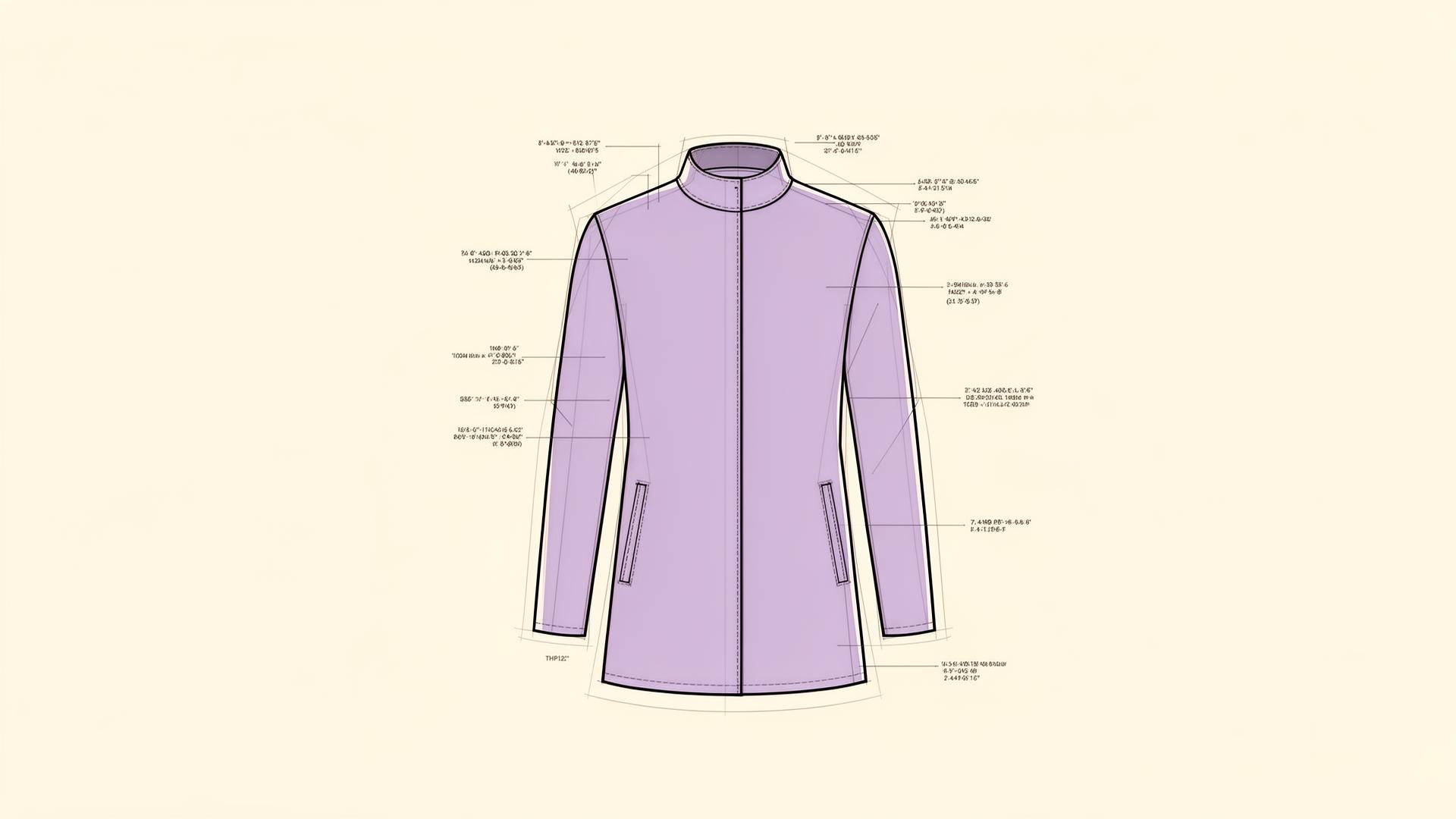
Factories do not inspect AI creativity. They inspect BOM completeness, POM clarity, grading logic, tolerances, construction notes, and whether every field survives handoff.
An AI tech pack generator with BOM, POM, and grading is only useful if it helps a factory quote, source, sample, and scale a garment with fewer questions. The output should not just look like a tech pack. It should carry the production logic behind the style: what materials are used, where the garment is measured, how each size changes, and which details still need technical approval.
For fashion teams, this matters most at the handoff point. A designer may know the jacket needs a washed cotton twill, a chunky zip, oversized sleeves, and a boxy fit. A factory needs that translated into a BOM with trim details, POMs with measurement methods, grading rules across the size range, construction notes, tolerances, and revision status. Without those fields, the supplier has to interpret the design instead of executing it.
This is where many AI tech pack tools break. They generate a clean document, but the BOM is thin, the POM list is generic, and the grading logic is either missing or guessed. That creates the same old problems under a nicer format: unclear costing, slower sampling, more vendor questions, and fit issues that show up too late.
A strong automated tech pack workflow uses AI to draft the structure, garment data to control the fields, and human review to approve the final production file. The goal is speed without weaker handoff. Designers get out of blank-page setup faster, technical designers focus on accuracy, and factories receive clearer inputs before sampling begins.
BOM stands for Bill of Materials. It lists the materials needed to produce the garment.
A good BOM includes main fabric, lining, interlining, buttons, zippers, thread, elastic, labels, hangtags, packaging, supplier references, color references, and placement notes. In stronger teams, the BOM also includes supplier codes, material status, MOQ notes, cost assumptions, colorway mapping, and approval status.
BOM matters because sourcing and costing depend on it. If the BOM is incomplete, the factory cannot quote cleanly. A missing zipper pull, care label, drawcord tip, or packaging instruction may look small in the document, but it creates questions downstream. The supplier either asks for clarification or makes an assumption. Both slow the process.
A practical example: a designer specifies “metal zipper” in a jacket tech pack. That is not enough. The factory needs zipper type, teeth size, finish, length, tape color, supplier, puller style, placement, and quantity. If the brand wants a specific look, the BOM has to carry that detail before sampling begins.
An AI tech pack generator can draft the BOM faster by reading garment inputs and proposing the likely components. For a hoodie, it may suggest body fabric, rib, drawcord, eyelets, care label, main label, hangtag, thread, and packaging. For a tailored trouser, it may suggest shell fabric, pocketing, waistband interlining, zipper, hook and bar, button, thread, labels, and polybag.
The draft still needs review. AI may structure the BOM well, but humans need to confirm supplier availability, fabric behavior, costing, compliance, and trim accuracy.

POM stands for Points of Measure. These are the exact places where the garment is measured.
Examples include chest width, body length, sleeve length, shoulder width, waist width, hip width, inseam, hem opening, neck drop, and armhole. POMs matter because fit depends on consistent measurement. If POMs are vague, every factory interprets the garment differently.
A POM table should include the measurement name, base size value, tolerance, grading reference, and measuring method. Strong tech packs also include diagrams or callouts showing how each measurement is taken. That removes ambiguity during sampling and inspection.
For example, “body length” can mean different things depending on the garment. Is it measured from high point shoulder to hem? Center back neck to hem? Waistband top edge to hem? Without a measuring method, the number is exposed to interpretation.
This is where generic AI often underperforms. It can create a table that looks convincing, but the POM list may be too generic for the garment. A woven blazer, oversized hoodie, bias skirt, compression top, and cargo pant need different measurement logic.
An AI tech pack generator built for fashion should start from garment type, fit intent, base size, and brand blocks. Then it can propose a POM set that matches the product category. A technical designer should still check the critical measurements before the tech pack moves to factory handoff.
In-house designer? Generate a factory-ready tech pack from your brief.
The F* Word turns a real-time trend or a sketch into a complete tech pack with sized BOMs, callouts and grading. Plus a brand-aligned moodboard. Free to try.
Grading defines how garment measurements change across sizes.
A medium might have a 38-inch chest. A large might add 2 inches. A small might reduce by 2 inches. The grading rule tells the factory how to scale the garment without distorting fit.
Grading matters because bad size logic creates returns, fit complaints, inconsistent production, and poor customer experience. A garment can fit beautifully in sample size and still fail across the range if the grade is wrong.
This matters especially for brands selling across wide size ranges. Straight grade rules can break when the garment moves into plus sizes, petite sizes, kids wear, maternity, adaptive wear, or performance apparel. Fabric also changes the logic. A stretch jersey dress does not scale like a rigid denim jacket. A relaxed fleece hoodie does not grade like a tailored coat.
AI can draft grading references, but it should not invent them per prompt. The safest workflow uses a brand grading library. The AI applies the relevant rule set by category, fit type, and size range. A technical designer reviews the critical jumps before sampling.
This is one of the clearest differences between a generic prompt response and an AI tech pack generator BOM POM grading workflow. The stronger system does not guess from language alone. It uses structured garment data.
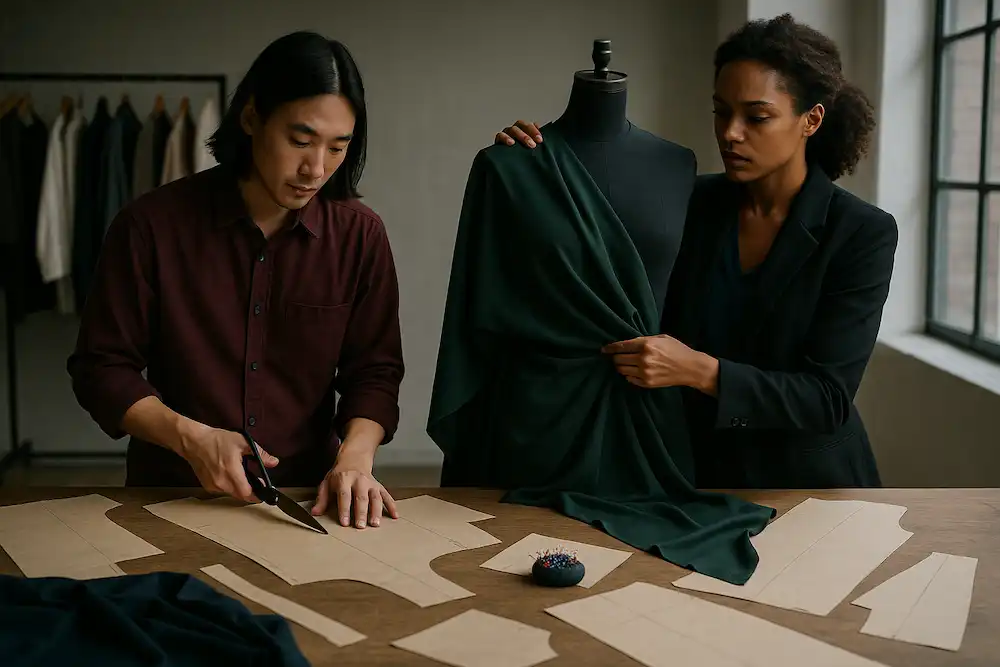
AI can speed up tech pack creation by interpreting garment type, visible details, fabric direction, construction signals, and expected measurement structure. It can draft BOM tables, POM tables, construction notes, colorway tables, grading references, label notes, packaging notes, and revision sections.
The speed gain comes from removing repetitive setup work. Designers and technical teams should not rebuild the same structure from scratch for every hoodie, jacket, trouser, or dress. An automated tech pack generator can start from known product logic, then adjust based on the current style.
In real teams, this changes the early workflow. A designer can move from sketch, concept notes, and fabric direction into a structured draft faster. A technical designer can spend less time formatting tables and more time checking fit, construction, tolerances, and factory clarity. A merchandiser can see material and trim assumptions earlier, before costing turns into a late-stage problem.
The best AI systems help with:
That last point matters. A tech pack is only useful if it supports the next decision. The factory needs to quote, source, sample, and scale. The brand needs to approve with confidence. AI should reduce drafting time while protecting the handoff.
The Spec Chain Check is a simple workflow for testing whether a tech pack section supports the next production action. Apply it by asking whether each field lets the next owner act without guessing: the BOM should let sourcing quote, the POM should let the factory measure, and grading should let the size range scale. When teams use it, creative direction, pre-production, and launch stay connected because style intent turns into measurable production data earlier. The tradeoff is that teams spend more time structuring inputs upfront. The failure mode is treating the check as a formatting task instead of a decision gate, which creates clean documents with unresolved production gaps.
| Tech pack task | Manual draft | Generic AI tool | Fashion-native AI tech pack generator |
|---|---|---|---|
| BOM creation | Accurate when handled by an experienced production team, slower to format | Fast draft, may miss trims, codes, supplier data, and packaging | Drafts from garment logic, brand libraries, supplier references, and component rules |
| POM creation | Strong when based on approved blocks, inconsistent if templates vary | Can produce a neat table, often generic by garment type | Pulls archetype-specific POMs and tolerance rules for review |
| Grading | Reliable when brand rules are documented and applied | Often invented per prompt and inconsistent across attempts | Applies stored grading references by category, fit, and size range |
| Cost awareness | Requires manual reconciliation | Usually absent unless prompted | Can connect BOM assumptions to target cost checks |
| Factory handoff | Depends on version discipline and team experience | Looks complete but often needs rebuild | Supports structured review, missing-field checks, and cleaner exports |
| Best use | Mature teams with established templates | Early drafting and admin support | Production-facing workflow with human approval |
A factory-ready tech pack needs more than complete-looking sections. It needs fields a factory can act on.
Before a tech pack goes to a vendor, the team should review the BOM, POM, grading, construction notes, colorways, labels, packaging, fit comments, revision history, and approval status. Each section should have an owner. Each open issue should be visible. Each assumption should be resolved or flagged.
For BOM, the review should confirm that every material and trim has enough detail for sourcing and costing. That means supplier references where available, color references, placement notes, quantities, and approval status.
For POM, the review should confirm that the measurement list matches the garment type and fit intent. Critical measurements need tolerances. Measuring methods should be clear enough that the factory and brand measure the sample the same way.
For grading, the review should confirm that size jumps match the brand’s rules and the garment’s fit logic. Oversized, stretch, tailored, adaptive, and extended-size products deserve extra attention. Those are the places where generic assumptions break fastest.
A strong factory-readiness section turns AI output into controlled production input. It gives the team a gate before sampling. That gate should be owned by a technical designer, production manager, or experienced product developer.
Assume a technical designer spends 4 hours building a manual tech pack draft for one style. An AI tech pack generator creates the first structured draft in 45 minutes. The technical designer then spends 75 minutes reviewing BOM, POM, grading, construction notes, and factory handoff details.
Inputs: 4 hours manual draft, 45 minutes AI draft, 75 minutes review.
Calculation: 45 minutes + 75 minutes = 120 minutes, or 2 hours.
Result: the team saves 2 hours per style before factory handoff, while keeping technical review in the workflow.
This estimate assumes the brand already has clean garment inputs and some reusable standards. If the team has no blocks, no trim library, no grading rules, and no supplier data, the first few styles will take longer. AI works better when the brand gives it structured memory.
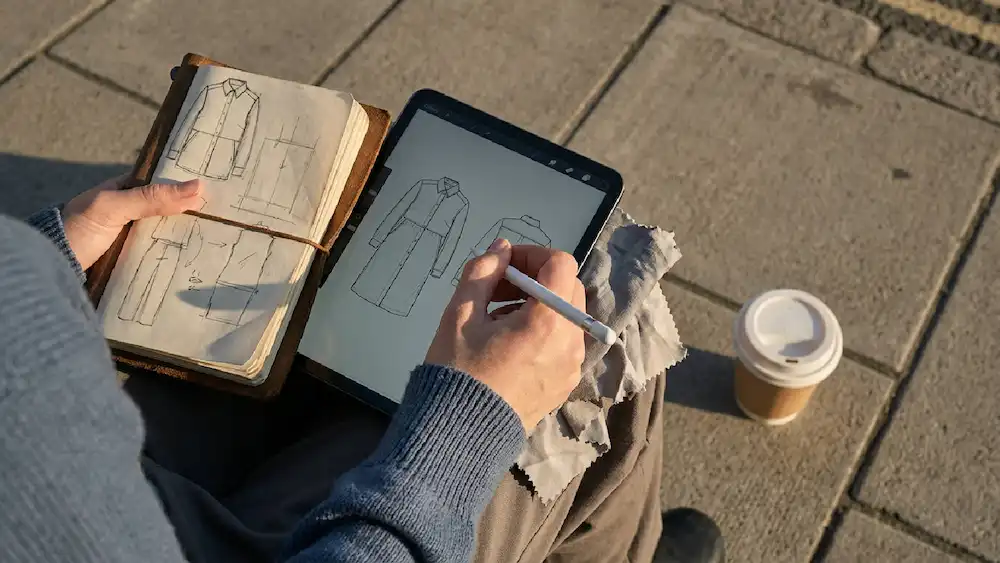
Technical designers should review measurement accuracy, tolerance ranges, grading logic, fabric suitability, construction feasibility, trim details, label compliance, factory-specific requirements, and final revision status.
AI should reduce drafting time. It should not remove accountability.
A common mistake is letting AI produce a table and assuming the table is correct because it looks complete. Production teams know better. The technical designer has to check whether the garment can be sewn as described, whether the materials behave as expected, whether the measurements match the block, and whether the grading supports the intended fit.
The production manager also has a role. They should check whether the supplier can source the listed components, whether lead times work, whether MOQ fits the order quantity, and whether the factory needs additional callouts before sampling.
For creative directors, the value is control. AI can help convert creative direction into production structure faster, but the design team still needs to approve the choices. The spec should protect the intent of the garment, not flatten it into generic factory language.
BOM means Bill of Materials. It lists the fabrics, trims, labels, packaging, and components required to make the garment. A useful BOM also includes supplier references, placement notes, colors, quantities, and approval status.
POM means Points of Measure. It defines where the garment is measured and helps factories maintain fit consistency. POMs should include values, tolerances, and measuring methods.
Grading defines how measurements change across sizes. It helps the factory scale a garment while preserving fit intent. The grading rule should match the product category, fit type, size range, and brand block.
AI can draft and structure these sections, but the output should be reviewed by a technical designer before factory use. The safest workflow combines AI drafting, garment-specific data, validation checks, and human approval.
Factories need BOMs for sourcing and costing, POMs for fit, and grading for size consistency. Without them, sampling slows down, supplier questions increase, and the factory has to interpret details the brand should have specified.
AI Tech Packs for Fashion Brands: What Good Production Handoff Looks Like
Best for teams that want tighter vendor handoff, cleaner approvals, stronger BOM clarity, better POM discipline, and fewer factory questions before sampling.
Trend to Tech Pack Workflow: AI-Driven Efficiency for Apparel
A useful companion for creative directors connecting trend intake, design direction, silhouette decisions, and production specs in one workflow.
Garment Tech Pack Software That Cuts Samples and Chaos
Strong follow-up for production teams dealing with version control, factory questions, sample revisions, and unclear spec ownership.
Related: ai tech pack generator
Get The F* Word workflow insights in your inbox.