
English

An AI tech pack generator uses artificial intelligence to automatically create factory-ready technical packets from design inputs like sketches or 3D models. This reduces documentation time from hours to minutes per style. This post explains what "factory-ready" means for pre-production and what data is required for a vendor to quote and sample accurately. We will cover the specific fields needed for style metadata, bills of materials (BOM), and grading logic. The article also shows how an effective generator processes both 2D and 3D design files to support varied product development workflows without manual data entry.
A factory ready tech pack is more than a pretty PDF. It is a structured product record that a factory can use to quote, source, sample, and build without reconstructing the design brief from scattered files.
That requires explicit fields for style metadata, version control, measurable points of measure, grading logic, BOM lines, and approval status. When those elements are present and consistent, the pack becomes the single source of truth across sourcing, costing, sampling, and launch.
PLM compliant does not mean the pack will plug into every system immediately, it means the data model is designed to travel. A vendor should be able to accept the pack and begin costing and sampling with minimal follow-up questions.
Most tools are built for one input type and force teams to rebuild everything when the workflow changes. A useful AI tech pack generator must process both 2D and 3D inputs and produce the same structured output regardless of origin.
On the 2D side that means sketches, Illustrator flats, rendered concepts, and screenshots should be parsed for silhouette, seam architecture, trim zones, branding areas, and colorway intent. The tool should convert those signals into explicit construction callouts, annotated flats, and BOM lines rather than plain captions or notes.
Actionable tip: standardize the image formats your design team submits and include a simple naming convention that the AI can read, for example STYLECODE_view_colorway.jpg. That small step improves recognition accuracy and reduces manual corrections during the first pass.
A 3D garment already contains useful information about volume, panel relationships, and fit. The generator should inherit that data so the documentation starts with greater precision, for example by extracting seam lines, panel ids, and approximate measurements from the 3D mesh and attaching them to spec fields.
For teams that use 3D, put the 3D phase before documentation, so the pack builds from a richer signal and developers spend less time guessing construction. If you want a deeper operational case study on this point, see 3D Fashion Workflow: Why 3D Belongs Between Concept and Tech Pack.
In-house designer? Generate a factory-ready tech pack from your brief.
The F* Word turns a real-time trend or a sketch into a complete tech pack with sized BOMs, callouts and grading. Plus a brand-aligned moodboard. Free to try.

A quick pack that omits core fields wastes time downstream. The table below shows the minimum components to decide whether a factory can execute the garment as intended.

Actionable tip: treat each BOM line as an addressable record with supplier, lead time, cost, and minimum order quantity. That turns a bill of materials into an operational list your sourcing team can act on immediately.
The Spec Lock Window is a short checkpoint between design approval and vendor handoff where every decision must be converted into structured fields, not comments, screenshots, or memory. Apply it by requiring a final pass across flats, points of measure, grading, BOM lines, artwork placement, labels, and revision notes before export.
When teams use this checkpoint correctly, creative direction stays fluid earlier and pre-production tightens quickly, which gives launch teams cleaner product data downstream. The tradeoff is construction choices are made earlier, which calls for clear governance on who approves those choices.
Operational tip: make the Spec Lock Window an approval gate in your product workflow with an audit trail and sign-off fields. That keeps changes auditable and prevents ad hoc edits that create rework in sampling.
Speed alone is not the benefit, throughput is. If a single technical designer builds packs manually, the hidden cost is not only time spent entering fields. The bigger cost is the queue that forms while design, merchandising, and vendors wait for documentation to catch up.
Here is the clean math. For a capsule of 40 styles, a manual pack at 180 minutes per style versus an AI-generated pack at 8 minutes gives: 40 × (180 - 8) = 6,880 minutes saved, which equals 114.7 hours saved before revision cycles even begin. That saved time shifts quality control earlier in the calendar and reduces calendar slippage.
With faster packs you can validate more styles sooner, let merchandising review line architecture earlier, and give vendors cleaner first passes. Actionable tip: measure time-to-first-sample and set targets for reductions across two seasons to quantify impact on lead time and markdown risk.
Many AI outputs look complete but lack measurable depth. Flats may appear correct visually, while seam logic and measurement detail remain generic. That leaves vendors guessing during costing and sampling.
Another common failure is treating BOMs as optional or high-level lists. Missing supplier detail, composition breakdowns, and trim references cause cost drift and wasted sampling rounds. A pack that omits those items will still create the same downstream friction as a poor manual pack.
Revision control is a third failure mode. Teams update packs in chat, email, or PDFs and the live record becomes out of date the moment it is exported. The fix is to make the tech pack the live artifact that records changes and exposes approval state.
A factory ready tech pack should leave your team with a structured product record that plugs into the rest of the apparel stack. That means fields that map to style metadata, version history, BOM line items, supplier notes, approval states, and spec changes.
If your AI tool generates a pack quickly but your team still rekeys core information into another system, the bottleneck has moved, not disappeared. The operational goal is a single editable record that feeds PLM and sourcing tools with minimal transcription.
Product teams should audit data flow end to end. Track where fields are re-entered, how often vendors request clarifications, and which BOM lines cause the most sampling rounds. Those metrics reveal where the workflow still needs work.
Start producing faster, cleaner tech packs today by moving generation earlier in your workflow, enforcing a Spec Lock Window, and tracking time-to-first-sample. If you want to deploy the platform for faster tech packs, fewer sampling rounds, real-time trend signals, and lower markdowns and returns, start a trial at https://app.thefword.ai/. The operator voice: generate a factory ready tech pack in minutes, not hours, and keep a single live product record throughout pre-production and launch.
Speed only matters if the artifacts are real. A pack that completes in 8 minutes but skips one of the six artifacts below is not factory-ready, it is a draft a technical designer still has to rebuild. The table below names each artifact, the field-level checks that prove it is complete, and the common shortcut that fails review.
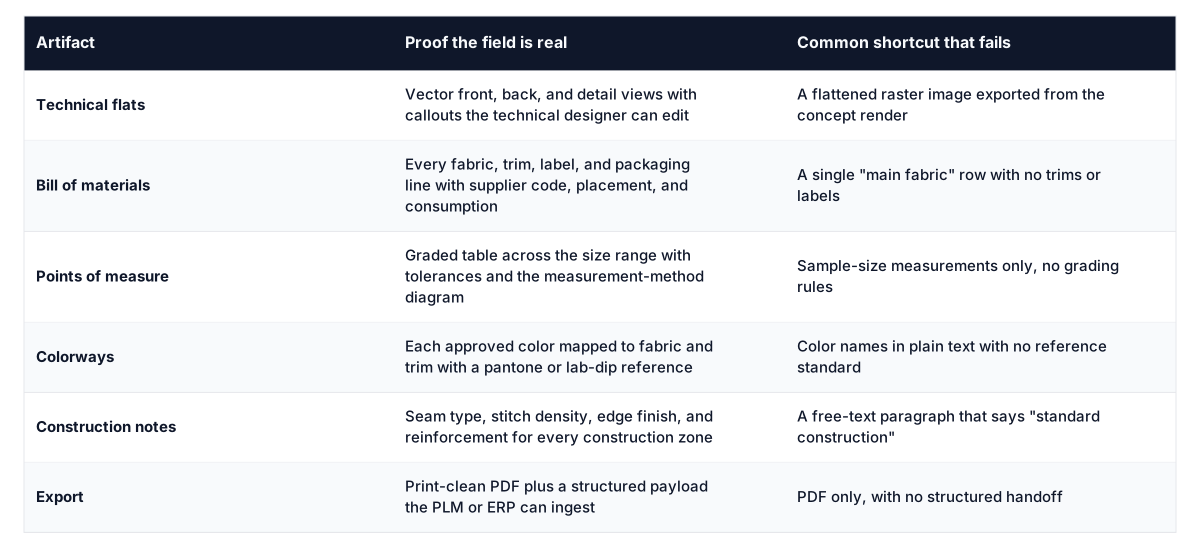
The F* Word generates all six artifacts in the same run, along with an on-brand moodboard tied to the same brief, so the creative direction and the production spec are versioned together. For the longer factory-ready reference, see what a factory-ready tech pack actually contains and the AI tech pack pillar.
Accuracy varies by input type and quality. 3D inputs yield more reliable initial measurements because they contain volume and panel data, while 2D inputs may require a short verification pass. Best practice is to run an automated first pass, then validate the measurement chart against a physical size sample or established fit block.
No, it should not replace PLM, it should feed PLM. A well-structured pack produces fields that map into PLM workflows, which reduces transcribing and improves data integrity. If your current process still requires manual rekeying, focus on integration and data model alignment first.
Start with a small pilot and share packs with trusted suppliers while keeping a parallel manual record for the first few styles. Collect vendor feedback on missing items and iterate the pack template. Once suppliers see repeatable, accurate packs, adoption accelerates quickly.
Better specs reduce variability in fit and construction which lowers sampling rounds and first-run defects. Over time that consistency contributes to lower returns and fewer markdowns, especially when combined with earlier commercial reviews and tighter BOM control.
Once the tech pack is factory-ready, these are the steps that take it through production.
Related: Best AI tech pack software in 2026 · AI colorway generation for fashion · AI measurement chart automation
Related: AI Tech Pack Generation · Pre-Production Workflow
Related: AI fashion design workflows
Related: typical tech-pack revision cycles
Get The F* Word workflow insights in your inbox.