
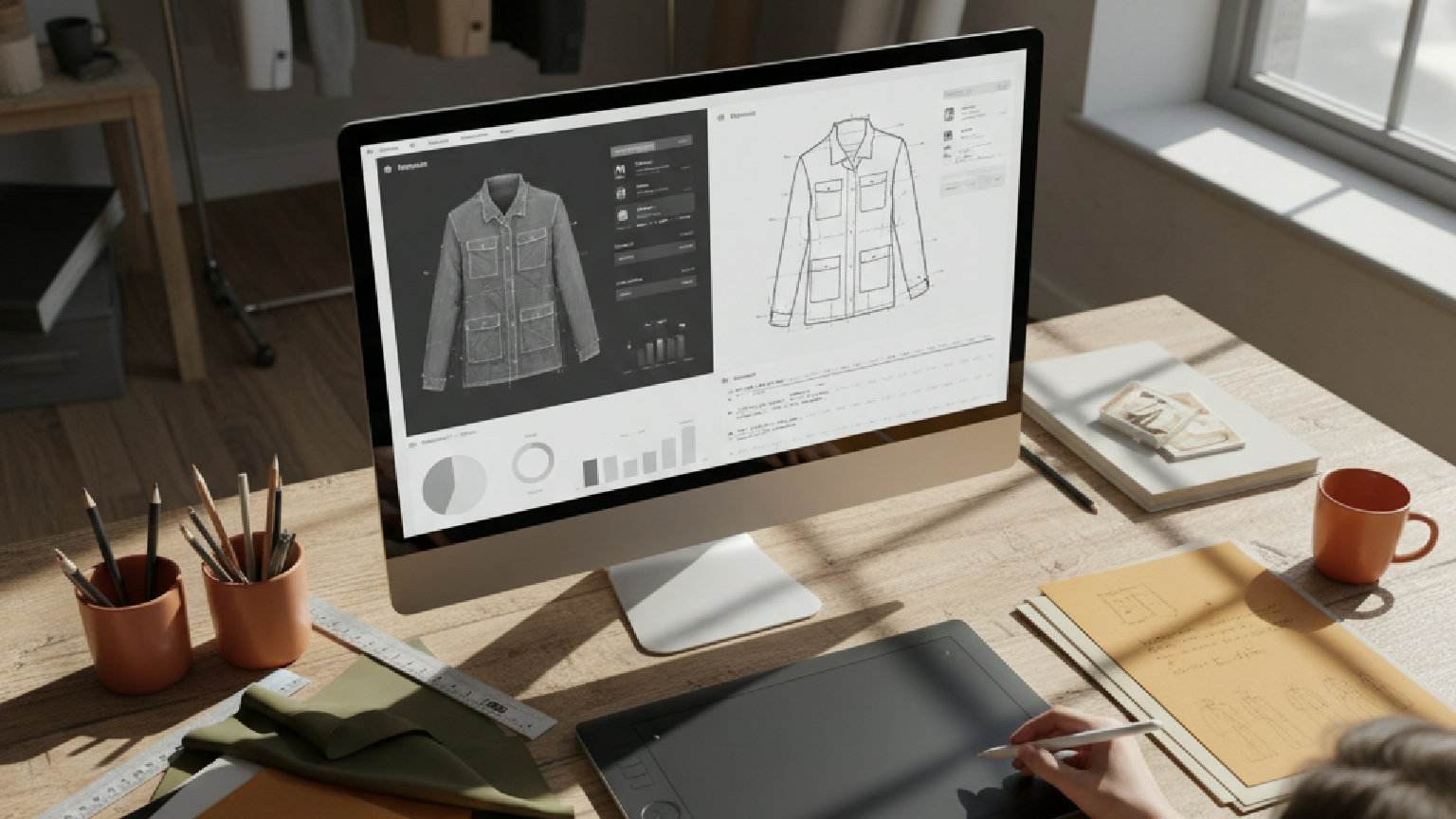
Quick take: An AI tech pack typically costs $4 to $25 per style on subscription platforms versus $80 to $250 per style for manual drafting through a freelancer or in-house designer. Time drops from 4 to 8 hours to 15 to 30 minutes per style. Accuracy on first pass is comparable for standard silhouettes; manual still wins on couture, complex tailoring, and any garment with non-standard construction.
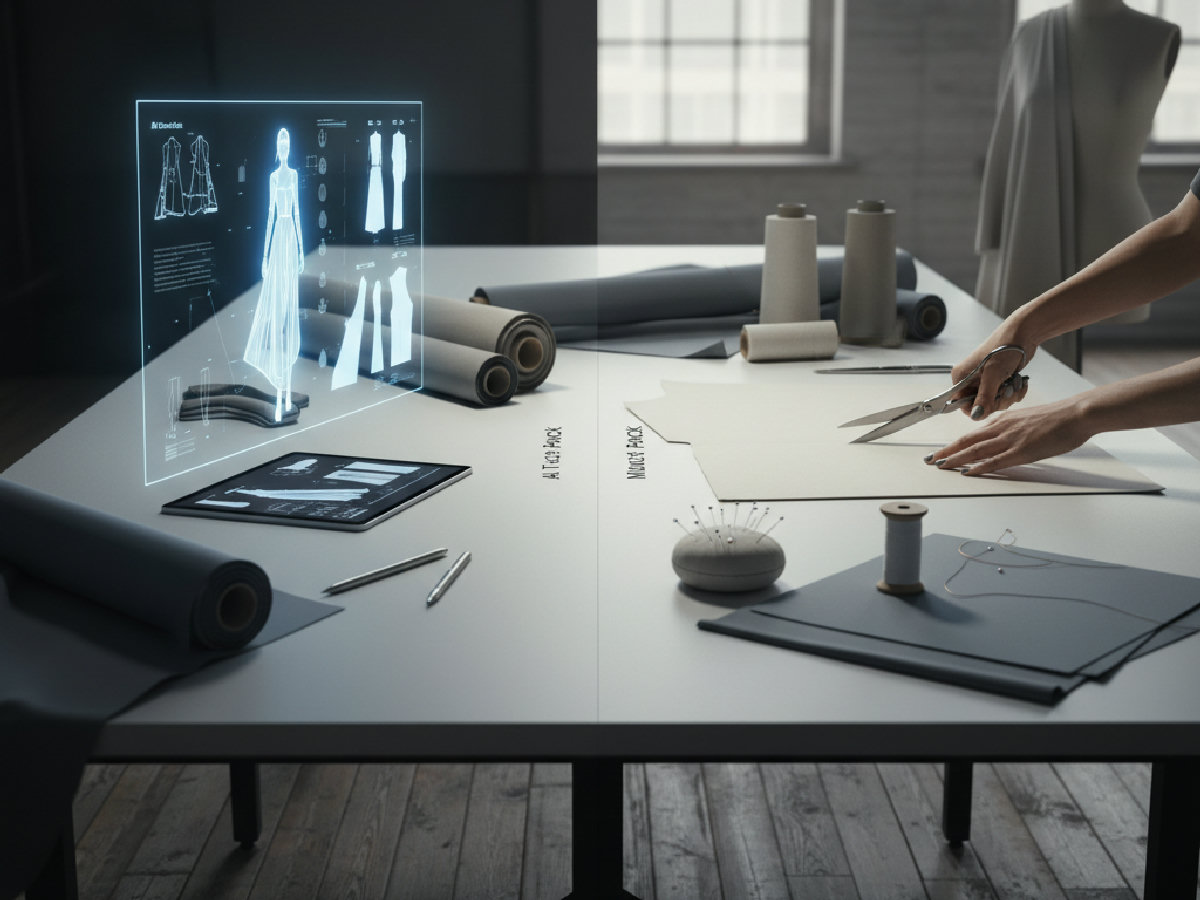
The question every production lead is asking in 2026 is no longer whether AI can generate a tech pack. It can. The question is whether the AI version is good enough to send to a factory without a senior designer rewriting half of it. The honest answer depends on three variables: silhouette complexity, brand's own data maturity, and the QA process the team is willing to run.
Manual tech pack pricing varies widely. A US or EU freelance technical designer charges $80 to $200 per style. A factory-supplied tech pack is technically free but the brand pays for it in lost IP and lost negotiating power. AI platforms charge per-seat or per-style. Per-style pricing on the major platforms in 2026 ranges from $4 (high-volume basics) to $25 (complex outerwear with full grading and BOM).
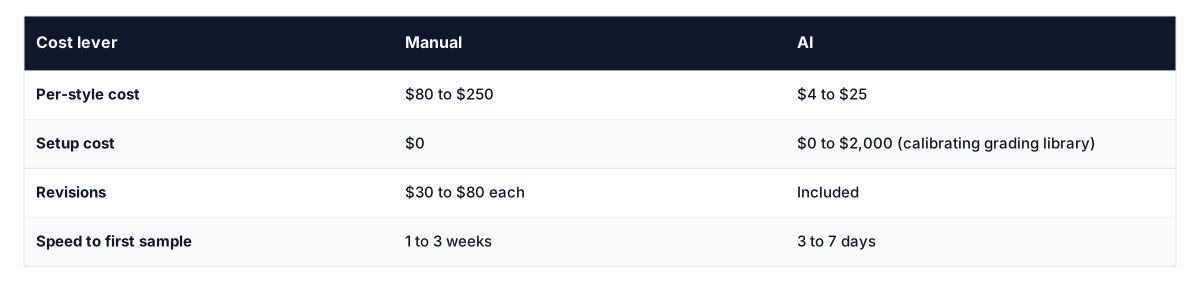
A senior technical designer takes 4 to 8 hours per style for a manual tech pack including BOM, points of measure, and grading. AI platforms compress that to 15 to 30 minutes per style of total human time, with the model handling 80 percent of the data entry. The savings compound on repeat silhouettes: by style 20, AI cycles drop to 10 minutes while manual stays flat.
AI wins on standard silhouettes the model has seen thousands of times: tees, hoodies, button-downs, jeans, basic dresses. First-pass accuracy for points of measure and construction notes is comparable to a mid-level technical designer. AI loses on novel construction (asymmetric seams, custom pleating, hand-finished tailoring) and on anything that requires understanding a specific factory's house preferences.
The pattern that has emerged in 2026 is brands using AI for 70 to 90 percent of their styles (basics, repeats, mid-complexity) and reserving senior technical designer time for the 10 to 30 percent of styles where construction complexity or brand-defining detail justifies the extra cost. This frees the senior designer from data entry and lets them focus on the parts of the job where their judgment is unique.
The biggest risk with AI tech packs is silent errors. A wrong fiber composition or a wrong point of measure will not throw an error message; the document just goes to the factory and the sample comes back wrong. Brands that have moved to AI without changing their QA process report the same defect rate as manual. Brands that added a 5-minute designer sign-off step to the AI workflow report defect rates lower than manual, because the AI is more consistent on the boring fields humans skim.
In-house designer? Generate a factory-ready tech pack from your brief.
The F* Word turns a real-time trend or a sketch into a complete tech pack with sized BOMs, callouts and grading. Plus a brand-aligned moodboard. Free to try.
Yes for any brand making more than 20 styles per season. Below that volume, the per-seat subscription cost can equal or exceed paying a freelancer per style.
Yes. Factories care about the document being complete and unambiguous, not who or what produced it. A well-formatted AI tech pack with clean BOM and grading is no different to the cutting room than a manually drafted one.
No. It eliminates the data-entry portion of the job. Technical designers shift into QA, system configuration, and the high-judgment 10 to 30 percent of styles where AI struggles. Headcount in 2026 is roughly flat at brands that adopted; output per designer has roughly doubled.
Read the data-handling clauses. Reputable platforms keep your sketches, BOMs, and tech packs in a tenant isolated from training data. Free tiers that train on uploaded sketches are not appropriate for proprietary designs.
On standard silhouettes, accuracy on points of measure is within 0.25 inch on 90 percent of measurements after grading library calibration. Construction notes are roughly 80 to 90 percent factory-ready on first pass. Both numbers improve sharply once the brand has run 10 to 15 styles through the same platform.
Related: AI tech packs pillar · Best AI tech pack software 2026
If you ship fewer than 20 styles a season and most are couture or complex tailoring, stay manual. The per-seat AI cost will not pay back. If you ship 20 to 100 styles with a healthy mix of basics and statement pieces, run hybrid: AI for the basics, manual for the statement pieces. If you ship 100+ styles per season, AI with a designer QA layer is the only economical path. Track defect rate at sampling for two seasons before scaling to your full catalog. The brands that move fastest are the ones that pilot on a 10-style capsule, measure honestly, then expand.
Related: tech pack vs spec sheet
Get The F* Word workflow insights in your inbox.