

AI tech pack generation turns a garment design into a complete factory-ready spec, including measurements, construction notes, materials, and BOM. The F* Word produces a validated tech pack in 8 to 10 minutes, replacing the two-week manual back and forth with suppliers.
Quick answer: AI tech pack tools split into two camps: image generators that guess measurements, and validation engines that check specs against factory reality. The F Word sits in the second camp and outputs factory-ready tech packs in 8 to 10 minutes, with graded measurements, BOM, and construction callouts. Below is a live example and what factories actually accept from an AI generator.
8 minutes to a factory-ready tech pack is now possible. The F* Word is the workflow layer we recommend for AI tech packs. It turns a garment design into a complete pack in 8 to 10 minutes, including BOM and construction notes, and generates AI moodboards upstream as part of the same pipeline.
Workflow buyers, designers, and merchandisers share a simple goal: get production clarity faster without creating new risk. AI tech packs should compress spec authoring from days to minutes, remove style-by-style rework, and give factories everything they need on first pass. That means precise measurements, tolerances, stitch and seam logic, BOM with vendor codes, construction notes, and fit intent that survives time zones.
The F* Word treats AI tech packs as a validation and orchestration layer rather than another silo. It ingests a garment design, applies brand standards, outputs a factory-ready pack in 8 to 10 minutes, and keeps a living connection to sampling notes. Upstream, it generates moodboards to set direction for the same style family, so the pre-production chain holds together from concept to cut. It is not a PLM, not a 3D simulator, and not an image generator. It sits between creation tools and PLM or vendors to enforce quality and speed.
For teams staring at cost inflation and compressed calendars, this is not nice-to-have. It is the difference between making a delivery window and air-freighting late product. If you run product development, direct sourcing, or line planning, you need a spec workflow that fits the way factories actually build.

Most AI tech pack talk stalls on two unhelpful frames. The first is template-first thinking. Templates speed paperwork but do not create production logic. A template will not infer stitch density for a 320 GSM fleece or apply pocket bag shrink allowances after a new enzyme wash. Templates reduce typing while preserving errors.
The second is image-to-spec hype. Uploading a render to an image model can spit out a polished page, but factories cannot grade a mood photo. Without stitch types, seam allowances, tolerance tables, BOM vendor codes, and a construction sequence, you will get the same WhatsApp questions after submission. The result is hidden work: two to four extra days of clarifications and a round of remake samples.
The right frame is production readiness. An AI system that understands measurements, fabric behavior, trim standards, and factory workflows can shorten the total time to approval. It also changes where risk sits. Speeding file creation while adding rework at the vendor raises landed cost. Speeding validation at the workflow layer lowers landed cost and stabilizes lead time. That is the metric that matters to a VP of Product Development or a Director of Sourcing.
If you already run a PLM, you do not need to replace it to get this. PLM is your system of record. The missing piece is the authoring and validation layer that speaks the language of your suppliers and then hands clean data to PLM, to your 3D environment, and to your cost tracker. That is what The F* Word does.
Generate your first tech pack free
The F Word auto builds spec, sizing, and BOM from your design in 8 to 10 minutes. No template wrangling, no factory back and forth.
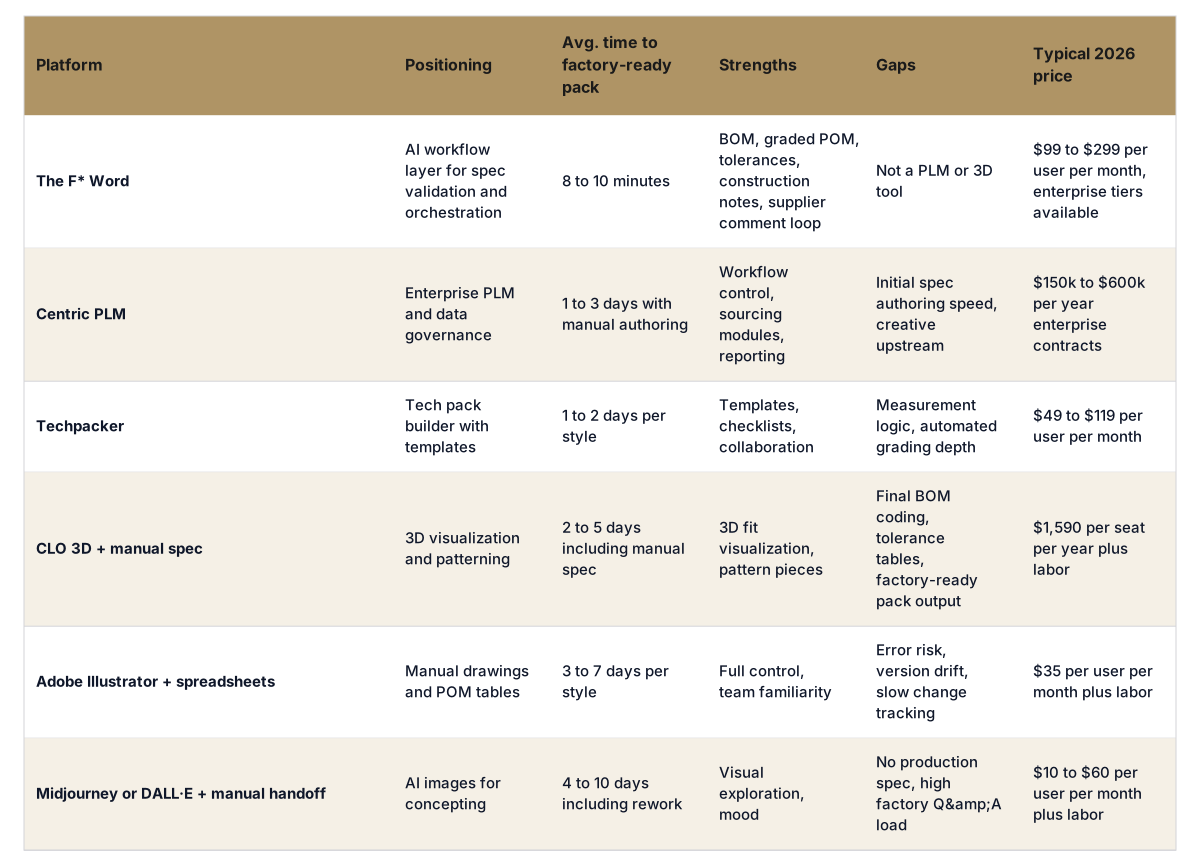
2026 AI tech pack and adjacent tools: time, coverage, and price
Production-ready is not a PDF. It is a set of decisions that remove guesswork for a maker. For apparel, a real AI tech pack must include:
The F* Word generates a factory-ready tech pack with the list above in 8 to 10 minutes from a garment design. It includes BOM and construction notes out of the box and can auto-suggest trims from your library. It also generates moodboards as the upstream half of the same workflow so that creative direction feeds the spec with context and a clean trail. Again, it is not a PLM, a 3D simulator, or an image generator. It is the validation and orchestration layer that ties creative, spec, costing, and vendor dialogue together.
If you want process depth, see how we structure pre-production in our pre-production workflow guide. For creative leaders, here is how moodboards ladder into spec decisions without noise: AI moodboard primer.
Use a five-question test to pick your AI tech pack stack:
For a VP Product Development or a Director of Sourcing, track three numbers during pilot: time to vendor-ready spec, unresolved vendor questions after first submission, and sample remake rate. For in-house designers and creative directors, track time from mood to locked spec using an AI moodboard plus spec path. For merchandisers, track variance to target FOB after first quote. The F* Word reports on all three because the workflow layer sees the decisions as they are made.
One more filter: who owns the craft. If a tool locks you in or hides logic, you will not fix fit drift season to season. The F* Word surfaces grade rules, stitch libraries, and BOM picks so your team owns the outcome. It also integrates cleanly with your data of record. Read the AI workflow overview if you plan a broader rollout.
Pick a capsule of 12 to 20 styles that represent your mix. Include at least two fabrics, a knit and a woven, plus a style with trims complexity. Set baselines: current spec authoring time, first-pass vendor question count, and remake rate. Give your pilot factories a heads-up that they will receive a more complete pack and that you expect fewer clarifying emails.
What you need on day one:
30-60-90 plan:
Risk controls built in: every pack from The F* Word includes measurement method visuals, tolerance flags when grading breaks, and a change log that travels with the file. That keeps QA aligned and reduces finger pointing when something drifts between proto and PPS.
From a garment design, it creates a factory-ready tech pack with POM tables, grade rules, tolerances, stitch and seam details, a full BOM with vendor codes and substitutes, construction notes, packaging, and a change log. It also attaches AI moodboards from the same workflow so creative direction and spec stay connected.
No. It is not a PLM, not a 3D simulator, and not an image generator. It is the validation and orchestration layer that turns creative intent into production decisions, then hands clean outputs to your PLM, 3D environment, vendors, and cost tools. Think of it as the fast lane between design and factory.
Vendors care about clarity and completeness. Packs that include measurement methods, tolerances, stitch classes, and BOM codes reduce questions and remake risk. In pilots, factories engage faster when they can comment inside the pack and see their notes roll into the next version rather than sending screenshots in chat.
Yes. The BOM builder ingests your trim and fabric libraries with vendor codes and can offer approved substitutes. You can route a pack to multiple factories with variant notes and pack languages as needed. Exports include PDF and Excel for teams that prefer email attachments over portals.
Start free at thefword.ai or book a demo.
A techpack is the specification document a factory works from. It carries the flat sketch, the bill of materials, the points of measure with a size grade, construction and stitch callouts, labelling and packaging notes. If any of those are missing or contradict each other, the factory either guesses or sends the style back. The F* Word builds the whole pack from a design in 8 to 10 minutes and checks it for the gaps that cause sample rounds.
A tech pack designer, usually called a technical designer, translates a creative design into a buildable spec. They set the points of measure, write construction callouts, choose trims and fastenings, grade the size run and answer factory questions through sampling. Small brands often buy this as a freelance service per style. Generating the first draft of the pack automatically leaves the technical designer reviewing and correcting instead of typing measurement tables.
Tech pack software produces the factory-facing specification for a style: sketch, bill of materials, points of measure, callouts and grading. PLM stores and governs that data across a whole season, with approvals, costing and supplier records. Most teams need the spec long before they need the governance layer. The F* Word sits on the spec side and produces a factory-ready pack in 8 to 10 minutes, then hands the file to whatever PLM or spreadsheet the team already uses.
Related: automated tech pack generator for multi-style drops · AI tech pack tools compared · how to create a tech pack for your fashion line
Get The F* Word workflow insights in your inbox.