
English

A mid-size fashion brand managing 200 styles per season often spends over three weeks revising specifications between design and technical design. This iterative cycle delays production and inflates costs due to repeated rounds of sampling and prototyping. Traditional methods of tech pack creation are labor-intensive, involving multiple departments and leaving room for misinterpretation and errors. The solution? Automated tech pack generators are streamlining workflows by reducing these revision cycles and enhancing accuracy.
Manual tech pack creation is fraught with inefficiencies. Designers and technical designers must meticulously compile information, from precise measurements and grading rules to materials and BOMs (Bill of Materials). This data must then be communicated to manufacturers, often leading to misunderstandings that require costly revisions. For example, an incorrect fabric listing can result in an entire batch needing re-production, wasting both time and resources.
What this looks like in practice: Consider a technical designer at a 150-SKU athleisure brand. They spend hours compiling detailed measurements, fabric details, and stitching instructions into a tech pack. Each piece of information must be checked for accuracy before sending it to the manufacturer. A single error, like a miscalculated seam allowance, can lead to a cascade of costly revisions.

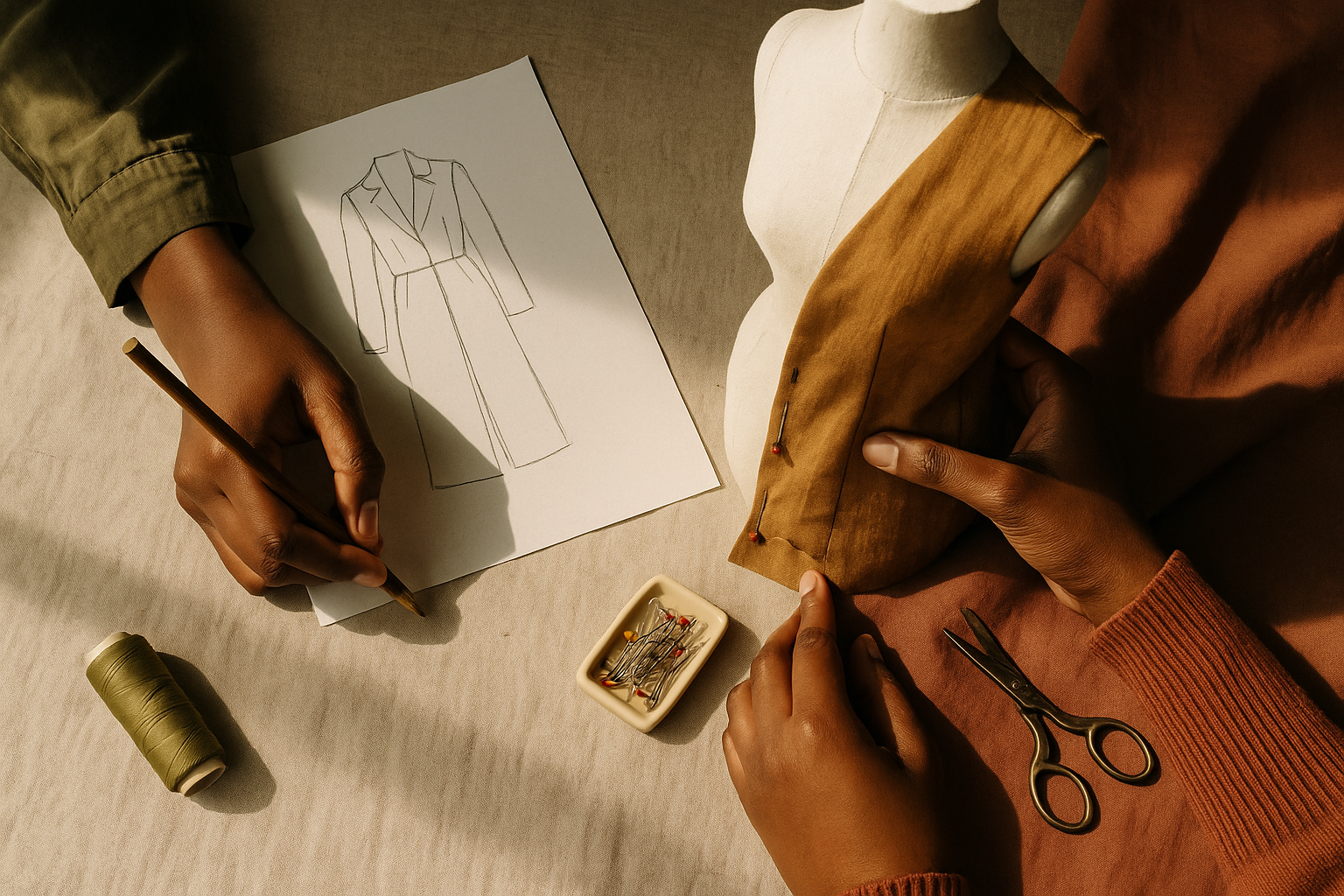
When a designer uploads a sketch to an automated tech pack system, it extracts silhouette data and aligns it with the brand's pre-defined construction library. This process automatically generates a spec-ready tech pack, complete with seam allowances, stitch types, and fabric requirements pre-filled. The reduction in manual input means fewer errors and faster production cycles. With AI-driven pattern recognition and data mapping, these systems convert creative sketches into detailed production-ready documents, facilitating a smoother handoff to manufacturers.
What this looks like in practice: At a high-fashion label with a quick turnaround ethos, designers use the automated system to input initial sketches. The AI processes these sketches and auto-fills all necessary technical details. The technical designer then reviews and approves the final tech pack, drastically cutting down on the traditional back-and-forth.
In-house designer? Generate a factory-ready tech pack from your brief.
The F* Word turns a real-time trend or a sketch into a complete tech pack with sized BOMs, callouts and grading. Plus a brand-aligned moodboard. Free to try.
Automated tech pack generators are beneficial in the pre-production phase and enhance the creative direction and product launch stages. During creative direction, tools can help align trend intake, moodboards, and silhouette planning with technical specifications, ensuring a cohesive vision from concept to execution. In the product launch phase, these generators support SKU readiness and merchandising by providing accurate measurements and construction details for ecommerce platforms, reducing returns and markdowns.
What this looks like in practice: A creative director at a luxury brand uses the system to ensure that moodboards and initial sketches align with the technical parameters. This holistic approach ensures that the eventual product retains the original design vision while being ready for production and sale with minimal adjustments.

The Design-to-Production Integration framework emphasizes the alignment of creative and technical processes from sketch to factory handoff. By synchronizing these phases, brands can achieve faster turnaround times and maintain design integrity. This framework uses automated tech pack generators to bridge the gap between design intent and manufacturing execution, minimizing the friction traditionally encountered in these transitions.
How to apply: Implement the framework by introducing AI tech pack generators into the design workflow. Train the design and technical teams on new processes to ensure smooth transitions. Expected impact: Brands can expect to see a reduction in revision cycles by 70% and a 20% improvement in product launch speed. Tradeoffs: Initial implementation requires investment in technology and training. Failure modes: Poor integration with existing systems can lead to data silos. Anti-patterns: Relying solely on AI without human oversight can overlook nuanced design elements.
Consider a brand that typically spends 3 weeks and $450 per style on manual tech pack creation. By adopting an automated tech pack generator, the process can be reduced to 3 days at a cost of $85 per style. Inputs: Time (3 weeks vs. 3 days), Cost ($450 vs. $85). Calculation: [(3 weeks - 3 days) / 3 weeks] = 90% time savings; [(450 - 85) / 450] = 81% cost savings. Result: This results in a time savings of approximately 90% and cost savings of over 80%, drastically improving overall operational efficiency. Sensitivity/edge-case variation: If a brand has a more complex design requiring additional manual review, time savings might reduce to 70% and cost savings to 60%, which still offers significant improvements.

The F* Word’s platform accelerates tech pack generation, reducing sampling rounds and offering real-time trend integration. Our AI technology ensures fewer errors, quicker turnarounds, and reduced markdowns and returns. Explore our solutions at The F* Word to see how you can optimize your fashion workflows today.
One of the most critical stages in the apparel industry is the transition from design to manufacturing. Automated tech pack generators play a critical role here by ensuring that the technical specifications are accurate and comprehensive. This minimizes the chance of miscommunication with manufacturers, which can lead to production errors and delays.
What this looks like in practice: At a global sportswear company, once the tech pack is finalized, it is exported directly to the manufacturer’s system. The automated tech pack ensures that all specifications, from fabric type to stitch density, are precisely communicated. This reduces the need for clarification queries and accelerates the manufacturing process.
While automated tech pack generators offer numerous advantages, there are common pitfalls that companies should be aware of. One major issue is the potential for over-reliance on automation, which can lead to overlooking important nuances in design elements that require human judgment.
What this looks like in practice: A novice team might fully depend on the AI-generated tech pack, missing out on critical design elements that add value to the final product. To avoid this, teams should integrate human oversight at critical checkpoints to ensure the final output aligns with the brand’s quality standards.
Quality assurance (QA) is a fundamental part of the fashion production process, and automated tech pack generators enhance this phase by ensuring consistency and accuracy. With precise measurements and instructions automatically generated, the QA team can focus on verifying these details rather than manually checking for errors. This focus allows for a higher quality product and smoother production runs.
What this looks like in practice: At a midsize denim brand, the QA manager uses automated tech packs to streamline quality checks. The system provides a checklist of specifications that the QA team can systematically verify, reducing the risk of defects and enhancing the overall quality of the final product.
Automated tech pack generators significantly impact cost management by providing accurate BOMs and cost estimations upfront. By reducing the number of revisions and errors, brands can better manage their budgets and forecast expenses. This precision in costing ensures that financial resources are allocated efficiently, preventing budget overruns.
What this looks like in practice: A financial planner at a high-volume fashion retailer use automated tech packs to set accurate budget forecasts. The planner uses AI-generated data to predict material costs and labor expenses, ensuring that the financial plan aligns with the operational realities of production.
An automated tech pack generator is a tool that converts design sketches into comprehensive production-ready documents, reducing manual input and errors. By streamlining this process, it ensures that designers and technical teams can focus more on creativity and less on administrative tasks. This tool extracts data from sketches, aligns it with existing libraries, and outputs detailed tech packs that are ready for manufacturing.
It significantly cuts down the time and cost associated with creating tech packs, enhances accuracy, and improves communication with manufacturers. This efficiency enables brands to bring products to market faster, maintain consistent quality, and reduce waste associated with production errors. The tool also allows for better resource allocation, reducing financial risks and improving overall profitability.
Yes, most automated tech pack systems are designed to easily integrate with popular design software, streamlining the workflow further. This compatibility ensures that teams can adopt new technology without overhauling their existing processes and tools. Integration typically involves API connections or plug-ins that allow smooth data exchange between systems.
These systems may struggle with highly complex or unique designs that require bespoke construction techniques not found in standard libraries. In such cases, manual intervention is necessary to ensure that the final product meets the design specifications accurately. Additionally, the initial setup and training might require upfront investment, which can be a barrier for smaller brands.
By providing precise specifications and reducing errors, it facilitates smoother product launches, ensuring accurate merchandising and reduced returns. This accuracy helps maintain brand reputation and customer satisfaction, as products delivered align closely with marketing and design intent. Additionally, it enables faster go-to-market strategies, giving brands a competitive edge in the fast-moving fashion industry.
Once the tech pack is factory-ready, these are the steps that take it through production.
Related: Tech Pack Designer vs AI Tech Pack Software: Which One Should You Hire
Get The F* Word workflow insights in your inbox.