
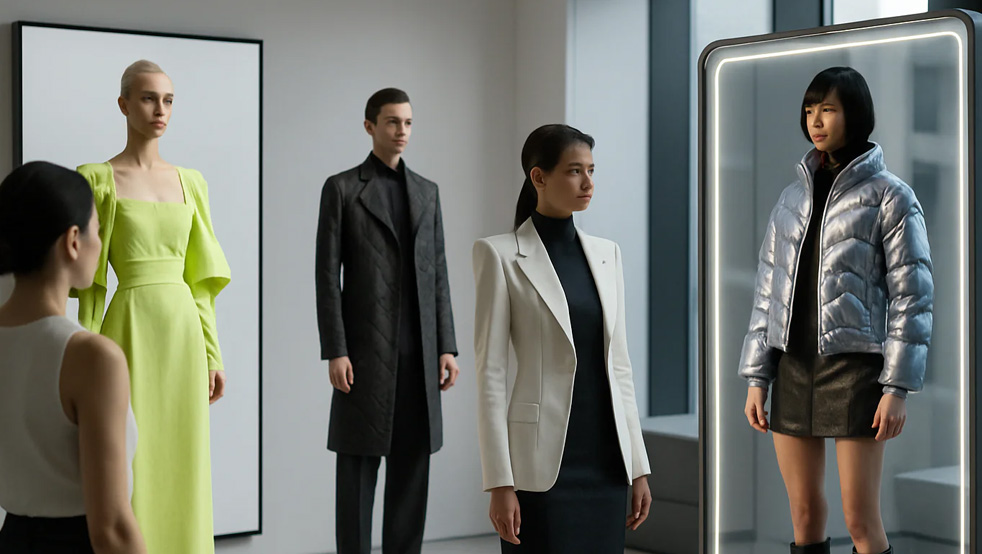
By 2026, a staggering 75% of leading fashion brands will rely on agentic AI not just for inspiration, but for autonomous, end-to-end design and production workflows. The conversation has decisively shifted from the novelty of text-to-image generators to the strategic implementation of AI agents, sophisticated digital collaborators that can independently manage complex tasks from market analysis to tech pack creation. This isn't science fiction; it's the new operational reality for brands that intend to compete on speed, innovation, and efficiency. For designers and labels, understanding this agentic paradigm isn't just an option; it's the critical professional development needed to stay relevant in an industry being rewritten by intelligent automation.
For the past few years, AI in fashion was largely synonymous with generative models, tools that could produce a static image from a text prompt. While revolutionary, this was merely the prelude. The year 2026 marks the era of the agentic AI, a far more powerful and integrated evolution. An AI agent is a system that can perceive its environment, process information, make decisions, and take actions to achieve specific goals without direct, step-by-step human command. Think of it as the difference between giving a calculator a sum to solve and giving a project manager a goal to achieve.
In fashion, this translates into AI systems that operate as specialized team members. A "Trend Analysis Agent" might be tasked to "Identify the top three emerging aesthetics on social media among 18-24 year olds in Northern Europe and generate a corresponding mood board and color palette." It would then autonomously crawl data sources, synthesize the findings, and deliver the completed assets. Similarly, a "Technical Design Agent" could take a 3D model of a garment and be tasked to "Generate a complete, factory-ready tech pack, including a bill of materials, graded measurement specs, and construction callouts." This marks a profound departure from using AI as a simple tool. Instead, we are now delegating entire workflows to our AI counterparts, freeing human designers to focus on high-level strategy, creative direction, curation, and brand storytelling. As we explore the top platforms, it's crucial to understand this distinction: we are no longer just evaluating image quality, but the intelligence and autonomy of the entire workflow.
The market for agentic AI fashion tools has matured from scattered, single-purpose apps into comprehensive suites. Selecting the right platform depends entirely on your role, the scale of your brand, and your specific needs, from initial concept to final production. Below is a comparison of the leading platforms defining the landscape in 2026.
Comparison: The Leading Agentic AI Fashion Suites of 2026

Designer or merchandiser? Replace the spreadsheet handoff.
The F* Word generates moodboards, factory-readable tech packs and sampling notes in one workflow, so creative, production and merchandising stay aligned. Free to try.
A table provides a snapshot, but the true power of these platforms lies in their specific agentic workflows. Understanding how they operate reveals which one will best integrate into your creative and production process.
Our platform, thefword.ai, is engineered around the principle of a smooth, end-to-end workflow. We don't believe in siloing the creative process. Our "Design Agent" is the centerpiece, it accepts a complex brief detailing target audience, brand ethos, key trends, and desired product mix. From there, it generates not just images, but a cohesive collection strategy: mood boards, key silhouettes presented as initial 3D drafts, a strategic color palette, and even text descriptions for each piece. The magic is in the integration. With a single click, you can then task our "Production Agent" to take an approved 3D design and generate a comprehensive, production-ready tech pack. This unified system eliminates the tedious data re-entry and file conversion that plagues designers, making it the most efficient solution for those who need to move quickly from a validated idea to a manufacturable product. This is the core of
SynthAtelier has carved a niche in hyper-realism. While other platforms handle materials well, SynthAtelier's "Material Agent" is on another level. It can analyze a photograph of a physical fabric swatch and create a PBR (Physically-Based Rendering) material that perfectly mimics its weight, drape, sheer, and reaction to light. Its true agentic capability shines when you task it to find alternates. For example: "Find three sustainable, recycled polyester alternatives to this silk charmeuse with a similar drape and weight, available from European suppliers." The agent will crawl supplier databases, run simulations, and present you with viable, sourced options, complete with cost estimates. This makes it indispensable for luxury houses where material is paramount and for sustainable brands committed to responsible sourcing.
Couture-GPT doesn't generate garments. It generates strategy. Its entire focus is on the pre-design phase. Its agents are constantly monitoring global runway shows, street style blogs, e-commerce sites, and social media platforms. A merchandiser could task it to "Analyze the top-performing outerwear styles from our three main competitors over the last six months and identify a market gap for a women's trench coat under $300." The platform would return a detailed report with silhouette suggestions, feature callouts (e.g., "double-breasted styles are declining; oversized lapels are trending"), and data-backed colorway recommendations. It's an AI collaborator for the business side of fashion, ensuring creative output is always commercially viable.
These two represent the "unbundled" approach. Fabrick API isn't a user-facing platform, but a toolbox for developers. A large company like Zara or H&M might use its APIs to build a custom internal agent that, for example, automatically optimizes fabric usage across all patterns for an entire season's collection to minimize waste (an agentic marker maker). PatternAI Pro, conversely, is a user-facing tool but with a laser focus. It does one thing exceptionally well: it automates the work of a master pattern maker. A designer can provide a finished 3D model from CLO or a detailed technical flat sketch, and the "Pattern Agent" will draft, true, and grade a complete 2D pattern set that's ready for cutting. It's a specialist tool for a specialist's job, designed to be plugged into a larger workflow.
How do you choose where to invest your time and money? It's not about finding the "best" tool, but about building the right stack for your specific needs. Here's a framework to guide your decision-making.
Adopting an agentic workflow is a transformative process. It requires a shift in mindset from being a "doer" to being a "director." Here’s a phased approach to make the transition smooth and successful.
Your first month is about learning and teaching. Start by feeding the AI your brand's DNA. Upload past collection images, your brand guidelines, customer personas, and marketing copy. This calibrates the agent to your unique aesthetic. Your main job is to master the art of the brief. Don't just prompt "denim jacket." A good agentic brief sounds like this: "Design an oversized, 90s-inspired trucker jacket for our 25-35 year old urban female customer. Use 14oz rigid selvedge denim. Include a corduroy collar detail. Show it in three washes: vintage light, rinsed indigo, and garment-dyed black." Treat the AI as a new junior designer you are onboarding.
Now, integrate the agent into a live, low-stakes project. Use it as a powerful brainstorming partner. Instead of spending two days creating three mood boards, ask the agent to create ten in 20 minutes. Your role shifts to curator and editor. You use your human expertise to select the best direction and refine it. Task the agent with creating 15 variations on a chosen silhouette. This is where you'll see the first major ROI, a massive expansion of creative possibilities in a fraction of the time. This phase is crucial for learning how to
In the third month, you begin to chain commands and automate entire workflows. An advanced task might look like: "Based on the approved trench coat design 'FW26-Trench-01', generate colorway variations using our approved Fall/Winter 2026 palette. Then, generate a full tech pack for the 'Stone' colorway in size Medium, and finally, create three e-commerce lifestyle shots of the coat on a model in a rainy London street setting." This is the essence of agentic AI: one high-level command that triggers a cascade of complex, sequential tasks. This is where you move from saving hours to saving weeks, fundamentally changing your business's speed and capacity for innovation.
The era of agentic AI isn't on the horizon; it's here. The designers and brands that master these collaborative workflows will define the future of fashion. By offloading the tedious, the technical, and the time-consuming, you unlock your most valuable asset: your creative vision. Ready to build that future? Start free at thefword.ai.
No, it redefines the designer's role. Agentic AI is a force multiplier, not a replacement. It automates repetitive and data-heavy tasks like market research, iterative sketching, and technical documentation. This liberates human designers to focus on what they do best: high-level creative strategy, trend curation, brand storytelling, and making the final critical decisions. The designer becomes an art director, guiding their AI collaborator.
The cost varies significantly based on capability and target user. All-in-one platforms like ours often use a tiered subscription model, with accessible plans for indie designers and students, and more comprehensive enterprise plans for brands. Specialized, high-powered tools like SynthAtelier or API-based solutions like Fabrick API are typically priced at the enterprise level with custom contracts based on usage and support needs.
By 2026, the answer is increasingly yes, but with a crucial caveat. Platforms like thefword.ai, which specialize in production workflows, can generate tech packs and 2D patterns that are remarkably accurate and nearly factory-ready. However, a final review by an experienced human technical designer or product developer is always an essential, non-negotiable step in the process to catch nuances and ensure perfect execution.
The learning curve is less about technical software skills and more about strategic thinking. Unlike complex 3D modeling programs that require months of training, most agentic platforms are designed to be intuitive. The primary skill to learn is how to write clear, detailed, and effective creative briefs. If you can clearly articulate your design intent to a junior designer, you can effectively direct an AI agent. The focus is on your vision, not your ability to manipulate vertices and splines.
Once the workflow is in place, these are the steps that turn it into shipped product.
Related: AI-driven fashion workflows
Get The F* Word workflow insights in your inbox.