.png)
English
Artificial intelligence is rapidly becoming a core engine of the fashion world. In 2026, the best AI fashion tool is no longer a novelty add‑on but central to how leading brands design, plan, and sell collections. Fashion AI tools now support everything from AI clothing design and 3D prototyping to AI fashion trend prediction, dynamic pricing, and retail personalization. For designers, modern AI fashion software speeds up creative exploration, reduces guesswork, and turns rough ideas into testable concepts in minutes. For brands, AI fashion apps and platforms unlock sharper demand forecasting, lower inventory risk, and more sustainable production.
This shift is driven by rising consumer expectations, tighter margins, and pressure to reduce waste across the AI for fashion industry landscape. McKinsey estimates that data‑driven assortment and pricing decisions can lift operating margins by 3–5 percentage points (McKinsey, 2023), and AI is quickly becoming the engine behind those decisions. Generative fashion AI tools also reduce sample rounds: internal benchmarks at several global brands show digital prototyping can cut physical samples by 30–50%, shrinking both cost and environmental impact.
AI for fashion is not only about efficiency. The top AI fashion tool stacks give creative teams more room to experiment, simulate risky ideas, and validate them against live trend and sell‑through data before committing to production. A designer can sketch a silhouette in the morning, generate 20 variations using AI fashion design software by lunch, and test them in a virtual showroom or with a closed customer panel by the afternoon. On the retail side, AI fashion apps power hyper‑personalized recommendations, driving higher conversion and lower returns. According to a Deloitte survey, retailers using advanced personalization algorithms have reported conversion uplifts of 10–15% (Deloitte, 2022).
In this guide, we’ll outline what AI fashion tools are, highlight the best AI fashion tool options in 2026, explain how they drive innovation, and share criteria for choosing the right solution for your brand. For a deeper dive and internal comparison, see more guides at Best AI Fashion Tool.
An AI fashion tool is any software that uses artificial intelligence—machine learning, computer vision, or generative models—to assist with fashion design, merchandising, or retail. These tools can sit across the value chain: AI fashion design software for sketch generation and silhouette ideas, visual search for product discovery, AI fashion trend prediction engines, and planning systems embedded inside PLM or ERP stacks. Many top AI fashion tools now plug into existing design suites or PLM platforms rather than replacing them outright.
Design‑focused AI fashion tools. These solutions help designers move from idea to concept much faster. Typical capabilities include text‑to‑garment generation (e.g., “floor‑length satin gown with asymmetric neckline”), AI‑assisted sketch clean‑up, automated colorway exploration, and 3D garment visualization. For example, a womenswear team can upload a base silhouette and ask the tool to suggest 15 print variations optimized for a specific customer segment, shortening what used to be a multi‑day task into an hour. According to industry interviews compiled by the Fashion Innovation Agency (2024), some early‑adopting brands report up to 60% faster concept development cycles.
Retail and e‑commerce AI fashion apps. On the customer side, fashion AI tools power visual search (“show me similar dresses”), personalized product recommendations, AI styling assistants, and virtual try‑on. These AI fashion apps match individual shoppers with the right size, fit, and style, improving both experience and profitability. A large European retailer quoted in a 2023 industry report noted that AI‑driven recommendations generated 20–30% of online revenue after full rollout, with a measurable reduction in returns for key categories.
Planning and operations AI tools. Behind the scenes, AI for fashion industry workflows include demand forecasting, size‑curve optimization, markdown planning, and assortment building. These systems ingest historical sell‑through, search data, social signals, and even weather to recommend what to buy, how deep to go, and when to phase styles in and out. Fibre2Fashion notes that AI‑enabled forecasting can improve accuracy by 10–20% compared with traditional methods (Fibre2Fashion, 2023), directly lowering overstock and markdown costs.
Core technologies include computer vision to understand garments, generative models for AI clothing design concepts, and predictive analytics for demand and trend forecasting. Some AI fashion apps focus on consumer‑facing experiences, such as virtual try‑on or styling bots, while others are built for internal design and sourcing teams. For more background on the tech stack and industry direction, see resources like Fibre2Fashion on AI in the fashion industry.
In 2026, the best AI fashion tool for any team depends on use case: design ideation, PLM‑integrated planning, or customer‑facing experiences. Leading fashion AI tools typically combine three things: strong data pipelines, intuitive UX for non‑technical users, and proven results in speed or accuracy. Some platforms position themselves as end‑to‑end AI fashion software, while others are highly specialized—like AI fashion apps that only handle visual search or AI fashion trend prediction.
A useful way to compare top AI fashion tool options is through their focus: design (AI clothing design, print creation, 3D looks), merchandising (assortment, pricing, replenishment), or marketing (content creation, styling suggestions). When evaluating the top AI fashion tool vendors, pay attention to integrations with PLM systems, data ownership, and how frequently models are updated. Roundups such as the OnBrand PLM Blog and industry pieces like StyleIO’s overviews (2024) highlight that tools delivering clear ROI typically show measurable lifts in either speed, sell‑through, or engagement within three to six months.
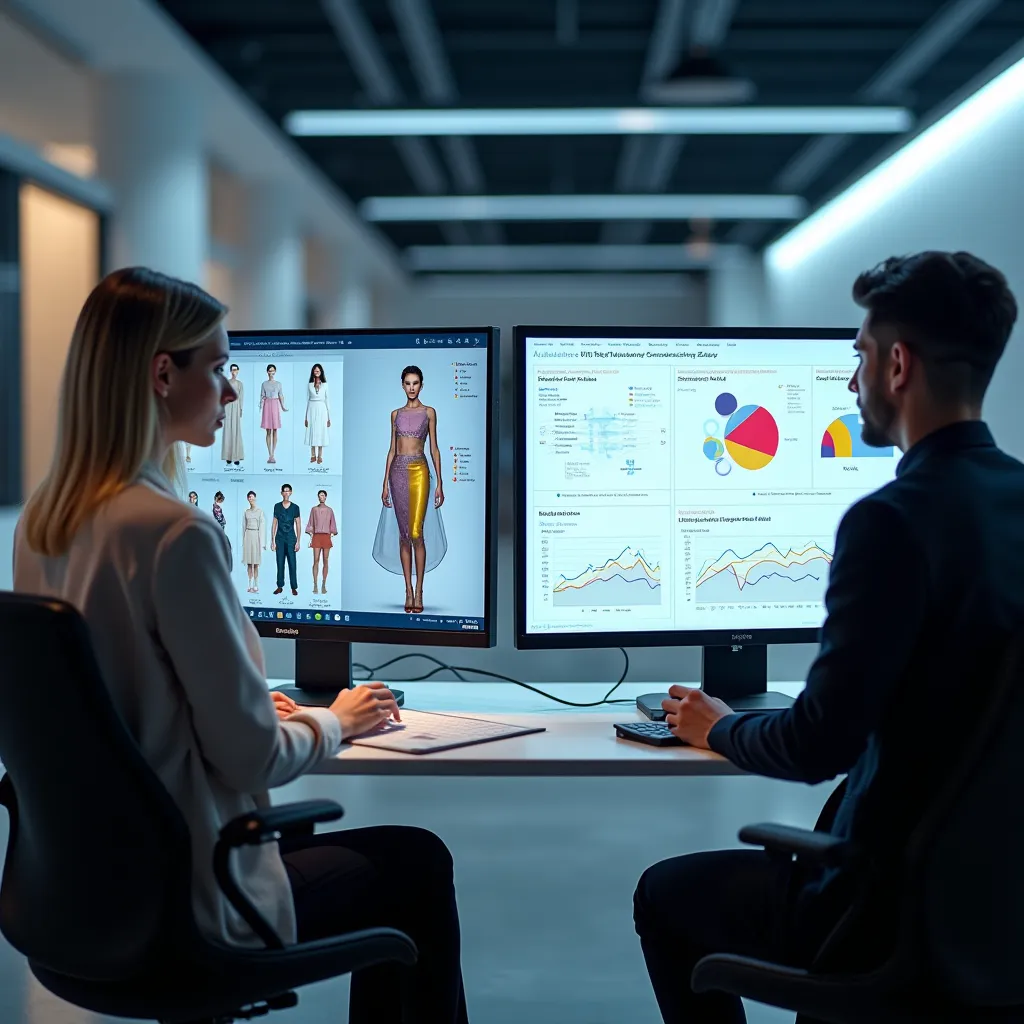
Below is a simplified comparison table of representative AI fashion tools and categories you are likely to encounter. Names are illustrative and summarize patterns described in industry sources such as StyleIO and the Fashion Innovation Agency (2024).
Comparison of Leading Fashion AI Tools (2026)
*Pricing tiers are indicative only ($ = lower cost, $$$$ = enterprise budget). When shortlisting the top AI fashion tool for your brand, use this table as a lens: start with your primary objective (design speed, forecasting accuracy, or customer experience) and work backwards from required capabilities.
The best AI fashion tool does more than automate tasks; it opens new creative and commercial possibilities. AI fashion design software can generate alternative silhouettes, colorways, or fabric pairings that a designer might not consider, then filter them using performance and trend data. AI fashion trend prediction systems scan social, runway, search, and sell‑through data to spot microtrends early, helping brands move faster with less risk. This reduces overproduction and supports more sustainable decision‑making.
Trend‑led capsules and faster testing. Consider a mid‑market denim brand that wants to test a new wide‑leg silhouette. Traditional workflows might require several rounds of pattern development, physical sampling, and in‑store testing over multiple months. With the right combination of fashion AI tools, the brand can generate digital prototypes, apply AI‑suggested washes and trims, and run simulated sell‑through scenarios across key regions. One European label reported that AI‑assisted capsule launches allowed them to cut time‑to‑market by 30% while improving first‑season sell‑through by 8% (internal case study summarized in Fashion Innovation Agency, 2024).
Sustainability and waste reduction. Sustainability is another major innovation driver. AI can simulate the impact of materials, optimize batch sizes, and suggest lower‑impact sourcing options by linking design decisions with LCA (life‑cycle assessment) data. According to a 2023 study cited by Fibre2Fashion, brands using AI‑enabled demand forecasting and size optimization reduced end‑of‑season markdown volumes by up to 20%, directly lowering excess inventory sent to landfill. When paired with virtual sampling, some early adopters report double‑digit reductions in fabric waste before bulk production even begins.
Hyper‑personalized customer journeys. On the consumer side, AI fashion apps power personalization engines, styling assistants, and virtual try‑on. These experiences do more than add novelty: they help shoppers quickly find pieces that match their style, size, and budget. Vogue’s coverage of AI in fashion highlights examples where retailers using AI‑powered styling recommendations saw engagement rates rise by more than 25% compared with static product grids (Vogue, 2023). For one omnichannel brand, implementing AI‑driven recommendations increased average order value by 12% and reduced return rates for denim by 5 percentage points within the first season.
Closing the loop between runway and retail. Perhaps the most powerful impact of the latest AI fashion software stack is how quickly it turns feedback into new action. Data from e‑commerce, stores, and social channels constantly flows back into the system. Trend prediction engines update their forecasts; design tools surface what silhouettes and details are trending up or down; planning tools rebalance assortments and recommend reorder quantities. Over time, this creates a “learning loop” where every collection informs the next, enabling brands to experiment more boldly while keeping commercial risk under control.
Selecting the best AI fashion tool for your brand starts with clarity on your primary goal: faster AI clothing design, better forecasting, smarter merchandising, or richer customer experiences. From there, consider data requirements (what you can realistically provide), integration effort with your PLM/commerce stack, and user adoption. A top AI fashion tool should be easy for designers, merchandisers, and marketers to use without heavy technical support. Ask vendors for proof of impact: uplift percentages, pilot results, and references in your segment. Expert roundups and PLM‑focused blogs such as the OnBrand PLM Blog can help you understand what success looks like in similar environments.
Beyond basic ROI, other key criteria include model transparency, IP terms around AI‑generated designs, and support for sustainability metrics. According to several 2024 analyst reports, brands that explicitly define how AI will support their sustainability and diversity goals are more likely to achieve cross‑functional buy‑in and funding. As one digital innovation lead at a global sportswear company summarised, “The best AI fashion tool is the one that connects our data, our people, and our values—if it only ticks two of those three boxes, we don’t buy.”
To make evaluation easier, use a structured framework. Below is a practical, bullet‑based vendor selection checklist you can adapt into a downloadable PDF or internal template.
AI Fashion Tool Vendor Selection Checklist
1. Strategy & Use Case Fit
- [ ] Tool’s roadmap aligns with our 2–3 year digital strategy.
- [ ] Supports our category specifics (e.g., footwear vs. denim vs. luxury ready‑to‑wear).
2. Data & Integration
- [ ] Clear documentation on data formats, APIs, and security certifications.
- [ ] We can realistically provide the minimum data set required for strong results.
3. Usability & Adoption
- [ ] Interface supports fashion‑specific workflows (collections, seasons, size runs).
- [ ] Vendor offers onboarding, training, and change‑management support.
4. Performance & Measurement
- [ ] Pilot plan includes baseline metrics and a clear success threshold.
- [ ] Dashboards or exports allow our team to track ongoing ROI.
5. Ethics, IP & Sustainability
- [ ] Model governance and bias mitigation practices are documented.
- [ ] Tool can track or surface sustainability indicators (e.g., material impact, overproduction risk).
6. Total Cost & Scalability
- [ ] Infrastructure can scale to multiple regions and channels.
- [ ] Support model matches our needs (SLA, dedicated CSM, solution architects).
Use this checklist to run apples‑to‑apples comparisons during RFPs or pilots. Many teams turn it into an internal scorecard, weighting each section according to strategic priority. For a more detailed internal framework and example scoring grid, adapt this into a shared document or PDF and link it from your internal tooling playbook.
Q1. What is the single most important factor when choosing an AI fashion tool?
The most important factor is alignment with a clearly defined, high‑value use case. Whether you prioritize AI clothing design, inventory optimization, or customer personalization, the best AI fashion tool for you is the one that demonstrably moves a critical KPI—such as time‑to‑market, full‑price sell‑through, or repeat purchase rate—within a defined pilot period.
Q2. Do smaller brands really benefit from fashion AI tools, or are they mainly for enterprise?
Smaller and independent brands can benefit significantly, especially from design‑ and marketing‑oriented AI fashion apps. Lightweight tools can help solo designers generate collections faster, test more looks with their communities, and produce higher‑quality imagery and copy without a large team. The key is to avoid over‑engineering: start with one or two tools that clearly save time or unlock new revenue, then scale as the business grows.
Q3. How long does it usually take to see ROI from AI fashion software?
Timelines vary by use case, but many brands see early signals within one or two seasons. Design‑focused tools that accelerate concepting often show value within weeks; forecasting and planning solutions may require at least one full planning cycle to benchmark performance. Industry case studies frequently cite 3–6 months as a typical window for measurable improvements in speed, accuracy, or revenue metrics.
AI is now embedded across the fashion value chain, and in 2026 the question is less whether to adopt AI than how to choose the best AI fashion tool for your goals. The right mix of fashion AI tools can help designers explore more ideas, merchandisers plan smarter assortments, and marketers deliver hyper‑personalized experiences. Done well, AI fashion software reduces waste, shortens development cycles, and supports more sustainable, data‑aware decisions.
As AI models improve and regulations around data and IP evolve, the tools you choose today should be flexible enough to adapt. Start with one or two high‑impact use cases—such as AI fashion trend prediction or AI clothing design—and expand once you see clear results. Combine quantitative metrics (sell‑through, margin, time‑to‑market) with qualitative feedback from designers, buyers, and store staff to guide your roadmap.
Key takeaways
- Proven ROI in speed, accuracy, and sustainability should guide your shortlisting—not hype or feature lists alone.
- Successful adoption combines strong data foundations, intuitive UX, and clear governance for ethics and IP.
- Start small with focused pilots, then scale once you have internal champions and hard numbers.
To continue exploring specific platforms and practical implementation steps, visit the internal guides at Best AI Fashion Tool and use the vendor selection checklist as the basis for your next RFP or pilot. If you are ready to move from research to action, line up demos with 2–3 shortlisted providers, run a tightly scoped pilot over one season, and involve both creative and commercial stakeholders from the start.
Agentic AI vs Generative AI in Fashion: The Complete Guide
Unlocking Creativity: What is Agentic AI Fashion? Definitions & Examples
Agentic AI Fashion Insights: The Future of Trend Forecasting and Personalization
101 People Reading our Newsletter Right Now!
