

This guide has moved. Read the updated version: ChatGPT vs Claude vs Gemini for Tech Packs: Why Generic AI Cannot Create Factory-Ready Specs.
ChatGPT can help draft parts of a fashion tech pack, but it should not be trusted alone to create factory-ready production specs. It can outline garment descriptions, construction notes, and measurement tables when prompted well. It struggles with garment-specific POM logic, BOM completeness, grading references, trim IDs, tolerances, and validation. Use it for drafting, not final factory handoff.
That distinction matters because a fashion tech pack is not a writing exercise. It is a production control document. A factory uses it to quote, sample, source, grade, sew, finish, label, and package a garment. When the file is vague, the factory fills in the blanks. That is where delays, wrong samples, and expensive revisions begin.
A ChatGPT tech pack can look polished and still fail the moment a production manager checks it against the actual garment. The issue is not formatting. The issue is missing production logic. A clean table with weak measurements still creates weak samples. A confident BOM with missing trims still creates sourcing questions. A neat construction note without stitch type, placement, tolerance, or sequence still forces the factory to guess.
For designers and fashion brands, the practical answer is clear: use ChatGPT to organize thinking, draft early language, and speed up admin. Do not use it as the final source for factory-ready tech pack approval.
ChatGPT is useful when a designer needs a first pass. It can turn a rough product idea into a structured outline. It can help junior teams understand which sections belong in a tech pack. It can also clean up messy notes from a design review or convert a product brief into a more production-facing format.
Inside a real apparel team, this saves time at the start of the workflow. A designer may have a bomber jacket concept, a few reference images, notes from a trend meeting, and a loose target customer. ChatGPT can help turn those inputs into a garment description, a draft construction section, and a starter measurement table. That gives the technical designer something to react to instead of a blank page.
ChatGPT is especially useful for:
This is real value. It reduces blank-page friction. It helps designers communicate faster. It can also help founders who have never seen a tech pack understand the shape of the document before they speak to a factory.
The ceiling appears when the document has to become operational. A factory-ready tech pack requires decisions, validation, and garment-specific judgment. ChatGPT can imitate the format, but it cannot reliably know whether the spec is complete for the exact garment, size range, fabric, factory, and production method.
ChatGPT fails when the task requires garment-specific validation. It does not automatically know whether the POMs are complete for the garment type. It does not know whether a sleeve opening, shoulder slope, waistband, inseam, pocket placement, or tolerance range is correct for the actual design. It can produce confident tables that look complete while still missing fields a factory needs.
The most common failure is false completeness. The file appears finished because every section has words in it. A production manager sees the gaps immediately. A factory sees them later, usually through questions, wrong samples, or quoted assumptions.
Common ChatGPT tech pack failures include:
These gaps matter because tech packs move across roles. The designer needs the style to reflect creative intent. The technical designer needs the spec to support fit and construction. The merchandiser needs the BOM to support costing. The factory needs enough detail to quote, sample, and produce without guessing.
When ChatGPT invents a measurement table, it may use plausible POM names that do not match the brand's blocks. When it drafts a BOM, it may forget drawcord tips, care labels, main labels, hangtags, polybags, spare buttons, or carton details. When it writes construction notes, it may describe the seam generally instead of specifying stitch type, seam allowance, reinforcement, placement, and finish.
That is where AI-generated tech packs create risk. The problem does not always show up in the document. It shows up in sampling.
In-house designer? Generate a factory-ready tech pack from your brief.
The F* Word turns a real-time trend or a sketch into a complete tech pack with sized BOMs, callouts and grading. Plus a brand-aligned moodboard. Free to try.
A factory-ready tech pack should include technical flats, front and back views, measurement points, tolerances, BOM, fabric details, trim details, colorways, construction notes, stitching details, label placement, packaging notes, grading references, fit comments, revision history, and approval status.
A good FR section makes those requirements visible before the file goes out. It should act like a gate between internal drafting and external factory handoff. The point is simple: the team should know what is incomplete before the factory finds it.
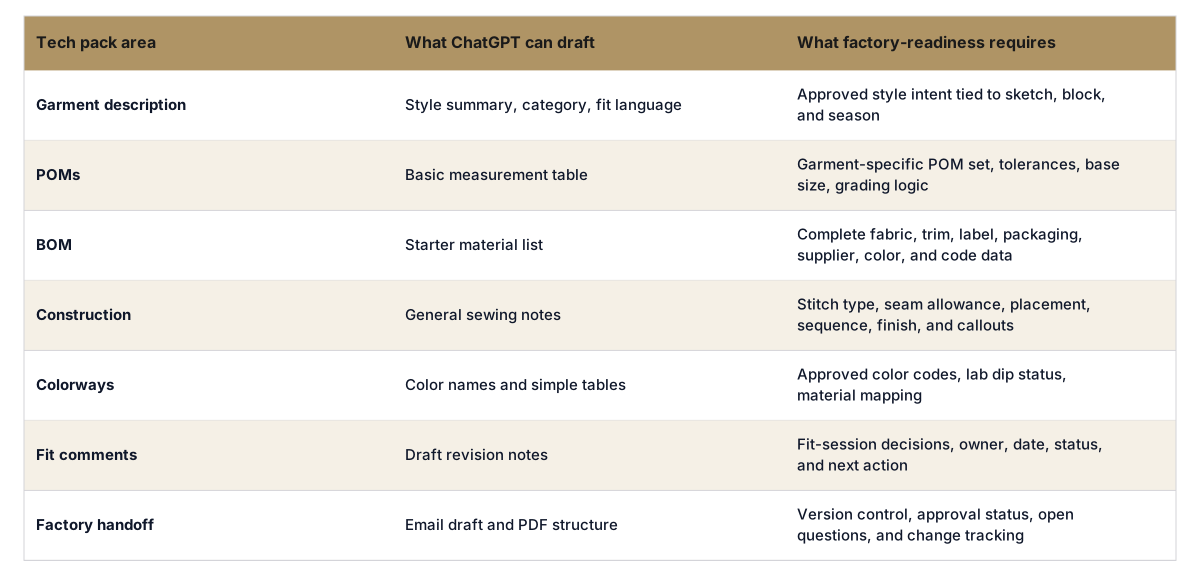
The factory-readiness question is blunt: could a production manager send this file to a supplier and expect a usable first sample? If the answer depends on the factory interpreting missing details, the tech pack is still a draft.
Assume a small brand sends five ChatGPT-drafted tech packs to a factory. Three styles come back with avoidable sample issues caused by missing POMs, incomplete BOM fields, and unclear construction notes. Each re-sample costs an estimated $180 in sample charges and shipping.
Inputs: 3 re-samples, $180 per re-sample.
Calculation: 3 × $180 = $540.
Result: the team spends an estimated $540 on avoidable re-sampling before counting lost calendar time, internal review time, or delayed launch decisions.
That number is modest on purpose. In real teams, the bigger cost is usually time. A two-week delay can push fit approval, photo samples, wholesale selling, campaign production, and factory booking. For seasonal brands, late clarity compounds quickly. A weak tech pack does not stay in the tech pack folder. It travels through the whole product calendar.
The better workflow is simple: use AI to draft, use garment data to structure, use validation to check, and use a human to approve.
That sequence protects the team from treating fluent language as production readiness. It also lets designers keep the speed benefit of AI without handing technical authority to a general-purpose chat tool.
For creative direction, AI can help translate trend intake, moodboards, silhouette decisions, color stories, and line planning into clearer briefs. For pre-production, the workflow needs more discipline. The garment record should hold the style data. The POM set should match the product type. The BOM should include material, trim, supplier, placement, colorway, quantity, and approval status. Construction notes should attach to the right garment zones. Fit comments should become tracked revisions.
The F* Word takes tech pack generation beyond generic text. It is built around garment records, POMs, BOMs, specs, grading, and production handoff logic. The workflow helps teams generate structured documents, review missing fields, and prepare cleaner handoffs.
This is where an AI tech pack generator becomes useful for fashion brands. The gain is not just faster writing. The gain is fewer missing fields, clearer ownership, better versioning, and cleaner factory conversations.
ChatGPT belongs early in the process. Use it before the file becomes official. It can help designers prepare clearer inputs for a technical designer or an AI tech pack workflow.
A practical use case looks like this: the creative director approves a cropped utility jacket direction after trend review. The designer has a sketch, three references, fabric direction, and target customer notes. ChatGPT can turn those notes into a clean product description, draft construction prompts, possible pocket callouts, and a first-pass factory email. Then the team should move that draft into a structured system where measurements, BOM, grading, labels, packaging, and approvals are validated.
This keeps the creative team moving without weakening the production handoff. Designers get speed. Technical teams keep control. Factories get clearer files.
The risk appears when a founder copies a ChatGPT response into a PDF and treats it as ready for sampling. That file may look professional. It may even contain familiar headings. But if it lacks garment-specific measurements, tolerances, BOM completeness, and revision control, the factory has to interpret. Interpretation is expensive.

ChatGPT can draft a basic tech pack outline, but it cannot reliably produce a factory-ready tech pack alone. It needs garment-specific inputs, validation, and human review. Treat it as a drafting assistant, then move the work into a structured tech pack workflow before factory handoff.
Do not use ChatGPT as the final authority for measurements, grading, tolerances, BOM completeness, trim IDs, label placement, or manufacturing instructions. Those areas affect sampling, costing, fit, compliance, and production. They need technical review.
It can draft a BOM structure, but it may miss materials, trims, labels, packaging, supplier details, and costing fields unless the user provides them. A factory-ready BOM needs codes, placements, color mapping, quantities, supplier references, and approval status.
It can suggest measurement points, but the output may be incomplete or generic. POMs should be validated against garment type, fit intent, size range, block, grading rules, and factory requirements. A POM table that looks clean can still be wrong.
Use an AI tech pack workflow that combines garment-specific structure, validation checks, and human approval before any file is used for sampling or manufacturing. The safer workflow keeps ChatGPT in the drafting lane and keeps technical approval inside a controlled production process.
AI Tech Pack BOM, POM & Grading: How It Works
A useful next read for designers who want to understand where AI can help with BOMs, POMs, and grading, and where human technical review still matters. The article breaks down the three production sections factories check first.
The F* Word vs ChatGPT / Claude / Gemini
A strong companion piece for readers comparing generic AI tools with fashion-specific tech pack workflows. Useful for teams deciding where ChatGPT belongs in drafting, validation, and factory handoff.
Best AI Tech Pack Generator for Fashion Brands in 2026
Best for designers and brand operators evaluating AI tech pack tools. It gives readers a sharper buying lens around editable outputs, BOM depth, approvals, exports, and factory-ready handoff.
Related: how to make a tech pack
Get The F* Word workflow insights in your inbox.