
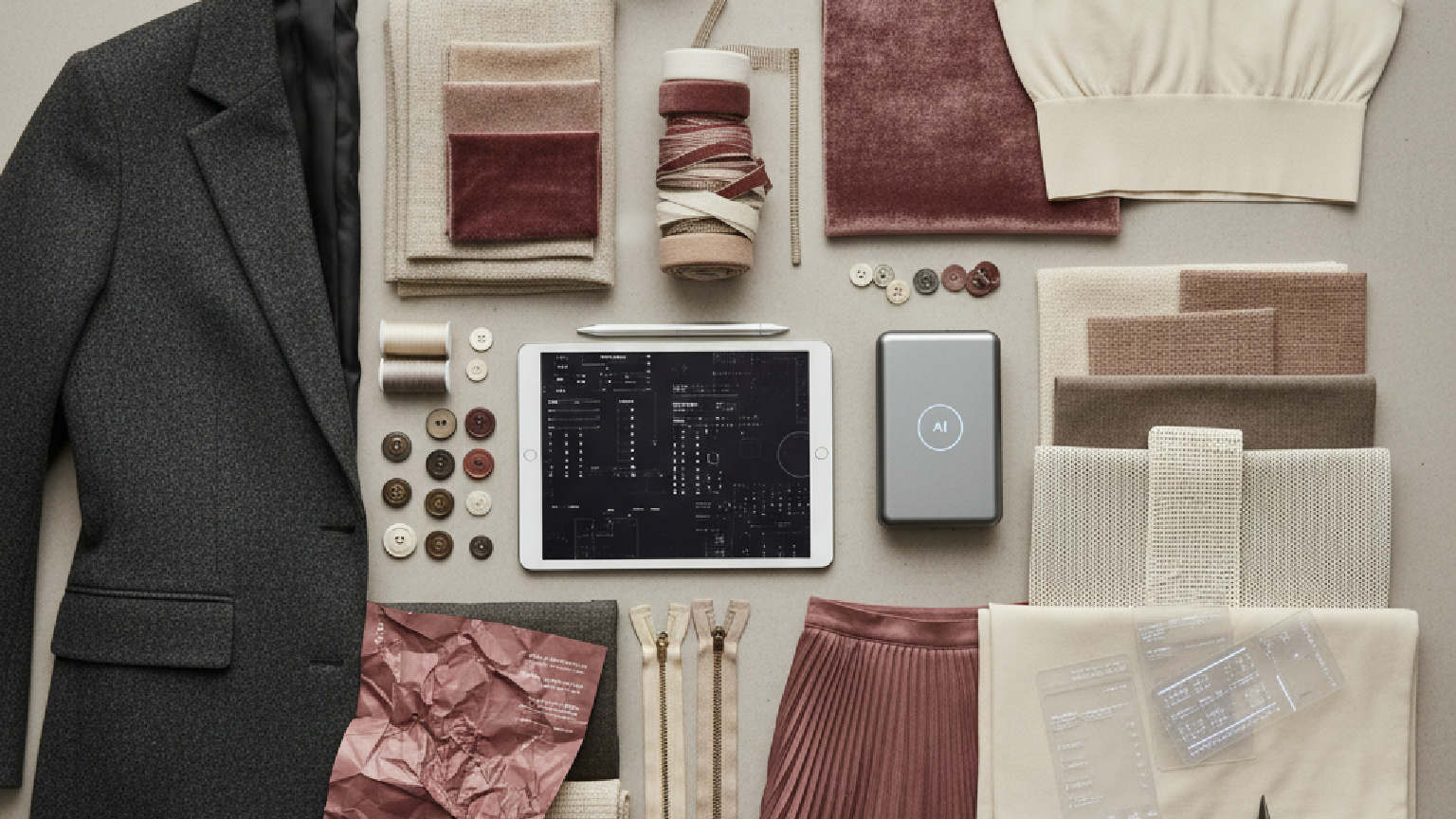
In 2026, the independent designer's day begins not with a blank sketchpad, but with a vibrant, data-rich dashboard. They engage with AI-driven platforms that provide real-time insights into global fashion trends, effectively serving as a worldwide team of trend spotters. This process starts with scanning AI-curated moodboards that highlight emerging color stories, silhouette trends, and fabric innovations. These aren't just collections of pretty pictures; they are visual representations of complex data, showing which trends are gaining traction with specific consumer demographics. Designers use this information to inform their creative direction, ensuring that their pieces are on-trend and aligned with verified consumer demand. A typical morning routine involves analyzing data from platforms like The F* Word, which consolidates trend reports, runway show analyses, and social media sentiment into actionable insights.
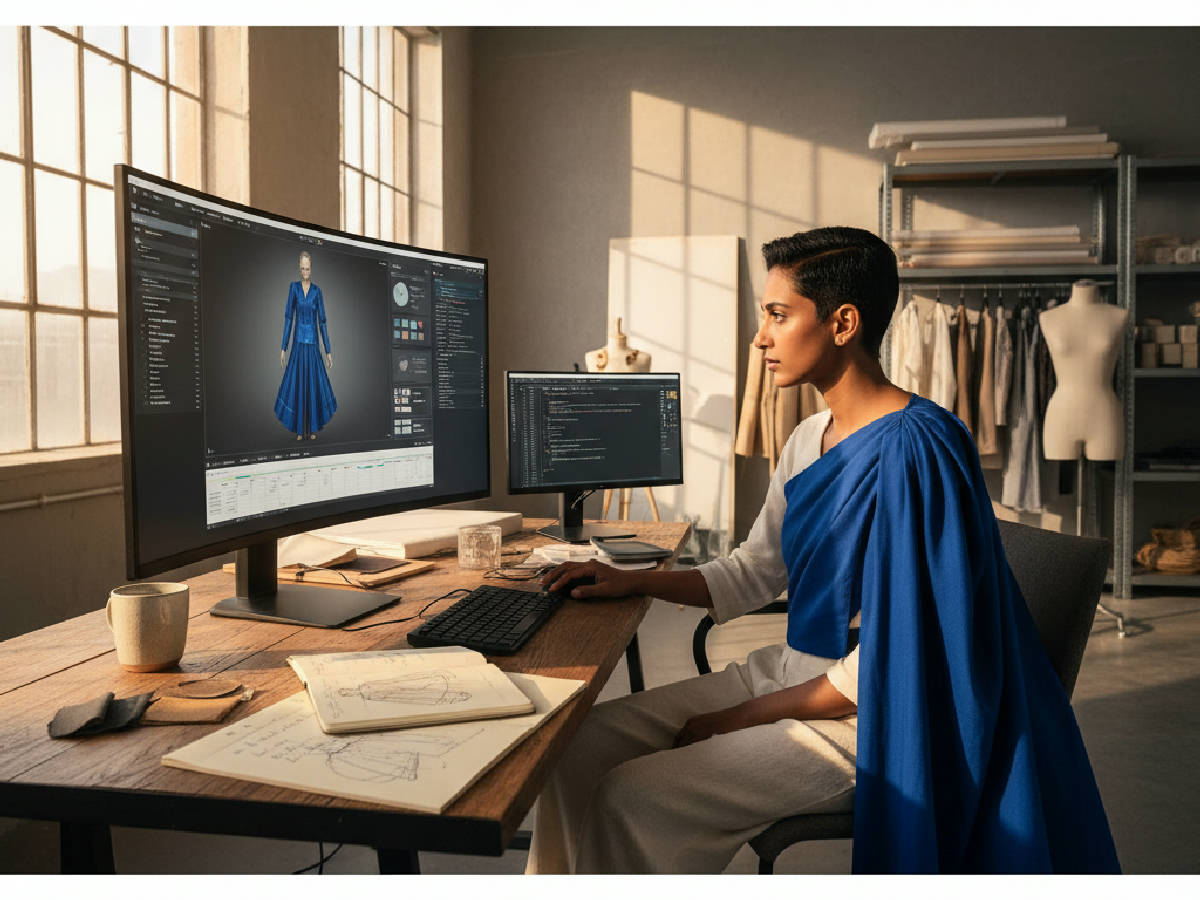
What this looks like in practice: Take Alex, a tech designer at a 200-SKU contemporary brand. Each morning, Alex logs into The F* Word to review a personalized dashboard. The AI has flagged the "Gorpcore" aesthetic as spiking among their target audience in the Pacific Northwest. The platform presents a moodboard with specific color palettes like "terracotta" and "moss green," and highlights technical fabrics with water-resistant properties. Alex then selects these relevant trends and integrates them into the day's design focus, creating a clear, data-backed brief for the creative team to develop a new line of technical outerwear.
Common pitfalls: The primary danger is an overload of information, leading to analysis paralysis where a designer is too overwhelmed to make a decision. To mitigate this, setting clear priorities and filters is essential. A designer should focus only on trends that align with the brand's core identity or "brand DNA." Another pitfall is chasing fleeting micro-trends that have a lifespan of weeks, not months. A disciplined designer uses AI to distinguish between a sustainable macro-trend and a transient fad, preventing wasted development cycles on styles that will be out of fashion before they hit the market.
In-house designer? Make AI fashion design survive the factory.
The F* Word turns a real-time trend into a brand-aligned moodboard and a factory-readable tech pack. What you design is what the factory makes. Free to try.
Once inspired, designers move into the core creation phase, where AI acts as a creative co-pilot. They use AI tools to generate a multitude of preliminary designs through sophisticated prompting. By inputting key details into an AI system, such as a desired silhouette ("A-line midi dress"), fabric type ("organic cotton poplin"), target price point, and even conceptual themes ("1970s Parisian chic"), designers receive a range of initial visual concepts in seconds. These concepts are then refined through rapid iterative cycles. Feedback loops, where the designer provides textual feedback ("make the sleeves puffier," "add a side slit") or visual edits, allow for continuous improvement and adaptation of the AI's output. Validation is a critical final step, achieved by cross-referencing the most promising design outputs with AI-driven consumer analytics, ensuring that the final design looks good and has a high probability of resonating with the target audience and selling well.
What this looks like in practice: Consider Maria, an independent designer focused on eco-friendly fashion. Maria uses The F* Word's design generation tool. Her prompt is: "Generate design concepts for a zero-waste jumpsuit using undyed linen, suitable for a minimalist consumer aesthetic." The AI provides ten initial sketches. Maria refines her favorite by instructing the AI to "incorporate a convertible collar design and replace the zipper with corozo nut buttons." The AI adjusts the sketch and updates the material list and provides an estimated sustainability score for the garment. This iterative process, taking less than an hour, produces a production-ready concept that aligns with her brand's values and market trends.
Common pitfalls: One of the most significant pitfalls is an over-reliance on AI suggestions, which can lead to generic designs that lack a distinct point of view. If a designer simply accepts the first output, their work may resemble that of others using the same AI model. To avoid this, designers must balance AI insights with their personal creativity, using the AI's output as a starting point for their own unique modifications. Another risk is the potential for IP contamination. Designers must ensure their AI tools are trained on ethically sourced data to avoid inadvertently infringing on existing copyrights. Maintaining a unique brand identity requires the designer to be the final editor and curator, not just an operator.

After creating a portfolio of initial design concepts, designers and merchandisers convene for review sessions supercharged by AI. Instead of relying solely on intuition, teams use AI systems that provide detailed, objective analyses of each design's potential success. This analysis is built on historical sales data, real-time market trends, and predictive analytics. These sessions involve evaluating designs for creative merit, technical feasibility, cost-efficiency, and market potential. Decision-making is expedited and de-risked by AI-generated reports that clearly outline the strengths and weaknesses of each design, allowing leadership to make informed, data-backed choices about which pieces to prototype and which to shelve.
What this looks like in practice: Take the example of Lee, a design director for a mid-size luxury brand. During the weekly design review, Lee's team projects The F* Word's analytics dashboard alongside the design sketches. For a proposed silk blouse, the AI report shows a 92% aesthetic match with the brand's core customer but flags a potential production issue: the chosen fabric is from a supplier with a recent 8% defect rate. The AI suggests three alternative silk suppliers with better quality control records. The team decides to proceed with the design but switches to one of the recommended suppliers, a decision made in minutes that prevents a potential quality crisis and saves thousands in potential lost inventory.
During these sessions, teams focus on a new set of data points that go far beyond simple aesthetics. First is the Predicted Sell-Through Rate, an AI-calculated percentage that forecasts what portion of the production run will sell at full price. Second is the Estimated Cost of Goods Sold (COGS), which AI calculates in real time as designers tweak materials and construction details. Third is a Sustainability Score, which evaluates a garment based on material origins, chemical usage, and end-of-life potential. Finally, a Manufacturing Complexity Score rates a design on a scale of 1 to 10, helping teams identify styles that may cause bottlenecks or require specialized factory capabilities before any commitment is made.
This data-driven approach transforms the dynamic of review meetings. Subjective debates like "I just don't feel this color" are replaced by objective discussions such as "This color has shown a 40% increase in engagement on social media in our target demographic over the past two weeks." This shifts the role of senior designers from being gatekeepers of taste to strategic decision-makers who can interpret data within a creative context. It fosters a more collaborative and less contentious environment, where decisions are based on shared data and a collective goal of commercial success and brand growth, reducing internal friction and aligning the entire team.
The transition from a finalized design to a production-ready specification is a traditionally tedious and error-prone phase. AI-powered tech packs fundamentally transform this process. By automatically generating detailed specification documents from initial design files or even 3D models, AI eliminates countless hours of manual data entry. These advanced tech packs include every critical piece of information, such as a complete Bill of Materials (BOM), precise Points of Measure (POMs), full grading rules for all sizes, and detailed construction notes with visual diagrams. This information is derived from the designer's initial creative work and refined with production realities in mind. By streamlining this handoff, brands consistently reduce the number of sample rounds by 20% or more, resulting in significant cuts to both time-to-market and operational costs.
What this looks like in practice: Imagine Zoe, a technical designer at a fast-fashion label with immense pressure for speed. Zoe uploads a finalized 3D design file of a pleated skirt to The F* Word. Within minutes, the platform generates a comprehensive tech pack. This document includes not just the basics, but also AI-generated stitch diagrams for the specific pleating technique, fabric consumption estimates to optimize material buys, and callouts for potential quality-control check-points. When the factory has a question, they can comment directly in the living document, and the AI can even suggest a response or translate the question from Mandarin to English for Zoe, minimizing back-and-forth communication delays from days to minutes.

Brands that implement AI in their tech pack creation process report significant reductions in revision cycles and overall costs, as demonstrated in the comparison table above. These efficiencies are not just about saving money; they translate directly to faster product launches and reduced time to market. This newfound agility allows brands to be more responsive to market shifts, capture trends at their peak, and ultimately operate a more profitable and sustainable business model.
No single tool can do everything, so savvy independent designers in 2026 build a customized "stack" of complementary AI platforms to create a powerful, end-to-end workflow. A designer might use The F* Word as the central hub for trend analysis and tech pack generation, then integrate it with other specialized AI platforms for 3D visualization, moodboard generation, and consumer feedback collection. This combination of tools accelerates the entire design-to-production lifecycle and dramatically enhances the accuracy, fit, and appeal of the final products, reducing returns and increasing customer satisfaction.
What this looks like in practice: Consider James, a freelance designer specializing in performance activewear. His stack begins with The F* Word for identifying micro-trends in athletic apparel. He then prompts The F* Word to generate initial legging designs, which he exports to CLO3D for 3D modeling and physics-based fabric simulation. For fit validation, he integrates with a virtual fitting software like Browzwear, testing the digital garment on a range of avatars with different body shapes and sizes. This dual approach allows him to refine the design for optimal comfort and performance based on real-time simulation, ensuring high satisfaction rates long before a physical sample is ever made.
A designer's ideal tool stack depends on their specific business model. For a Direct-to-Consumer Brand Founder, a powerful stack might include The F* Word for concepts and tech packs, CLO3D for creating high-fidelity 3D assets, and a platform like Emperia for building a virtual showroom where buyers can interact with the digital collection. The 3D assets can then be reused on a Shopify store for marketing, creating a smooth digital thread from concept to consumer.
For a Materials-Focused Innovator, the stack might look different. They would use The F* Word for trend direction, but then deeply integrate with a platform like Materialo or Swatchbook. These AI-powered tools help designers discover, vet, and source innovative and sustainable materials from a global database. The AI can analyze the tech pack requirements from The F* Word and suggest new bio-fabrics or recycled textiles that meet the performance, cost, and sustainability criteria, accelerating innovation.
To maximize productivity and maintain strategic focus, designers in 2026 structure their work into distinct daily and weekly cadences. Daily routines are tactical, focusing on immediate tasks that move current projects forward. This includes morning trend analysis, iterative design prompting sessions, reviewing AI-generated QA flags from the factory, and updating tech packs with minor revisions. These are high-volume, quick-turnaround activities. In contrast, weekly routines are reserved for strategic planning and higher-level analysis. This involves long-term trend forecasting, comprehensive reviews of the entire design portfolio's performance, and planning major creative initiatives for the upcoming season. By consciously balancing daily operational tasks with weekly strategic sessions, designers ensure they are not just busy, but also productive and continuously aligned with both market demands and long-term creative goals.
What this looks like in practice: Sarah, a senior designer at a streetwear brand, dedicates her mornings from Monday to Thursday to daily AI-driven tasks. This is when she creates, iterates, and refines. Her Fridays, however, are blocked out for strategic work. On Friday morning, she reviews an AI-generated report summarizing the week's creative output, sample approval rates, and a competitive analysis of what other brands have launched. In the afternoon, she uses this data to plan the design briefs for the following week and adjust the long-term collection plan, ensuring the brand's evolution is both creative and commercially sound.
The beauty of AI integration is its flexibility; designers across the industry can tailor AI-powered workflows to their unique needs. A freelance designer working for multiple clients will prioritize speed and communication, while a corporate technical designer will focus on precision and scale. These adaptable templates highlight the versatility of AI in catering to a wide spectrum of design roles and responsibilities within the fashion ecosystem.
A freelancer's currency is time and client satisfaction. Their daily routine is optimized for rapid concept-to-delivery workflows.
A technical designer's role is to ensure that creative vision can be manufactured consistently and at scale. Their AI routine is about precision, communication, and quality control.
The indie founder wears many hats: creative director, CEO, and merchandiser. Their routine balances creative exploration with business viability.
Once a design is finalized, the manufacturing handoff and subsequent quality assurance (QA) workflows become the most critical stages for ensuring a product's success. AI-driven systems create a foolproof bridge between the design team and manufacturing partners. By generating standardized, multi-language tech packs and maintaining a single source of truth in the cloud, AI ensures that all specifications are communicated with absolute clarity. This precision drastically reduces the misunderstandings and errors that lead to flawed samples and production delays. AI changes the QA process itself, moving it from a reactive, manual task to a proactive, automated one.
What this looks like in practice: Emily, a production manager at a sportswear company, uses an AI-powered QA platform like Inspectorio, which integrates directly with The F* Word's tech packs. The factory in Vietnam is equipped with cameras on the production line. As garments are finished, the AI visually inspects them in real time, comparing each one to the "digital twin" established in the tech pack. The system automatically flags a batch of shorts where the side seam stitching deviates from the specification by more than 2mm. Emily receives an alert on her phone, reviews the visual evidence, and puts a hold on that batch before it is even packed for shipment, preventing thousands of defective units from reaching the warehouse.
This proactive approach minimizes defects, ensures consistency across massive production runs, and builds a rich data history of factory performance. Over time, the AI can predict which factories are best suited for certain types of garments based on their historical quality data, making supplier selection a data-driven science.
The financial argument for integrating AI is one of its most compelling aspects. The direct impact on cost reduction and efficiency is significant, making adoption a key strategic priority for brands of all sizes. AI-powered tools facilitate a more agile and responsive approach to market trends and consumer demand, which in turn allows teams to optimize pricing strategies, reduce waste, and improve margins. The adoption of AI is not just about new software; it requires building a new, more efficient way of working that benefits the entire organization.
What this looks like in practice: At a large fashion house, the integration of AI tools from The F* Word across design, merchandising, and production had a cascading financial benefit. The finance team, now equipped with more accurate AI-driven COGS predictions from the initial design stage, could model future profit margins with much greater accuracy. This allowed the merchandising team to plan their buys more effectively, reducing overstock by a reported 18%. The combined effect of reduced sampling costs, lower material waste, and minimized markdowns resulted in a verifiable 15% increase in gross profit margins within the first year of full implementation.
Despite the clear benefits, integrating AI is not without its challenges. Team adoption can be a major hurdle. Some experienced designers may feel that AI threatens their creativity or devalues their intuition. To overcome this, successful companies focus on education and empowerment. They position AI not as a replacement, but as a "power tool" that automates tedious tasks (like manual data entry) and frees up more time for high-level creative thinking. Starting with a small pilot team to create internal champions and demonstrate clear wins is a powerful strategy. Once other designers see their colleagues spending less time on paperwork and more time designing, adoption rates increase organically. Strong leadership and a clear vision for how AI supports creative goals are essential for a smooth transition.
The financial impact of AI is not abstract. Let's break down the savings for a hypothetical mid-sized fashion brand. Consider a brand that produces 200 new styles per season. The traditional process is expensive and iterative, while the AI-powered process is streamlined and efficient.
Calculation:
Traditional Cost = 200 styles * 10 cycles/style * $450/cycle = $900,000
AI-Powered Cost = 200 styles * 3 cycles/style * $85/cycle = $51,000
Result:
By implementing an AI-driven workflow, the brand achieves a seasonal cost saving of $849,000 on sampling and revisions alone. This capital can be reinvested into marketing, material innovation, or brand expansion.
Sensitivity analysis: This model is highly scalable. Should the number of styles increase to 300 for the next season, the traditional cost would balloon to $1,350,000. The AI-powered cost would only rise to $76,500, increasing the total savings to $1,273,500. This demonstrates how AI saves money and provides a competitive advantage that grows as the business scales, allowing for more profitable growth.
AI streamlines the entire pipeline by automating time-consuming and repetitive tasks. It significantly reduces the number of revision cycles and accelerates the creation of accurate tech packs, leading to faster production timelines and substantial cost savings. By automating the mundane, AI allows designers to focus more of their energy on high-value creative and strategic work. AI enhances communication with manufacturing partners by providing precise, consistent, and often multilingual design specifications, which dramatically reduces the costly errors and reworks that stem from miscommunication.
AI acts as a powerful analytical engine, sifting through vast, unstructured datasets from social media, runway shows, and e-commerce platforms to identify emerging trends in real time. It provides designers with quantifiable insights into what colors, silhouettes, and patterns are resonating with consumers, informing creative direction and ensuring market relevance. This allows designers to move beyond guesswork and rapidly adjust their collections to align with verified consumer demand. Crucially, AI also offers predictive insights that help designers anticipate future trends, making their collections more forward-thinking and less reactive.
No, AI is a tool to augment and enhance human creativity, not replace it. It serves as a creative co-pilot, handling data-heavy analysis and rapid generation of ideas, but human intuition, cultural understanding, and storytelling ability remain essential. While AI can process data and generate options efficiently, it lacks the emotional intelligence, taste, and contextual awareness that a human designer provides to create a truly compelling and meaningful product. The future of fashion design is a alignment between human creativity and AI efficiency.
AI tech packs are dynamic, intelligent, and automatically generated, whereas traditional tech packs are static, manual, and prone to human error. An AI tech pack is created instantly from a design input and contains a complete, integrated set of specifications. Unlike a traditional spreadsheet, an AI tech pack is a "living document." If a designer changes a single element, like a button type, the AI automatically updates the BOM, construction notes, cost estimate, and supplier information across the entire document, ensuring perfect consistency and saving hours of manual updates.
While powerful, AI has limitations. It may struggle with capturing highly nuanced design elements, cultural subtexts, or the "happy accidents" that often lead to breakthrough designs. There is also a risk of design homogenization if multiple designers rely too heavily on the default outputs of the same AI models. Another challenge is the "black box" nature of some AI systems, where it may not be clear *why* a certain recommendation was made. Designers must remain critical thinkers, skillfully integrating AI capabilities as a powerful tool while always applying their own creative instincts and market knowledge to produce work that is both new and culturally resonant.
Related: What Is AI Fashion Design? A 2026 Guide for Designers
Get The F* Word workflow insights in your inbox.