
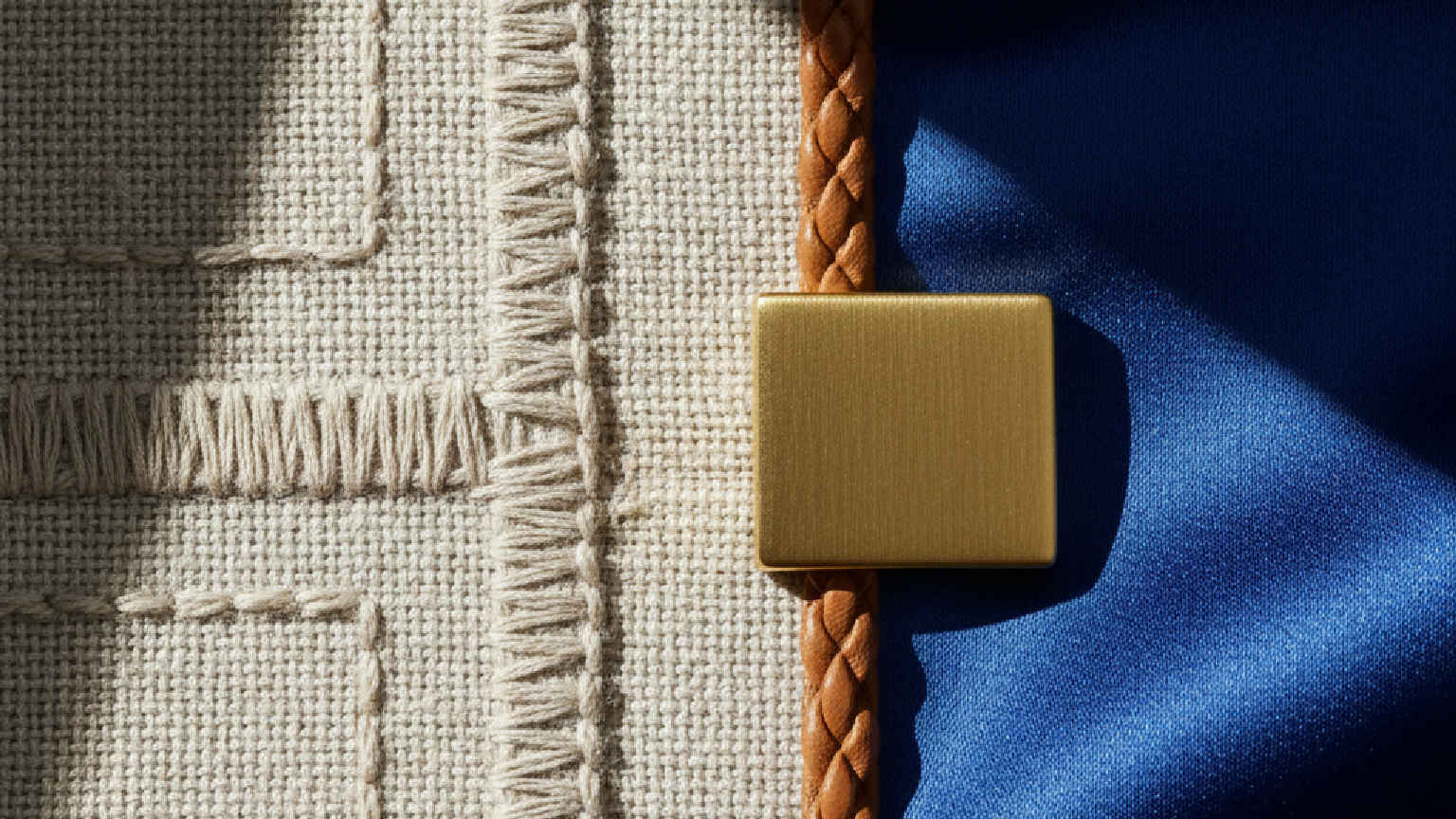
A major challenge for fashion brands is ensuring that the prototype fabric matches the final production fabric in critical physical properties. Even the consistency of an AI fabric generator is crucial for maintaining design integrity and production efficiency. Pattern makers and technical designers often struggle with this issue during the handoff from design to pre-production, leading to costly and time-consuming revisions. Having spoken to hundreds of folks in the industry, one has to admit that fabric related problems often get brushed under the carpet earlier and surface to cause problems later in the workflow.
An AI fabric generator is a specialized digital tool that uses machine learning models often trained on vast datasets of real fabric scans, material specifications, and physical test results to create highly realistic virtual fabrics. It can generate accurate visual textures, simulate how a fabric behaves under movement or gravity in 3D environments, and predict key technical parameters from minimal inputs like fiber composition, weave/knit structure, or yarn specs. This accelerates early-stage design iteration, enables virtual sampling, reduces physical proto costs, and bridges the gap between creative teams and technical teams.
What it is not is a magic replacement for physical reality or a guaranteed production-ready solution. It is a predictive simulation engine, not a fabric manufacturer. Its outputs are only as reliable as the training data and underlying physics models; it cannot fully capture complex real-world variables like mill-specific finishing processes, batch-to-batch variations, or subtle environmental interactions (humidity, washing cycles). Over-reliance without calibration against physical swatches often leads to the very consistency problems it aims to solve. Pattern makers and technical designers still struggle during the handoff from design to pre-production, leading to costly and time-consuming revisions.
Having spoken to hundreds of folks in the industry, one has to admit that fabric-related problems often get brushed under the carpet earlier and surface to cause problems later in the workflow. The most effective AI fabric generators therefore act as intelligent collaborators, highlighting potential mismatches early, rather than standalone oracles. Brands that integrate them with rigorous physical validation loops see the greatest gains in speed and accuracy.

What this looks like in practice: Consider a technical designer at a mid-size contemporary brand managing 150 new styles per season. They must ensure the prototype fabric's weight and drape match the final production material. If inconsistencies arise, it could cascade into multiple rounds of redesigns, delaying the entire collection release.

In-house designer? Make AI fashion design survive the factory.
The F* Word turns a real-time trend into a brand-aligned moodboard and a factory-readable tech pack. What you design is what the factory makes. Free to try.
By 2026, the fashion industry has adopted advanced AI-driven tools to bridge the gap between prototype and final fabrics. AI fabric generators tools analyze and match physical properties such as weight, stretch, and texture, ensuring that the prototype fabric aligns with the final product specifications. AI fabric generator technology reduces the margin for error and accelerates the development process. A fix in upstream workflows can avoid downstream grief. A range of point solutions also emerged across the value chain ranging from image generators, model photoshoots, lookbook generators, etc. They cannot solve the workflow problem in a silo. Modern day fashion industry is about having an orchestra (workflow tools) at your disposal, not owing musical instruments (many point solutions). The fashion industry is as operational as it is creative, and both need to come together as a key success factor.
What this looks like in practice: A design director at a luxury brand uses AI tools to instantly receive feedback on a prototype fabric's adherence to desired specs. The rapid feedback loop allows for faster adjustments, keeping the design phase aligned with production timelines. A good AI fabric generator is also operationally aware of factory realities; pretty images don't solve production problems.

The "Fabric Consistency Framework" is a strategic approach to aligning prototype and production fabrics. It involves three key steps: Evaluation, Adjustment, and Verification. The Evaluation phase uses AI to assess the prototype fabric's properties. During Adjustment, any discrepancies are corrected by tweaking the fabric's composition or selecting a more suitable material. Finally, Verification ensures that the adjusted prototype fabric meets all necessary specifications before full-scale production begins.
How to Apply: During the Evaluation phase, a technical designer inputs the fabric's initial specs into the AI system. Adjustment involves collaboration with suppliers to tweak the fabric composition based on AI feedback. Verification uses AI-generated reports to confirm the fabric's compliance with production standards.
Expected Impact: Implementing this framework can reduce fabric-related production delays by up to 40%, according to a 2025 McKinsey report, enhancing overall time-to-market efficiency.
Common Pitfalls: Over-reliance on AI without manual checks can lead to oversight, especially with unique fabric blends not in the AI database. The physics of fabric does play in a role in AI delivering value, but human oversight cannot be understated.
Inputs: A prototype fabric with a 10% elastane composition. Calculation: If the desired stretch for the final fabric is 20%, adjustments are needed to increase elastane content or alter the weave. Result: Adjusted prototype fabric achieves the target stretch, ensuring consistency in the final product.
Sensitivity Variation: If the elastane percentage is increased to 15%, the stretch increases proportionally, allowing for more flexibility in design adjustments.

Incorporating AI into fabric selection enhances creative direction by allowing designers to focus on trend intake and silhouette planning without worrying about material inconsistencies. With AI tools, teams can achieve real-time trend alignment and ensure that the final product reflects the initial design vision accurately.
What this looks like in practice: A creative director at a fast-fashion brand uses AI to align fabric choices with seasonal color stories, ensuring each piece's fabric matches the intended design narrative using an AI fabric generator.
AI tech packs streamline the pre-production phase by automating spec sheets, BOMs, and construction notes. Once the prototype fabric is verified, the product is primed for a smooth transition to ecommerce platforms, ensuring SKU readiness and reducing markdowns due to mismatched materials.
Common Pitfalls: Failing to update AI systems with the latest supplier data can lead to mismatched specs and production delays. Sourcing matters and even AI cannot fix that.
Adopting AI tools requires a shift in team dynamics and skillsets. Training designers and technical staff to effectively use these tools is critical. Brands must invest in upskilling their workforce to maximize the benefits of AI fabric generators. People from all functions of the organization must familiarize themselves with AI given fashion is a very artifact-heavy, version-heavy, and handoff-heavy workflow. A cross functional awareness of AI and its capabilities surface risks and opportunities upfront avoiding costly operational mistakes.
What this looks like in practice: At a global sportswear brand, training sessions focus on integrating AI tools into daily operations, ensuring that all team members are proficient in using these technologies.
Ensuring that prototype and final fabrics share the same physical properties minimizes production errors and maintains design integrity. This alignment reduces the need for costly reworks and helps keep production timelines on track, ultimately preserving the brand's creative vision.
AI analyzes fabric properties such as weight and stretch, ensuring they align with final product specifications, thereby reducing errors. By providing real-time feedback and adjustments, AI tools help streamline the production process and ensure a higher level of accuracy in fabric matching.
AI tools may struggle with unique or custom fabrics that lack extensive data, requiring manual adjustments by experienced designers. Additionally, the initial setup and training of AI systems can be resource-intensive, necessitating a balance between AI and human expertise.
They ensure accurate specs and materials, reducing delays and errors, thus facilitating a smoother product launch. By automating many pre-production tasks, AI tech packs enable teams to focus on strategic decisions, improving overall launch readiness.
CTA: Explore The F* Word to enhance your fabric consistency process with AI-driven solutions for faster tech packs and fewer sampling rounds.
Related: ai clothing generator
Get The F* Word workflow insights in your inbox.