

In 2026, fashion brands face the operational challenge of rapidly iterating from design concept to final product. The pressure to deliver newness faster than ever, driven by social media trends and consumer expectations, has created a breaking point for traditional workflows. Many large organizations struggle with the inefficiencies in traditional design workflows, which often result in elongated timelines, increased costs, and creative compromises due to technical limitations. These outdated processes are characterized by manual data entry, siloed communication channels between design, technical, and sourcing teams, and a heavy reliance on physical samples. The demand for digitization and automation has pushed brands to adopt AI-powered platforms as a strategic imperative, not just a technological luxury. However, adoption rates vary significantly, with larger brands leading the charge due to their need to manage extensive product lines efficiently and find competitive advantages at scale. According to McKinsey (2026), over 70% of large brands have integrated some form of AI into their design processes, with notable improvements in design accuracy, speed to market, and a reduction in sample waste by up to 40%.

What this looks like in practice: Consider a tech designer at a 200-SKU contemporary brand. Their old process involved manually creating a new tech pack in Excel for each style, a task that could take up to a full day. They upload new sketches into the AI platform, which instantly generates detailed tech packs by referencing a library of previously approved styles, materials, and construction methods. The AI suggests appropriate fabrications, trims, and points of measure based on the sketch's silhouette and category. This process saves hours of tedious work and minimizes the back-and-forth revisions typical in traditional workflows that stem from human error or incomplete specifications. The tech designer can then shift focus from managing endless spec updates to higher value activities like refining design elements, collaborating with pattern makers on complex fits, and researching new sustainable materials.

Designer or merchandiser? Replace the spreadsheet handoff.
The F* Word generates moodboards, factory-readable tech packs and sampling notes in one workflow, so creative, production and merchandising stay aligned. Free to try.
For enterprise AI fashion design platforms to serve large brands effectively, certain non-negotiable features are essential. These platforms become the central nervous system for product creation, meaning they must be reliable enough to support a global, complex organization. Scalability is crucial as these platforms must handle vast amounts of design data and support numerous simultaneous users across different time zones. Security is another key factor, ensuring that sensitive design data and intellectual property, which represent billions in potential revenue, are protected against internal and external breaches. Finally, governance features, such as compliance tracking and audit trails, ensure that the design process adheres to both external industry regulations and internal brand policies, protecting the brand from legal and reputational risk.
A platform's architecture must be built for growth. For an enterprise, this means supporting hundreds or even thousands of concurrent users, from designers in New York to sourcing agents in Vietnam, without performance degradation. The system must process enormous datasets, including high-resolution 2D sketches, complex 3D virtual sample files, and extensive material libraries. A key failure mode for less reliable platforms is slow-down during peak usage times, such as line finalization or seasonal launch periods, which can bring productivity to a halt. Look for platforms that offer cloud-native infrastructure, auto-scaling capabilities, and well-documented API rate limits that can handle millions of calls per day required for integrations with PLM, ERP, and e-commerce systems.
In fashion, unreleased designs are a company's most valuable asset. A security breach that leaks a new collection before its launch can be catastrophic. Enterprise-grade security is paramount. This extends beyond basic password protection. Look for platforms that provide end-to-end encryption for data both in transit and at rest. Role-based access control (RBAC) is critical, allowing administrators to define precisely who can view, edit, or share specific designs. For example, a freelance designer might only have access to the specific styles they are working on, while a division head can see the entire collection. with increasing data privacy regulations like GDPR, the platform must support data residency requirements, allowing a company to specify the geographic location where its data is stored. Vendors should be able to provide documentation of their security protocols, including penetration testing results and compliance certifications.
Large brands operate under a microscope of regulatory and consumer scrutiny. Governance features within an AI platform automate and track compliance, reducing significant business risk. This includes maintaining a digital chain of custody for materials, ensuring that claims of using organic cotton or recycled polyester can be backed by valid certifications linked directly to the product's bill of materials. An immutable audit trail logs every action taken on a design, from initial sketch to final approval. This is invaluable during audits, quality control investigations, or in case of a product recall. Strong version control is another key governance feature, preventing designers from accidentally using an outdated logo or incorrect color standard, thus ensuring brand consistency across all products.
What this looks like in practice: For a global fashion house, managing design data across regions is simplified through a scalable, cloud-native platform. The security team in the Paris headquarters configures granular access controls to ensure only authorized personnel handle the sensitive couture sketches. Meanwhile, a compliance officer in the U.S. office uses the platform's governance dashboard to monitor audit trails, ensuring all products designated for sale in California adhere to specific chemical regulations, thereby reducing the risk of regulatory penalties and legal challenges.
When evaluating enterprise AI fashion design platforms, a comprehensive framework is necessary to ensure all crucial aspects are considered and to avoid decisions based on flashy demos or personal preference. A weighted scorecard is a powerful tool that assists decision-makers in prioritizing features based on their strategic importance to the specific brand. For example, a fast-fashion brand like Zara might assign a 30% weight to "Speed & Automation Features," while a luxury brand like Hermès might place a 30% weight on "Material Innovation & Quality Assurance" capabilities. This systematic approach ensures the final choice aligns with core business objectives.
The framework should include detailed criteria such as feature set (e.g., AI-powered mood board creation, 3D virtualization, automated cost roll-ups), user experience (UX), vendor support and partnership model, total cost of ownership (TCO), and integration capabilities. Each criterion is assigned a weight based on its importance to the organization. Platforms are then scored on a scale of 1 to 5 for each criterion, and a final weighted score is calculated. This provides a clear, data-backed comparison that can be presented to executive leadership.
Application Steps:
Expected Impact: This structured process leads to a more streamlined and objective decision-making process, builds consensus across departments, and greatly improves the long-term return on investment (ROI) from the technology investment by ensuring the chosen tool solves the right problems.
Common Pitfalls: A frequent mistake is an overemphasis on upfront cost savings without adequately considering the complexity and cost of integration. A platform might be 20% cheaper on its license fee, but if it requires a $500,000 custom integration project to connect with your ERP system, the initial savings are erased. Another pitfall is being swayed by a single "wow" feature while overlooking weaknesses in core workflow functionality. The weighted scorecard helps maintain discipline against these biases.
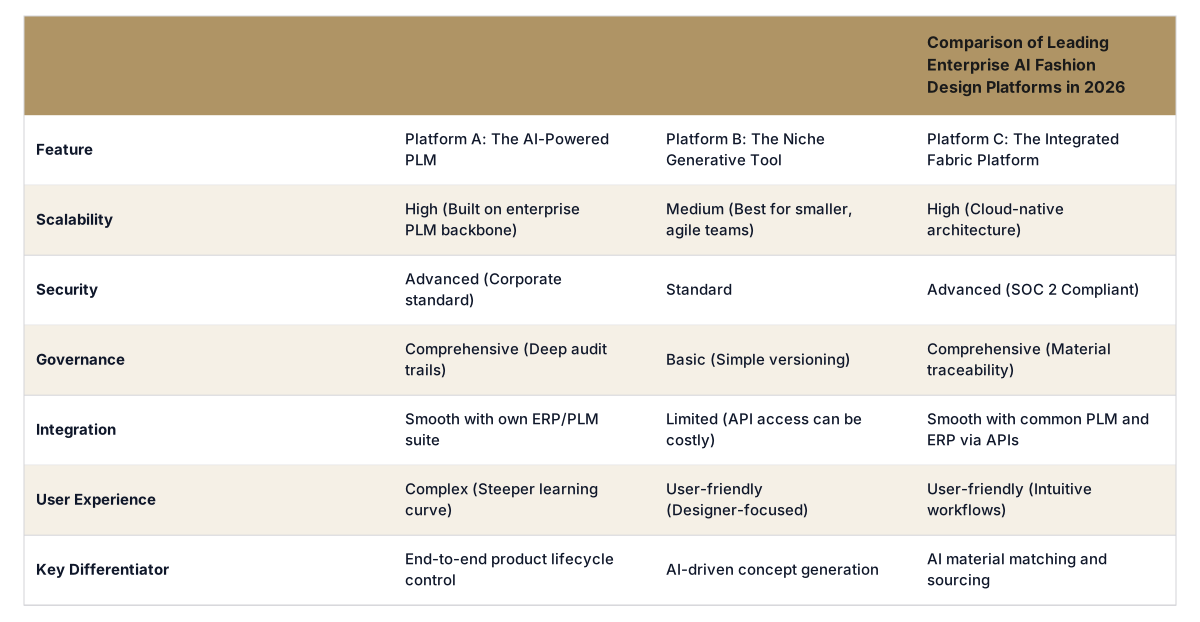
What this looks like in practice: A mid-sized fashion brand, currently using a legacy PLM system, compares platforms using this table to guide its decision. They are struggling with speed to market and material sourcing. Platform A is tempting due to its familiar PLM structure but is deemed too rigid and complex for their creative teams. Platform B offers exciting generative AI for mood boards but has weak integration capabilities, creating the risk of a new data silo. They ultimately focus their evaluation on Platform C, which offers a user-friendly interface for their designers and reliable API integration with their existing ERP, which is crucial for maintaining inventory accuracy and enabling automated cost roll-ups.
Understanding the total cost of ownership (TCO) is vital for brands considering a significant investment in an AI platform. TCO includes the visible annual or monthly subscription price and a host of other expenses: one-time implementation and setup fees, data migration from legacy systems, costs for third-party implementation partners, user training programs, and ongoing maintenance or support packages. Large brands must also carefully consider the timeline for implementation, which can range from three months for a straightforward rollout to over 18 months for a complex, global deployment that requires significant process re-engineering and customization.
For example, Platform A might have a higher initial license cost but offers faster implementation through pre-built connectors and lower long-term maintenance fees. In contrast, Platform B might appear more cost-effective upfront with a lower subscription fee but requires more extensive employee training and has higher hidden costs for API access and data storage, which can escalate as the brand grows. It is critical to model these costs over a 3 to 5 year period to get a true picture of the investment.
Numerical Example: A brand plans to invest in an AI platform. The vendor quotes $150,000 annually for 100 users.
However, the business case projects that by reducing design cycle times by 20% and sample costs by 30%, the brand saves $400,000 annually. This results in a clear ROI within three years and demonstrates how the investment generates significant net benefits beyond the initial expenditure.
What this looks like in practice: A luxury brand evaluates TCO by projecting potential savings in areas traditional accounting misses, such as reduced waste from fewer physical samples and lower air freight costs. They also project a 5% increase in full-price sell-through due to faster responsiveness to micro-trends, allowing them to capture consumer demand more effectively. This holistic view of costs and benefits justifies the significant upfront investment to their board of directors.
A decision matrix helps brands align their specific operational DNA with the capabilities of various AI platforms. One size does not fit all. A platform that is perfect for a global sportswear giant may be a poor fit for a burgeoning sustainable brand. For instance, a brand focused on rapid trend adaptation will prioritize platforms with strong predictive analytics, social media trend integration, and rapid 3D prototyping. Conversely, a brand built on a foundation of sustainability will seek platforms that offer strong material traceability, lifecycle analysis tools, and supplier certification management.
By mapping out specific business challenges and goals, brands can use the matrix to make more informed decisions.
What this looks like in practice: A small, direct-to-consumer eco-conscious brand uses a decision matrix to find its ideal platform. They place the highest weight on "Sustainable Design Features" and "E-commerce Integration." Their evaluation leads them to prioritize a platform that offers strong material certification tracking (for GOTS, FSC, etc.) and lifecycle analysis tools to calculate the environmental impact of a product. The platform's ability to sync product data directly with their Shopify store is the deciding factor, as it eliminates hours of manual merchandising work.
The F* Word offers a compelling solution specifically engineered for large brands seeking to enhance their design and product development processes through AI. Our platform excels in the critical areas of scalability, security, and governance, meeting the stringent requirements of enterprise clients. The F* Word is built on a cloud-native architecture that supports thousands of users globally and handles massive asset libraries without compromising performance. For security, we provide SOC 2 Type II compliance, end-to-end encryption, and granular role-based access controls to ensure your intellectual property is always protected. The F* Word provides smooth, API-first integration with existing ERP and PLM systems like SAP, Centric PLM, and FlexPLM, ensuring a connected ecosystem rather than another data silo.
In terms of user experience, The F* Word is designed with fashion professionals, not IT experts, in mind. We offer intuitive interfaces that mirror the creative workflow, reducing the learning curve and driving team adoption. Our patented AI model can reduce the time it takes to generate a complete, factory-ready tech pack from over 8 hours to under 15 minutes. Brands that adopt The F* Word's platform benefit from tangible outcomes: dramatically reduced design cycles, a 50% or greater reduction in physical sampling rounds, improved cross-functional collaboration, and enhanced design accuracy that lowers factory errors and improves final product quality.
What this looks like in practice: A global activewear brand integrates The F* Word to streamline workflows across its international design teams in the US, Europe, and Asia. The platform's intuitive interface significantly reduces the required training time, allowing designers to focus on creativity and innovation while the system handles the administrative burden. The head of product development uses the platform's analytics dashboard to track cycle times by product category, identifying bottlenecks and opportunities for process improvement, all while maintaining the highest standards of security and compliance for their highly confidential product roadmap.
Implementing an enterprise AI fashion design platform is a significant change management project, not just a software installation. Success requires careful planning and proactive risk mitigation strategies. Best practices include conducting a thorough needs assessment, engaging stakeholders across all affected departments, and establishing clear, measurable objectives and realistic timelines. Comprehensive training and ongoing support are also critical pillars to ensure team members can effectively adopt and utilize the new platform, moving from basic use to mastery.
One of the first major decisions is the rollout strategy. A "big bang" approach, where the entire organization switches to the new system on a single day, can be faster but carries significant risk. If unforeseen issues arise, they can disrupt the entire business. A phased rollout is often the preferred strategy for large enterprises. This can be done by department (e.g., start with the knits team), by brand (for a multi-brand portfolio), or by geography (start with the North American division). A pilot program with a small, tech-savvy team is a great way to identify challenges, gather feedback, and create internal champions before a wider rollout. This iterative approach allows the implementation team to learn and adapt, increasing the overall probability of success.
What this looks like in practice: During implementation, a large apparel company assigns dedicated project leaders from both the business and IT sides to co-own the transition and ensure all departments are aligned. They launch a pilot with their most complex product category, sportswear. Regular weekly feedback sessions are scheduled with the pilot users to address issues promptly and adapt the configuration as needed. The successes and learnings from this pilot are then used to build a business-wide rollout plan.
AI platforms significantly transform the critical link between design and production: the manufacturing handoff and the subsequent quality assurance (QA) workflows. By automating the creation of comprehensive, error-free tech packs and integrating directly with manufacturing execution systems (MES), these platforms reduce misunderstandings, minimize production mistakes, and enhance final product quality. AI-driven QA tools can identify inconsistencies in design specifications, such as conflicting measurements or missing construction details, long before a costly physical sample is even made.
This integration extends to the factory floor. For example, when a tech pack is updated in the design platform, the change can be automatically pushed to the supplier's portal, ensuring they are always working from the latest version and preventing production based on outdated specs. emerging AI visual inspection tools can compare photos of production samples against the original 3D digital twin. The AI can automatically flag discrepancies in color (measuring the Delta E value), stitch placement, logo size, or key points of measure, allowing QA teams to focus their attention only on the flagged issues, making the approval process faster and more accurate.
What this looks like in practice: A high-end sportswear brand uses AI to automatically generate hyper-detailed tech packs that include precise grading rules, complex construction callouts, and 3D model renderings from multiple angles. This level of detail ensures that their manufacturing partners in Asia can produce garments that meet stringent quality standards with fewer questions. During the QA process, they use an AI tool to compare photos from the factory's production line against the approved digital sample, instantly catching a 5% sizing error in a logo placement that would have been easily missed by the human eye, saving them from a costly recall.
The ultimate success of any new enterprise AI design platform depends on two factors: how well it is adopted by the teams who use it every day, and how smoothly it integrates with the existing ecosystem of software tools. Platforms must offer deep, bi-directional compatibility with essential design software (Adobe Creative Cloud), 3D design tools (CLO 3D, Browzwear), core business systems (PLM, ERP), and sales channels (Shopify, Salesforce Commerce Cloud) to ensure smooth, end-to-end operations.
Resistance to change is human nature. Designers and technical developers who have spent decades perfecting their workflows in Adobe Illustrator and Excel may be hesitant to adopt a new system. A successful adoption strategy focuses on bridging this skills gap. This starts with comprehensive, role-based training that demonstrates how the new tool makes their specific job easier, not harder. Additionally, identifying and empowering "super users" or "champions" within each team is highly effective. These are enthusiastic users who receive extra training and act as the first line of support for their peers, helping to troubleshoot issues and showcase the benefits, which builds momentum and encourages wider adoption.
What this looks like in practice: A mid-tier brand is rolling out a new AI design platform. They integrate it directly with Adobe Creative Cloud via a dedicated plugin. This allows designers to continue working in their familiar Illustrator environment but with the ability to sync their designs and associated data directly into the central platform with a single click, eliminating the need to manually copy and paste information into a separate system. This simple integration feature makes the designers' lives easier from day one, dramatically accelerating adoption and facilitating faster design iterations and better team collaboration.
These platforms streamline the entire design-to-production process, enhance accuracy, and significantly reduce time-to-market. They achieve this by automating repetitive and low-value tasks like tech pack creation, spec sheet updates, and data entry, allowing designers to focus more on creativity and innovation. By centralizing all product data and creating a single source of truth, they reduce manual errors, which improves production quality and consistency. This ultimately leads to fewer costly sampling rounds, less factory rework, a lower rate of product returns, and higher overall customer satisfaction.
Brands must perform due diligence on a vendor's security posture. This means selecting platforms with strong, multi-layered security measures such as end-to-end data encryption, multi-factor authentication, and granular role-based access controls. It is essential to look for vendors who undergo regular third-party audits and hold certifications like SOC 2 Type II. Internally, brands should implement strict user access policies, ensuring personnel can only access the information relevant to their role. Regular security awareness training for all staff is also crucial to help prevent security breaches caused by human error, like phishing attacks, which helps maintain the integrity of sensitive design data.
Brands should prioritize platforms with a modern, API-first architecture, which makes integration more flexible and reliable. It's crucial to map out all necessary data flows between the AI platform and existing systems like ERP, PLM, and e-commerce platforms to prevent data silos and operational bottlenecks. Key questions to ask vendors include: Do you have pre-built connectors for our existing systems? Is your API documentation clear and comprehensive? What are the costs associated with API calls? Involving IT specialists and solution architects early in the evaluation process can help address technical challenges, estimate integration costs accurately, and ensure a smooth data exchange between all systems.
The most common challenges are organizational, not technical. They include employee resistance to change, difficulties with migrating clean data from legacy systems, and providing adequate training for all team members. Overcoming resistance requires a strong change management plan, which includes clear communication from leadership about the "why" behind the change and highlighting the benefits for individual users. Data migration requires careful planning and a dedicated "data cleansing" phase to avoid carrying over old errors into the new system. Finally, comprehensive, role-specific training programs are essential to equip staff with the skills and confidence needed to use the new technologies effectively.
It offers enterprise-grade scalability, security, and governance features tailored to the complex needs of large, global brands. Our platform provides smooth integration capabilities with major PLM and ERP systems, user-friendly interfaces designed for fashion creatives, and a powerful AI engine for automation. The platform's strong analytics capabilities provide leadership with actionable insights into design performance, cycle times, and market trends, enabling data-driven decision making. its support for globally distributed teams ensures that large brands can maintain consistency, quality, and compliance across diverse markets and complex supply chains.
For fashion brands seeking to enhance their design processes with AI, The F* Word offers a comprehensive solution. Explore faster tech pack generation, fewer sampling rounds, and real-time trend integration by visiting The F* Word.
Get The F* Word workflow insights in your inbox.