
Direct answer: Fashion Brand DNA in AI fashion design is the rule layer that keeps outputs, from moodboards through tech packs, consistent with the brand's creative direction, product codes, fit logic, material boundaries, approved construction, campaign mood, and customer promise. Pattern memory matters, but it is only one of five layers in the full system.
Brand DNA is not the biggest traffic keyword in fashion SEO. It is not the phrase that will carry a brand's growth by itself. The high-volume market is AI fashion design, AI fashion design software, AI fashion design tools, AI tech pack generator, and production-ready AI fashion design.
That does not make Brand DNA irrelevant. It makes Brand DNA a conversion layer.
When a serious brand evaluates AI fashion design software, the fear is not just bad images. The fear is losing taste. The fear is that every output starts looking like the same average internet aesthetic. The fear is that the brand's fit, silhouette, material logic, customer promise, and campaign language get diluted inside a generic model. Merchandisers see this fear materialize when a collection looks "fine" but stops selling like the brand used to.
Some pattern-first tools are using this fear well. They make a clear claim: Brand DNA lives in pattern libraries. They argue that AI pattern intelligence can preserve fit DNA by learning from existing DXF files and creating new patterns that follow the brand's shape logic. That argument has value. It is also incomplete.
The stronger position is that patterns are one memory layer inside a broader AI fashion design workflow.
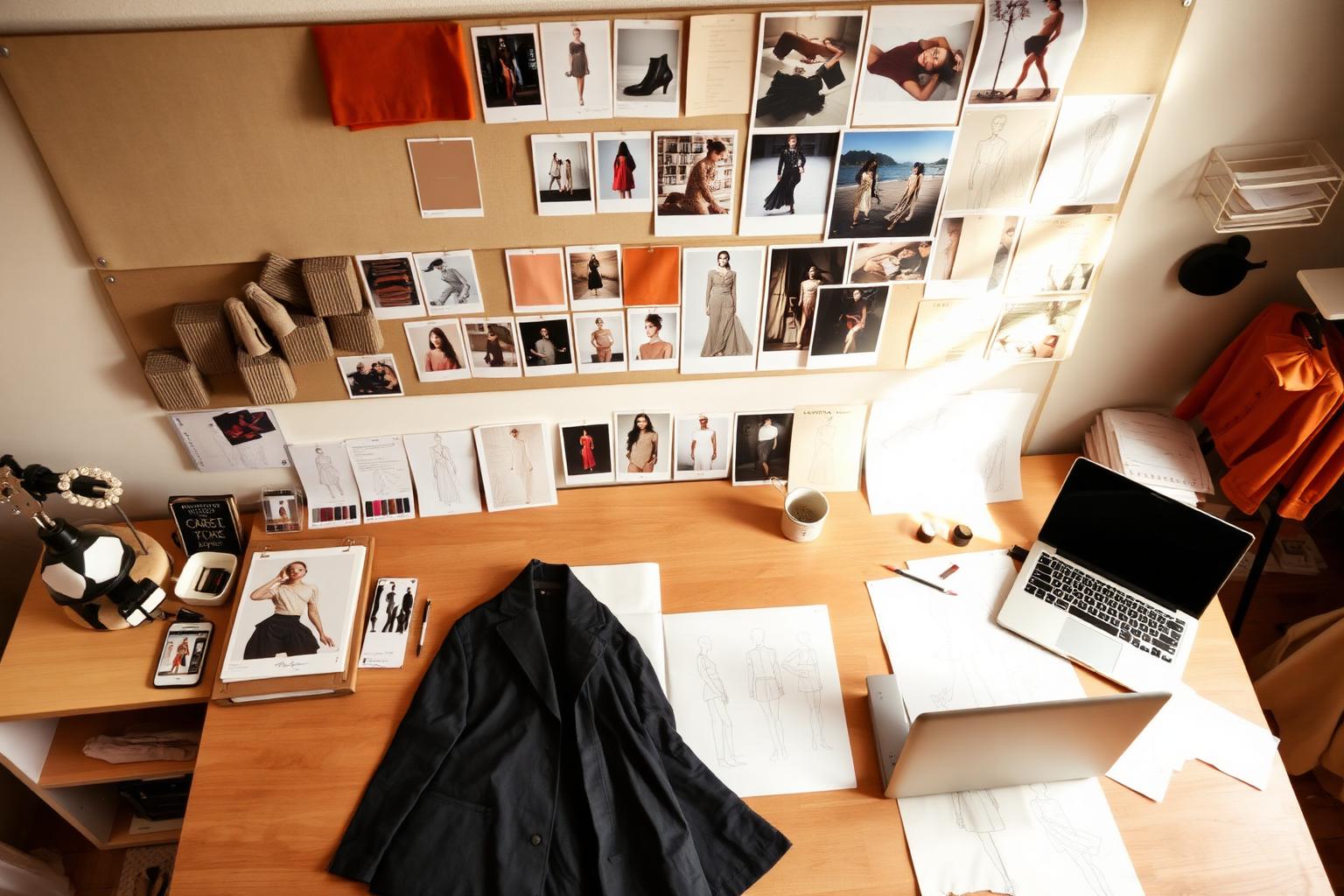
Where Brand DNA actually gets formed: moodboards, swatches, references, and garment flats working together.
In traditional fashion, Brand DNA is often described through values, visual identity, tone, color, silhouette, founder taste, heritage, and customer emotion. That definition is useful, but not enough for AI workflows.
In AI fashion design, Brand DNA must become operational. It has to guide what the AI accepts, rejects, repeats, adapts, and turns into downstream work. It must shape moodboards, creative briefs, garment concepts, flat sketches, tech packs, campaign images, and launch assets.
A brand's DNA should answer questions like these. Which silhouettes belong to the brand? Which proportions are wrong even if they look trendy? Which materials are approved? Which trims are too cheap, too expensive, or off-brand? Which fit blocks should be reused? Which colors carry the season? Which construction details are part of the brand's signature? Which campaign mood supports the customer promise?
This is why Brand DNA belongs inside the AI fashion design pillar, not as a separate low-volume content island.
In-house designer? Make AI fashion design survive the factory.
The F* Word turns a real-time trend into a brand-aligned moodboard and a factory-readable tech pack. What you design is what the factory makes. Free to try.
A brand can have perfect colors and still create an off-brand collection. A brand can have a strong logo and still produce inconsistent garments. A brand can have a pattern library and still lose its creative direction.
Brand DNA is the pattern behind many decisions, not one file type.
For a luxury brand, Brand DNA may live in restraint, fabric quality, proportion, finishing, hardware, scarcity, and campaign silence. For a streetwear brand, it may live in fit, graphic language, cultural references, drop cadence, and community codes. For a DTC brand, it may live in hero products, repeatable fit, commercial colorways, and customer trust. For sportswear, it may live in performance claims, body mapping, technical materials, and movement.
Patterns can preserve fit history. They cannot, alone, preserve all of that.
The pattern-first positioning is clear: learn from a brand's pattern library, preserve fit DNA, create patterns faster, and connect AI visuals to DXF outputs. That is a good wedge for teams whose bottleneck is pattern drafting.
The limitation is scope.
A pattern file does not decide whether a trend belongs in the next collection. It does not create a seasonal story. It does not define the customer mood. It does not validate fabric availability, cost, margin, trims, labels, campaign visuals, or line architecture. It does not give the merchandiser a range logic. It does not give the launch team a consistent visual direction. It does not create the full tech pack by itself.
That is the gap The F* Word should own. Fit DNA is one layer, but commercial fashion teams need workflow DNA across creative direction, product, technical, and launch decisions.
Caption: Five Brand DNA memory layers that AI fashion design software must respect. Pattern intelligence sits inside one of them.

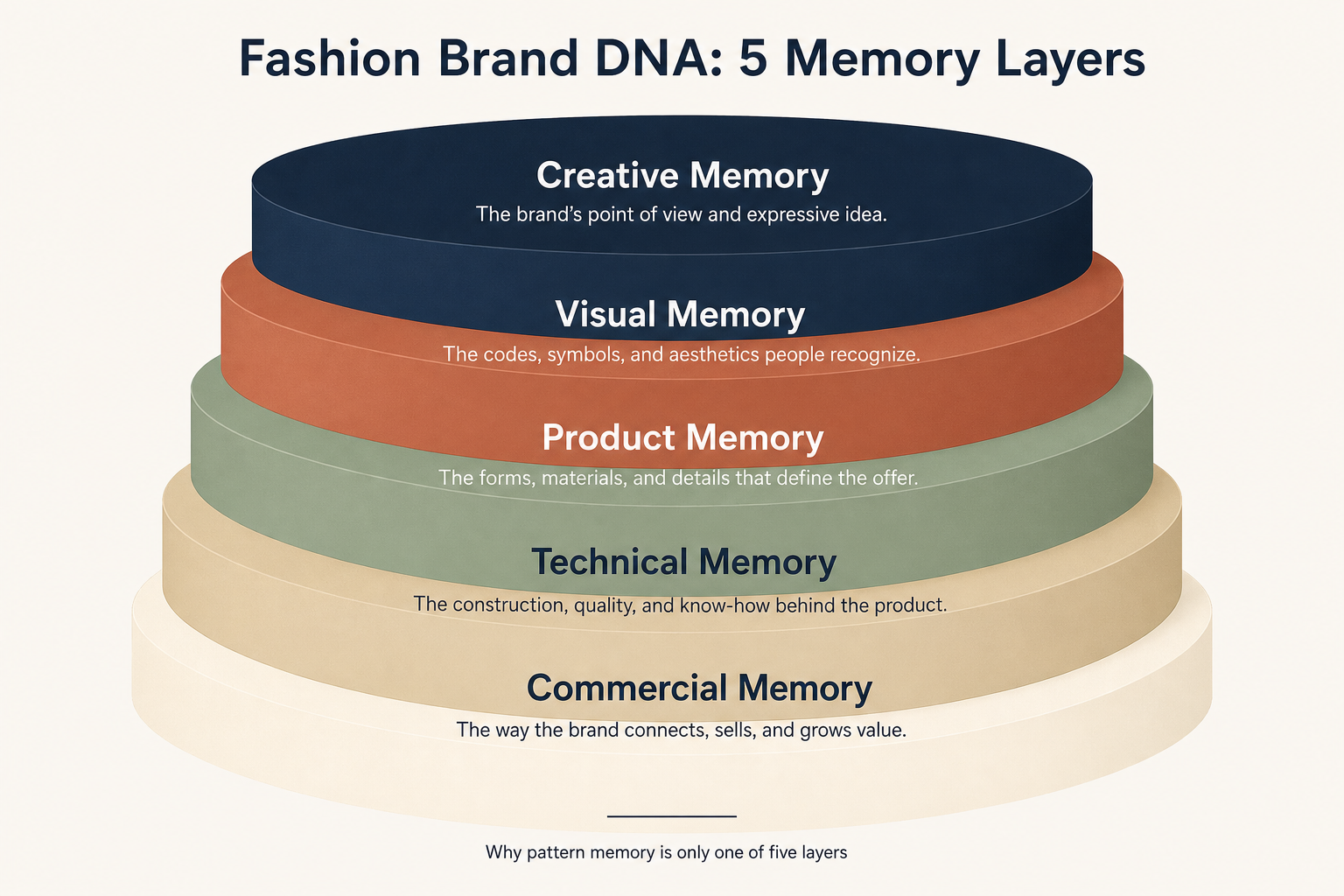
Brand DNA is five memory layers. Pattern memory is part of technical memory only.
This stack is where The F* Word competes. Pattern intelligence can sit inside technical memory, but the broader workflow needs all five layers, and the merchandiser is the layer most pattern-first tools ignore entirely.
Brand DNA starts before the garment. It starts when a team decides which signals to ignore.
A creative director may see hundreds of references across runway, social, retail, resale, archive, fabric fairs, and creator styling. The job is not to collect more references. The job is to decide what belongs to the brand now.
AI fashion design software should help filter signals through the brand's codes. A tailoring brand may translate utility trends into proportion shifts and washed neutrals. A romantic occasion brand may translate the same trend into drape, sheen, neckline, and styling softness. The signal is the same. The Brand DNA changes the output.
That is why every Brand DNA conversation should link to the creative direction workflow for fashion brands. Creative direction is where AI moves from visual input to brand-specific decision.
Product memory includes the repeatable choices that make a brand's garments feel familiar without becoming stale. These include shoulder shape, rise, length, collar type, cuff detail, pocket placement, print scale, neckline, closure, surface treatment, and fabric hand.
Generic AI can copy fashion language. It cannot know which details are yours unless the workflow gives it brand-specific rules and references.
This is where designers need more than a moodboard. They need a system that can turn mood into garment logic. Brand DNA, applied here, is a way to move from direction to structured concept, then from concept to a production package.
Technical memory is where the pattern argument has real strength. Fit blocks, pattern libraries, grading history, construction standards, and approved vendor notes all matter.
The F* Word includes that layer, then expands beyond it.
Technical memory should include approved tech packs, BOM choices, POM standards, grading rules, sample comments, recurring fit issues, preferred construction, fabric performance, trim libraries, packaging notes, and factory feedback. If AI can learn from these assets, it can reduce rework and create outputs technical teams can actually use. This is the layer the AI tech pack generator turns into reviewable output.
That is more defensible than a pattern-only narrative.
A collection can be technically correct and still fail to look like the brand in market.
Launch memory controls the way products are styled, photographed, described, merchandised, and released. It includes model direction, lighting, campaign tone, product-page language, lookbook sequencing, social cuts, and the level of polish or rawness the brand uses in market.
This matters because AI fashion design is not only design generation. The best workflow should help a team carry the same creative logic from moodboard to garment to tech pack to campaign asset. Merchandisers see the cost of broken launch memory in markdown rate; creative directors see it in brand erosion.
That is a stronger buyer promise than pattern speed alone.
Taste drift happens when AI outputs slowly pull a brand toward generic aesthetics. The outputs may look polished, but they lose the brand's edge. This is especially dangerous because early drift can feel productive. The team sees more options, faster. The problem appears later, when the collection feels inconsistent, technical teams reinterpret designs manually, and campaign visuals do not match product reality.
Brand DNA prevents taste drift by turning taste into usable constraints. It tells the AI what to preserve, what to ignore, what to avoid, and what can evolve.
The product should not be positioned as a generator. It should be positioned as a workflow that keeps brand direction intact as work moves across teams. For deeper context on how generic models slide off-brand, read about how generic AI tools create taste drift.
A brand should start by gathering the inputs that define its creative and product rules. That may include past collections, moodboards, tech packs, fit blocks, approved materials, rejected references, campaign visuals, customer notes, line plans, and vendor feedback.
The workflow should then separate these inputs into categories: creative direction, visual identity, product identity, technical memory, and launch memory. Once structured, those rules can shape the way AI creates concepts, validates direction, generates tech-pack inputs, and supports launch outputs.
The goal is not to freeze the brand. The goal is to help the brand evolve without losing itself.
Before a brand adopts an AI fashion design tool, ask these questions.
Can the tool learn from past brand assets? Can it separate brand references from trend noise? Can it preserve silhouettes, fit logic, and material preferences? Can it connect moodboards to creative briefs? Can it create garment concepts that follow brand rules? Can it carry those rules into tech packs? Can it support campaign consistency? Can it help technical designers and merchandisers, not only creatives?
If the answer is no, the tool may help with ideation. It should not be trusted as the brand's AI fashion design workflow.
Fashion Brand DNA in AI fashion design is the set of creative, product, technical, and commercial rules that guide AI outputs so they stay consistent with the brand across moodboards, tech packs, and launch assets.
No. Patterns preserve fit and construction memory, but Brand DNA also includes creative direction, materials, silhouette, color, customer promise, tech packs, campaign style, and launch logic.
Generic AI tools are trained on broad public data. They optimize for plausible visual output, not for a specific brand's history, customer, materials, fit rules, or product constraints, so outputs slide toward an average internet aesthetic.
Brand guidelines describe how a brand should look and sound. Brand DNA goes deeper. It includes the product, fit, material, construction, customer, and workflow rules that shape what the brand should create.
The F* Word turns creative direction into structured product data, autonomously generating moodboards and factory-ready tech packs in one workflow. Start free at thefword.ai or book a demo.
Related: generative ai for fashion design
Get The F* Word workflow insights in your inbox.