
English
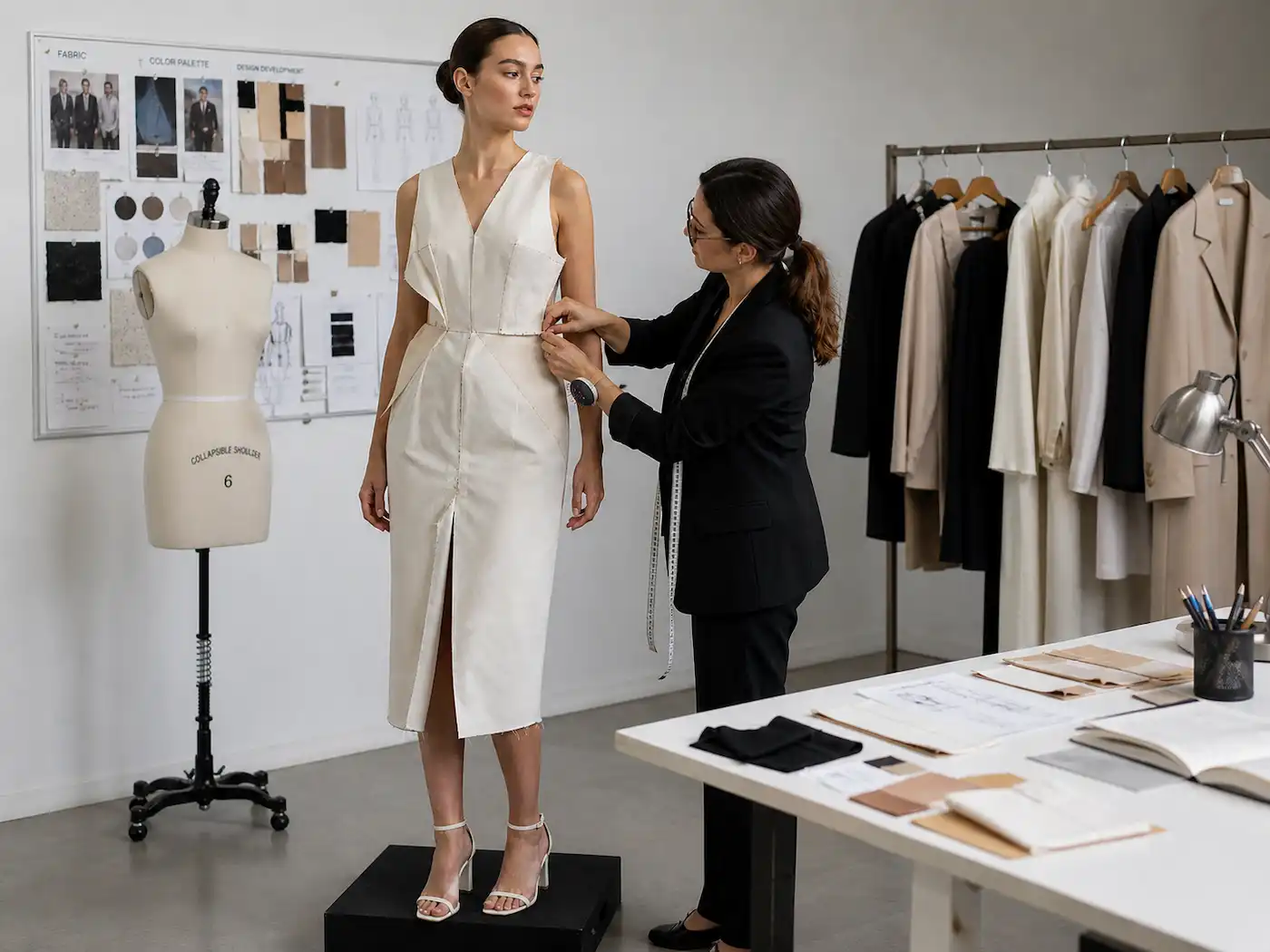

The fashion industry stands at a technological crossroads in 2026. Design leaders face mounting pressure to accelerate product development cycles while controlling costs and reducing waste. Fashion design apps promise to reshape workflows, but with price tags ranging from thousands to tens of thousands annually, the critical question remains: do these tools deliver measurable returns that justify their cost?
This cost-benefit analysis examines the real financial impact of fashion design apps, comparing traditional methods against modern digital solutions. We'll explore hard numbers, hidden costs, and the strategic advantages that separate worthwhile investments from expensive distractions.
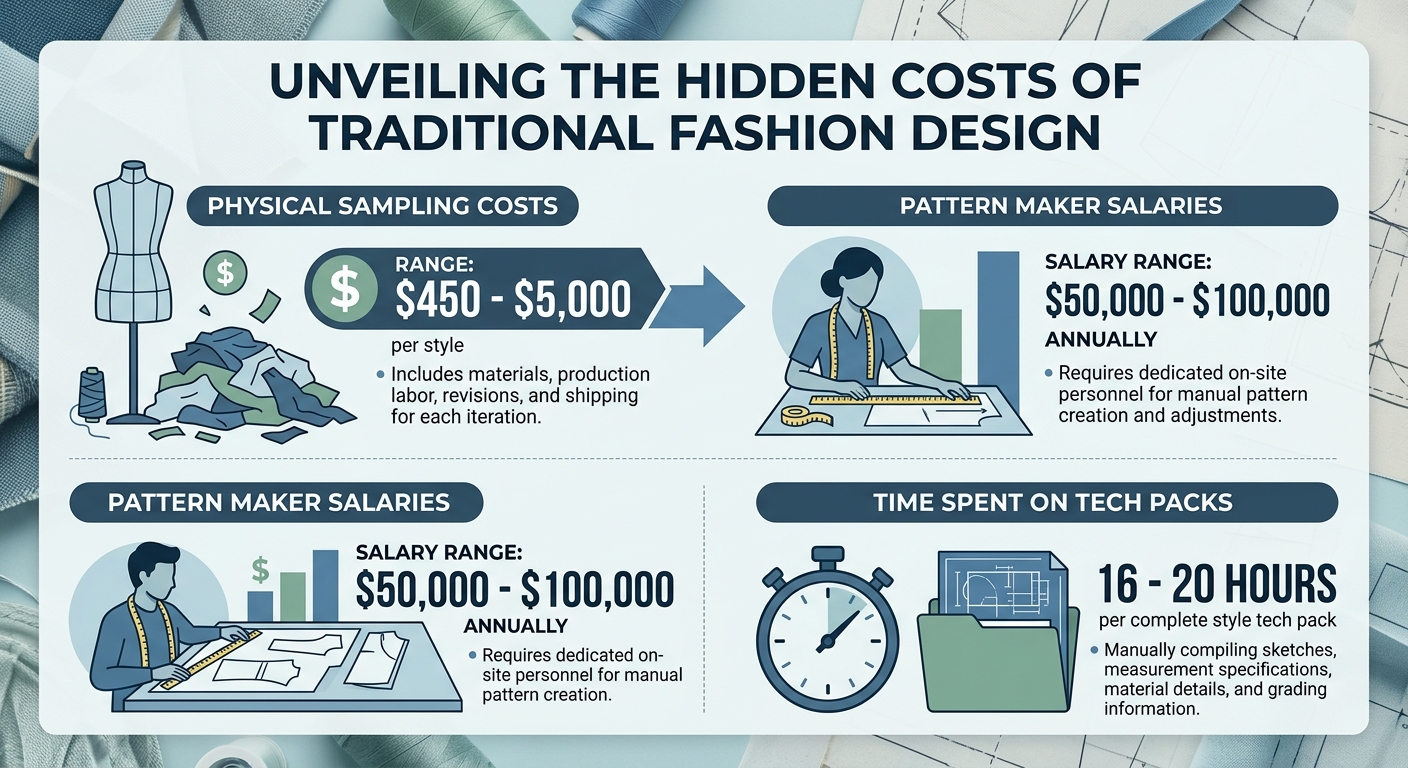
Traditional fashion design carries substantial hidden expenses that many brands fail to calculate accurately. Physical sampling alone represents one of the largest cost centers, with each sample round costing between $450 and $5,000 per style. Most brands require 3-5 sample rounds before production, meaning a single garment can consume $2,250 to $25,000 in sampling costs before it ever reaches consumers.
Pattern maker salaries add another significant expense, ranging from $50,000 to $100,000 annually per team member. When you factor in the 16-20 hours required to create comprehensive tech packs manually, plus coordination time across disconnected tools, the labor costs compound quickly. Studio photography after production commitment adds weeks of post-production work and expensive reshoots for missing variants, further inflating budgets while delaying time-to-market.
The coordination overhead alone consumes hours that design teams could spend on creative work. Teams manually transfer files between systems, chase approvals across email threads, and reconcile version conflicts. These inefficiencies don't appear on balance sheets as line items, but they represent real costs in delayed launches and missed market opportunities.
Fashion design software investments in 2026 typically range from $3,600 to $24,000 annually, depending on feature sets and team size. This includes licensing fees, training costs, and integration expenses. While this appears substantial upfront, the calculation changes dramatically when measured against traditional workflow expenses.
The fashion design and production software market is projected to reach $5,446.18 million by 2035, reflecting widespread industry adoption and continued innovation. This growth signals that leading brands view these tools as essential infrastructure rather than optional upgrades. However, not all fashion design apps deliver equal value, the key differentiator lies in whether they simply create assets or actually manage complete workflows.
Implementation costs vary based on team size and existing infrastructure. Smaller teams may face minimal integration work, while larger organizations need to connect new platforms with existing PLM and ERP systems. Training represents another investment, though modern platforms with intuitive interfaces reduce onboarding time significantly compared to legacy enterprise software.
Creative director? Go from trend signal to moodboard and tech pack.
The F* Word turns a real-time trend into a brand-aligned moodboard and the factory-readable tech pack that ships it. One workflow, free to try.
Virtual prototyping through 3D fashion design software can reduce physical sampling costs by up to 40%, with some integrated platforms achieving even higher savings. By catching fit and drape issues digitally before physical production, brands eliminate unnecessary sample rounds and the associated shipping, materials, and labor costs. Fashion design software benefits extend beyond cost reduction to quality improvements and faster iteration cycles.
The math becomes compelling quickly: a brand producing 200 styles annually at $2,000 average sampling cost per style spends $400,000 on samples. A 40% reduction saves $160,000 annually, already exceeding the cost of most design software solutions. Platforms that reduce sampling to 1-2 rounds through 3D validation can push savings even higher, approaching 75% reduction in physical samples.
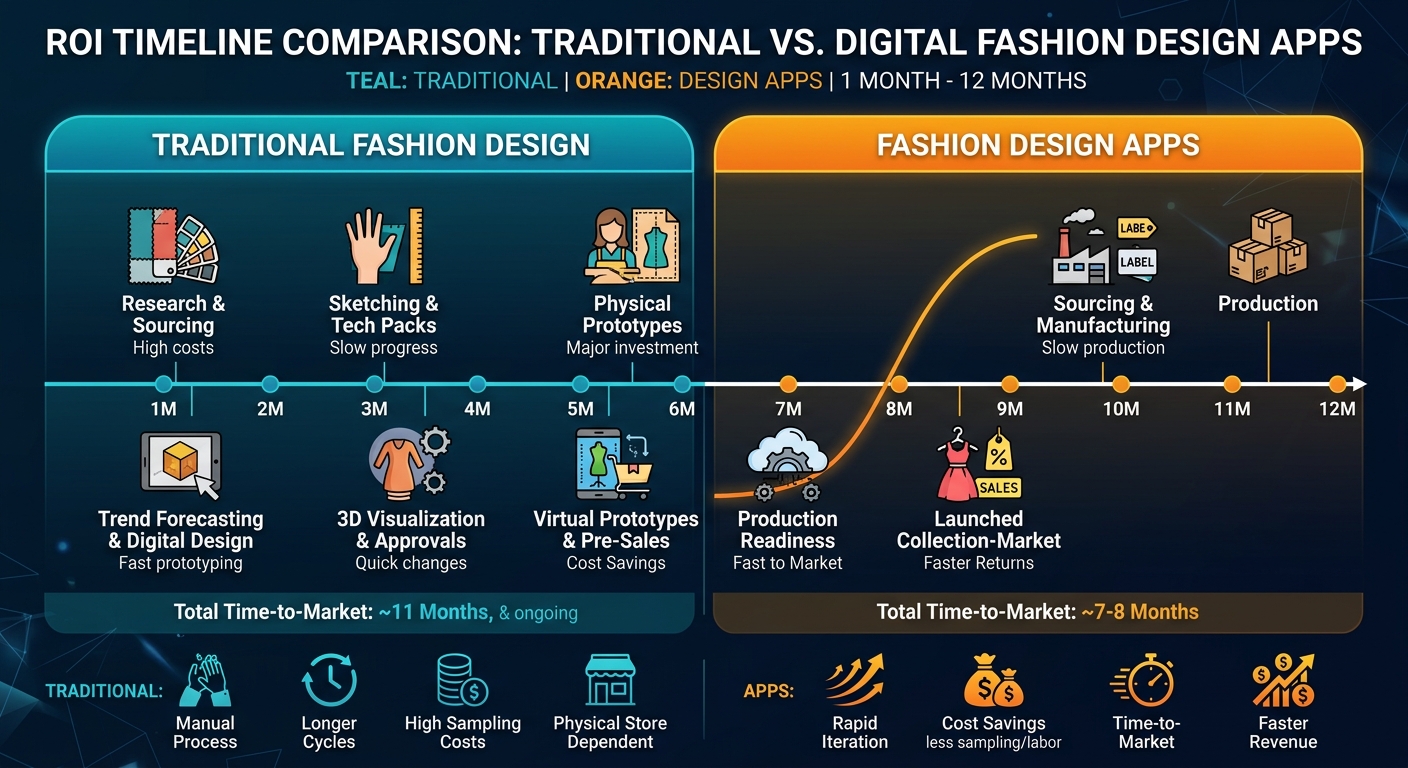
Speed represents another crucial ROI factor that financial models often undervalue. Traditional creative cycles spanning 4-6 weeks before validation create opportunity costs, missed trend windows, delayed revenue, and competitive disadvantage. Fashion design apps that generate validated concepts in minutes rather than weeks compress development timelines dramatically.
This acceleration enables brands to explore 5-7 validated concepts per cycle instead of 1-2, increasing the probability of market success while reducing inventory risk by 60%. When a brand can launch products weeks earlier, the revenue impact often exceeds direct cost savings. AI for fashion design transforms tech pack creation from a 16-20 hour manual process to a 15-minute automated workflow, freeing technical designers for higher-value work.
Many design teams operate with 6 or more disconnected tools across their workflow, Adobe for design, CLO for 3D, PLM systems for production, separate tools for trend research, tech packs, and asset management. While each tool excels at its specific function, the integration gaps create substantial hidden costs.
Coordination overhead consumes hours daily as teams manually transfer data between systems, reconcile version conflicts, and chase approvals across platforms. Design leaders spend more time managing operations than actually designing. File compatibility issues, lost work during handoffs, and communication breakdowns add friction that slows every project.
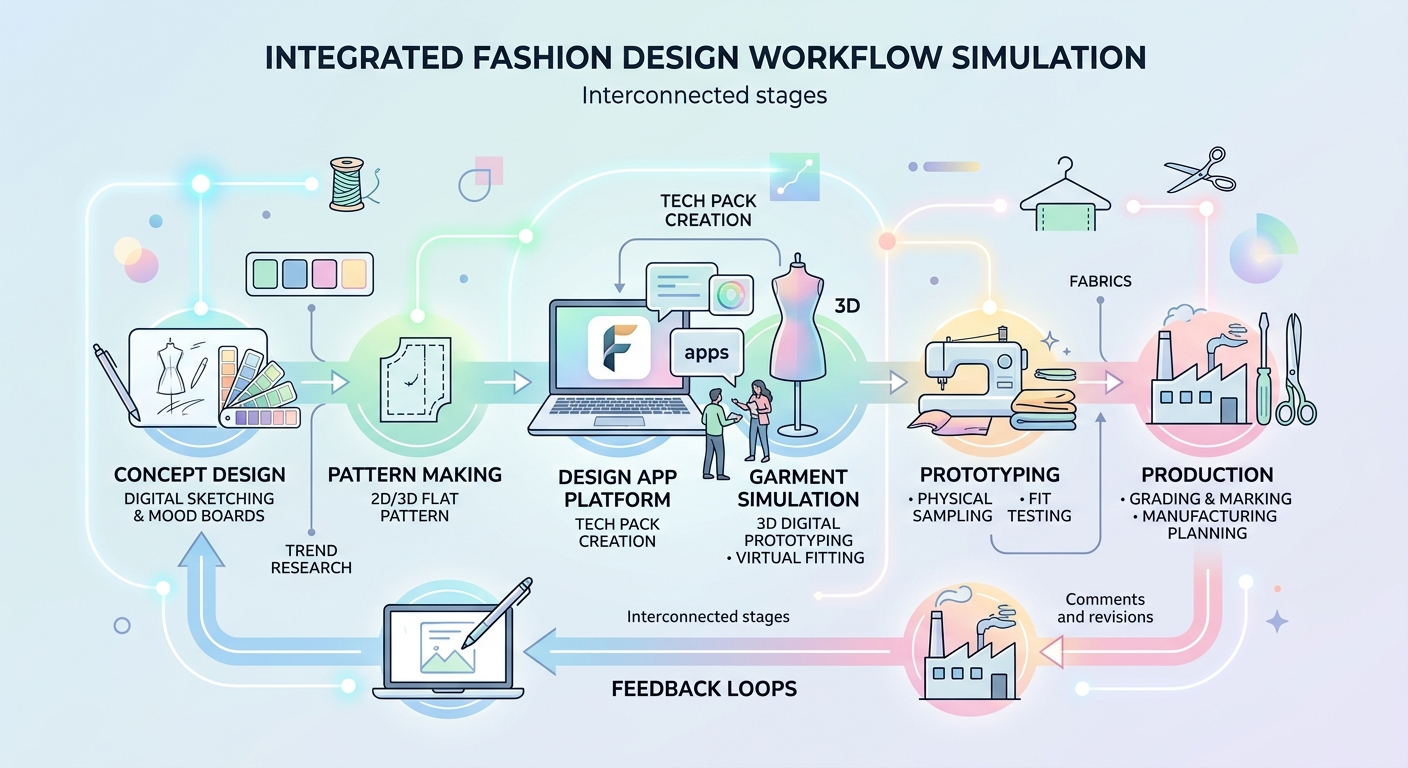
The cost-benefit analysis must account for these workflow inefficiencies. A platform that connects creative direction, technical design, and merchandising workflows eliminates these gaps, reducing coordination time and enabling teams to scale output without proportional headcount increases. This is where affordable clothing design software that integrates workflows delivers value beyond individual tool capabilities.
Not every fashion design app investment generates positive returns. Several scenarios indicate poor cost-benefit ratios. Apps that duplicate existing capabilities without workflow integration simply add another tool to manage. Solutions requiring extensive custom development or lengthy implementation timelines delay ROI and increase total cost of ownership.
Platforms lacking production-ready output force teams to recreate work in other systems, negating efficiency gains. Design apps that don't integrate with existing PLM, ERP, or production systems create data silos rather than solving them. Additionally, tools focused solely on creative exploration without validation mechanisms can actually increase waste by enabling more unvalidated concepts to reach expensive production stages.
The "we already use Adobe and CLO" objection highlights a common misconception, asset creation tools don't manage workflows. The question isn't whether individual tools work well, but whether your complete workflow from concept to launch operates efficiently. Free AI fashion tools can serve specific needs, but comprehensive workflow platforms address systemic inefficiencies that fragment tools cannot.
To determine if fashion design apps justify investment for your specific situation, calculate your break-even timeline using these factors:
For a mid-size brand producing 150 styles annually with 4 sample rounds at $1,500 per sample, sampling alone costs $900,000. If a design app reduces this by 50%, the $450,000 annual savings pays for even premium software within months. Add time savings from automated tech packs and faster concept validation, and ROI often exceeds 300-500% in the first year.
The calculation shifts for smaller brands or independent designers. Launching a fashion collection with AI for under $200 demonstrates that accessible tools now enable cost-effective production at any scale, though the absolute dollar savings will be proportionally smaller.
The cost-benefit analysis extends beyond immediate financial metrics to strategic capabilities that compound over time. Fashion design apps enable brands to test significantly more design directions without hiring additional staff, improving market fit and reducing inventory risk. Trend-informed briefs replace gut-feel bets that drive excess inventory.
Same-day asset generation from 3D data means launch visuals exist before physical samples, enabling earlier marketing campaigns and pre-orders that validate demand before production commitment. Variant-rich content for every SKU improves conversion rates and reduces returns by showing accurate product representations. These strategic advantages create competitive moats that purely financial analyses may undervalue.
The future of digital fashion design points toward increasingly integrated workflows where AI handles repetitive tasks while humans focus on creative direction and strategic decisions. Early adopters of comprehensive platforms gain experience and workflow optimization that becomes harder for competitors to replicate over time.
What's the typical payback period for fashion design app investments?
Most brands achieve payback within 6-12 months when accounting for sampling reduction, labor savings, and faster time-to-market. Brands with high sample volumes or large style counts often see positive ROI within the first quarter. The key is selecting platforms that address your specific workflow bottlenecks rather than adding disconnected tools.
Can small fashion brands justify design app costs?
Yes, though the calculation differs from large brands. Small brands benefit most from apps that eliminate outsourcing costs (pattern makers, tech designers, photographers) and enable one person to handle workflows that traditionally required teams. Cloud-based platforms with usage-based pricing make enterprise capabilities accessible at startup budgets.
How do I measure ROI beyond direct cost savings?
Track metrics like concepts explored per cycle, time from concept to production decision, sample rounds per style, and time-to-market. Also measure strategic outcomes: inventory sell-through rates (indicating better market fit), team capacity to handle more styles without additional headcount, and reduced coordination overhead. These operational improvements often exceed direct cost savings in total value.
What if my team already uses industry-standard tools like Adobe and CLO?
Asset creation tools remain valuable for specific tasks, but they don't manage complete workflows. The question is whether your workflow from trend research through creative direction, technical design, and merchandising operates efficiently, or whether disconnected tools create coordination overhead and delays. Integrated platforms complement specialized tools by connecting workflows rather than replacing every capability.
Are AI-powered fashion design apps production-ready in 2026?
Yes, AI fashion platforms have matured significantly, with leading solutions now handling production-critical tasks like tech pack generation, grading, and 3D validation. However, quality varies widely, evaluate platforms based on actual output quality, integration capabilities, and whether they're used by brands in production environments rather than just experimental projects.
Fashion design apps represent a worthwhile investment when they address genuine workflow inefficiencies and deliver measurable improvements in cost, speed, or capability. The cost-benefit analysis favors platforms that integrate multiple workflow stages over point solutions that add complexity without eliminating existing tools.
In 2026, the question isn't whether to adopt digital design tools, it's which platforms deliver production-ready results that justify their cost. Brands that carefully match tool capabilities to their specific bottlenecks, calculate realistic ROI including hidden costs and strategic advantages, and prioritize workflow integration over feature checklists will find that fashion design apps not only pay for themselves but become essential competitive advantages.
The most successful implementations don't just reduce costs, they fundamentally transform what design teams can accomplish, enabling exploration of more concepts, faster validation, and reliable launch timelines that were previously impossible.
AI Fashion Workflow Software Comparison for Brands in 2026
A practical comparison for brand teams evaluating AI fashion software by workflow impact, not feature lists. Useful if you want to compare fashion design apps against cost, speed, sampling reduction, and production handoff quality.
The Best AI Tech Pack Creator in 2026: What Actually Works in Production
A strong next read for teams trying to connect design ROI to factory execution. It breaks down BOMs, POMs, grading, construction callouts, version control, and where AI tech packs actually reduce rework.
AI Fashion Workflow Tools in 2026: Best Free & Pro Platforms by Workflow Stage
Best for designers, founders, and operators deciding which tools belong at each stage of the workflow. Use it to separate concept tools from systems that support pre-production and launch readiness.
AI Tech Packs for Fashion Brands: What Good Production Handoff Looks Like
A focused guide for teams that want cleaner vendor handoffs. It pairs well with this article because the investment case for fashion design apps gets stronger when tech packs reduce factory questions, wrong-version errors, and sample loops.
The F* Word Editorial · Fashion workflow team
Written by The F* Word editorial team. We build AI fashion workflow software grounded in thousands of industry-produced tech packs and proprietary garment records, so what reaches the factory is consistent, reviewed, and tied to design intent.
Once the concept is approved, the next steps move it from board to factory floor.
Related: ai fashion design branding
Get The F* Word workflow insights in your inbox.