.png)
English

The future of AI in fashion is moving from experimentation to everyday reality. Brands are already using algorithms to predict trends, personalize shopping, and manage inventory, but the next few years will see AI embedded across the entire value chain. As we look toward 2025 and beyond, AI fashion future discussions are shifting from 'if' to 'how fast' and 'how deep' adoption will go. This post outlines what’s coming next: key future fashion AI trends for 2025, how big the opportunity is in terms of AI fashion market size, and what the long‑term outlook looks like for brands, retailers, and tech providers.
Over the past five years, the fashion sector has quietly become one of the most intensive adopters of applied AI within consumer industries. McKinsey estimates that AI could add between $150 billion and $275 billion in operating profit to the apparel, fashion, and luxury sector alone by 2030 (McKinsey, 2023). At the same time, 73% of fashion executives say they have accelerated their investments in data and analytics since the pandemic (BoF & McKinsey, 2022). These numbers show that the future of AI in fashion is no longer a niche innovation topic—it is a core driver of competitiveness.
This article pulls those threads together into a practical guide to what’s next AI fashion. It explains how AI is moving from pilots to production in design, merchandising, marketing, and retail operations, and it connects these use cases to the evolving AI fashion market size. You will also find pointers to deeper internal analysis on AI fashion market size, plus curated external research that illustrates how leading brands are already executing on the most important trends. The goal is to help decision‑makers translate the hype around the AI fashion future into a concrete roadmap of pilots, investments, and capability building.

By 2025, the future of AI in fashion will be defined by a few concrete shifts rather than vague experimentation. First, AI‑driven demand forecasting and assortment planning will become standard, helping brands reduce overstock and markdowns. Second, hyper‑personalization will move from simple recommendations to full AI‑curated outfits, size predictions, and dynamic pricing across channels. Third, content creation will increasingly be supported by generative AI, from campaign concepts and product copy to AI‑assisted lookbooks and virtual models. Fourth, AI‑powered design tools will support creative teams by translating trend, sales, and social data into directional design insights. Finally, store and e‑commerce experiences will blend through AI chatbots, styling assistants, and virtual try‑on, making the customer journey more seamless.
On the merchandising side, advanced forecasting is quickly becoming a baseline capability. Retailers that have implemented machine‑learning demand models report inventory reductions of 10–15% and forecast accuracy improvements of up to 40% versus spreadsheet‑based planning (BCG, 2023). For fashion, this means fewer end‑of‑season markdowns, tighter buy quantities at SKU level, and more agile in‑season reordering. In practice, a mid‑sized apparel brand can feed historical sell‑through, price, promotion, and weather data into AI models to plan buys by store cluster and channel—freeing planners to focus on strategy rather than manual number crunching.
Customer‑facing experiences will also look very different by 2025. Instead of static recommendation carousels, shoppers will interact with AI styling agents that combine browsing history, returns data, and stated preferences to propose complete looks. Early adopters of AI‑driven personalization in retail have seen revenue lifts of 5–15% and marketing‑spend efficiency gains of 10–30% (McKinsey, 2021). In fashion, this can translate into AI‑curated capsule wardrobes, automatic size and fit guidance based on body‑shape data, and dynamic pricing engines that optimize margin while keeping offers compelling for each micro‑segment.
Generative AI will play a visible role in marketing and creative workflows. Brand teams are already using generative models to ideate campaign visuals, adapt imagery to different markets, and generate product descriptions tuned to specific audiences. Rather than replacing creative direction, future fashion AI tools will act as accelerators: surfacing moodboards from trend data, proposing color and styling variations, and helping teams test hundreds of options before committing production budget. Virtual models and AI‑assisted photoshoots will further compress timelines, especially for e‑commerce where speed matters more than high‑concept storytelling.
In stores and on digital channels, AI will quietly orchestrate omnichannel journeys. Computer‑vision systems can track traffic patterns and product interactions (while respecting privacy settings), informing merchandising layouts and staff deployment. AI chatbots and virtual stylists will handle routine questions, freeing human associates for high‑value styling and relationship building. Virtual try‑on—whether through smartphones or smart mirrors—will help reduce returns by giving shoppers more confidence in fit and styling.

Understanding AI fashion market size is key to planning investment. The future of AI in fashion is supported by strong growth in AI spending across retail, e‑commerce, and enterprise software. Fashion and apparel brands are allocating larger budgets to data platforms, recommendation engines, and AI‑driven supply chain tools, while solution providers are packaging industry‑specific offerings. This creates a layered opportunity: software vendors, consulting partners, and in‑house data teams all play a role. Internally, brands can explore detailed projections and segmentation through the dedicated AI fashion market size resource, which can be linked from this section as a deeper dive. Externally, market size commentary can be contextualized with trend‑focused analysis that connects numbers with real‑world use cases.
Zooming out, global spending on AI in retail—including fashion—is projected to reach roughly $24–30 billion by 2030, up from low single‑digit billions in the early 2020s, implying a compound annual growth rate (CAGR) of around 20–25% (PwC, 2023; Statista, 2023). Within that, fashion and apparel account for a disproportionately high share of experimentation, because margins are tight and product cycles are fast. While estimates vary, multiple analyst houses suggest that fashion and luxury could represent 15–20% of total retail AI spend by the end of the decade.
Regional dynamics also matter for the AI fashion future. North America currently leads in AI investment, with major US and Canadian retailers piloting end‑to‑end AI stacks from demand planning to personalized marketing. Europe follows closely, driven by luxury powerhouses that use AI both for operational excellence and for storytelling that blends heritage with innovation. Asia–Pacific, however, is the fastest‑growing region, underpinned by highly digital consumers and super‑apps that blur the lines between social, commerce, and entertainment. For brands, this means that the center of gravity for future fashion AI experimentation may shift toward APAC, even as global platforms standardize core tooling.
The opportunity is not only in software licenses. Consulting and systems integration services that help brands implement, customize, and scale AI solutions will represent a significant revenue pool, as will data enrichment and annotation services. Internally, data science and engineering teams will become critical strategic assets; fashion companies that once outsourced most technology work are increasingly building in‑house AI capabilities to differentiate. Compared to broader retail AI, where use cases like fraud detection and basic recommendations are maturing quickly, AI for fashion still has substantial white space in design, sustainability analytics, and circular business models—areas that can yield defensible competitive advantage.
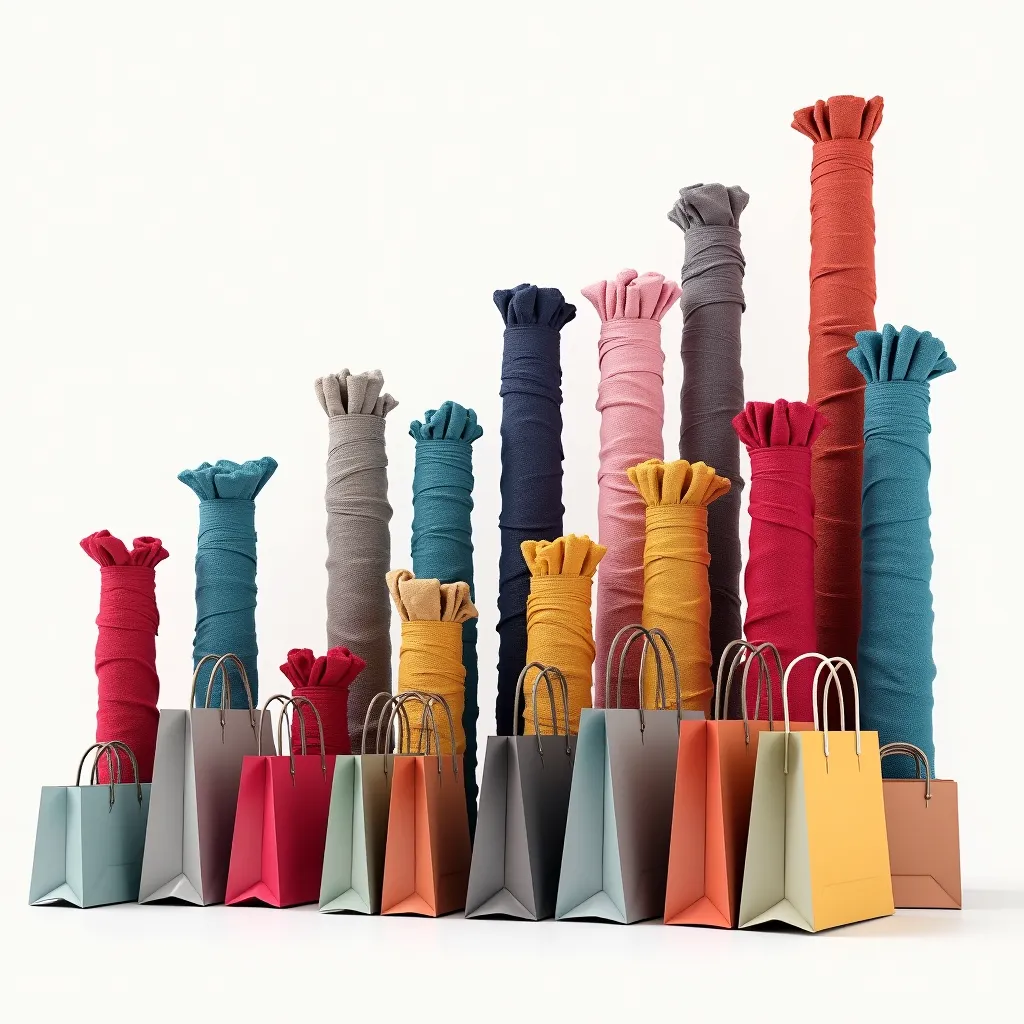
Looking beyond 2025, what’s next in AI fashion will be shaped by three main forces: maturity of data capabilities, evolving regulation, and consumer expectations. As data infrastructure improves, brands will move from isolated pilots to fully integrated AI ecosystems spanning design, sourcing, merchandising, marketing, and customer service. Regulation around privacy, AI transparency, and sustainability reporting will influence how algorithms are trained and deployed, pushing brands to adopt more explainable and responsible AI practices. On the consumer side, expectations will rise: shoppers will treat AI styling, real‑time size guidance, and sustainable production insights as hygiene factors rather than novelties. Over time, future fashion AI discussions will focus less on tools and more on outcomes—profitability, circularity, and differentiated brand experiences.
In an optimistic scenario, fashion brands use AI to build truly circular and transparent value chains. Multimodal AI systems—models that can process text, images, and 3D data together—support designers in creating garments that are easier to recycle, repair, or resell. Computer‑vision tools track garments through their lifecycle, feeding data back into recycling partners and resale platforms. Regulators introduce clear but innovation‑friendly rules around AI transparency and environmental reporting, which helps consumers trust the data they see on origin, carbon footprint, and labor practices. In this version of the AI fashion future, technology becomes an enabler of both profitability and sustainability.
The base‑case outlook is more incremental but still transformative. AI becomes embedded in all major enterprise platforms used by fashion companies—PLM, ERP, CRM, commerce—so that employees experience AI more as a feature than a standalone tool. Virtual fashion assets and digital twins are used alongside physical collections to test demand, reduce sampling, and power virtual try‑on. Consumers regularly see AI‑generated content in campaigns, but creative direction remains strongly human‑led. Regulation tightens around data usage and bias, but most mainstream use cases remain viable with good governance. In this world, what’s next AI fashion is less about headline‑grabbing experiments and more about compounding operational improvements.
A more cautious scenario emerges if regulatory or reputational risks are mishandled. High‑profile cases of biased algorithms or misleading sustainability claims could trigger stricter controls, slowing innovation. Brands that fail to invest in data quality and governance might struggle with unreliable AI outputs, creating internal skepticism. Nonetheless, even in a conservative future, many behind‑the‑scenes applications—like demand forecasting, size prediction, and supply‑chain analytics—are likely to remain, because their business value is proven and relatively low‑risk when well managed.
Across all scenarios, several emerging technologies will shape the longer‑term future of AI in fashion:
• Multimodal AI will help interpret runway images, street‑style photos, sales data, and text reviews together, giving design and merchandising teams a richer understanding of trend momentum.
• Virtual fashion and digital garments will power new revenue streams in gaming, augmented reality, and the metaverse, as well as lower‑impact sampling before physical production.
• AI‑driven circular models will optimize buy‑back pricing, resale matching, and refurbishment decisions, making it easier to keep garments in circulation and out of landfills.
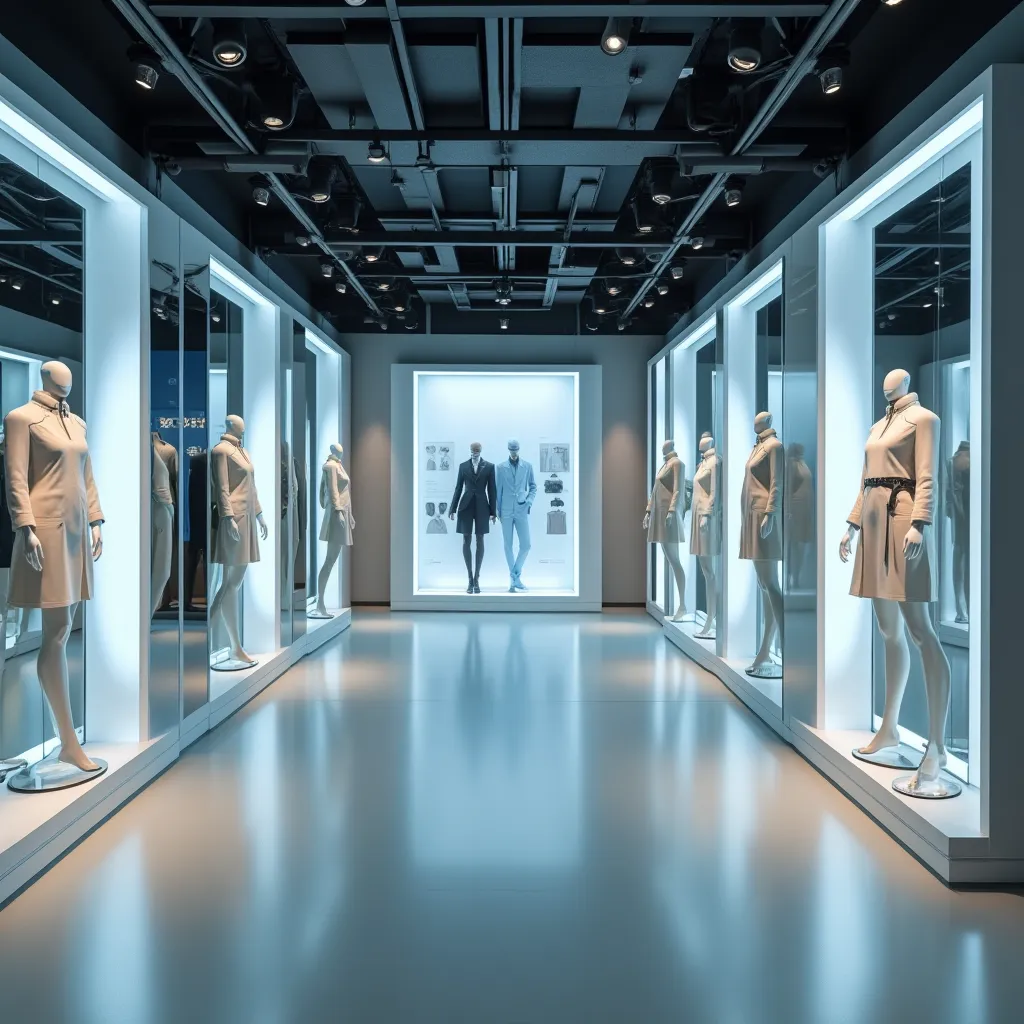
To capture value from the future of AI in fashion, companies will need a clear roadmap rather than scattered experiments. Strategically, this means aligning AI use cases with business priorities such as margin improvement, inventory efficiency, customer lifetime value, and sustainability targets. It also requires building a foundational data layer, strengthening analytics and engineering talent, and setting governance for ethical and transparent AI. Partnerships with specialized vendors and platforms will likely accelerate progress, especially for mid‑sized brands that lack in‑house capabilities. At the same time, creative teams will need support to adopt AI as a co‑pilot, not a replacement. The organizations that treat AI as a cross‑functional capability—spanning design, merchandising, marketing, and operations—will be best positioned as the AI fashion future matures.
A practical way to move from vision to execution is to follow a simple five‑step framework: assess, prioritize, pilot, scale, and govern.
1. Assess the current state of data, technology, and skills. Map where data lives today—from e‑commerce analytics to POS systems and PLM—and evaluate its quality. Identify where manual decision‑making slows the business or relies heavily on heuristics.
2. Prioritize AI use cases that directly support strategic goals. For example, a brand struggling with high return rates might focus on fit prediction and virtual try‑on, while one facing margin pressure might prioritize demand forecasting and markdown optimization. Use the internal AI fashion market size analysis to understand where investment is flowing and which solution categories are maturing fastest.
3. Pilot in focused, measurable ways. Set up limited‑scope tests—such as AI‑powered recommendations for a single category or AI‑assisted design for one seasonal drop—then track uplift in key metrics like sell‑through, conversion rate, or design cycle time. According to Deloitte, retailers that run well‑structured AI pilots can achieve ROI within 6–12 months for targeted use cases (Deloitte, 2022).
4. Scale successful pilots across channels, categories, and regions by integrating AI into core systems and processes. This often involves consolidating data into a more robust platform, standardizing APIs, and training teams beyond the original pilot group.
5. Govern AI responsibly. Define clear policies for data usage, bias monitoring, and human oversight. Establish cross‑functional governance that includes design, merchandising, legal, and sustainability voices to ensure that future fashion AI decisions reflect brand values as well as performance goals.
Consider a simplified 2–3 year rollout example. In year one, a mid‑sized retailer pilots AI demand forecasting for one category and launches AI‑driven recommendations on its e‑commerce site. In year two, the brand expands forecasting to additional categories, experiments with AI‑assisted design for a capsule collection, and introduces a virtual stylist chatbot in key markets. By year three, AI is embedded across merchandising, allocation, marketing personalization, and customer service, with a central data team supporting ongoing optimization. Throughout, the brand invests in training designers, buyers, and marketers to work effectively with AI tools rather than around them.

The future of AI in fashion is moving quickly from prediction to implementation. By 2025, core trends such as AI‑driven forecasting, personalization, and content creation will be widespread, and the underlying AI fashion market size will continue to expand as brands invest in scalable platforms and expertise. Longer‑term, future fashion AI will influence not just how products are sold, but how they are designed, sourced, and reused. For decision‑makers asking what’s next in AI fashion, the priority now is to combine clear strategy, realistic pilots, and strong data foundations.
Three takeaways stand out. First, AI is already delivering measurable value in fashion, particularly in demand forecasting, personalization, and supply‑chain optimization. Second, the market opportunity is large and growing, with fashion set to remain one of the most dynamic segments of retail AI investment. Third, long‑term success will depend on how effectively brands integrate AI into cross‑functional workflows and govern it responsibly, not simply on who has the flashiest tools.
To move from insight to action, use your internal AI fashion market size analysis as a starting point to benchmark where you are versus where the market is heading. Then, define a short list of priority use cases that align with your brand’s positioning and constraints. As you plan what’s next AI fashion in your organization, staying close to both internal research and high‑quality external insights will help ensure that AI becomes a lever for profitability, creativity, and sustainability.
If you are ready to translate the AI fashion future into a practical roadmap, start by exploring the deeper breakdowns, case studies, and benchmarks in your internal AI fashion market size resource—then use those insights to brief your next wave of pilots, partners, and capability building.
Q1. Will AI replace designers and creative directors?
No. In the foreseeable future of AI in fashion, AI is best understood as a powerful assistant rather than a replacement. It can surface trends, generate variations, and automate repetitive tasks, but human judgment is still essential for storytelling, brand identity, and cultural relevance.
Q2. Where should smaller brands start with AI?
Smaller brands often see the fastest returns by focusing on a few high‑impact areas: personalized recommendations, basic demand forecasting, and automated campaign content. Cloud‑based tools and off‑the‑shelf platforms make it possible to access future fashion AI capabilities without building large internal teams on day one.
Q3. How can brands manage ethical and regulatory risks?
Establish clear governance early. That includes consent and transparency around data collection, regular bias testing for models (especially those used in sizing, pricing, or hiring), and clear escalation paths when AI recommendations conflict with brand values. Responsible governance is central to any credible answer to what’s next AI fashion.
Related reads: AI fashion market size
© 2026 The F Word. All rights reserved.
101 People Reading our Newsletter Right Now!
