English
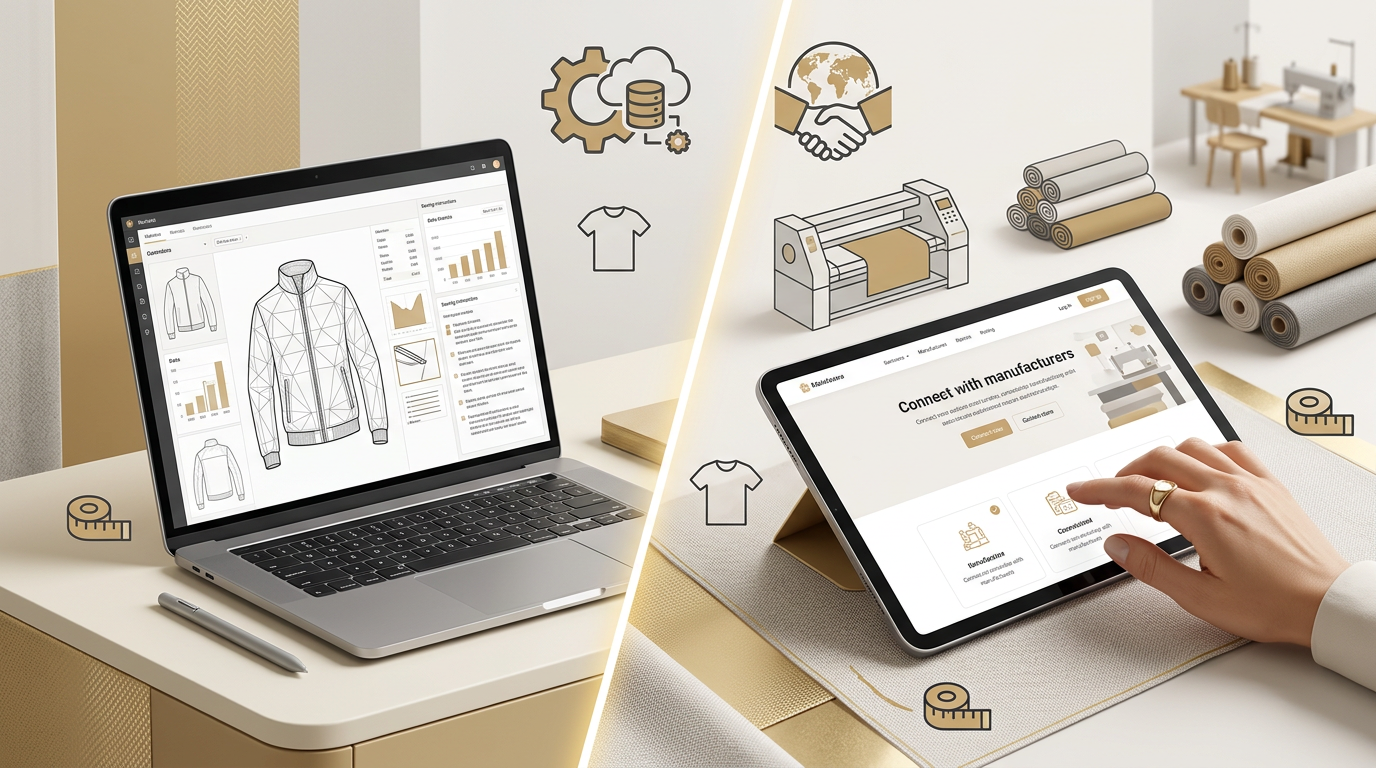
Your factory outcome is decided by the clarity of your specifications.
If you are weighing garment tech pack software vs online maker, anchor on one question: will the output survive first contact with a factory without a round of clarification emails? Speed matters, but rework kills margin.
For early-stage teams, online makers can generate a clean first draft. For complex categories, graded sizes, or multiple vendors, dedicated software reduces ambiguity and sampling loops. The right stack aligns with your product complexity, vendor expectations, and compliance exposure.
Factories optimize for instructions they can execute.
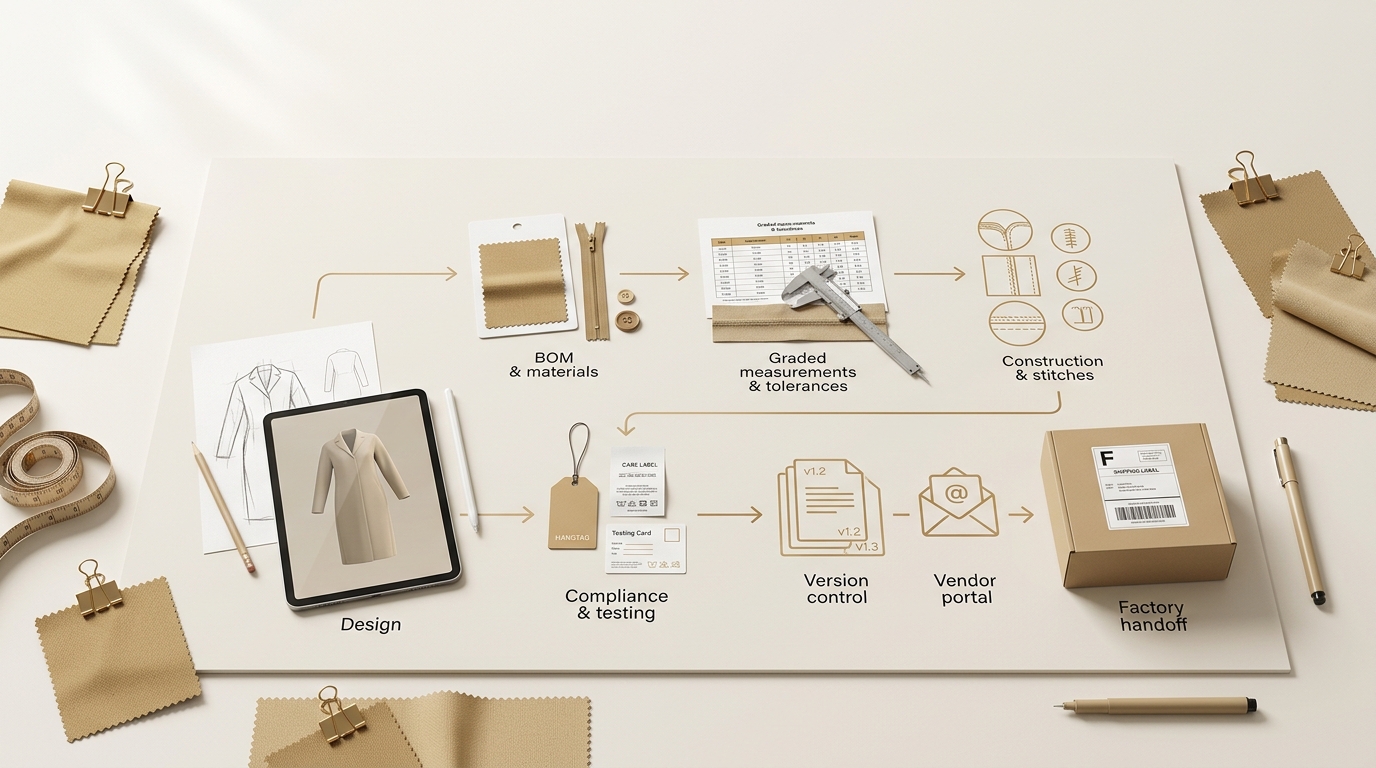
A factory-ready pack includes BOM with substitutes, seam and stitch types, tolerances, graded measurements, construction callouts, labeling, testing, and revision control. Gaps here inflate sampling rounds, unit cost, and delays that compound across POs.
Template-driven online makers accelerate structure, but often skip vendor-specific preferences and compliance lines that prevent rework. For regulated categories like kidswear, you need testing notes and certification references per CPSC children's product guidance. That means explicit flammability or small-parts testing plans tied to SKUs, not just a generic compliance note.
Designer or merchandiser? Replace the spreadsheet handoff.
The F* Word generates moodboards, factory-readable tech packs and sampling notes in one workflow, so creative, production and merchandising stay aligned. Free to try.
Choose dedicated software when complexity, compliance, and collaboration hit a threshold.
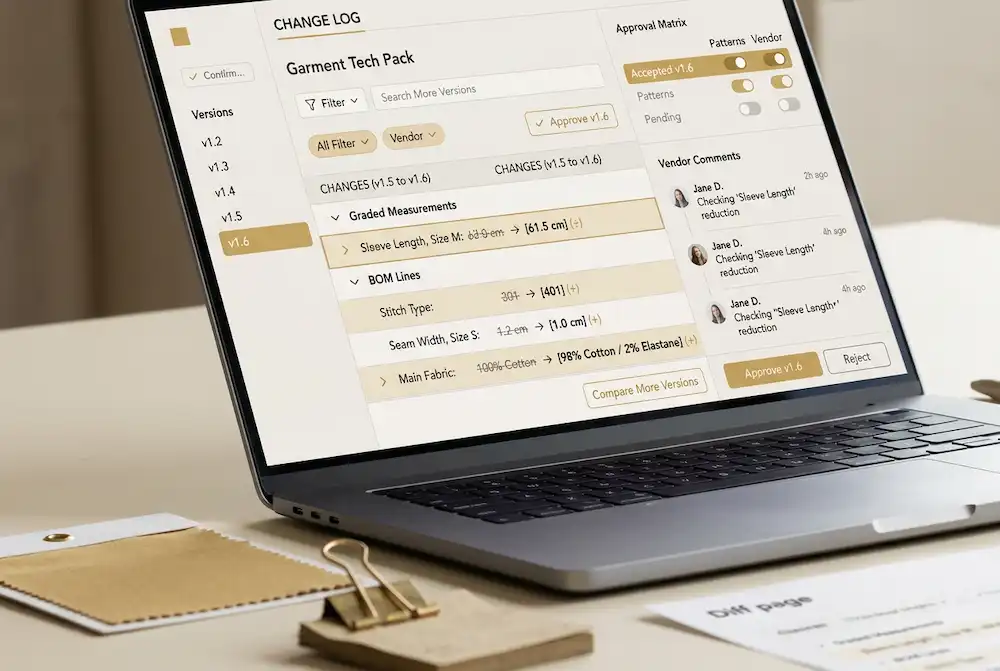
Signals you've crossed it: 5+ vendors, 10+ styles per drop, full graded size runs, or any category with safety testing. Libraries, versioning, vendor portals, and structured fields cut context loss across teams and seasons while giving factories a single source of truth.
Pairing 3D tools like CLO3D with a structured spec reduces physical samples, but the 3D must translate to factory-ready measurement sheets and BOMs. See what clean handoff looks like in AI Tech Packs for Fashion Brands: What Good Production Handoff Looks Like. If you're deciding between garment tech pack software vs online maker for multi-piece outerwear, denim, or technical knitwear, the cost of ambiguity is higher than the cost of software process.
Speed wins for simple blocks with aligned vendors.
If you're producing 1-3 basic blocks with a trusted full-package vendor, online makers give you fast, consistent docs. The catch is hidden risk: missing tolerances, seam specs, or labeling can still trigger a remake or slow approvals by a week.
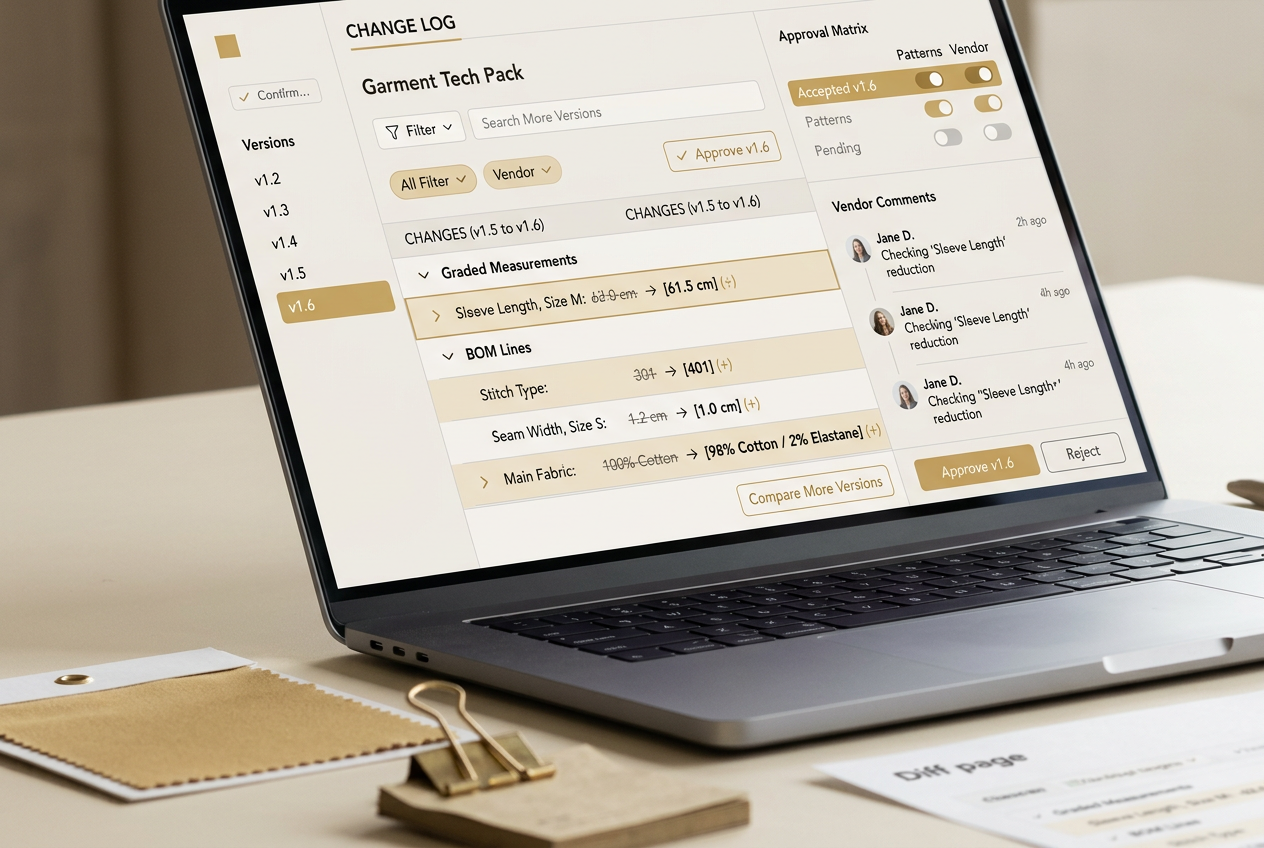
Plan to add factory-specific clauses and compliance snippets manually. As you scale SKUs or vendors, migration to software with libraries and change logs becomes inevitable. For a tooling map by workflow stage, review AI Fashion Workflow Tools in 2026.
DimensionTech Pack SoftwareOnline MakerProduct ComplexityHandles complex, multi-piece, graded specsBest for simple blocks, limited variationsCompliance FieldsStructured fields, templates, audit trailsUsually manual add-onsCollaboration/VersioningNative version control, comments, portalsBasic exports, limited change historyVendor AlignmentVendor-specific schemas and librariesGeneric formatsTime To First DraftSlower setup, faster at scaleFast initial, slower to fix gapsTotal Sampling RoundsLower with consistent standardsHigher if specs under-defined
Decisions improve when you score the risk.
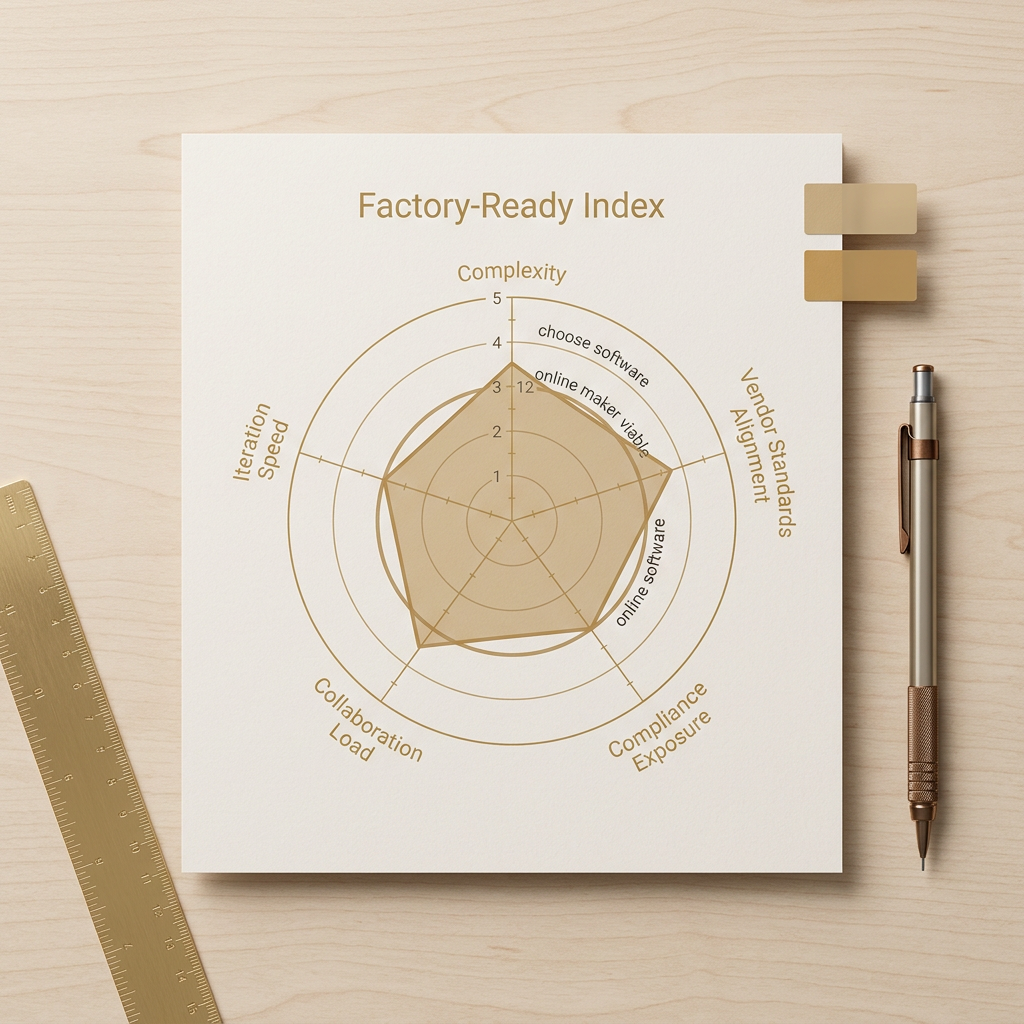
The Factory-Ready Index (FRI) rates your context across five axes: Complexity, Vendor Standards Alignment, Compliance Exposure, Collaboration Load, and Iteration Speed. Score each 1-5 based on evidence from the last two drops. If FRI is 15 or more with any 4+ on Compliance or Collaboration, choose tech pack software. If FRI is 12 or less and all axes are 3 or below, an online maker is viable.
Tradeoff: software adds process overhead and training; online makers add rework risk and scattered change history. Failure modes: optimism bias in scoring, ignoring vendor feedback during scoring, and mixing tools without a single source of truth. Mitigate by documenting questions per style, sample counts, and approval times in a shared tracker you review monthly.
Moving from 2.4 to 1.6 samples per style saved $3,520 on a 20-style drop and cut ~2 weeks from approvals.
Integration beats heroics: design, spec, 3D, testing, and vendor feedback belong in one loop.
Put 3D fit notes, graded measurement tables, and stitch libraries in the same source that exports factory-ready sheets. Require factory acknowledgment against tolerances and BOM lines, then log deltas for the next drop. This closes the loop on recurring defects and normalizes expectations across vendors.
For regulated categories, attach testing plans and certificate references early (e.g., OEKO-TEX scope or CPC docs via CPSC). Keep BOM substitutions explicit: fiber, weight, finish, and acceptable alternates with supplier SKUs. Operational tradeoff: deeper structure takes an extra 20-30 minutes per style on the first pass, but saves a full sample cycle when you scale beyond 5 vendors and 30 styles.
Treat your specs like code: monitor, diff, and release.
When to refresh: after any vendor change, material substitution, size run expansion, or when sampling rounds exceed 2 per style for two consecutive drops. Decay signals to track: clarification emails per style rising above 3, measurement disputes per PO, sample rejections above 15%, or time-to-approve pushing past 10 business days.
How to update: add missing tolerances, convert ambiguous sketches to construction callouts, move ad-hoc notes into structured fields, and archive deprecated variants. Re-run FRI quarterly; if Compliance or Collaboration scores rise, graduate from online maker to software. Document factory feedback verbatim and update templates so the fix ships to every future style.
Pick the tool that makes your next PO clearer than your last sample.
Use an online maker for simple spec formatting. Use garment tech pack software when you need editable BOMs, POMs, grading, version control, vendor handoff, and production accountability.
Related: tech pack generation software
Get The F* Word workflow insights in your inbox.