
English
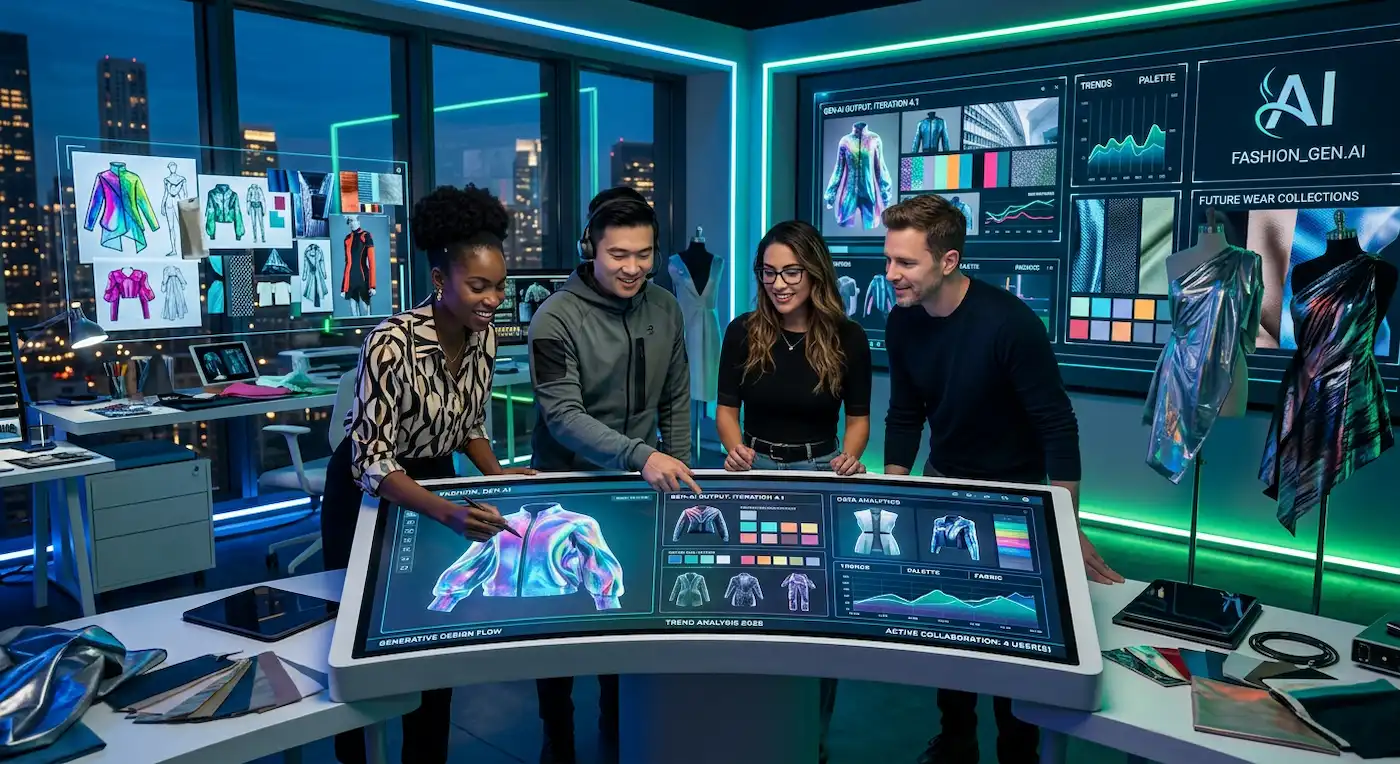
Multi-agent AI is useful when it coordinates work across creative direction, technical design, merchandising, and launch. It fails when teams treat agents as magic instead of governed workflow operators.
Unlike single-purpose AI tools that handle isolated tasks, multi-agent systems deploy multiple intelligent agents that work collaboratively across your entire design workflow. According to LeewayHertz, these systems can adapt and solve complex problems in real-time, making them uniquely suited for fashion's multifaceted creative process. For creative directors juggling trend forecasting, concept development, technical specifications, and merchandising, this represents a fundamental shift from managing disconnected tools to orchestrating an intelligent, integrated workflow.
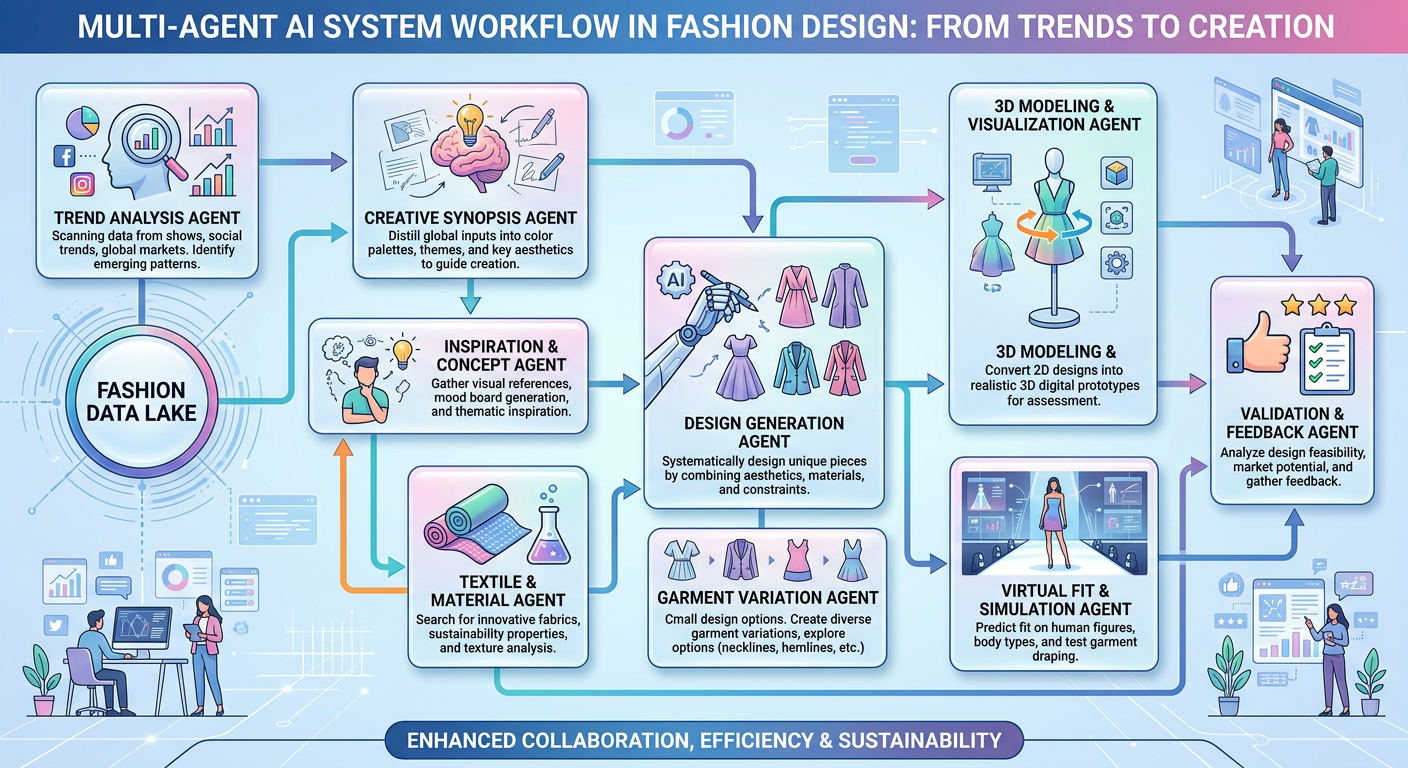
multi-agent-system-workflow-diagram
Multi-agent AI systems consist of multiple specialized AI agents working collaboratively to solve complex problems, exactly what fashion design demands.
These systems deploy several intelligent agents, each handling specific tasks while communicating and sharing insights with other agents to achieve sophisticated goals. In fashion design automation, one agent might analyze trend data while another generates design concepts, and a third validates technical feasibility, all working simultaneously and coordinating their outputs. This collaborative approach mirrors how successful design teams operate, but at machine speed.
The power becomes clear when you consider the typical fashion workflow in 2026. As outlined in research from IBM, multi-agent systems excel in environments requiring real-time decision-making across multiple domains. Fashion design demands exactly this: simultaneous consideration of aesthetic trends, technical constraints, material availability, cost parameters, and market timing. Traditional single-agent AI tools force designers to manually bridge these considerations, creating the coordination bottlenecks that consume 60-70% of a creative director's time.
This collaborative intelligence addresses fashion's core workflow problem. Where creative directors spend weeks coordinating between trend researchers, designers, technical teams, and merchandisers, agentic AI systems enable these conversations to happen instantaneously. Each agent contributes specialized expertise while maintaining alignment with your creative vision, transforming the 4-6 week creative cycles that plague mid-to-large fashion brands into streamlined processes measured in days, not months.
Designer or merchandiser? Replace the spreadsheet handoff.
The F* Word generates moodboards, factory-readable tech packs and sampling notes in one workflow, so creative, production and merchandising stay aligned. Free to try.
Multi-agent ai systems coordinate across three critical workflow stages, creative direction, technical development, and merchandising, eliminating handoff delays that extend timelines.
During creative direction, trend analysis agents continuously monitor fashion shows, social media, street style, and retail data to identify emerging patterns. These insights feed directly into concept generation agents that produce multiple design directions aligned with your brand DNA. Validation agents then assess each concept against historical sales data, current inventory, and market positioning, delivering what McKinsey research describes as significantly improved productivity and speed to market.
Instead of gut-feel bets that drive excess inventory, creative directors receive trend-informed briefs with validated concepts ready for development. This addresses the core problem fashion brands face: spending more time coordinating than designing. Multi-agent systems reduce creative cycle validation from 4-6 weeks to 3-5 days, enabling teams to explore significantly more design directions without hiring additional staff.
In technical development, multi-agent systems coordinate between design intent and production reality. 3D modeling agents create digital prototypes while fit analysis agents identify potential draping or construction issues before physical sampling. Technical specification agents automatically generate tech packs with bills of materials and grading rules, reducing what traditionally takes 16-20 hours to just 15 minutes. This isn't about replacing AI clothing designers, it requires augmenting their capabilities so they focus on creative decisions rather than documentation.
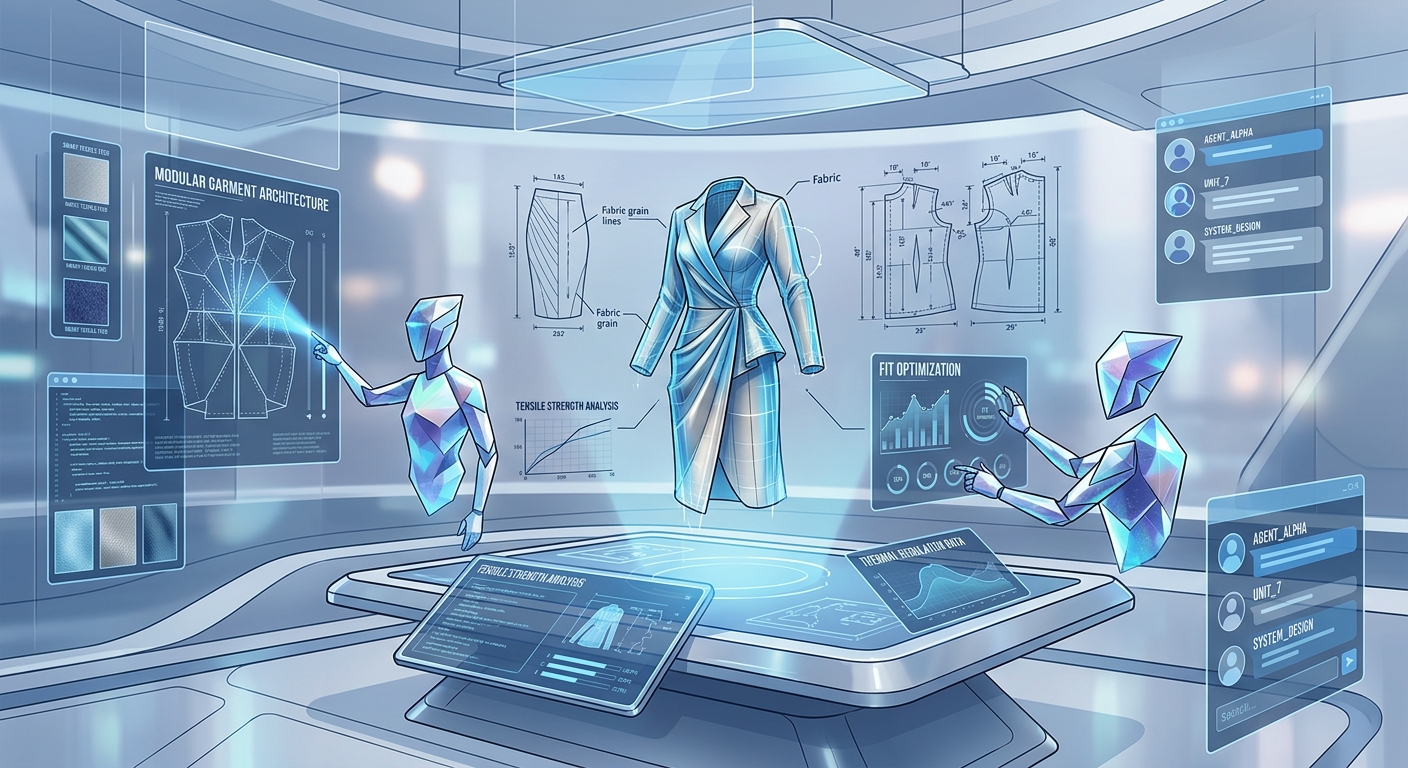
technical-design-agent-collaboration
Fashion brands implementing multi-agent ai systems see 75% fewer physical samples and 60% reduction in inventory risk through intelligent coordination that maintains creative integrity.
Consider the sample development process, traditionally requiring 3-5 rounds per style at $450-$5,000 per failed sample. Multi-agent systems deploy 3D validation agents that catch fit and drape issues before physical production, working alongside material simulation agents that predict fabric behavior and costing agents that optimize for target price points. Brands using this approach complete development in 1-2 rounds instead of multiple iterations, dramatically reducing both costs and timeline.
The financial impact is substantial, but the creative impact is even more significant. Designers can explore more directions without budget constraints limiting their vision. A VP of Design at a mid-size contemporary brand reported exploring 40 concepts per season versus their previous 12, with better validation data informing which directions to pursue. This creative expansion happens without hiring more staff, the multi-agent system handles the coordination that previously required additional headcount.
For merchandising and launch planning, multi-agent systems coordinate between design assets and market-ready content. Once a 3D design is validated, rendering agents generate on-model imagery while variant generation agents create colorway and styling options. Content optimization agents ensure each SKU has the variant-rich visual content needed for omnichannel launch. What previously required studio shoots after production commitment, with expensive reshoots for missing variants, now happens before samples exist, with same-day asset generation from 3D data.
The broader implications extend to how agentic AI is reshaping fashion personalization and automation. Multi-agent systems don't just speed up existing processes; they enable entirely new approaches to design exploration and market validation that weren't feasible with manual workflows or single-purpose AI tools.
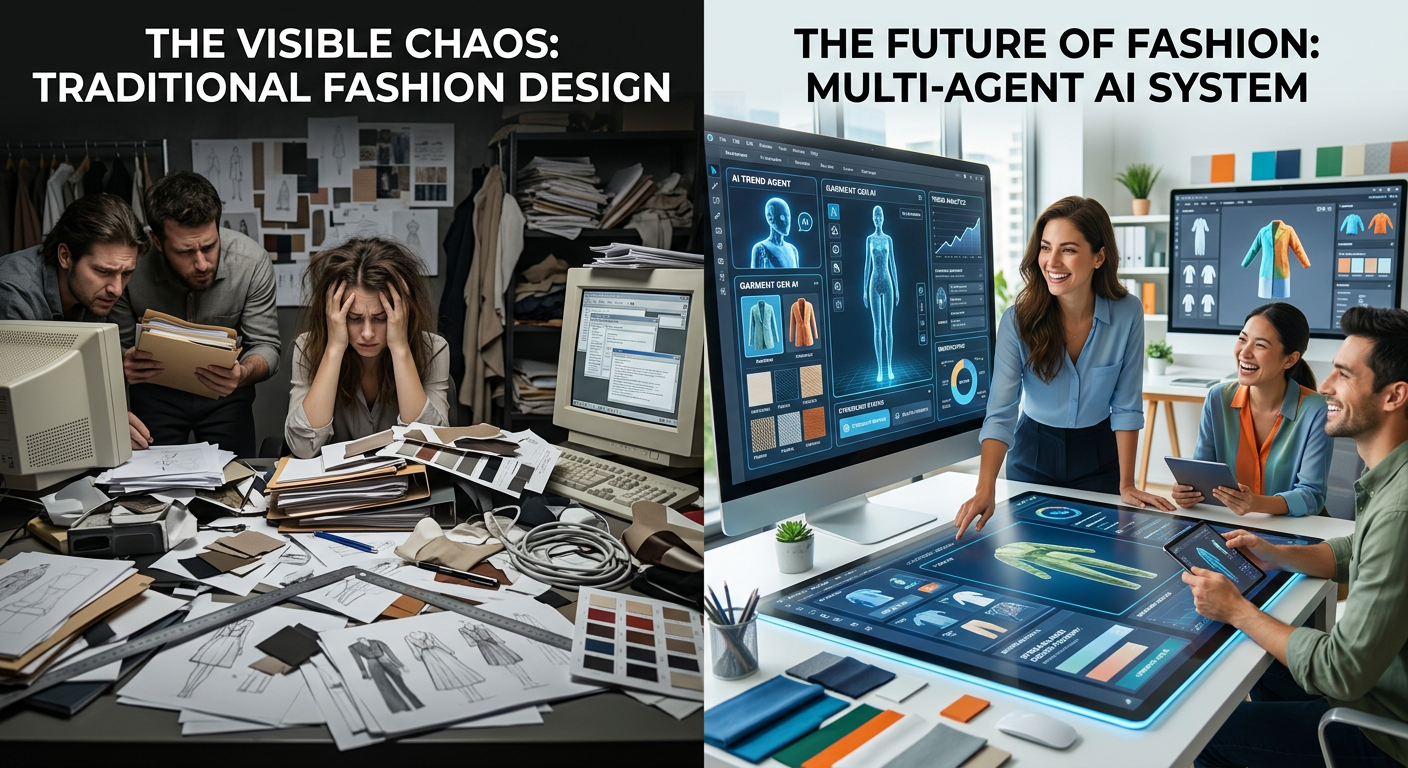
before-after-workflow-comparison
The most successful implementations start by mapping coordination bottlenecks rather than trying to automate everything at once.
Successfully deploying multi-agent ai systems requires strategic planning that balances technological capability with creative culture. The most common implementation mistake is treating multi-agent systems as just another tool in an already fragmented tech stack. The value comes from integration, connecting agents across your entire workflow rather than creating new silos that add to the six disconnected tools creative directors already manage.
Start by identifying where handoffs between teams create delays. Where does information get lost in translation? These friction points are where multi-agent systems deliver immediate value. For most fashion brands, the highest-impact starting point is connecting creative direction to technical development, ensuring that validated concepts move smoothly into production-ready specifications without manual reformatting or re-explanation.
When evaluating platforms, prioritize systems built specifically for fashion workflows rather than generic AI tools. As detailed in guides on implementing agentic AI in fashion, fashion-specific systems understand industry terminology, seasonal cycles, and the unique balance between creativity and commercial viability. They should integrate with your existing tools, Adobe for asset creation, CLO for 3D design, while providing the workflow orchestration layer that these tools lack. This addresses the common objection: "We already use Adobe and CLO." Those tools create assets, but they don't manage the full fashion workflow.
Change management is equally critical. Position multi-agent systems as creative amplification, not replacement. Your designers' taste and vision remain central; the systems handle coordination, documentation, and validation that currently consume their time. Pilot with a small team on a single collection, measure time savings and creative output expansion, then scale based on demonstrated value. This approach addresses concerns that AI might dilute creative taste by proving the systems enhance rather than replace human judgment.
Next-generation multi-agent systems will propose entire collection architectures, not just individual designs, understanding how pieces relate and balance commercial accessibility with creative statements.
Looking ahead through 2026 and beyond, multi-agent ai systems will become increasingly sophisticated in their understanding of fashion's nuanced creative requirements. Current systems excel at coordination and validation; next-generation systems will contribute more actively to creative ideation while maintaining brand-specific aesthetic sensibilities. This evolution addresses leadership concerns that AI tools are experimental rather than production-ready by demonstrating measurable business impact.
The evolution toward more autonomous design exploration is already visible in emerging AI fashion trends. Multi-agent systems are beginning to suggest which hero items to build around and how to balance collection elements, collection-level intelligence that represents a qualitative leap beyond current capabilities. This doesn't replace creative directors; it provides them with data-informed starting points that accelerate the creative process.
Integration with supply chain and sustainability agents will further expand multi-agent systems' value. Consider design agents that automatically consider material availability, production capacity, and carbon footprint while generating concepts, ensuring that creative vision aligns with operational reality and environmental commitments from the earliest stages. This holistic approach addresses fashion's most pressing challenges while accelerating rather than constraining creativity, delivering the reliable launch timelines that brands desperately need.
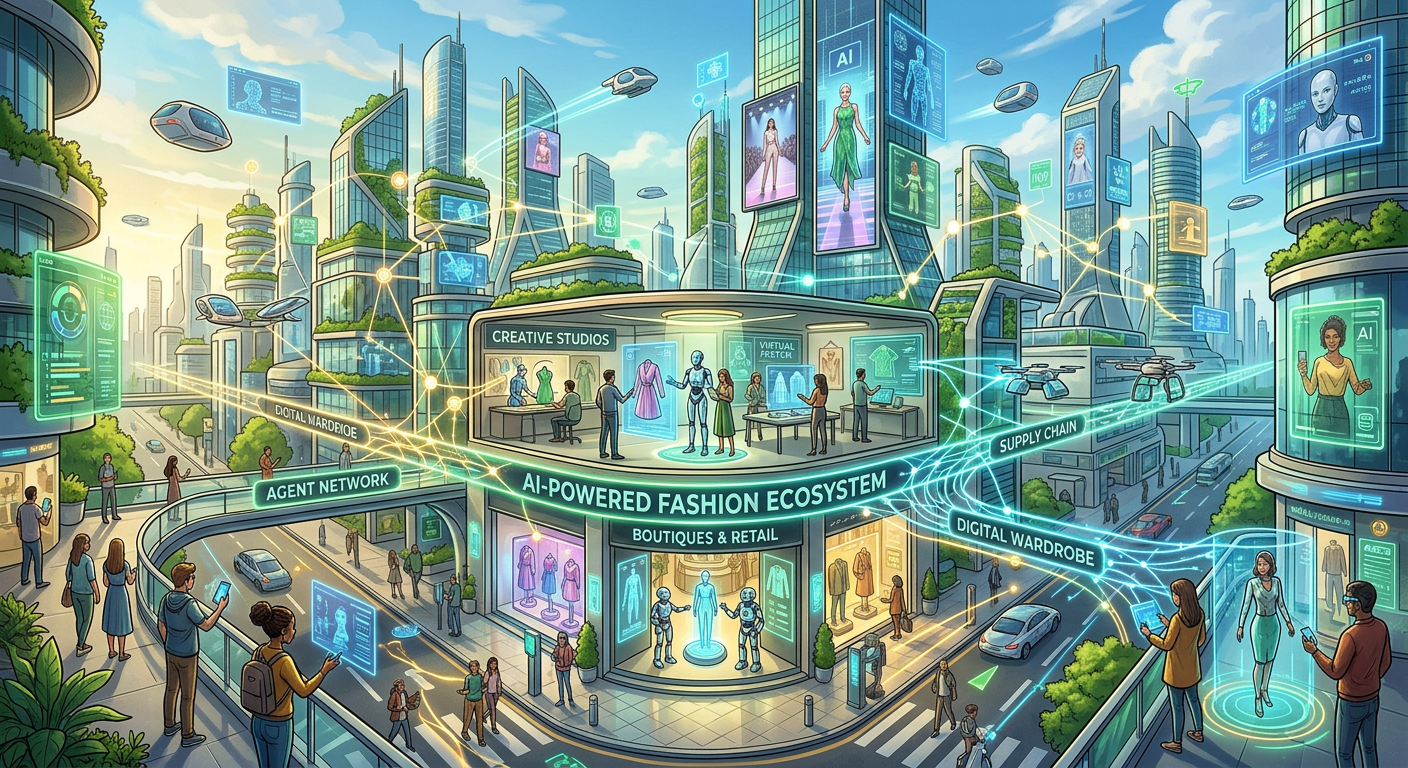
future-integrated-fashion-ecosystem
What's the difference between multi-agent AI systems and regular generative AI for fashion?
Generative AI creates individual assets like designs or images, while multi-agent ai systems coordinate multiple specialized AI agents across your entire workflow. Think of generative AI as a powerful tool and multi-agent systems as the intelligent project manager that orchestrates when and how different tools are used together. Multi-agent systems provide the workflow integration that fashion brands need to move from disconnected tools to cohesive operations.
Will multi-agent systems replace fashion designers?
No. Multi-agent systems handle coordination, validation, and documentation, the operational tasks that currently prevent designers from focusing on creativity. They expand what's possible by enabling designers to explore significantly more directions and validate concepts faster, but creative vision, brand taste, and aesthetic judgment remain human responsibilities. The goal is amplification, not replacement.
How long does it take to implement multi-agent AI systems?
Implementation timelines vary based on workflow complexity, but most fashion brands see initial value within 4-6 weeks when starting with a focused use case like creative direction or technical development. Full workflow integration typically takes 3-4 months, with measurable time savings visible within the first collection cycle.
Do multi-agent systems work with existing tools like Adobe and CLO?
Yes. Multi-agent systems should integrate with your existing creative tools rather than replace them. Adobe and CLO excel at asset creation; multi-agent systems provide the workflow orchestration layer that connects these tools into a cohesive process. The value comes from integration, not replacement.
What ROI can fashion brands expect from multi-agent AI systems?
Brands typically see 60% reduction in inventory risk through better concept validation, 75% fewer physical samples through 3D validation, and 80-90% time savings on technical documentation. Beyond direct cost savings, the ability to explore 3-5x more design directions without additional headcount represents significant competitive advantage.
Multi-agent ai systems represent more than incremental improvement in fashion design automation, they fundamentally change what's possible when creative vision meets intelligent coordination. For creative directors and design leaders in 2026, the question isn't whether to adopt these systems but how quickly you can implement them before competitors gain insurmountable advantages in speed and creative exploration capacity.
The fashion brands thriving in 2026 aren't choosing between creativity and efficiency. They're using multi-agent systems to achieve both: more design directions explored, faster validation cycles, reduced sample waste, and launch timelines that actually hold. This is the promise of truly integrated AI, not replacing human creativity but amplifying it through intelligent workflow orchestration that eliminates the coordination burden consuming 60-70% of creative directors' time.
Harnessing Generative AI for Fashion Design Innovation
Good for readers who want to separate generative AI from multi-agent AI, especially the difference between creating design assets and coordinating the full concept-to-production workflow.
How to Implement Agentic AI in Fashion: Step-by-Step
Useful for creative directors and operators who need a practical rollout path: where to pilot first, how to reduce team resistance, and how to measure workflow gains.
The F* Word Editorial · Fashion workflow team
Written by The F* Word editorial team. We build AI fashion workflow software grounded in thousands of industry-produced tech packs and proprietary garment records, so what reaches the factory is consistent, reviewed, and tied to design intent.
Related: AI fashion workflow software · AI tech pack generation · creative direction workflow
Related: AI Fashion Workflow Software
Get The F* Word workflow insights in your inbox.