
Fashion automation should connect multiple workflow stages, not just digitize isolated tasks. The test is whether it reduces handoff loss between creative direction, technical design, production, and merchandising.
Yet despite the transformative potential, 73% of fashion brands still confuse AI with basic automation, leading to costly tool selection mistakes. For creative directors and design leaders managing fragmented workflows across six or more disconnected platforms, understanding the nuances of fashion automation isn't just beneficial, it's essential for survival in an increasingly competitive market.
The apparel industry remains one of the least automated sectors globally, creating a significant opportunity gap. While other industries have embraced integrated systems, fashion design workflows continue forcing leaders to spend more time coordinating than creating. This guide will help you navigate the automation landscape, distinguish meaningful solutions from marketing hype, and identify which systems can genuinely transform your core workflows without diluting your creative vision.
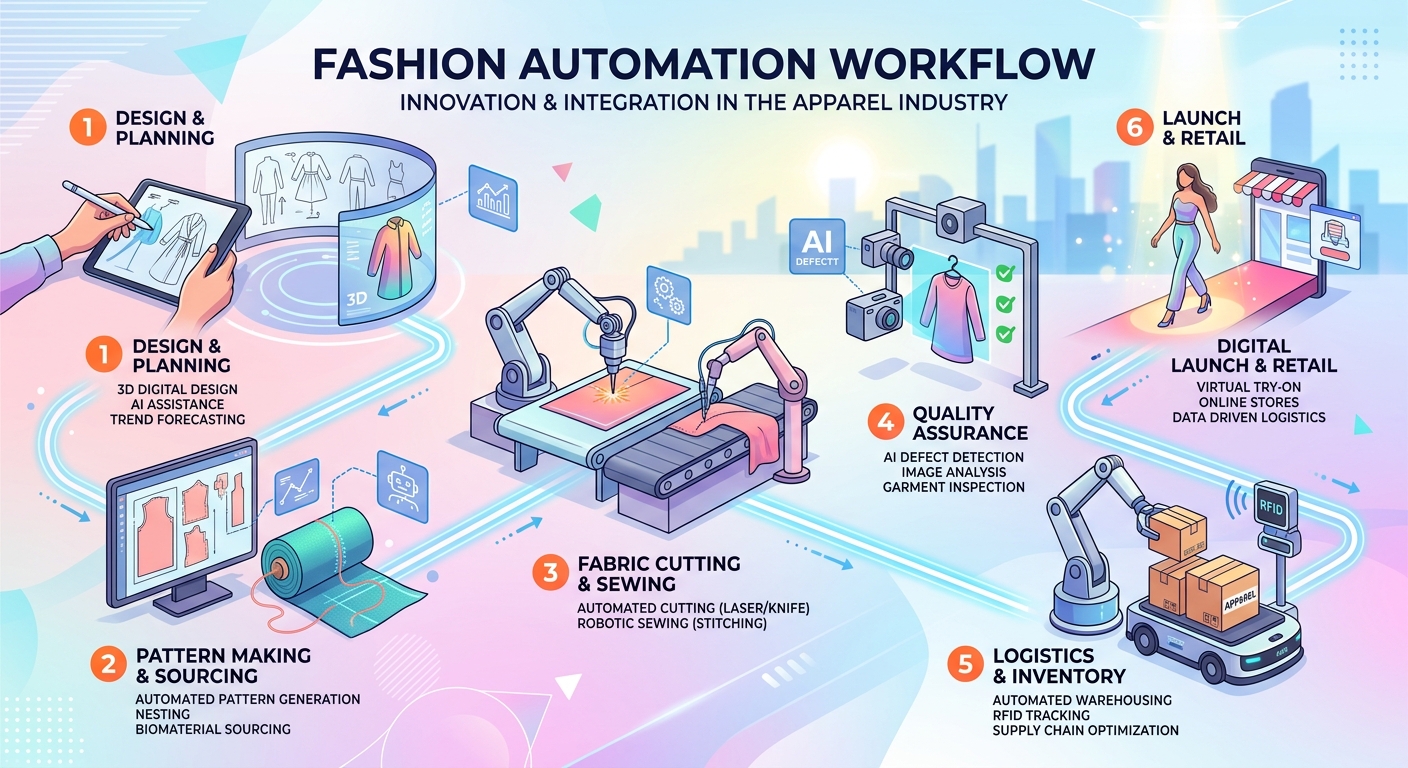
fashion_automation_workflow_overview
The terminology confusion plaguing the industry stems from vendors conflating basic automation with artificial intelligence, and the distinction directly impacts your ROI. Automation executes predefined tasks like auto-generating size grading or batch-processing images. AI makes decisions based on pattern recognition and learning from vast datasets. In 2026, this distinction matters because your technology stack determines whether you're simply speeding up existing processes or fundamentally transforming how decisions get made.
True fashion automation should connect multiple workflow stages, not just digitize isolated tasks. When evaluating platforms, ask whether the solution manages handoffs between creative direction, technical design, and merchandising, or merely automates individual functions within each silo. Point solutions that optimize one task while leaving coordination gaps don't solve the core problem facing design leaders today.
The evolution of AI in fashion demonstrates that integrated platforms deliver exponentially more value than disconnected tools. A system that generates beautiful renderings but doesn't connect to tech pack creation still leaves you coordinating manually. The most powerful solutions combine AI decision-making with workflow automation across your entire design-to-launch cycle.
Designer or merchandiser? Replace the spreadsheet handoff.
The F* Word generates moodboards, factory-readable tech packs and sampling notes in one workflow, so creative, production and merchandising stay aligned. Free to try.
Traditional creative cycles consume 4–6 weeks before any validation occurs, forcing designers to bet on just 1–2 concepts based largely on intuition. This approach creates enormous financial risk because significant resources get committed before market validation happens. Fashion automation platforms now enable trend-informed briefs that replace gut-feel bets, allowing teams to generate 5–7 validated concepts in minutes rather than weeks.
The transformation extends beyond speed to quality and confidence. Automated systems can analyze thousands of runway images, social media trends, and historical sales data simultaneously, a task impossible for human teams regardless of size. This capability means creative directors can explore significantly more design directions without expanding headcount, directly addressing one of the most common pain points among design leaders managing lean teams.
This shift reduces inventory risk by 60% because decisions are grounded in data before significant resources get committed. When you can validate seven concepts against trend data and consumer signals before selecting final directions, your hit rate on successful styles increases dramatically. The brands implementing these systems report fewer end-of-season markdowns and stronger full-price sell-through rates.
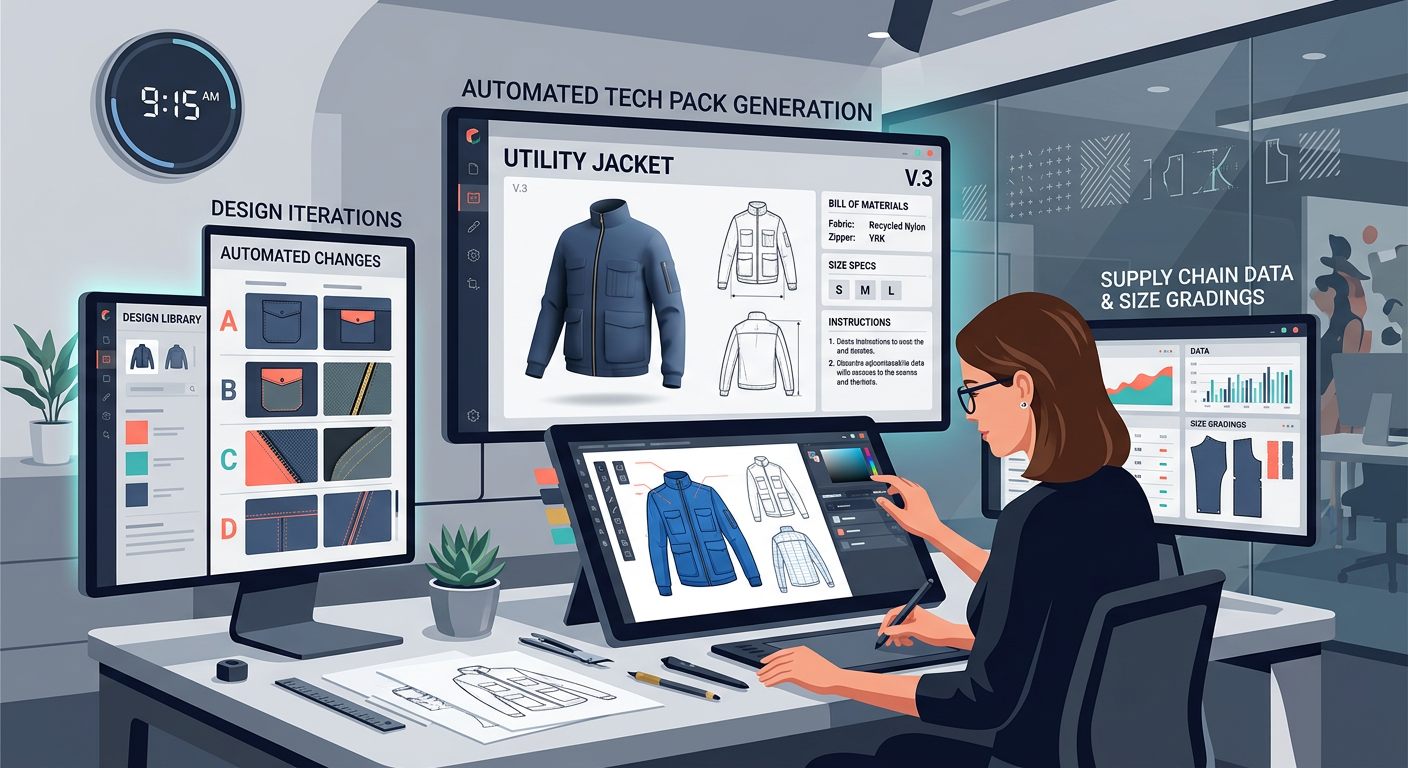
Pre-production represents the most expensive bottleneck in fashion workflows, with brands typically cycling through 3–5 sample rounds per style at $450–$5,000 per failed sample. Manual tech pack creation consumes 16–20 hours per style, and coordination errors between design and production teams compound delays. These inefficiencies don't just cost money, they compress creative exploration time and force conservative design choices.
AI clothing design tools are reshaping this stage by enabling 3D validation that catches fit and drape issues before physical samples exist. Automated tech pack generation with BOMs and grading specifications now takes 15 minutes instead of days, freeing technical designers to focus on innovation rather than documentation. This speed enables iteration that was previously impossible within production timelines.
Brands implementing these systems report dropping from 3–5 sample rounds to just 1–2 rounds with 3D validation, representing a 75% reduction in physical samples. The environmental and financial benefits compound across hundreds of styles per season. More importantly, technical designers gain bandwidth to refine details and quality standards rather than rushing to meet deadlines.
Beyond design workflows, manufacturing automation is redefining factory operations with robotic assembly and AI-driven predictive analytics becoming standard in 2026. Robotic garment assembly and AI-driven predictive analytics enable intelligent cutting systems that reduce fabric waste by up to 20%. For brands managing sustainability commitments alongside profitability targets, these efficiency gains deliver both environmental and financial returns.
Integrated production management platforms now coordinate multiple manufacturing partners simultaneously, providing real-time visibility into production status. This transparency eliminates the coordination overhead that traditionally consumed design leaders' time. When systems automatically track production progress and flag delays, teams can focus on creative decisions rather than status update meetings.
Energy-efficient automated systems are also addressing sustainability concerns, using significantly less power than traditional manual operations while increasing throughput. For brands managing complex global supply chains, these systems provide the reliability and predictability that manual coordination cannot match. The result is fewer late deliveries, reduced air freight costs, and more dependable launch timelines.
The final mile, getting products to market with compelling visual assets, has historically required waiting until after production commitments, creating enormous financial risk. Studio shoots happen post-production, expensive reshoots address missing variants, and weeks of post-production delay launches. This sequence means brands commit to inventory before seeing how products will be marketed or gathering any market feedback.
Fashion automation platforms now generate on-model imagery directly from 3D designs, creating variant-rich content for every SKU on the same day. Launch visuals exist before physical samples, enabling marketing teams to test concepts and gather pre-orders before manufacturing begins. This reversal of the traditional sequence fundamentally changes risk profiles for new collections.
Brands using these systems report launching with complete visual assets 4–6 weeks earlier than traditional workflows allow. This timing advantage enables earlier market testing, pre-season buzz generation, and inventory adjustments based on actual consumer response rather than predictions. The ability to test marketing angles before production commitments represents a strategic shift in how fashion brands manage risk.
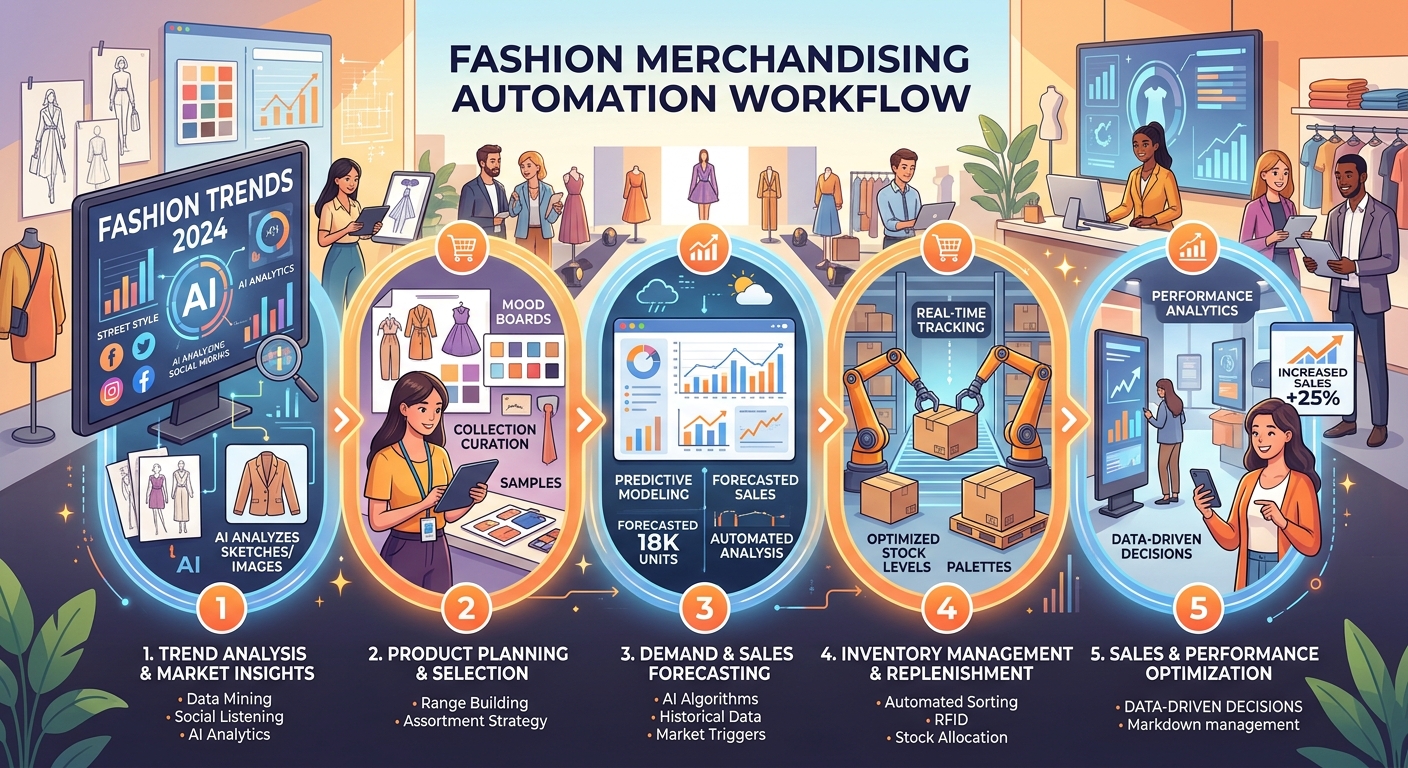
The most frequent objection from design leaders is: "We already use Adobe and CLO", but these tools create assets, they don't manage the full fashion workflow. These platforms excel at their specific functions but don't connect the handoffs, maintain version control across teams, or ensure everyone works from the same source of truth. The challenge isn't replacing existing software, it's connecting them within an integrated system.
Successful automation implementations in 2026 focus on workflow orchestration rather than tool replacement. Platforms that integrate with existing design software while adding coordination layers deliver faster ROI because they don't require teams to abandon familiar interfaces or relearn core skills. The value comes from connecting tools, not replacing them.
Look for solutions that treat your existing tools as components within a larger workflow system. The best platforms act as the connective tissue between Adobe for creative exploration, CLO for 3D visualization, and production systems for manufacturing coordination. This approach respects your existing investments while solving the coordination problem that actually slows you down.
Many creative directors worry that automation will dilute their creative taste or reduce fashion to algorithmic outputs, but this reflects a misunderstanding of how modern systems actually function. Automation handles repetitive tasks and coordination, freeing creative leaders to focus on the high-value decisions that define brand identity. The technology amplifies creative capacity rather than replacing creative judgment.
The brands seeing the greatest success with automation are those that position it as expanding creative exploration rather than constraining it. When designers can explore seven concepts instead of two, they make better final selections. When technical designers spend 15 minutes on tech packs instead of 20 hours, they have bandwidth for innovation and refinement.
Agentic AI in fashion demonstrates how systems can handle coordination while preserving creative control. These platforms suggest options based on trend data and brand history, but designers make all final decisions. The result is more informed creativity, not automated creativity.
When assessing fashion automation solutions, prioritize platforms that demonstrate production-readiness rather than experimental features. Leadership teams increasingly view AI tools skeptically because many vendors overpromise and underdeliver. Look for case studies showing measurable outcomes: reduced sample rounds, faster cycle times, lower inventory risk. Vague promises about "transformation" without specific metrics should raise red flags.
The distinction between agentic AI and generative AI matters here. Generative tools create assets; agentic systems manage workflows and make decisions. For design leaders managing operations instead of focusing on creativity, agentic platforms that coordinate across teams deliver more strategic value. Asset creation is necessary but not sufficient, you need systems that connect the entire workflow.
Ask potential vendors about integration capabilities, implementation timelines, and support structures. Platforms requiring six-month implementations and extensive custom development create risk and delay value realization. Cloud-based solutions with proven integration patterns deliver faster results and lower risk.
As we progress through 2026, the automation gap between fashion and other industries continues narrowing, and brands that delay face mounting competitive pressure. Brands that implement integrated workflow platforms gain compounding advantages: faster time-to-market, lower development costs, reduced inventory risk, and increased creative output. Those maintaining fragmented tool stacks face mounting pressure from more agile competitors who can explore more concepts, validate faster, and launch with confidence.
The question isn't whether to automate, it's which workflows to automate first and which platforms can deliver reliable production results today. For most mid-to-large fashion brands, the highest-impact starting point is connecting creative direction through technical design to merchandising within a single platform. This sequence addresses the most expensive bottlenecks while preserving creative control.
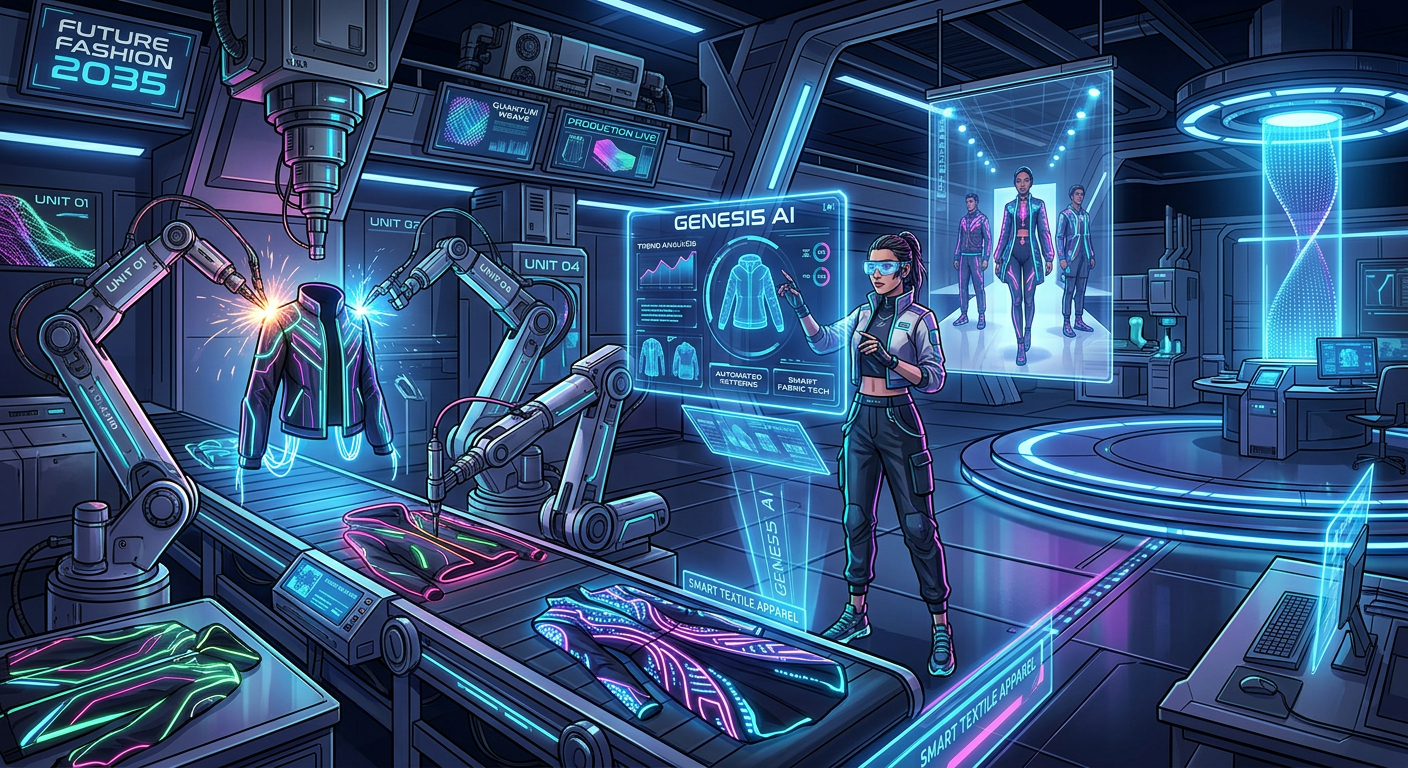
Navigating fashion automation in 2026 requires understanding the distinction between hype and genuine workflow transformation. For creative directors managing fragmented processes across disconnected tools, the right automation platform doesn't just speed up existing tasks, it fundamentally changes how decisions get made, validated, and executed across your entire design-to-launch cycle.
The brands winning in this environment are those that view automation as a strategic capability rather than a tactical efficiency tool. By connecting creative direction, technical design, and merchandising within integrated platforms, design leaders can finally focus on creativity instead of coordination. The question isn't whether your competitors are automating, it's whether you'll lead or follow.
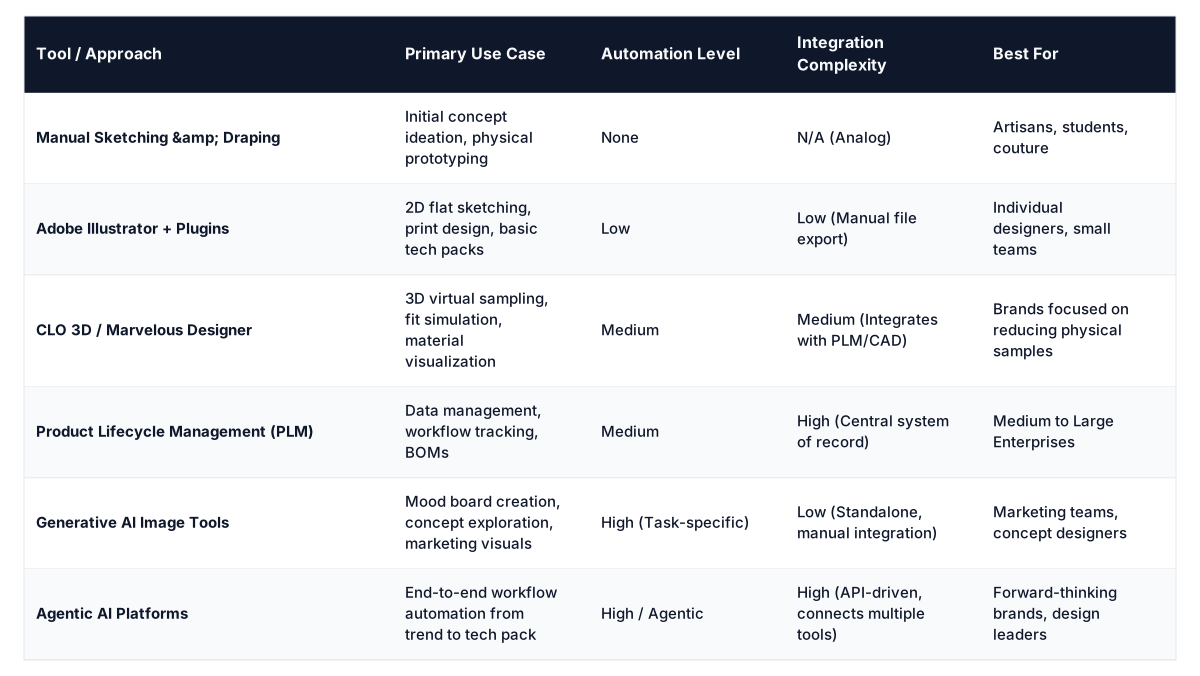
Comparison: Fashion Automation & Design Tools
Reduce your design cycle from months to days and eliminate costly sample rounds by unifying your creative and technical workflows. Start free at thefword.ai or Book a demo.
Standard design software, like Adobe Illustrator or CLO 3D, automates specific tasks such as 2D sketching or 3D prototyping. Fashion automation platforms go further by connecting and streamlining entire workflows. They orchestrate multiple tasks, from trend analysis and mood board creation to tech pack generation and PLM data entry, reducing manual handoffs and speeding up the entire concept-to-production lifecycle.
No, automation empowers them. It acts as a co-pilot, handling repetitive and time-consuming tasks like creating endless colorway options, drafting boilerplate tech pack information, or rendering standard product views. This frees designers to focus on higher-value activities like trend forecasting, innovative construction, brand strategy, and pure creativity, which are uniquely human skills.
The best first step is to identify your single biggest bottleneck. Don't try to automate everything at once. Is your team spending too much time creating tech packs? Are physical sample approvals slowing you down? Pinpoint the most painful, time-consuming part of your workflow and run a pilot project with a tool that specifically targets that problem. Success in one area builds momentum for broader adoption.
Measure key performance indicators (KPIs) before and after implementation. Track metrics such as: time-to-market per collection, number of physical samples required per style, tech pack error and revision rates, and the percentage of a designer's time spent on administrative tasks versus creative work. A positive ROI will be evident in reduced costs, faster speed-to-market, and increased team productivity.
The F* Word Editorial · Fashion workflow team
Written by The F* Word editorial team. We build AI fashion workflow software grounded in thousands of industry-produced tech packs and proprietary garment records, so what reaches the factory is consistent, reviewed, and tied to design intent.
Once pre-production is locked, these are the steps that get the collection to market.
Related: Automated Fashion Photoshoot Software: The F* Word vs Competitors
Get The F* Word workflow insights in your inbox.