

The primary operational impact of 3D garment visualization is a significant reduction in physical sample rounds, which directly lowers pre-production costs and shortens development calendars. This post explains how product teams use digital garments to replace physical prototypes for key approval gates. We will analyze the specific effects on tech pack accuracy, remote fit session efficiency, and material consumption tracking. The discussion also covers the downstream benefits for merchandising, where digital assets are used for early-stage sales catalogs and wholesale line sheets before a single garment is sewn.
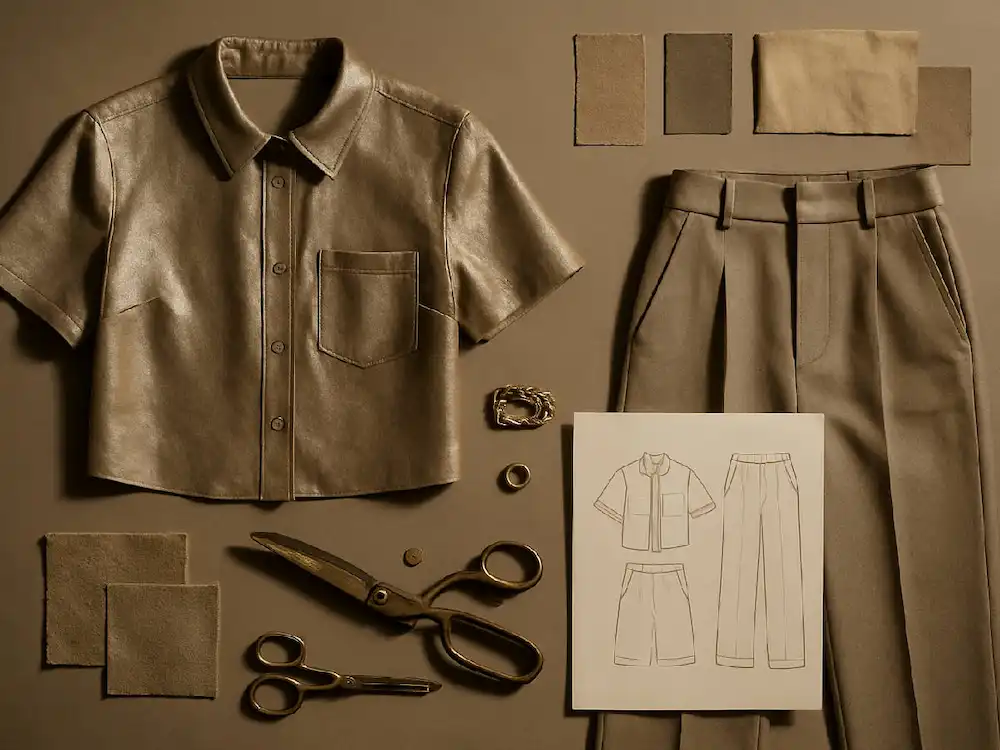
For decades, the fashion workflow has been rigidly linear. A design concept could only be truly evaluated once it was physically manifest. A sketch became a pattern, which was sewn into a muslin, then a fabric sample, then another, and another, until the fit, drape, and details were deemed correct. Each step was a commitment of time, materials, and capital, tethering the design process to the physical world with an iron chain. The core problem? You couldn't validate the idea without first creating the object.
3D garment visualization breaks this chain. It introduces a parallel, digital-first workflow where ideation, iteration, and validation happen in a virtual space at a fraction of the cost and time. By creating a photorealistic, physically accurate digital twin of a garment, designers and technical teams can make critical decisions long before a single piece of fabric is cut. They can assess the silhouette on a dynamic avatar, scrutinize the way a specific silk charmeuse drapes versus a rigid denim, test colorways under different lighting conditions, and perfect pattern placement, all on-screen.
This "great uncoupling" is the source of its transformative power. It allows for a level of creative experimentation that is financially unfeasible in a traditional workflow. A designer can explore ten different sleeve variations in an afternoon, a task that would take weeks and cost thousands of dollars with physical samples. This decoupling doesn't eliminate the need for physical samples entirely, but it strategically repositions them. Instead of being a mandatory tool for design development, the physical sample becomes a final verification step for a nearly-perfected design. The goal shifts from "let's make a sample to see what it looks like" to "let's make a sample to confirm what we already know." This fundamental change in process unlocks exponential gains in efficiency and creativity across the entire organization.
To truly grasp the operational impact of 3D visualization, it's essential to compare the key stages of product development side-by-side. The traditional, physical-first process is characterized by sequential dependencies and long feedback loops. The digital-first, 3D-enabled workflow, by contrast, is built on parallel processing, rapid iteration, and shared, real-time data. The differences are not incremental; they are systemic, touching every aspect of the calendar from initial concept to launch day.
Comparison: Traditional vs. 3D-Enabled Garment Development Workflows

Technical designer? Cut sampling time before first fit.
The F* Word generates the tech packs, BOMs and sampling notes your factory actually needs. Plus a brand-aligned moodboard upstream. Free to try.
Adopting 3D visualization involves a new sequence of steps that run parallel to, and largely replace, the early stages of physical prototyping. Understanding this process demystifies the technology and reveals its practical application.
The transition to a 3D-centric workflow creates a powerful ripple effect that extends far beyond the design department, creating tangible value across the entire business operation.
Speed to Market: The most immediate impact is a dramatic acceleration of the development calendar. By reducing the number of physical sample rounds from an average of five down to one or two, brands can shave 6 to 12 weeks off their pre-production timeline. This speed allows brands to react more quickly to emerging trends, test more ideas, and ultimately, deliver more relevant products to their customers. A faster-turning inventory means less risk of obsolescence and fewer end-of-season markdowns.
Cost and Sustainability Gains: The financial and environmental savings are profound. Consider a single style that requires five physical samples. Each sample incurs costs for fabric, trims, labor, and international express shipping, easily totaling $500 to $2,000+ per style. By eliminating 75% of these samples, a brand developing 100 styles per season could save between $150,000 and $600,000 in direct sampling costs alone. Environmentally, this translates to a massive reduction in fabric waste, water consumption, and carbon emissions from shipping. This solidifies sustainability not as a marketing claim, but as a direct, measurable outcome of operational efficiency.
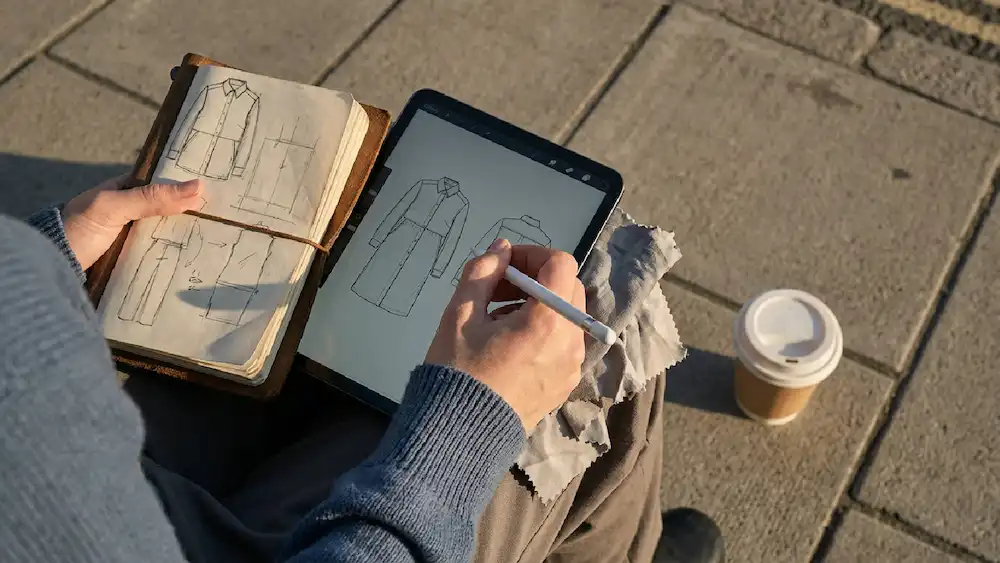
Enhanced Collaboration and Communication: 3D assets act as a "single source of truth." A 3D model is a universal language that is understood equally by a designer in New York, a pattern maker in Milan, and a factory manager in Vietnam. It eliminates the ambiguity of a 2D sketch, where details are left to interpretation. By sharing a link to an interactive 3D model, teams can review designs, add annotations, and make decisions in real-time, regardless of their location. This clarity drastically reduces miscommunication and costly errors with manufacturing partners.
Perhaps the most transforming impact is on launch readiness. With traditional workflows, marketing and sales activities can only begin once the final production samples are in hand. With 3D visualization, photorealistic marketing assets can be generated the moment a design is finalized, months before the first physical product rolls off the line. This enables powerful new strategies:
Transitioning to a 3D workflow is a strategic decision that requires careful planning. It's not just about buying software; it's about evolving processes and empowering teams. To determine your brand's readiness and map out a path forward, consider the following questions:
Beginning your journey into 3D can feel daunting, but a structured approach makes it manageable. First, focus on education. Immerse your team in the possibilities by exploring case studies and understanding the core concepts of the digital workflow. Designate a lead individual or a small "innovation team" to champion the initiative and become the internal subject matter expert.
Next, choose the right tools for your scale and skill level. You don't need to hire a team of CGI artists. Modern, all-in-one platforms are designed to make this technology accessible. An AI-driven fashion design solution, for example, can automate many of the technical steps, from pattern creation to basic simulation, allowing designers to focus on creative decisions rather than software mechanics. Look for a platform that offers comprehensive training resources, a supportive community, and a clear path from simple visualization to production-ready outputs.
Finally, start small and build momentum. Your pilot project is your proof of concept. Document everything: the time saved, the costs avoided, the feedback from the factory. Use this data to build enthusiasm and secure buy-in for a broader rollout. The transition to 3D is a journey, not a flip of a switch, but each digital sample you create instead of a physical one is a step toward a smarter, faster, and more sustainable future for your brand.
The shift to 3D isn't just an upgrade; it's a new operational paradigm. By embracing digital visualization, you unlock speed, sustainability, and market agility that is impossible to achieve in a physical-first world. Ready to see the future of your workflow? Start free at thefword.ai.
Not at all. While large corporations were early adopters, the rise of accessible, cloud-based platforms and AI-driven tools has democratized 3D technology. For indie designers and small brands, the ROI can be even more significant, as eliminating the high cost of physical sampling can make the difference between a profitable launch and running out of capital. The key is to choose a platform that scales with your needs and doesn't require a dedicated team of 3D artists.
The accuracy is impressively high and constantly improving. It depends heavily on the quality of the digital material data. Professional 3D software uses physically-based rendering (PBR) materials that contain data on weight, thickness, bend resistance, and other properties. When using a high-fidelity digital twin of a real-world fabric, the simulation of drape, stretch, and fall is remarkably close to reality, allowing for reliable fit and aesthetic decisions.
For now, yes, but far fewer. The best practice is to use 3D for all developmental iterations, getting the fit, proportions, and details 95% perfect in the digital realm. A single physical pre-production (PP) sample is then typically created at the end of the process. This sample serves as a final physical confirmation of the perfected digital design and a tangible standard for the factory to reference during the bulk production run.
The core skills remain the same: a strong understanding of garment construction, pattern making, and fit. The change is in the toolset. Instead of scissors and a sewing machine, the primary tools become a mouse and keyboard. Technical designers and pattern makers often adapt the fastest, as 3D software is a logical extension of 2D CAD. Designers need to learn to think and communicate in a 3D space. The most important "skill" is an open mindset and a willingness to embrace a new, more efficient way of working.
The F* Word Editorial · Fashion workflow team
Written by The F* Word editorial team. We build AI fashion workflow software grounded in thousands of industry-produced tech packs and proprietary garment records, so what reaches the factory is consistent, reviewed, and tied to design intent.
Once pre-production is locked, these are the steps that get the collection to market.
Get The F* Word workflow insights in your inbox.