

In fashion design, scaling AI across global teams introduces a distinct challenge: governance and approval hierarchies. For instance, when a brand implements AI to automate tech pack generation, it must establish who reviews and approves these packs. Without a clear framework, you risk creating a chaotic environment where unapproved designs enter the sampling phase, wasting time and resources. Typically, this includes roles like the technical designer, product manager, and creative director. Each role requires a clear understanding of the AI's input and output to ensure specifications meet the brand's quality standards. Approval hierarchies must be streamlined to avoid bottlenecks without sacrificing the oversight needed to maintain brand integrity and commercial viability.
What this looks like in practice: Consider a technical designer at a mid-sized brand with 200 SKUs per season. They receive AI-generated tech packs and verify them against the brand's construction standards and master block library. Any tech pack with a material cost forecasted by the AI to be 10% over budget is automatically flagged and routed to the product manager. The product manager reviews for alignment with the collection's strategic goals and profit margins, and the creative director ensures aesthetic consistency. This multi-stage hierarchy equips each role to focus on their expertise while maintaining a cohesive product vision and preventing costly errors from moving downstream.
Effective governance is built on technology that supports role-based access control. Modern fashion technology platforms, including Product Lifecycle Management (PLM) systems like Centric PLM, allow administrators to configure granular permissions. For example, a junior designer might have permissions to create new design concepts using AI tools within a specific collection, but they cannot approve their own designs for sampling. A senior designer or design director would have the authority to review these AI-generated concepts, provide feedback, and give the final approval that moves a style from concept to development. Similarly, a technical designer might have exclusive rights to edit the master pattern blocks and construction libraries that the AI uses to generate tech packs, ensuring that the foundational data remains pure and accurate. This prevents unauthorized changes and maintains strict quality control at scale.
Beyond manual approvals, sophisticated AI systems can automate certain compliance checks. An AI can be trained to scan every new design for adherence to specific rules, such as logo placement guidelines, restricted color palettes for a specific product line, or even sustainability criteria. If a designer uses a material that is not on the company's approved list of sustainable textiles, the AI can immediately flag the design and prevent it from moving forward until reviewed by a sustainability officer. This creates an automated first line of defense, allowing human approvers to focus on more subjective creative and strategic decisions. The system also creates a complete audit trail, logging who approved what and when, which is invaluable for internal accountability and external compliance reporting.

Preserving brand DNA while scaling AI fashion design across global teams is vital. Brand DNA encompasses everything from color palettes and silhouette styles to fabric choices, stitch density, and even hardware finishes that define the brand's identity. AI can assist in maintaining this DNA by generating design elements that adhere to pre-set guidelines. A sophisticated AI system will include options to lock certain design parameters, ensuring that any new design aligns with the brand's established image. However, the challenge lies in balancing automation with the creative freedom needed to innovate within those parameters. The goal is to make the AI a "brand guardian," not a creative straitjacket, by guiding designers toward on-brand choices rather than restricting them completely.
What this looks like in practice: At a luxury brand known for its tailored silhouettes and use of specific Italian fabrics, the design team use AI to ensure all new styles fit within the established fabric and color profiles. The AI system, trained on the brand's archive of successful collections, automatically filters out options that deviate from the core brand DNA. It might present designers with a "Brand Compliance Score" for each new concept. For example, a new blazer concept might score 92% compliant but flag a proposed button style as an outlier, prompting a deliberate, conscious decision from the creative director. This approach ensures creative freedom is exercised in line with the brand's identity, preventing brand dilution as teams grow.
Static, 100-page PDF brand books are no longer sufficient for guiding AI. To truly enforce brand DNA, AI models must be trained on a "living" or dynamic set of brand guidelines. This involves feeding the system a constant stream of curated data. This data includes approved creative assets and commercial performance data. For instance, the AI can learn which silhouettes or colors within the brand's DNA have historically sold the best in specific markets. It can also be trained on negative examples, such as past designs that were rejected for being off-brand. This continuous training loop, powered by platforms that can connect design archives with sales data, ensures the AI's recommendations evolve with the brand and its customers, keeping the DNA relevant and commercially successful.
Workflow buyer? Get tech packs and moodboards your team will use.
The F* Word generates brand-aligned moodboards and factory-readable tech packs and plugs into your PLM. See it run on your own product. Free to try.
Effective cross-functional collaboration is essential when scaling AI fashion design. A siloed approach will undermine any potential gains from the technology. For example, once a designer inputs a sketch or a 3D model, the AI system generates a tech pack that must then be reviewed by technical designers, merchandisers, and production teams. Each team uses the AI-generated data differently, and for collaboration to work, this data must be centralized and instantly accessible. The merchandising team might focus on SKU readiness, initial margin calculations, and market trends, while production looks at construction notes and fabric requirements to begin factory allocation. Ensuring that all teams have access to the same data set, or single source of truth, is imperative to maintaining consistency and efficiency across the board.
What this looks like in practice: A fast fashion retailer operating globally coordinates its design and production teams through a shared AI platform like The F* Word. Designers in London upload sketches, and the system generates tech packs that include grading, BOMs, and construction notes. Instantly, merchandisers in New York can analyze AI-driven trend forecasts against the new designs and adjust SKU counts or colorway depths. Simultaneously, production teams in Hong Kong can review the material requirements and immediately begin sourcing materials or booking factory capacity. This parallel processing, enabled by a shared platform, helps reduce the concept-to-sample timeline from several weeks down to a matter of days.
As teams scale globally and work across different time zones, version control becomes increasingly important. Without it, chaos ensues. Fashion brands need systems that track changes to designs and tech packs in real-time, allowing multiple teams to work simultaneously without overwriting each other's contributions. This is especially critical when dealing with complex 3D design files. Advanced version control systems, borrowing concepts like "branching" from software development, can log every adjustment made, who made it, and why. This level of transparency reduces costly errors and speeds up the iteration process, which is crucial when responding to fast-moving fashion trends spotted by the AI.
What this looks like in practice: At an eco-conscious label, the technical design team uses a version control system within their PLM, such as Backbone PLM, that logs each change in tech packs. When a pattern is modified to include a new sustainable material like Tencel instead of conventional cotton, every update is tracked. The system logs the change and automatically pulls in the new material's GOTS (Global Organic Textile Standard) certificate and updates the garment's calculated environmental impact score. This provides a comprehensive and instantly accessible audit trail for sustainability certifications and marketing claims, while also allowing the team to revert to a previous version with a single click if the new material proves unworkable.
Several tools and platforms are available to support global teamwork in AI fashion design. These are not just file-sharing services; they are integrated ecosystems. The core of this new stack is often 3D design software like CLO 3D or Browzwear, where digital prototypes are created. These tools then integrate with PLM systems that manage the entire product lifecycle. Selecting the right platform is critical. The platform should facilitate easy access to large 3D design files, support AI integration for tasks like trend analysis and costing, and offer strong security features to protect intellectual property. Examples include systems like PTC FlexPLM or DeSL, which integrate with existing enterprise resource planning (ERP) tools to enhance their functionality with AI capabilities and connect design data to the broader business.
What this looks like in practice: A multinational apparel company integrates its design teams in the US and production partners in Vietnam using a PLM system with reliable AI capabilities. Designers create and iterate on styles in CLO 3D. The 3D files are managed within the PLM, where an AI module analyzes the design to generate a preliminary cost. When the designer shares the 3D model with the factory, the factory can leave time-stamped comments and annotations directly on the model, such as "Stitching difficult on this curve, suggest alternative seam." This eliminates slow, ambiguous email chains and ensures that all stakeholders, from design to production, are aligned and informed in real time.
The F* Word offers enterprise collaboration features specifically designed for AI fashion design. These features address the core challenges of scaling by unifying workflows on a single platform. This includes advanced tech pack generation that can create a full spec sheet, graded measurements, and bill of materials directly from a 3D asset or even a simple sketch. Our platform also includes real-time trend analysis, providing a dashboard that tracks breakout aesthetics on social media and e-commerce sites, scored for relevance against your brand's DNA. This is combined with streamlined approval workflows that can be customized to your team's unique governance structure. By using The F* Word's platform, brands can expect to see a reduction in spec revision cycles and faster design-to-market timelines. The platform emphasizes user-friendly interfaces and integrates smoothly into existing workflows, making it an attractive option for brands looking to scale their AI capabilities without disrupting their entire operation.
What this looks like in practice: Brands using The F* Word platform report a 50% decrease in time spent on revisions. This reduction from an average of 8 revision cycles per style to just 3 is achieved because the AI flags potential construction, fit, or cost issues before the first sample is even made. The platform's real-time analytics provide designers with immediate feedback on trend alignment, allowing for quicker adjustments and more informed design decisions. For example, a designer can see that a specific shade of green is trending up 300% week-over-week and instantly apply it to a new design. Brands also see an average 15% reduction in physical sample costs due to higher first-sample accuracy, directly impacting the bottom line.
Scaling AI fashion design is fraught with some pitfalls that can derail a brand's efforts. Common failure modes include inadequate version control, inconsistent data sets, and misaligned cross-functional goals. These issues often lead to significant delays, budget overruns, and frustration across teams. Solutions involve adopting strong version control systems, ensuring clear communication channels, and aligning goals across all teams from the outset. Brands must also be prepared to continuously refine their processes as they expand their AI capabilities. Simply buying the technology is not enough; success requires a change in culture and process.
Common pitfalls: An emerging challenge is data siloing, where different teams use disparate data systems that do not communicate. The design team might work in Adobe Illustrator, the tech team in a niche pattern software, and merchandising in disconnected Excel spreadsheets. This creates a nightmare for AI, which needs clean, unified data to function. One solution is to implement an integrated data management system or a platform like The F* Word that provides a unified view of all design and production elements. This "single source of truth" is achieved using APIs to connect disparate systems, ensuring consistency and accuracy across teams. Another common failure is insufficient team training, leading to low adoption rates and a quick reversion to old, inefficient methods.
Another major failure mode is training your AI on poor quality or biased data. If an AI model is only trained on a brand's European sales data, its design recommendations for the North American market will likely be flawed. Similarly, if it is only trained on designs featuring specific body types, its ability to help create inclusive sizing will be severely limited. To solve this, brands must be deliberate about curating a diverse and comprehensive training dataset. This includes historical sales data from all regions, customer feedback, market intelligence reports, and a wide range of visual assets representing diverse body types and aesthetics. The quality of the AI's output is a direct reflection of the quality of the data it learns from.
The transition from design to manufacturing is a critical phase in the fashion workflow, notorious for miscommunication and errors. AI can streamline this handoff by generating precise, unambiguous tech packs that include all necessary specifications, from stitch-per-inch requirements to 3D construction diagrams. These comprehensive packs ensure that manufacturers have a clear, visual understanding of the design requirements, dramatically reducing the likelihood of errors or misinterpretations that lead to bad samples. Additionally, AI can enhance Quality Assurance (QA) processes by identifying potential defects or inconsistencies before production even begins, saving money and time.
What this looks like in practice: At a global sportswear company, the design team finalizes a collection using AI-generated tech packs. These tech packs are automatically translated into the manufacturer's native language and include interactive 3D models that factory workers can rotate and inspect on a tablet. The AI system also includes detailed, dynamic QA checklists. If a particular factory has historically shown issues with zipper placement, the AI will automatically add more frequent and stringent QA checkpoints for zippers on all orders sent to that supplier. This adaptive QA workflow ensures the final product meets the brand's quality standards with much higher consistency, and it creates a digital log of all checks for complete transparency.
AI implementation can significantly affect the cost structure of fashion design. While initial adoption may require a notable investment in technology and training, the long-term benefits include reduced operating costs and dramatically increased efficiency. Initial investments include software licenses for platforms like The F* Word or 3D tools like Browzwear, potential hardware upgrades for design teams, and comprehensive training to ensure user adoption. However, AI systems streamline processes such as tech pack generation, sample creation, and trend analysis, leading to faster turnaround times and fewer costly errors. These efficiencies ultimately reduce production costs and free up creative teams to focus on innovation rather than administrative tasks.
What this looks like in practice: A mid-sized fashion brand invests in AI tools for design and production, reducing their average collection development cost by 30%. This savings is not a single line item. It is a composite of multiple improvements: a 15% reduction comes from decreasing the number of physical samples from five down to one per style by using accurate 3D prototypes. Another 10% comes from AI-driven fabric nesting optimizations that reduce material waste during cutting. The final 5% is saved by eliminating shipping costs for samples and reducing errors from unclear tech packs. By automating labor-intensive tasks and minimizing errors, the brand successfully reallocates resources towards material innovation and market expansion.
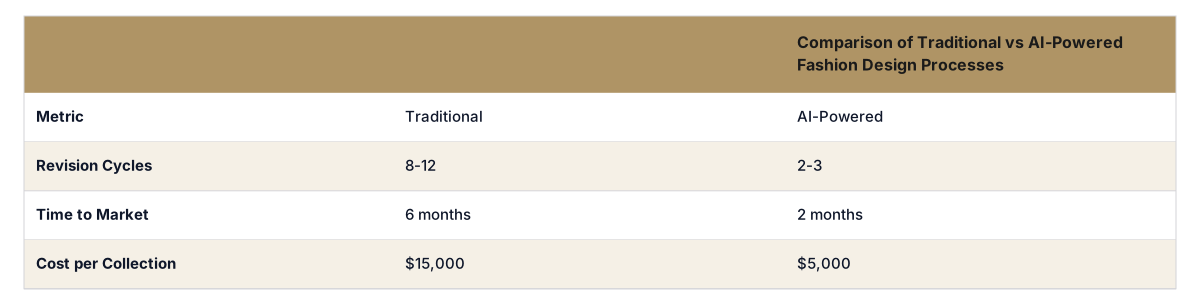
Adopting AI is not just about improving existing metrics; it is about transforming the entire operational model of a fashion brand. The F* Word's platform is designed to facilitate this transformation, turning design and production into a connected, intelligent, and efficient engine for growth. By centralizing data and automating manual work, our tools empower your teams to collaborate more effectively and bring exceptional products to market faster than ever before. Ready to see how? Request a demo of The F* Word today.
AI systems can lock in brand-specific parameters such as color schemes and fabric types, ensuring new designs align with established brand identities. By automating these elements, AI reduces the risk of human error and ensures consistency across all global teams. This capability is crucial for maintaining a cohesive brand image, particularly for brands operating across diverse markets. AI can also analyze a brand's entire historical archive to identify unwritten "rules" of its DNA, making tacit knowledge explicit and actionable for new designers. AI platforms can be updated with new guidelines, allowing them to adapt quickly to changes in brand strategy or market positioning.
Platforms with cloud-based storage, real-time collaboration features, and AI integration capabilities are ideal for supporting global teams. These tools enable smooth communication and coordination across time zones, ensuring all team members are aligned. Key features to look for include user-friendly interfaces, strong security measures to protect IP, and the ability to integrate with existing systems such as PLM and ERP. Features supporting asynchronous communication, like time-stamped comments directly on 3D models, are also vital. Additionally, platforms that offer analytics and insights based on AI can help teams make data-driven decisions, enhancing overall productivity and creative output.
Common pitfalls include poor version control, data siloing, and misaligned team goals, which can lead to increased costs and delays. To mitigate these issues, it is essential to establish clear governance frameworks and communication protocols from the outset. Another pitfall is the risk of "over-automation," where rigid processes stifle the human intuition and creativity essential for fashion. Regular training sessions can ensure that all team members are proficient in using AI tools, reducing the likelihood of errors. continuous feedback loops should be implemented to assess the effectiveness of AI processes and make necessary adjustments.
Version control prevents data overwriting and ensures transparency, allowing for efficient collaboration across teams. It provides a reliable mechanism for tracking changes and understanding the evolution of a design, which is essential for maintaining quality and consistency. Effective version control systems also facilitate rollback capabilities and audit trails, ensuring that any issues can be quickly identified and rectified. This is also critical for compliance, as a clear version history can prove the origin and specifications of materials for regulations like the upcoming EU Digital Product Passport. This capability is particularly valuable in fast-paced fashion environments where quick iterations are often required.
The F* Word platform provides advanced tech pack generation, trend analysis, and smooth integration into existing workflows to enhance collaboration. By offering real-time data and analytics, it equip teams to make informed decisions quickly, reducing time to market and improving product quality. The platform's user-friendly interface and strong security features make it a preferred choice for brands looking to scale their AI operations efficiently. Its ability to simulate the environmental impact of different material choices in real time also supports growing sustainability goals. Additionally, its ability to integrate with various other tools and platforms ensures a smooth transition and minimal disruption to existing processes.
Get The F* Word workflow insights in your inbox.