
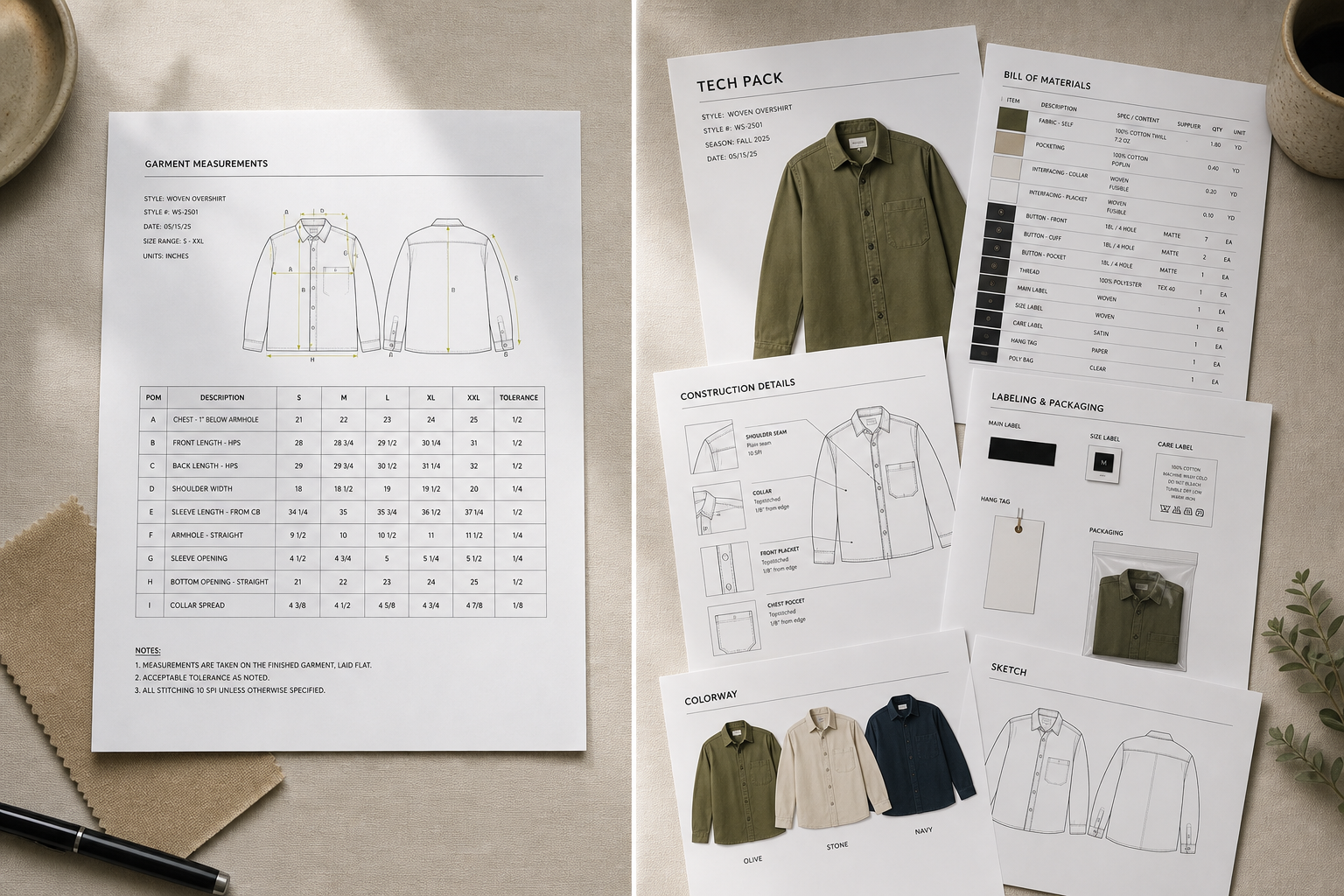
The primary difference between a tech pack and a spec sheet is that a spec sheet is only one component of a tech pack. A spec sheet exclusively contains the garment's measurements and grade rules, known as Points of Measure (POMs). A complete tech pack is a comprehensive multi-page document that includes the spec sheet plus at least 5 to 10 other sections, such as the Bill of Materials (BOM), construction details, and artwork placement instructions.

A spec sheet, or specification sheet, contains one primary set of data: the graded measurements for a garment. This document is the master list for all Points of Measure (POMs), which are specific locations on a garment used for measurement, like the chest width, sleeve length, or body length. The sheet details the target measurements for a sample size and then provides the grade rules, which are the incremental changes in measurement for each size up or down the range.
Technical designers and patternmakers use the spec sheet to create the initial pattern and grade it for all sizes. During the sampling process, the spec sheet is used as a quality control tool. When a factory sends a prototype or a fit sample, the technical team measures it against the spec sheet's POMs to check for accuracy. A spec sheet alone is not enough to manufacture a garment; it is a dimensional guide, not a full instruction manual.
Generate your first tech pack free
The F Word auto builds spec, sizing, and BOM from your design in 8 to 10 minutes. No template wrangling, no factory back and forth.
A tech pack is the central document for apparel production, acting as a complete instruction manual for the factory. It contains every detail a manufacturing partner needs to turn a design concept into a finished product, minimizing errors and ensuring consistency across an entire production run. The document typically consists of 10 to 20 pages and includes the spec sheet within it, along with many other critical sections.
A well-constructed tech pack serves as the single source of truth between the brand and the factory. It outlines everything from the type of thread to use to how the final garment should be folded and packed. Without it, factories are left to guess, leading to incorrect samples, wasted materials, and significant production delays. Creating a comprehensive, factory-ready tech pack is the most critical step in the pre-production workflow for any fashion brand.

Beyond the spec sheet, a professional tech pack contains at least six other essential sections that provide a 360-degree view of the garment's requirements. These components transform a simple list of measurements into an actionable production plan.
| Feature | Included in Spec Sheet | Included in Tech Pack |
|---|---|---|
| Graded Measurements (POMs) | Yes | Yes |
| Bill of Materials (BOM) | No | Yes |
| Sewing and Construction Details | No | Yes |
| Technical Flats with Callouts | No | Yes |
| Label & Hangtag Placement | No | Yes |
| Packaging Instructions | No | Yes |
The F* Word generates a validated, factory-ready tech pack in 8 to 10 minutes from a garment design. Traditionally, a technical designer could spend up to 16 hours building a single tech pack manually using tools like Adobe Illustrator and Excel. This manual process is slow, prone to data entry errors, and creates information silos. Our platform functions as a dedicated validation and orchestration layer, not a full Product Lifecycle Management (PLM) system or a 3D simulator. It is purpose-built to do one thing exceptionally well: generate accurate technical documents.
By uploading a design file or even just a descriptive prompt, our AI validates the data, generates technical flats, creates a complete Bill of Materials, builds a graded spec sheet, and compiles all construction and finishing details into a single, shareable document. The system also generates cohesive moodboards from the same design input, aligning the creative and technical workflows. This level of automation reduces the tech pack creation time by over 95%, freeing up designers and technical teams to focus on product innovation instead of administrative tasks.
The F* Word is not a PLM, a 3D simulator, or an image generator. It is the validation and orchestration layer that creates complete, factory-ready tech packs from your designs in minutes, not days. Stop building spec sheets in spreadsheets. Start free at thefword.ai or book a demo.
No, it is not possible to accurately produce a garment with only a spec sheet. A spec sheet provides measurements but lacks critical information on materials, construction methods, sewing details, colors, and finishing. A factory requires a complete tech pack to manufacture a product correctly.
No, a BOM is a core component of a tech pack, not a spec sheet. The BOM lists every material required to produce the garment, from fabric and trims to thread and labels. A spec sheet is strictly focused on garment measurements and grade rules.
Creating a manual tech pack for a single new style can take a technical designer between 4 and 16 hours, often spread across several days. This includes drafting sketches, inputting data into spreadsheets, and compiling all components. AI-powered tools reduce this time to under 10 minutes by automating data generation and document formatting.
Related: AI tech pack generator
Get The F* Word workflow insights in your inbox.