
Fewer than 10% of designs generated by mood boards and initial sketches ever make it to a tech pack, let alone production. This staggering inefficiency is the accepted cost of business in the fashion industry. Brands absorb immense costs in sample iterations, manual data entry, and communication gaps between creative and technical teams. The promise of artificial intelligence was to fix this. Instead, the conversation stalled at generating pretty, but ultimately useless, images. The real opportunity is not in replacing mood boards, but in building an integrated system that connects creative intent directly to the factory floor. This system is the AI fashion stack.
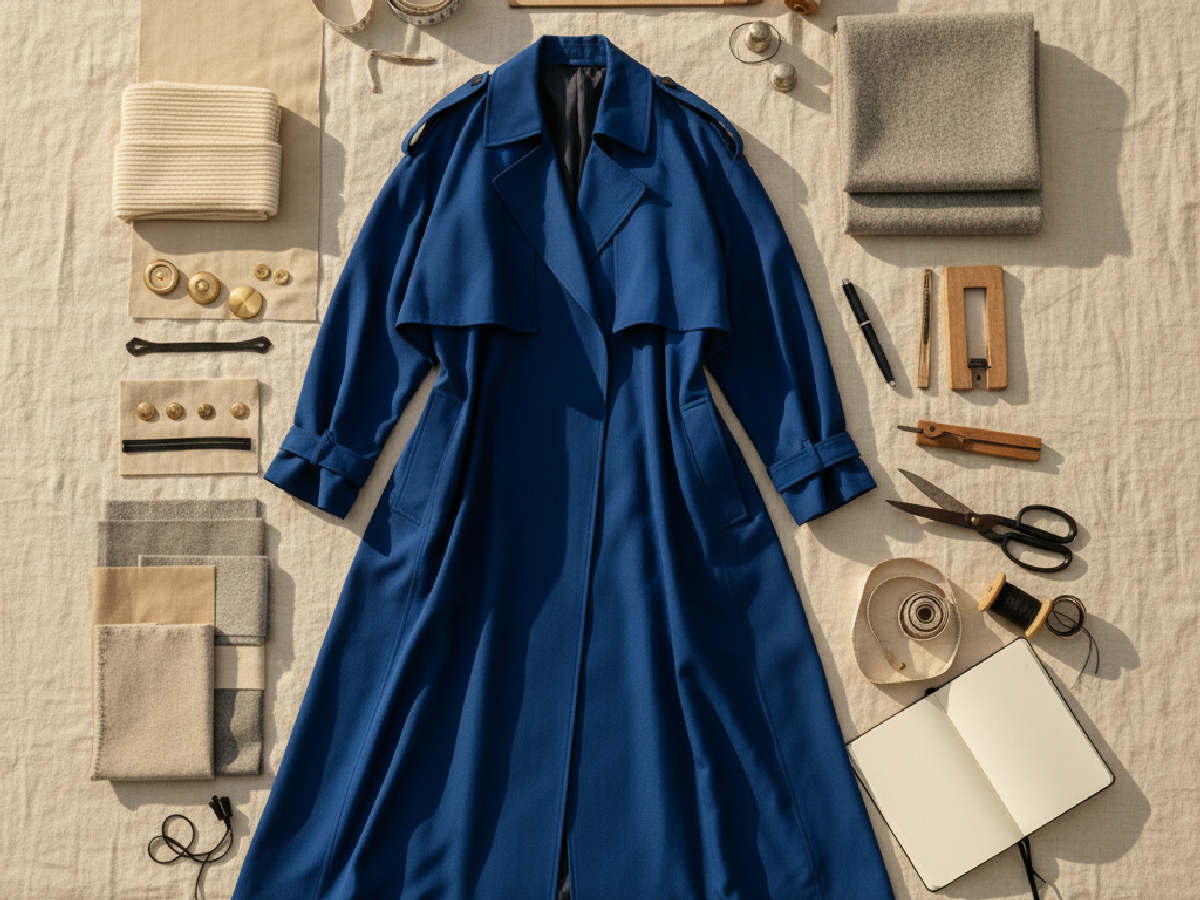
The current narrative around AI in fashion is dominated by text-to-image generators. These tools are powerful for rapid visualization and exploring aesthetic directions. A designer can prompt for a "utilitarian trench coat in the style of brutalist architecture" and receive dozens of compelling concepts in minutes. This is a genuine, if minor, improvement for the ideation phase. The problem is that this is where the AI a-ssistance ends. The resulting JPEG or PNG file is a creative dead end.
That image contains no technical information. It cannot be converted into a technical flat, a bill of materials, or a graded spec sheet. A technical designer must manually interpret the image, redrawing it in Adobe Illustrator and then painstakingly building a tech pack from scratch in Excel or a PLM system. This manual handoff introduces errors, increases lead times, and severs the link between the original creative vision and the final product. Essentially, the industry has adopted a fun new toy for the creative department while leaving the core production workflow untouched. It's like designing a car with a video game engine and then handing a screenshot to the engineers on the assembly line.
This creates a fragmented toolchain. A designer uses Midjourney, a technical designer uses Illustrator and Excel, a merchandiser uses a separate PLM, and a pattern maker uses yet another CAD system. Data is re-entered at each stage, leading to version control nightmares and communication breakdowns that cost brands an average of 3 to 5 extra sample rounds per style. The AI fashion stack addresses this by treating the entire process, from concept to costing, as a single, interconnected workflow.
Workflow buyer? Get tech packs and moodboards your team will use.
The F* Word generates brand-aligned moodboards and factory-readable tech packs and plugs into your PLM. See it run on your own product. Free to try.
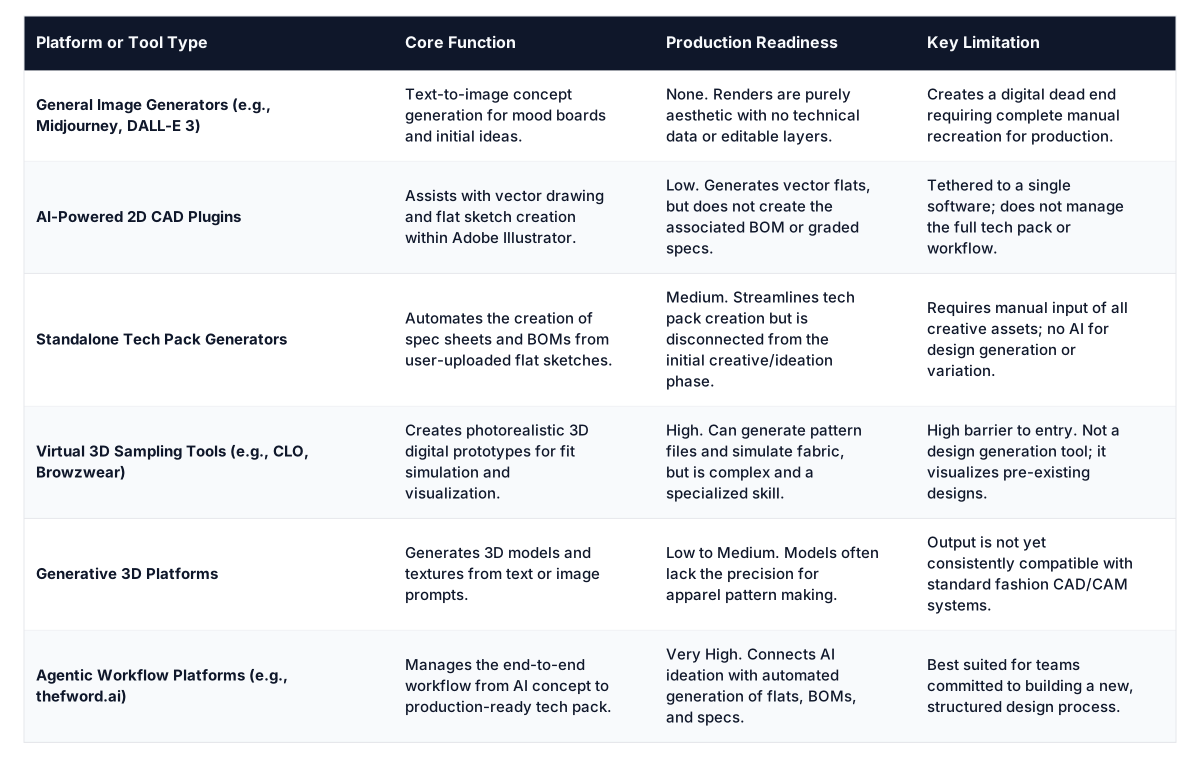
A side-by-side look at the tools shaping the modern fashion workflow.

The term "production-ready" is used loosely. In the context of an AI fashion stack, it has a precise meaning. It means generating a set of linked, manufacturable assets that a factory can use to produce a consistent and accurate garment. A pretty picture is not one of them. A true production-ready output from an AI system must include several non-negotiable components.
Anything that does not generate these interconnected assets is a concept tool, not a production tool. The goal of the AI fashion stack is to make the creation of these documents an automated byproduct of the creative process, not a separate, manual stage.
Adopting an AI stack is not about buying a single piece of software. It is about rethinking a workflow. For founders, product heads, and design leads evaluating these tools, here is a practical framework for making a decision.
First, audit your current process from idea to purchase order. Quantify the bottlenecks. How many hours are spent manually creating tech packs? What is your average number of sample rounds per style, and what does each round cost in courier fees and time? Your goal is to identify the most expensive part of your product development cycle. For most brands, this is the gap between the approved design and the factory-ready tech pack.
Second, evaluate tools based on integration, not isolated features. A tool that generates amazing images but does not connect to your spec sheet is a distraction. The key question is: "How does data move from this step to the next?" A true stack platform has a single source of truth. A design change in the AI model should automatically update the technical flat, the BOM, and the graded specs. If a vendor requires you to export a file from one system and import it into another, you are just trading one form of manual work for another.
Third, prioritize systems that understand fashion-specific data. Generic AI models do not know the difference between a welt pocket and a patch pocket. A purpose-built AI fashion platform has been trained on technical drawings, grade rules, and component libraries. It understands that a change in fabric from a non-stretch woven to a jersey knit will require a change in the measurement specs. This domain-specific intelligence is what separates a professional tool from a consumer one.
Finally, run a pilot project. Choose one core product or a capsule collection. Use it as a test case to build a complete workflow within a new platform. Do not try to boil the ocean and transition your entire organization overnight. A successful pilot on a single SKU, tracking metrics like time-to-tech-pack and number of revisions, will provide the concrete data needed to justify a broader rollout.
The most effective way to begin is to stop chasing novelty and start solving problems. The temptation is to use AI to generate wildly new designs. The more practical and profitable starting point is to use it to optimize your existing business. Take one of your proven, bestselling silhouettes. Use an agentic AI platform to generate 20 new variations in minutes. This could involve exploring new sleeve types, collar shapes, or graphic placements.
Because the platform operates as a stack, each of these variations is not just an image. It is a proto-tech pack. You can immediately see the technical flats and review the component changes. This allows your team to move from creative exploration to a manufacturable design in a single session, not a series of week-long handoffs. You can then select the top three variations and have production-ready tech packs generated instantly.
This approach de-risks AI adoption. It focuses the technology on a clear business goal: rapidly expanding a successful product line. It proves the value of an integrated workflow on a manageable scale. As your team builds confidence and proficiency, you can then expand its use to new category development and blue-sky ideation. The key is to start with the workflow, not just the image. Moving from a fragmented set of tools to an integrated AI fashion workflow is the single most impactful change a brand can make to its product creation engine.
The AI fashion stack is here. It's not about generating mood boards faster. it requires building a direct, data-driven bridge from imagination to production that eliminates manual work, reduces errors, and gets better products to market faster. Start free at thefword.ai or book a demo.
No. The AI fashion stack is a tool to augment, not replace, designers. It automates the tedious, repetitive tasks like spec sheet creation and data entry, freeing up designers to focus on creative direction, trend analysis, and final decision-making. It makes good designers more efficient and powerful.
Not at all. While large brands benefit from the scalability, emerging brands and startups arguably have more to gain. An integrated AI workflow allows smaller teams to operate with the efficiency of a much larger company, launching more styles with fewer resources and faster turnaround times.
Modern agentic platforms are cloud-based and require no complex installation. Implementation focuses on workflow integration. It typically involves a pilot project on a small collection, followed by team training sessions focused on using the platform for a full concept-to-production cycle.
Yes, reliable platforms are designed for this. You can upload existing digital block patterns, fabric libraries, and hardware component lists. The AI then uses these proprietary elements as the foundation for new design generation, ensuring brand consistency and production readiness.
Related: AI tech packs merchandiser launch dates how to hit them
Get The F* Word workflow insights in your inbox.