
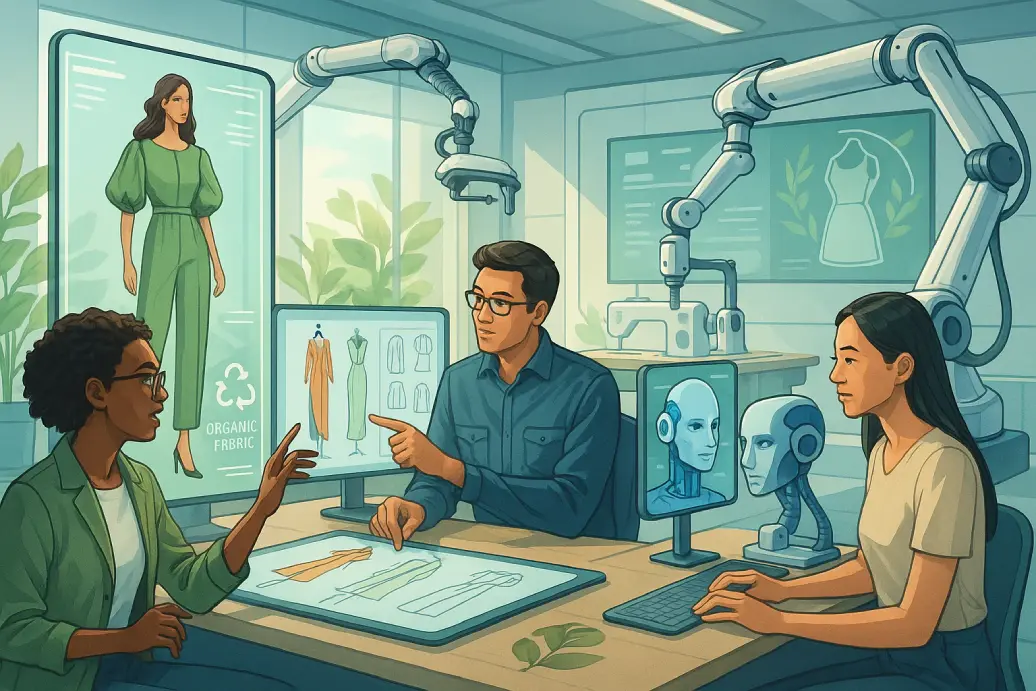
A staggering 40% of all apparel produced is sold at a discount, a direct consequence of a legacy product development cycle plagued by manual guesswork, endless revisions, and a crippling disconnect between design intent and market reality. This isn't just a margin problem; it's a sustainability crisis fueled by inefficiency. While generative AI offered a glimpse into a faster, more creative future, its promise was limited to inspiration. Now, a new paradigm is here: agentic AI, which moves beyond simple generation to intelligent, autonomous action, poised to automate the entire sample-to-shelf workflow and fundamentally rewire the business of fashion.
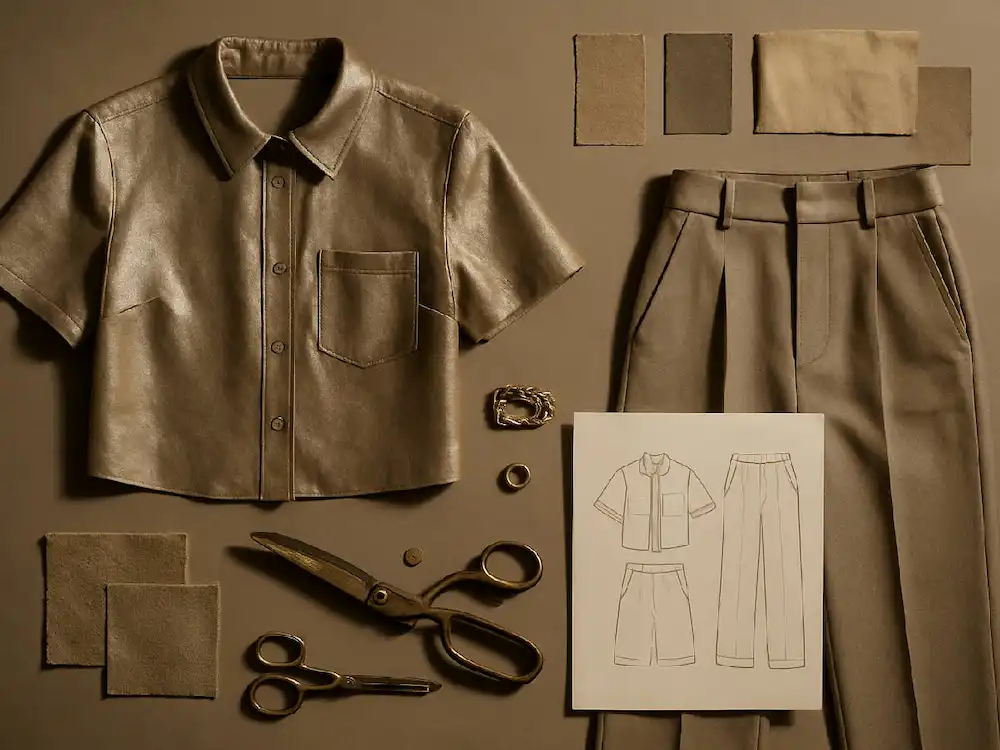
For the past few years, the conversation in fashion tech has been dominated by generative AI. Tools that could produce stunning mood boards, sketch countless design variations, and create photorealistic model mockups in seconds captured our imagination. They acted as powerful, tireless assistants, supercharging the ideation phase. However, their role was fundamentally passive. They responded to prompts, creating assets that still required a human operator to interpret, select, format, and push to the next stage of a long and fragmented process. The designer still had to manually translate a chosen AI image into a technical sketch, input data into a PLM system, create a tech pack, and email a factory.
Agentic AI represents a quantum leap forward. An "agent" is an AI system that doesn't just respond; it perceives its environment, makes decisions, and takes autonomous actions to achieve a specific goal. In the context of fashion, this means an AI that can operate across different software platforms and data sources to execute complex, multi-step workflows. Think of it as the difference between a graphic designer who creates a logo for you (generative AI) and a project manager who takes your brand brief, hires the designer, manages the feedback rounds, secures the final files, and updates your brand's style guide accordingly (agentic AI). It’s about orchestrating the entire process, not just executing a single creative task. This shift from task-specific generation to goal-oriented orchestration is the key to unlocking true automation and efficiency in the fashion industry.
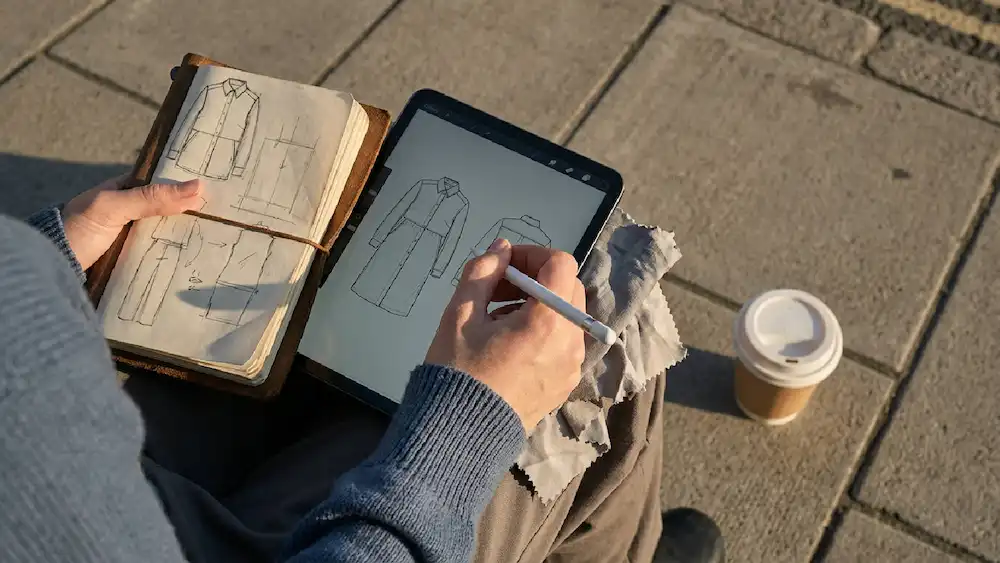
To truly grasp the impact of agentic AI, it's essential to compare its workflow to both the traditional process and the more recent generative AI-assisted model. The differences in speed, cost, and creative efficacy are stark, revealing a clear evolutionary path in how we create fashion.
Comparison: Fashion Product Development Workflows

Designer or merchandiser? Replace the spreadsheet handoff.
The F* Word generates moodboards, factory-readable tech packs and sampling notes in one workflow, so creative, production and merchandising stay aligned. Free to try.
An agentic system transforms the product development pipeline from a sequential, siloed relay race into a dynamic, interconnected network. It acts as a central nervous system, receiving inputs, processing information, and directing actions across what were once disparate departments and software systems. Let's explore the key stages.
An agentic AI system doesn't wait for a brief. It is perpetually connected to the digital world. It ingests a firehose of information: real-time point-of-sale data from your own stores, competitor pricing, social media trends via APIs (e.g., tracking the rise of a specific silhouette on TikTok), runway show analyses, and even raw material cost fluctuations. It then cross-references this external data with your brand’s internal memory, its DNA, past sales performance, and customer demographics. The output isn't a mood board; it's a strategic directive, such as: "Data suggests a 35% rise in interest for 'utility gorpcore' aesthetics among our target Gen Z demographic in the Pacific Northwest. Proposing a capsule of 3-5 technical outerwear pieces with a target margin of 65% for the FW25 collection."
Armed with this directive, the agent moves to design. This is not the limitless, sometimes random, generation seen with basic image tools. The agent generates concepts that are pre-vetted for commercial viability. It knows which fabrics are available from your nominated suppliers, understands the cost implications of adding an extra zipper, and designs within the constraints of your target retail price. The human designer's role shifts from a sketch artist to a creative director. They review the agent’s curated options, providing high-level feedback like, "I like option C, but let's explore it with a more sustainable recycled nylon and a color palette inspired by 1970s mountaineering." The agent then executes this feedback, generating new, constrained variations in moments.
Once a design is approved, the most laborious bottleneck for most brands begins: the tech pack. This is where agentic AI delivers its most tangible ROI. Instead of a designer or technical designer spending 4-8 hours manually creating a 20-page document, the agent automates it instantly. Because the agent has managed the design process from the start, it already possesses all the necessary information. It extracts the technical flat sketch, populates the bill of materials (BOM) from the chosen fabric, generates a full grading table based on your brand's block, and writes detailed construction notes. Critically, this process can be linked to a platform that provides an
With a complete tech pack, the agent's job is far from over. It can then take on the role of a production coordinator. The agent can automatically push the tech pack to your PLM system, send RFQs (Requests for Quotation) to a predefined list of suppliers, and even parse their responses to create a comparative cost analysis. As feedback arrives from digital or physical sampling, the agent logs it and can even suggest design modifications to meet cost targets. Simultaneously, it updates the master merchandising plan, slotting the new style into the collection architecture with real-time data on projected cost, margin, and delivery dates. This creates a powerful, self-correcting loop between design, production, and commerce.
Adopting agentic AI is not an all-or-nothing proposition. It’s a strategic journey that should be tailored to your brand’s maturity, resources, and specific pain points. A successful implementation requires a clear framework.
First, Assess Your Current State. Before you can automate, you must understand your current workflows in granular detail. Where do the most significant delays occur? Is it in the initial trend-spotting phase? The endless back-and-forth on sample comments? The error-prone process of manual tech pack creation? Identify the one or two areas where friction and manual labor are highest. This will be your starting point.
Second, Define Your Primary Goal. What is the number one metric you want to improve? For a fast-fashion brand, the goal might be radically reducing time-to-market. For a luxury house, it might be improving design precision and reducing costly sample iterations. For a sustainability-focused indie brand, it could be minimizing waste by ensuring a better product-market fit from the outset. Your primary goal will determine which agentic capabilities you prioritize.
Third, Start Small and Scale Intelligently. Don't try to automate your entire 200-person design department overnight. Begin with a pilot project focused on your biggest pain point. For many, this is tech pack automation. It’s a discrete, highly repetitive task with a clear, measurable ROI. Once you’ve proven the value and your team is comfortable with the new tool, you can expand its scope, integrating trend analysis or supplier communication capabilities. This "crawl, walk, run" approach minimizes risk and builds internal buy-in.
Finally, embrace the Human-in-the-Loop Imperative. The goal of agentic AI is not to remove designers, but to elevate them. The most successful implementations will keep humans at the center of all critical creative and strategic decisions. For a deeper understanding of this collaborative model, exploring what AI fashion design truly is can provide foundational context. The AI handles the 80% of work that is repetitive and data-driven, freeing your creative talent to focus on the 20% that defines your brand: taste, storytelling, and innovation.
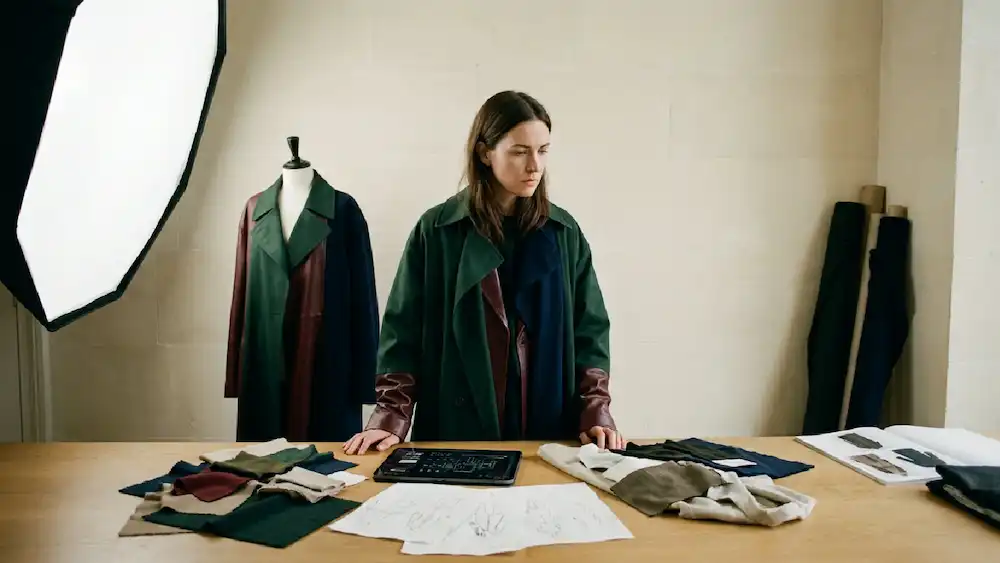
Embarking on this transformation requires a methodical approach. Here are the practical first steps for any brand or designer looking to use agentic AI.
Agentic AI is valuable when it removes repeated coordination work while keeping human approval over taste, fit, cost, and production risk. The future isn't just about designing with AI; it's about building businesses that are run by it. Ready to automate your workflow and focus on what truly matters? Start free at thefword.ai.
Not at all. While large enterprises can build custom agentic systems, the rise of SaaS platforms like thefword.ai democratizes this technology. For a monthly subscription, indie designers and small brands can access the same powerful automation tools for tasks like tech pack creation and trend analysis, leveling the playing field and allowing them to compete on creativity and agility, not just scale.
No, it will augment them. Agentic AI is designed to automate the tedious, non-creative tasks that bog designers down, manual data entry, endless file conversions, and administrative coordination. This frees up human designers to focus on higher-value work: brand strategy, creative direction, taste-making, and original ideation. The role will evolve from a "doer" of all tasks to a "director" of a powerful AI collaborator.
The biggest challenge is typically twofold: data integration and organizational change. Agentic AI needs access to clean, structured data from across your business (sales, design, materials, etc.). Brands with siloed, messy data will need to undertake a data-cleansing project first. Equally important is managing the cultural shift. Teams must be trained and encouraged to embrace a new way of working, which requires strong leadership and a clear vision for how the technology will empower, not replace, employees.
Agentic AI learns a brand's aesthetic through a combination of data and feedback. It is trained on the brand's entire historical archive: every past collection, bestseller, marketing campaign, and design guideline. This creates a foundational understanding of the brand's DNA. From there, it is refined through a continuous human-in-the-loop feedback process. When designers approve, reject, or modify the AI's suggestions, the agent learns and fine-tunes its understanding of the brand's subjective taste, becoming progressively more aligned over time.
Once the workflow is in place, these are the steps that turn it into shipped product.
Related: agentic ai fashion strategy
Get The F* Word workflow insights in your inbox.