
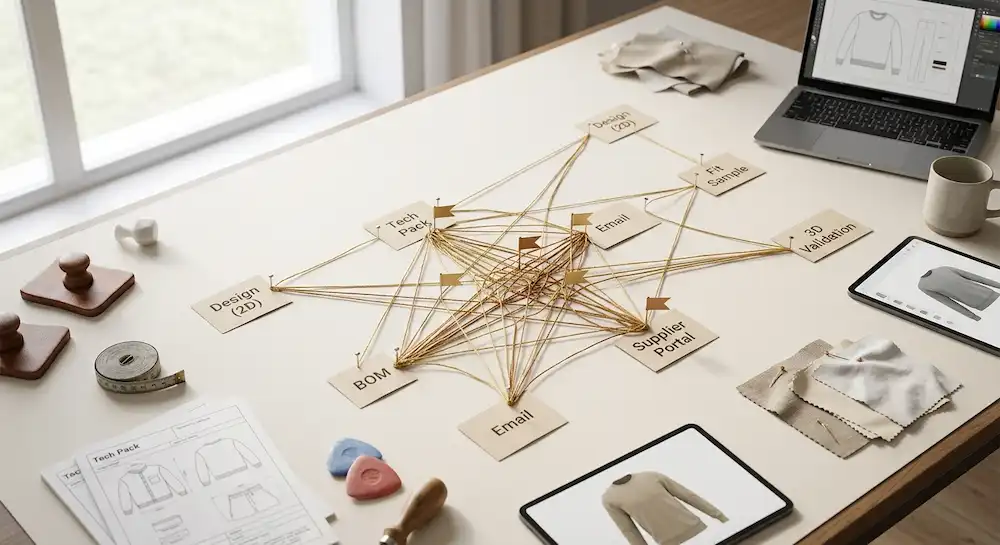
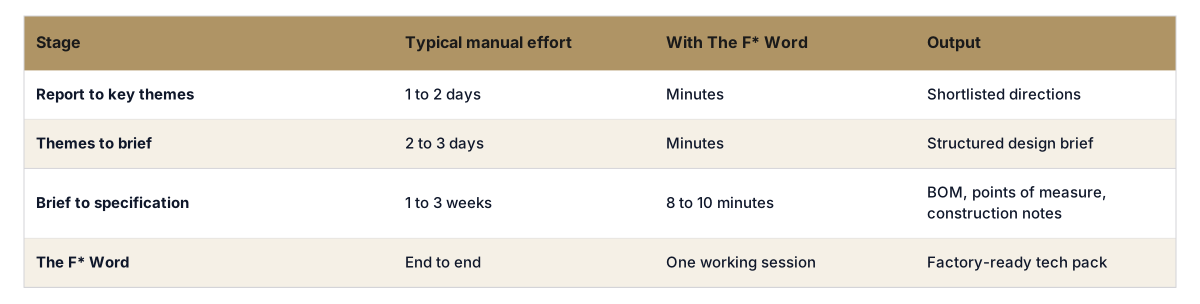
Turning a trend report into a design brief means stripping the narrative down to a silhouette, a colour story, a fabric direction and a target price, in a format a designer can work from. The F* Word generates that brief and then the factory-ready tech pack in 8 to 10 minutes, with bill of materials and points of measure.
Quick answer: A trend report becomes a design brief when every theme is reduced to a silhouette, a fabric family, a colourway, a target price, and a factory constraint. Anything left as an adjective gets reinterpreted downstream. The F* Word takes the brief through to a moodboard and a factory-ready tech pack in 8 to 10 minutes.
Definition: Turning a trend report into a design brief means converting a direction into decisions: silhouette, fabric, colourway, price point, and the factory constraints that govern all four. The report gives you the theme; the brief has to give a designer something to draw and a factory something to quote. The F* Word writes the brief and the tech pack from that input in 8 to 10 minutes.
To move from a trend signal to a product brief, teams must translate abstract concepts into concrete product attributes, validate them with internal data, and structure them within a merchandising plan. Trend tools provide high-level direction, but they do not produce a bill of materials or a viable tech pack. This gap between initial inspiration and production-ready instructions is where budgets are wasted and timelines slip. This article provides a framework for connecting mood boards to merchandising, building a brief that design teams can execute, and ensuring creative vision aligns with commercial goals before pre-production begins.
The journey from a nascent trend, a color on a catwalk, a silhouette on social media, a texture in a vintage store, to a tangible product brief is a minefield of subjectivity and friction. Traditional trend forecasting services like WGSN or Trendalytics excel at identifying and contextualizing macro and micro trends. They are the lighthouses, scanning the horizon and illuminating potential directions. However, they leave your team on the shore, tasked with navigating the treacherous waters to a specific destination. This is the "Trend-to-Brief Gap," and it's where costs skyrocket and time evaporates.
What happens in this gap? Endless meetings debating the commercial viability of a runway look. Designers spending days, not hours, manually sketching dozens of variations on a theme, only to have them rejected for not aligning with brand DNA or target margin. Merchandisers scrambling to find historical sales data to justify a new colorway, pulling reports from clunky ERP systems. The entire process becomes a slow, laborious negotiation between creative intuition and commercial pragmatism. Each handoff, from forecaster to designer, designer to merchandiser, merchandiser to technical designer, is a point of potential failure. Information is lost, context is diluted, and the original, powerful trend signal becomes a weak, compromised whisper by the time it reaches the factory. The result is often a "safe" product that feels dated on arrival or a risky bet that misses the mark entirely. To compete and win, modern fashion brands need a new paradigm: a system that closes this gap by embedding data and commercial intelligence directly into the creative process from the very first spark.
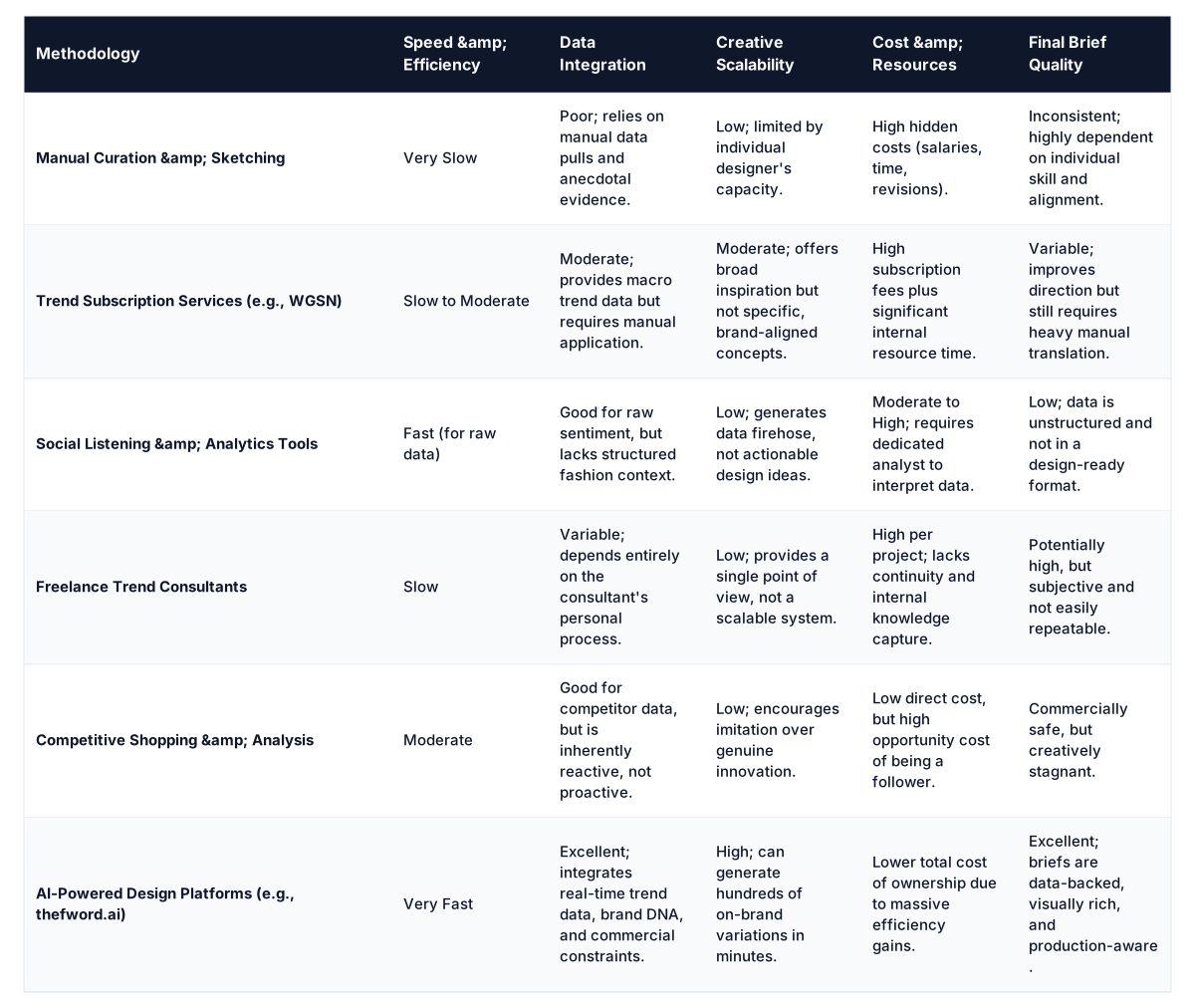
The methodology a brand uses to translate trends into briefs directly impacts its speed-to-market, design originality, and commercial success. While every team has a unique flavor, their workflows generally fall into a few key categories, each with distinct advantages and disadvantages. From the purely manual, intuition-driven approach to a fully integrated, AI-augmented process, the difference in efficiency and output is dramatic. Understanding these options is the first step toward optimizing your own creative engine.
Comparison: Trend-to-Brief Workflow Methodologies
Creative director? Go from trend signal to moodboard and tech pack.
The F* Word turns a real-time trend into a brand-aligned moodboard and the factory-readable tech pack that ships it. One workflow, free to try.
Let's walk through the "old way" of doing things, a process that will feel painfully familiar to many design teams. It begins with the Inspiration Phase. Your design lead has just returned from a trade show or has spent a week digesting reports from a major forecasting service. The team gathers around a massive mood board covered in printouts, fabric swatches, and handwritten notes. The energy is high, but the direction is broad. Keywords like "utility," "soft grunge," and "dopamine dressing" are thrown around.
Next comes the Concepting Phase, where the friction starts. Designers are tasked with interpreting these abstract concepts. One designer sketches a "utility" jacket with 12 pockets, while another sketches one with epaulets and a belted waist. Which one is right for your customer? Which one can be made at the target price point? No one knows yet. This phase involves days of manual sketching, creating dozens of options, most of which will never see the light of day. This is a significant resource drain, burning out creative talent on work that is ultimately discarded.
Then, the process moves to the Internal Review & Culling Phase. The sketches are pinned up for a cross-functional meeting with design, merchandising, and management. The merchandiser points out that a similar belted jacket failed two seasons ago. The product manager notes that the 12-pocket version will be impossible to produce under $50. The creative director feels neither sketch truly captures the "brand DNA." The feedback is subjective, often conflicting, and rarely backed by hard data in the moment. The designers are sent back to the drawing board for another round of revisions. This cycle can repeat two, three, or even four times, adding weeks to the calendar.
Finally, if a design survives, it enters the Brief Finalization Phase. A designer or technical designer must now manually translate the approved sketch into a preliminary product brief. This involves cobbling together information: pulling color codes from a separate system, finding similar flat sketches from a past season to use as a template, and writing descriptive text to explain the fit, fabric, and feel. The resulting "brief" is often a messy collection of JPEGs, Excel sheets, and Word documents, a recipe for misinterpretation by downstream teams and factory partners.
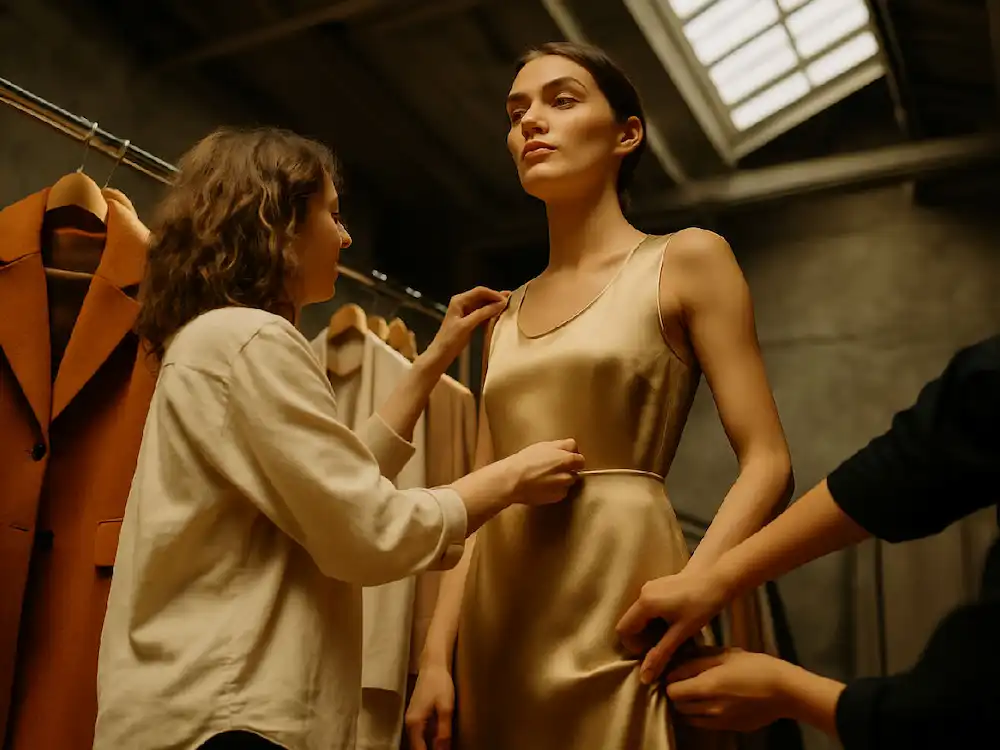
Now, let's reimagine that entire process with an AI-powered workflow, like the one enabled by thefword.ai. The goal isn't to replace designers, but to supercharge their creativity and eliminate the soul-crushing administrative work that bogs them down. This modern workflow transforms the funnel into a streamlined, data-driven pipeline.
The process starts with an AI-Augmented Signal Analysis. Instead of just a mood board, the designer inputs key trend signals, images, keywords like "utility jacket," "relaxed fit," or "cotton twill", directly into an AI design platform. The crucial difference is that the platform has already been trained on the brand's specific DNA: its core silhouettes, best-selling styles, color palette, and target customer profile. The AI doesn't just see "utility"; it sees "utility for your brand."
This leads immediately to the Generative Concepting Phase. In minutes, not days, the AI generates dozens or even hundreds of unique, on-brand design concepts based on the inputs. Crucially, these aren't just random images. They are structured design proposals. The designer can instantly filter and refine these concepts with simple commands: "Show me this in our seasonal color palette," "Make the fit more oversized," or "Add flap pockets instead of patch pockets." This transforms the designer from a manual sketch artist into a creative director, curating and refining high-potential ideas at lightning speed. It's an essential part of adopting agentic AI into a modern fashion workflow.
The Collaborative AI-Driven Review is next, and it happens in real-time. Instead of printing and pinning, the team collaborates within the platform. The merchandiser can see AI-generated cost estimates or fabric yield predictions alongside each design variant. The product manager can see how a silhouette compares to historical top-sellers. The feedback loop is instantaneous and data-informed. A designer can apply a suggested change and regenerate the design live in the meeting. What used to take a week of revisions now takes five minutes. Debate is replaced by data-driven decisions.
Finally, the process culminates in the One-Click Brief Generation. Once a design is approved, the platform automatically generates a comprehensive, production-ready design brief. This isn't a cobbled-together document; it's a structured, detailed package. It includes high-resolution renderings from multiple angles, flat sketches, potential colorways, initial BOM (Bill of Materials) suggestions, construction details, and descriptive AI-generated text. This clear, unambiguous brief can be sent directly to technical design and sourcing, dramatically reducing errors and sample lead times. This is the power of a true AI fashion designer solution: it connects the dots from signal to brief to production in one unbroken chain.
Adopting a new workflow is a significant decision. To choose the right path for your brand, you need to evaluate your current process against your strategic goals. A "good enough" process might be costing you more than you think in lost opportunities and invisible inefficiencies. Use this framework to assess your needs and identify where to invest.
Transitioning to an AI-accelerated workflow doesn't have to be a daunting, company-wide overhaul. You can start small, prove the value, and scale a new, more efficient process across your organization. Here's a simple, actionable path to get started.
First, run a pilot project. Select a single category or capsule collection to serve as your test case. Choose a team that is open to new technology and hungry for a better way of working. The goal is to create a direct A/B test: Team A uses the traditional workflow, and Team B uses the new AI-powered workflow for a similar product. This provides concrete data on time savings, revision rounds, and the quality of the final briefs.
Second, focus on "training the AI" with your brand's unique intelligence. The power of a platform like thefword.ai lies in its ability to understand your specific context. Dedicate time upfront to feeding it your brand guidelines, historical sales data on silhouettes and colors, and your target customer aesthetics. This initial investment pays massive dividends by ensuring the AI's output is consistently on-brand and commercially relevant, not just a generic mood board.
Third, integrate, don't just implement. Technology alone doesn't solve problems; process change does. Hold short workshops to train the design and merchandising teams on the new workflow. Redefine roles: designers become creative directors and curators, while merchandisers become strategic partners in the live design session. Establish new KPIs to measure success, such as "time from trend signal to approved brief" or "percentage of designs approved in the first round."
Finally, share the success story internally. Present the results of your pilot project to leadership and other teams. Showcase the design briefs, highlight the time saved, and let the designers who participated share their firsthand experience. This builds momentum and creates a pull-effect for adoption across the rest of the company, transforming your organization one capsule collection at a time.
The most common mistake is failing to translate a high-level trend into the specific context of their brand and customer. A team might see "Cottagecore" trending and immediately jump to sketching floral prairie dresses, without first asking if that silhouette, fabric, or print aligns with their core customer's lifestyle, price sensitivity, and existing wardrobe. A successful translation filters the trend through the brand's unique DNA, asking "What is our version of this?" rather than simply copying the most literal interpretation.
Small brands can use agility and a strong point of view as their primary weapons. Instead of subscribing to expensive, broad-stroke forecasting services, they can use more nimble tools. Social media listening, niche community forums, and platforms like TikTok provide a wealth of real-time trend data. More importantly, AI design platforms like thefword.ai level the playing field, allowing a single designer to generate and iterate on hundreds of ideas, effectively giving them the output of a much larger team and enabling them to move from signal to brief in a fraction of the time.
No, AI is a tool for augmentation, not replacement. It will change roles, not eliminate them. Trend forecasters will move from simply identifying "what" is trending to using AI to analyze "why" and model its potential impact. Designers will be freed from the tedious work of manual sketching and endless revisions. Their roles will become more strategic and curatorial, acting as the creative director for the AI, guiding it, refining its output, and infusing the final product with human taste, emotion, and storytelling. AI handles the "how," freeing up humans for the "why."
Clarity comes from standardization and visual detail. A great brief leaves no room for interpretation. It must include: high-resolution visuals of the front, back, and side; detailed flat sketches with measurements; a clear Bill of Materials (BOM) specifying fabric, trims, and hardware; specific color codes (e.g., Pantone TCX); and written construction callouts for any complex details like seams or pocket types. Using an AI platform that auto-generates this structured information is the most effective way to ensure consistency and eliminate the ambiguity that leads to costly sampling errors.
The F* Word Editorial · Fashion workflow team
Written by The F* Word editorial team. We build AI fashion workflow software grounded in thousands of industry-produced tech packs and proprietary garment records, so what reaches the factory is consistent, reviewed, and tied to design intent.
Once the concept is approved, the next steps move it from board to factory floor.
Related: Private Label Fashion Trend Intelligence: From Signal to Supplier Brie
Get The F* Word workflow insights in your inbox.