


Digital sampling has transformed from an experimental curiosity into a production necessity for fashion brands in 2026. Digital sampling uses 3D garments, AI visuals, and structured product data to make design decisions before physical samples are cut.. Instead of cutting fabric and sewing test garments, designers can now visualize fit, drape, and construction details on photorealistic digital models.
The shift toward digital sampling isn't just about technology, it's about survival in an industry where speed-to-market and cost efficiency determine competitive advantage. According to the Australian Fashion Council's Digital Sampling Business Case, brands implementing digital sampling reduce development costs by up to 30% while compressing timelines from weeks to days. For design leaders juggling disconnected tools and 4–6 week creative cycles, digital sampling offers a path to faster validation without expanding headcount.
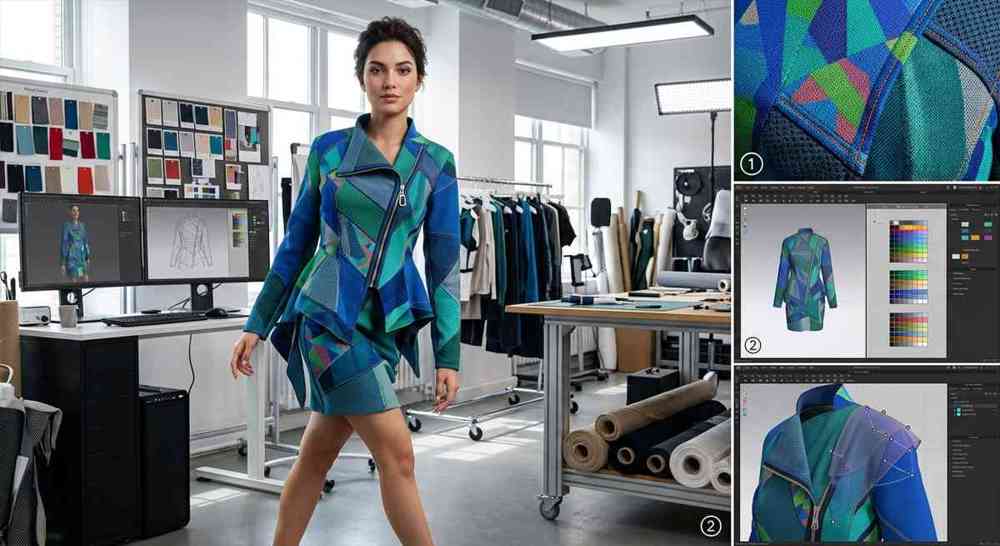
digital_sampling_3d_garment_visualization
Digital sampling creates virtual garments by draping digital patterns onto 3D avatars with precise body measurements, simulating real fabric behavior before production.
Designers begin by creating a digital pattern, either by digitizing physical patterns or building them from scratch in specialized software. These patterns are then draped onto customizable avatars that represent target fit models with exact body measurements. The software doesn't just display flat patterns; it calculates how fabrics with specific properties (weight, stretch, drape coefficient) will behave when sewn together.
Advanced physics engines simulate gravity, movement, and tension points, revealing potential fit issues before a single yard of fabric is purchased. Technical designers can adjust seam placement, add darts, modify grading, and test colorways instantly. Iterations that would take days or weeks with physical samples happen in minutes, allowing design teams to explore more directions without extending timelines.
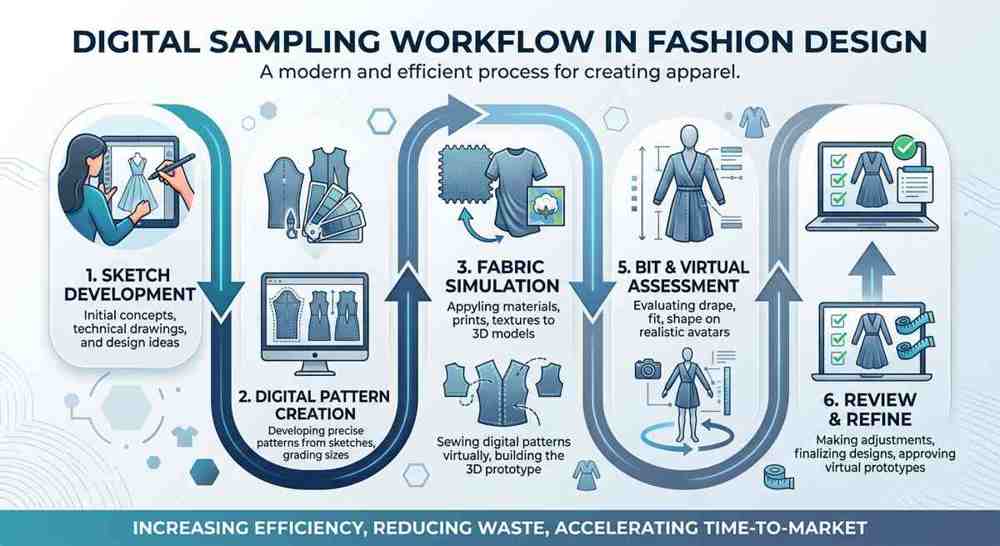
The process typically follows this workflow: sketch or concept development, pattern creation or digitization, fabric property input, 3D draping and simulation, fit assessment on avatars, and iteration until approved. Each step happens digitally, with stakeholders reviewing and commenting in real-time regardless of geographic location.
Technical designer? Cut sampling time before first fit.
The F* Word generates the tech packs, BOMs and sampling notes your factory actually needs. Plus a brand-aligned moodboard upstream. Free to try.
Brands implementing digital sampling reduce physical samples by 60–80% and compress development timelines by 40%, directly addressing the cost and speed challenges of traditional workflows.
The traditional sampling process is expensive and slow. Most fashion brands cycle through 3–5 physical sample rounds per style, with each failed sample costing between $450 and $5,000 in materials, labor, and shipping. Multiply that across a 200-piece collection, and the waste becomes staggering, both financially and environmentally. For a mid-sized brand, sampling costs alone can exceed $500,000 per season.
Digital sampling addresses these pain points directly. Brands using 3D fashion workflows report catching construction errors that would have required expensive corrections in production. The environmental benefits are equally compelling: fewer samples mean less fabric waste, reduced shipping emissions, and smaller carbon footprints across the supply chain.
Beyond cost savings, digital sampling enables design leaders to explore significantly more design directions without hiring additional staff. When validation happens in days instead of weeks, creative teams can test trend variations, compare silhouettes, and refine details that would have been abandoned due to time constraints in traditional workflows.
Modern 3D simulation predicts garment behavior during wear, how sleeves restrict movement, where fabric bunches during sitting, and how hems fall during walking.
This dynamic simulation capability has made digital samples reliable enough for technical design decisions, not just marketing imagery. Software now accounts for body movement, fabric stress points, and construction tolerances. Technical designers can identify issues like armhole restrictions, waistband rolling, or hem twisting before physical production.
The simulation accuracy depends on proper fabric digitization. Brands build digital fabric libraries by scanning physical materials to capture weight, drape, stretch recovery, and surface texture. Once digitized, these fabrics can be applied to any style, creating consistency across collections.
Artificial intelligence has accelerated pattern creation and grading, reducing technical design time from 16–20 hours per style to under 15 minutes for complete tech packs.
AI-powered fashion design tools can generate base patterns from sketches, automatically grade across size ranges, and suggest construction methods based on fabric properties. This integration eliminates the bottleneck between creative direction and technical development.
AI pattern generation doesn't replace technical expertise, it amplifies it. Technical designers review and refine AI-generated patterns, focusing their skills on complex construction details rather than repetitive grading calculations. The result is faster turnaround without sacrificing quality.
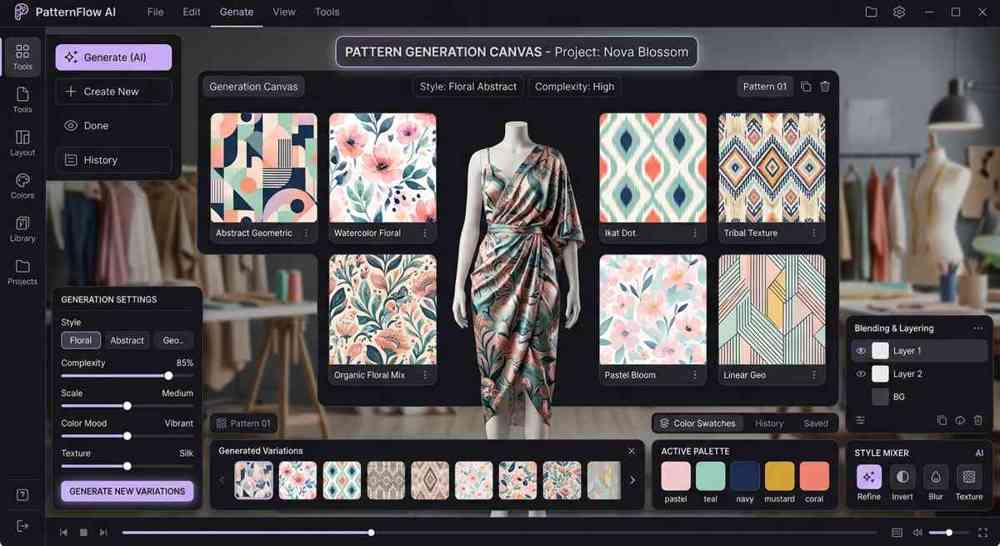
Remote fit approvals have become standard practice, eliminating the logistics of shipping physical samples internationally and waiting for feedback cycles.
Design teams conduct virtual fit sessions where stakeholders review 3D samples on avatars, rotating views, zooming into construction details, and requesting modifications in real-time. These sessions happen via screen sharing or collaborative platforms where multiple team members can annotate and comment simultaneously.
Virtual fit sessions work best when paired with standardized fit avatars that match brand fit models. Teams establish digital fit standards, documenting acceptable ease allowances, seam placements, and proportion requirements. This standardization ensures consistent fit evaluation across seasons and product categories.
The digital sampling ecosystem balances simulation accuracy with workflow integration, but many brands struggle by treating it as isolated visualization rather than connected workflow management.
Leading solutions include CLO3D for advanced fabric simulation, Browzwear for enterprise-scale workflows, and Style3D for integrated design-to-production pipelines. According to Style3D's 2026 tool comparison, the best tools balance simulation accuracy with ease of use and integration capabilities.
However, software selection is only part of the equation. The most successful implementations connect digital sampling to upstream creative direction and downstream merchandising needs. Fashion design apps that bridge these gaps deliver better ROI than point solutions that create beautiful 3D assets but leave teams coordinating across disconnected tools.
Consider your existing workflow before selecting software. If you're already using Adobe for design and CLO for 3D, ask whether these tools manage your full fashion workflow or just create individual assets. The gap between asset creation and workflow management is where time and money disappear.
Despite proven benefits, only 35% of fashion brands have fully integrated digital sampling into their 2026 workflows, the primary barriers are organizational, not technological.
Many brands invest in software but fail to restructure workflows around digital-first processes. Teams continue creating physical samples "just to be sure," negating cost savings. This happens when leadership views digital sampling as experimental rather than production-ready, or when technical teams lack confidence in digital validation.
Another challenge is the learning curve. Technical designers accustomed to physical sampling need training in 3D software, fabric digitization, and virtual fit assessment. As research on why digital sampling fails reveals, brands that treat digital sampling as a tool rather than a workflow transformation see limited results. Training must extend beyond software tutorials to include new approval processes, communication protocols, and quality standards.
Material accuracy remains an ongoing challenge. While fabric simulation has improved dramatically, capturing the exact hand-feel and drape of specialty materials still requires physical validation for critical styles. Heavily embellished fabrics, unconventional textures, and materials with complex behaviors don't always translate perfectly to digital simulation.
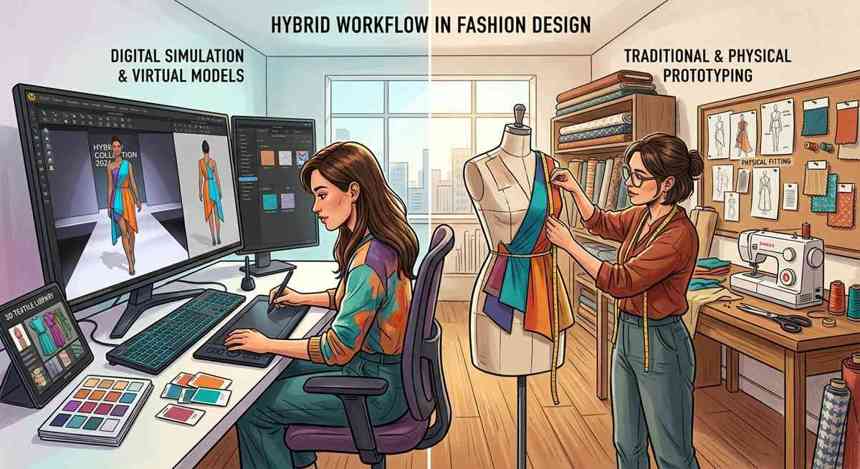
The solution isn't abandoning digital sampling, it's using 3D validation strategically to reduce physical samples from 5 rounds to 1–2 targeted rounds. This hybrid approach delivers speed and cost benefits while maintaining quality assurance.
Successful digital sampling adoption follows a phased approach, starting with high-volume basics where fit consistency matters more than novelty fabrics.
Build a digital fabric library by scanning your most-used materials with accurate physical properties. Partner with fabric suppliers who provide digital fabric files, or invest in fabric scanning equipment for in-house digitization. Start with 20–30 core fabrics that represent 80% of your production volume.
Train technical designers on 3D software while maintaining physical sampling for complex styles during the transition. Establish clear criteria for when styles require physical validation versus digital-only approval. Most brands find that basic silhouettes, colorway variations, and graphic placements can be approved digitally, while new constructions, experimental fabrics, and fit-critical styles benefit from physical validation.
The goal isn't eliminating physical samples entirely, it's using them strategically. The future of digital fashion design lies in hybrid workflows where digital validation happens first, catching 80% of issues before physical samples are made. This approach delivers the speed and cost benefits of digital while maintaining the quality assurance of physical validation.
What is digital sampling and how does it differ from physical sampling?
Digital sampling creates virtual garment prototypes using 3D software, allowing designers to visualize fit, drape, and construction without cutting fabric. Unlike physical sampling, digital versions can be modified instantly, shared globally, and tested across multiple colorways simultaneously without additional cost. The primary difference is speed and iteration capacity, digital samples enable exploration that would be cost-prohibitive with physical prototypes.
Can digital samples replace physical samples completely?
For most brands, digital sampling reduces physical samples by 60–80% but doesn't eliminate them entirely. Critical styles, new fabric types, and final production approvals typically still require physical validation. The optimal approach uses digital sampling for early-stage validation and reserves physical samples for final confirmation, particularly for styles entering production.
What software do I need to start digital sampling?
Entry-level options include affordable and free clothing design software for basic 3D visualization. Professional implementations typically use CLO3D, Browzwear, or Style3D. However, software alone isn't sufficient, you need workflow integration that connects digital sampling to tech pack creation, merchandising, and production. Evaluate whether tools create isolated assets or manage connected workflows.
How accurate are digital fabric simulations?
Modern fabric simulation in 2026 achieves 85–95% accuracy for standard wovens and knits when materials are properly digitized. Specialty fabrics with complex behaviors (sequins, heavy embroidery, unconventional textures) still require physical validation. The key is building an accurate digital fabric library through proper scanning and testing. Accuracy improves as your digital fabric library expands and your team develops expertise in simulation software.
What's the ROI timeline for digital sampling implementation?
Most brands see positive ROI within 6–12 months. Initial investments include software licensing ($3,000–$15,000 annually), training (2–3 months), and fabric digitization. Savings come from reduced sample costs ($450–$5,000 per avoided sample), faster development cycles (40% timeline reduction), and lower inventory risk from better pre-production validation. Brands with high sample volumes and complex collections see faster ROI.
Digital sampling has evolved from a sustainability initiative into a competitive necessity in 2026. Brands that master digital-first workflows compress development timelines, reduce costs, and launch with greater confidence. The technology is proven, the challenge is organizational transformation.
The most successful brands don't just adopt digital sampling software; they restructure workflows to use digital validation throughout the design process. This means connecting creative direction to 3D validation to tech pack generation to merchandising assets in an integrated system, not a collection of disconnected tools. When design leaders spend more time coordinating than designing, the problem isn't lack of tools, it's lack of integration.
For VP-level design leaders and creative directors managing mid-to-large fashion brands, digital sampling offers a path to explore more design directions without expanding headcount, validate trends faster, and establish reliable launch timelines. The brands winning in 2026 aren't just using digital sampling, they're using it as part of an integrated workflow that connects every stage from concept to production.
Digital sampling tools are not interchangeable. Some are strong for garment simulation, some are better for enterprise workflow control, and some work best as part of an AI-driven pre-production stack. The right choice depends on where your team loses time: pattern iteration, fit validation, vendor communication, tech pack creation, or launch asset production.
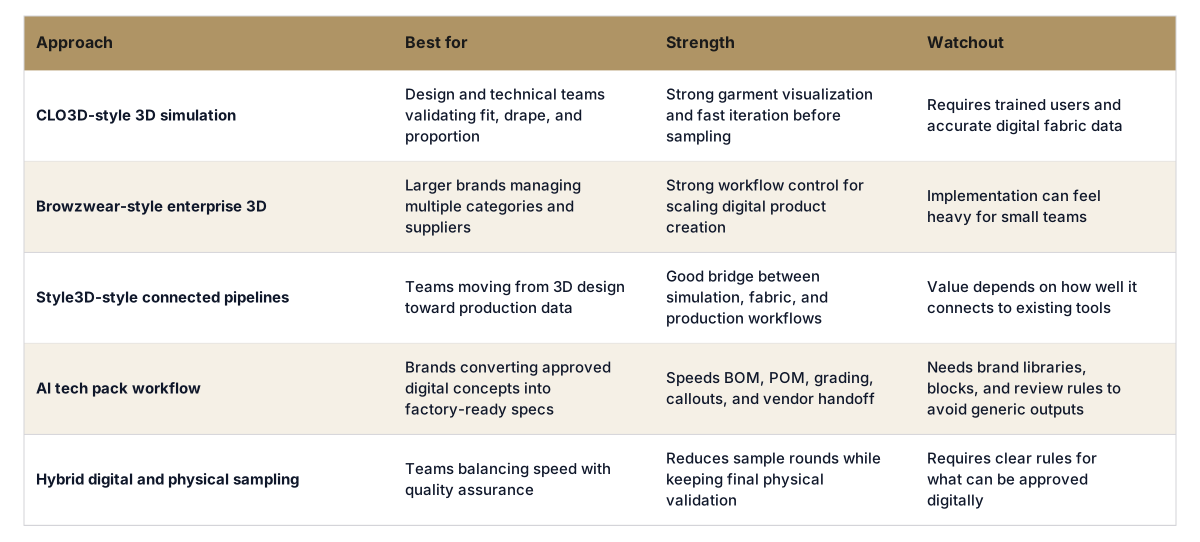
Digital sampling only pays off when it connects to the rest of the workflow. Use AI to move from concept to 3D validation, AI tech packs, factory-ready specs, and launch assets without rebuilding the same product data five times.
Start free.
AI Tech Pack BOM, POM & Grading: How It Works
Useful for technical designers and production teams turning approved digital samples into structured BOMs, POMs, grading rules, and vendor-ready specs.
Digital Fashion Sustainability: Designing a Greener Future in 2026
A clean follow-up for teams using digital sampling to cut waste, reduce physical prototypes, and build lower-impact product development workflows.
Garment Tech Pack Software That Cuts Samples and Chaos
Strong fit for brands struggling with version control, repeated vendor questions, unclear specs, and sample revisions after the digital concept stage.
Once pre-production is locked, these are the steps that get the collection to market.
The F* Word Editorial · Fashion workflow team
Written by The F* Word editorial team. We build AI fashion workflow software grounded in thousands of industry-produced tech packs and proprietary garment records, so what reaches the factory is consistent, reviewed, and tied to design intent.
Once pre-production is locked, these are the steps that get the collection to market.
Related: digital fashion design benefits
Get The F* Word workflow insights in your inbox.