
English
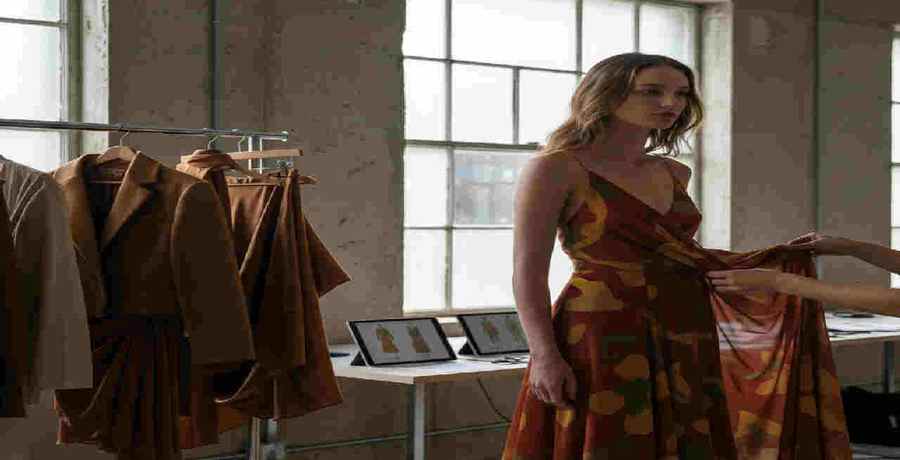
Direct answer. Fashion design software for small businesses encompasses accessible digital tools that help independent designers and small brands manage their design process, from ideation to production. These solutions prioritize affordability, ease of use, and essential features like digital sketching, pattern making, material visualization, and tech pack creation, without the complexity or high cost of enterprise-level systems. This software streamlines tasks, reduces sample rounds, and supports efficient communication with manufacturers, enabling small businesses to compete effectively and bring their creative visions to life more quickly.
Fashion design software for small businesses is distinct from the comprehensive, complex platforms used by large corporations. It focuses on the core needs of independent designers and small teams: efficiency, creativity, and cost-effectiveness. These tools simplify tasks that traditionally consumed significant time and resources, such as creating technical drawings, developing patterns, and specifying materials.
The goal is to provide a digital environment where designers can iterate on ideas, visualize garments, and prepare accurate documentation for manufacturing. This approach reduces errors, minimizes rework, and ultimately lowers the barrier to entry for launching and scaling a fashion brand.
When selecting fashion design software, small businesses should prioritize features that offer the most impact for their scale. Digital sketching and illustration tools allow for quick ideation and presentation of designs without the need for traditional drawing skills.
Pattern making and grading capabilities are crucial for translating designs into tangible garments, ensuring correct fit and size ranges. Material and trim libraries help visualize how different fabrics and components will look, while also simplifying bill of material (BOM) generation. Tech pack creation is perhaps the most critical feature, as it generates the detailed specifications required by manufacturers, including measurements (POMs), construction notes, and finishing details.
Independent designers gain several significant advantages by adopting specialized fashion design software. First, it dramatically accelerates the design cycle. Digital tools allow for rapid sketching, colorway changes, and pattern adjustments, reducing the time spent on manual tasks. This speed translates into more collections per year or more time for marketing and sales efforts.
Second, precision and consistency improve. Digital patterns are inherently more accurate than hand-drawn ones, minimizing fit issues during sample development. Third, communication with factories becomes clearer. Detailed tech packs eliminate ambiguity, leading to fewer misinterpretations and consequently, fewer sample rounds and less material waste. This efficiency is vital for managing tight budgets and timelines inherent to small businesses.
Selecting the best fashion design software for a small business involves balancing cost, functionality, and user-friendliness. Many platforms offer tiered pricing, with essential features available at an affordable monthly or annual subscription. Cloud-based solutions are often preferred because they require no specialized hardware and allow remote access, which is ideal for small, distributed teams.
Consider the learning curve. Software that is intuitive and offers good tutorials or community support will be more readily adopted. Integration with other tools, such as accounting software or e-commerce platforms, can also be a valuable long-term benefit, though often not an initial requirement. Some platforms also offer specific modules for managing production, inventory, and sales, providing a more holistic business solution as the brand grows.
The range of fashion design software includes various types of tools, each serving different aspects of the design and production process. For small businesses, individual design tools (like digital drawing or 3D prototyping) often provide the most accessible entry point, while a complete PLM (Product Lifecycle Management) often represents a later-stage investment.
AI is becoming increasingly accessible for small fashion businesses, not as a replacement for designers but as a powerful assistant. AI can help with trend forecasting by analyzing vast amounts of data, identifying emerging styles and consumer preferences. This insight helps small brands make more informed design decisions.
Generative AI tools can also assist in brainstorming concepts, creating variations of design elements, or generating mood boards. For example, an AI might suggest color palettes or trim combinations based on specific themes. While full-scale AI-driven design is still evolving, small businesses can use AI to augment creativity, streamline research, and even automate simple tasks like generating product descriptions for their e-commerce platforms.
The future of fashion design software for small businesses points towards greater integration, enhanced accessibility, and more intuitive AI features. Expect to see tighter connections between 3D design software and virtual fitting rooms, making it easier for small brands to showcase their products without physical samples. Subscription models will likely continue to evolve, offering more flexible pricing and feature sets to cater to varying business sizes and growth stages.
Interoperability will become key, allowing data to flow smoothly between design tools, PLM systems, and e-commerce platforms. This smooth exchange of information will further reduce manual data entry and errors, freeing up small business owners to focus on creative development and strategic growth rather than administrative overhead.
The F* Word is an autonomous fashion workflow layer that generates full tech packs in 8-10 minutes from a garment design and builds AI moodboards from a single prompt. It sits on top of your existing tools (Illustrator, PLM, factory portals) as the validation and orchestration layer, not a replacement for 3D sim or PLM. Teams use it to compress the brief-to-production loop from weeks to a single afternoon.
Many digital sketching tools, like Procreate for iPad or free trials of professional software, offer low-cost entry points. Some cloud-based tech pack solutions also provide affordable subscription options. Open-source pattern making software can also reduce initial investment, though it may require more technical proficiency.
While dedicated tech pack software often comes with a cost, you can create basic tech packs using general-purpose tools like Google Sheets or Airtable by setting up templates. These methods might lack specialized features but are viable for small scale production with careful manual input.
Yes, 3D fashion design software is becoming increasingly suitable. Tools like CLO and Marvelous Designer offer licenses for individual designers or small studios. Using 3D can significantly reduce physical sample rounds, save on material costs, and accelerate the product development timeline, which is highly beneficial for small budgets.
AI assists small fashion brands by providing trend insights, generating design variations for inspiration, or automating mundane tasks like image tagging and product descriptions. It helps streamline the creative process, enhance market understanding, and improve operational efficiency without needing a large team.
Fashion design software focuses on the creative and technical aspects of design (sketching, pattern making, 3D). PLM (Product Lifecycle Management) is a broader system that manages the entire product journey, including design, development, sourcing, costing, and production scheduling, often integrating with design tools.
While some specialized software has a steeper learning curve, many modern fashion design tools prioritize user-friendliness and intuitive interfaces. Numerous tutorials and online communities exist to help beginners. Basic computer literacy is generally sufficient to get started with most entry-level options.
Absolutely. By reducing the need for physical samples, minimizing errors in production specifications, and optimizing material usage through precise pattern making and 3D visualization, fashion design software directly contributes to more sustainable and less wasteful production practices for small businesses.
To truly understand how these systems orchestrate your entire product development process, See the workflow.
Get The F* Word workflow insights in your inbox.