English
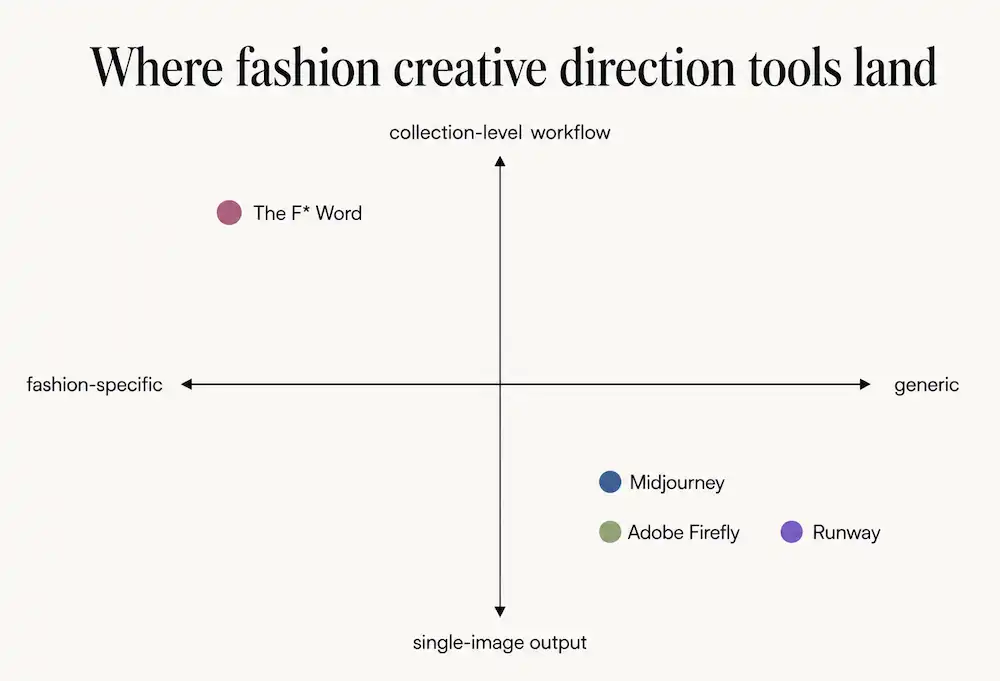
Creative direction workflow covers brief, moodboard, concept, and design sign-off across a season. The F* Word generates moodboards and design options from a written brief, then keeps every version linked to the tech pack so creative intent survives into production.
The F* Word is browser-based AI creative-direction software for fashion brands. It converts trend signals and brand rules into on-brand moodboards, product concepts, and structured fashion design briefs that flow into tech-pack creation. It is built for creative directors, brand designers, and apparel teams that need a connected path from trend research to production.
A creative direction workflow helps fashion teams turn trend signals into moodboards, product concepts, line direction, and an on-brand creative brief. For creative directors and brand designers, this work often takes weeks because research, references, concept routes, and alignment meetings happen in separate places.
The F* Word helps teams move from trend signal to on-brand brief in one focused session. It supports trend research, moodboards, concept generation, and direction alignment, so design, merchandising, production, and marketing start from the same creative decision. The pain it solves is drift: too many references, too many opinions, and no clear brief.
A creative direction workflow gives fashion teams a structured way to turn trend signals into moodboards, concepts, product direction, and a usable brief. The F* Word helps creative directors and brand designers filter trends through brand codes, generate concepts, align direction, and create a brief that design, merchandising, production, and marketing can act on.

Fashion brands are working in a more compressed creative cycle. Trend signals move faster, customer taste shifts faster, and product launches need stronger stories earlier. A brand cannot spend three weeks collecting references, another week debating moodboards, and another week trying to translate direction into product concepts. By then, the team has burned time before design development has properly started.
In 2025 and 2026, the bigger issue is alignment. Creative teams are flooded with inputs from social platforms, runway coverage, resale movement, creator styling, retail drops, customer feedback, archive references, fabric fairs, and internal sales. More input does not automatically create better direction. It often creates noise.
A strong creative direction workflow helps the team decide what to ignore. A brand may see ten trend signals, but only two may belong in the next drop. The rest may be wrong for the customer, price point, margin, production calendar, or brand codes. The F* Word helps creative teams convert raw signals into a direction the wider team can use.
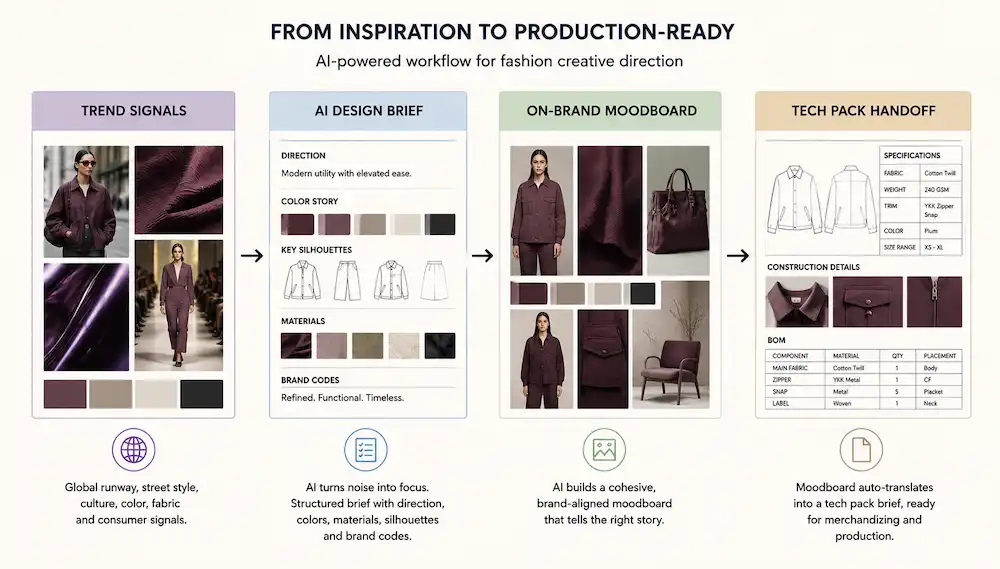
The workflow starts with signals. These may come from runway themes, retail movement, social styling, creator content, customer comments, sales data, archive references, fabric fairs, competitor drops, or cultural moments. The F* Word helps organize these inputs into fashion-specific categories such as silhouette, color, material, print, styling, category, occasion, and customer mood.
A trend only matters if it fits the brand. The F* Word helps the team test each signal against the brand’s identity, customer, price point, product architecture, and visual codes. A minimal tailoring brand may pull utility details, washed neutrals, and proportion shifts. A feminine occasion brand may focus on drape, sheen, neckline, and evening styling. The same trend should create different outputs for different brands.
The team then builds moodboards around color story, silhouette family, fabric direction, styling mood, product category, and campaign energy. These boards should answer specific questions: What does the collection feel like? Which shapes lead? Which colors carry the season? What materials support the price point? What styling makes the story clear? The board becomes a working decision tool, not a research archive.
Once the board is clear, The F* Word helps generate product concepts. This can include hero pieces, supporting styles, colorways, print direction, styling combinations, range ideas, and product notes. The creative director can quickly compare routes, reject weak options, and refine the direction that feels most on-brand.
The final output is a creative brief the wider team can use. It should give design enough clarity to start sketching, merchandising enough context to shape the line plan, production enough warning on complexity, and marketing enough story to prepare launch direction. The brief becomes a working tool with product and story logic, not a decorative deck.
Traditional creative direction often depends on long research decks, private folders, scattered screenshots, and subjective meetings. The strongest voice in the room can win even when the direction is weak. Teams may agree on the mood, then disagree later when sketches, fabric choices, range architecture, or marketing visuals do not match the original intent.
The F* Word creates a tighter path from signal to decision. It helps teams move through research, board building, concept generation, and brief writing without losing the creative logic.
The practical gain is fewer bad starts. When the direction is unclear, designers sketch in too many directions. Merchandisers struggle to shape the range. Marketing waits for a story that arrives late. Production gets surprised by complexity. A better creative workflow protects the calendar before the product enters development.
use The F* Word to turn scattered research into a clear point of view. They can compare trend routes, sharpen brand fit, and create briefs that design, merchandising, production, and marketing can act on. This gives them more control over the direction without forcing them to build every board manually.
use it to build moodboards and explore concepts faster. They can test visual routes, color stories, silhouettes, styling ideas, and product families before committing to a direction. This gives them more room to edit, which is where strong design decisions happen.
use it to connect creative energy to assortment balance. They can see whether a direction supports key categories, hero products, price points, outfit logic, and commercial range architecture. If a board is visually strong but category-poor, the team can catch that early.
use it to keep the brand point of view consistent. Many founders know what feels right but struggle to translate that taste into repeatable direction for a team. The F* Word helps turn instinct into a brief that others can use.
use it to prepare story, styling, campaign mood, and content direction earlier. They can see the collection logic before final samples arrive, which makes launch planning less reactive.
The F* Word is best for creative directors, brand designers, founder-led fashion labels, small design teams, and brands that need faster seasonal or drop direction. It is especially useful when teams need to move from trend research to moodboards, product concepts, direction alignment, and launch story without weeks of scattered research and deck building.
It is less useful for teams that want generic trend reports without brand filtering, final art direction without product development context, or pure inspiration boards with no line planning impact. The product is strongest when creative direction needs to guide real apparel decisions across design, merchandising, production, and marketing.
More questions? See all FAQs
The F* Word helps creative teams move from trend signal to moodboard, concept route, product direction, and on-brand brief in one focused workflow.