
Use 3D visualization to validate proportion, colorways, print placement, and approval decisions before physical sampling. Then move the approved garment into a structured tech pack workflow.
When evaluating vendors, prioritize render fidelity, PLM/ERP integration, supplier handoff workflows, and measurable ROI (sample reduction, approval time). This article compares features, expected time-savings, and vendor use-cases to help design and production leaders pick the system that shortens concept-to-production cycles while maintaining quality.
The fashion industry operates on a broken model of fragmented communication. We call this the Coordination Tax. This tax represents the hidden productivity cost of using six or more disconnected tools to manage a single garment's lifecycle. Teams lose countless hours moving data between Adobe Illustrator, Excel spreadsheets, email threads, and legacy PLM software. This constant context switching drains creative energy and introduces massive margins for error.

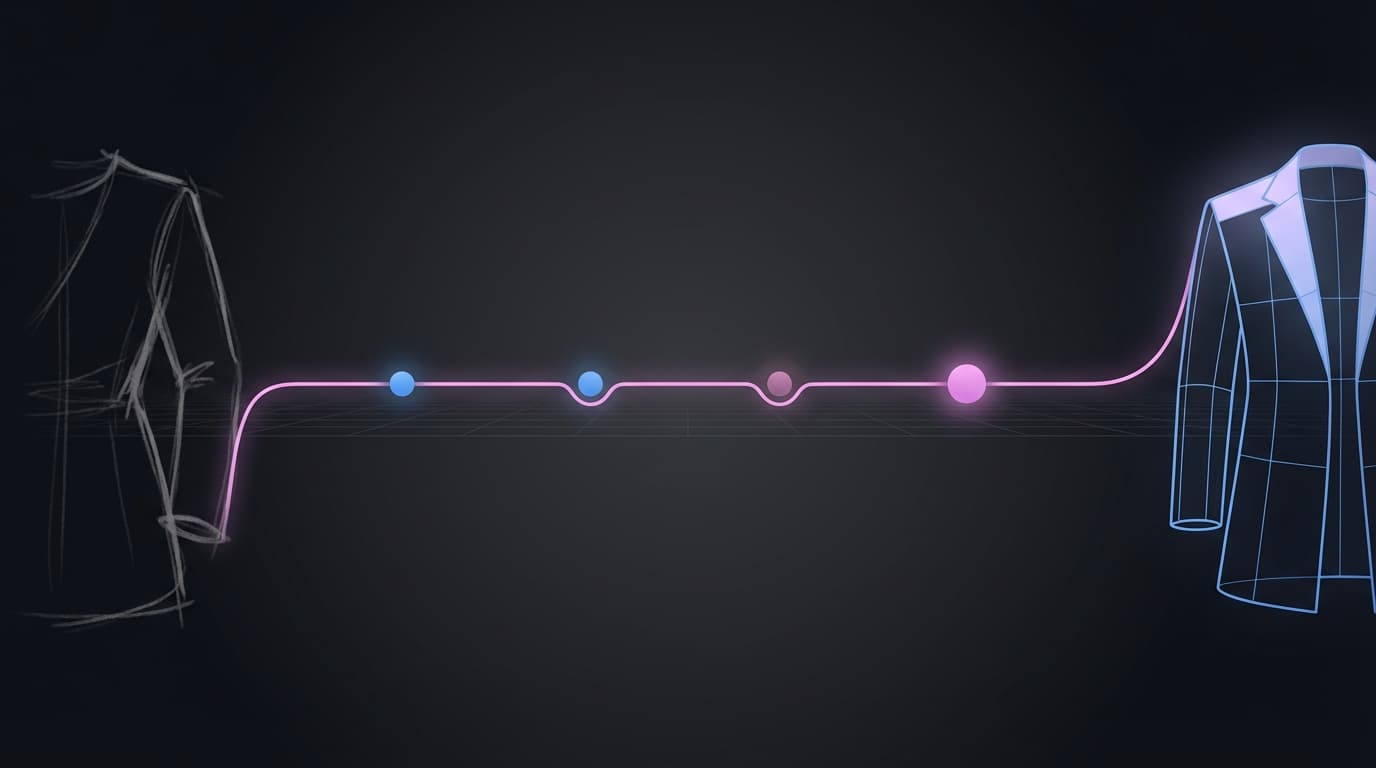
The Coordination Tax: fragmented tools force teams into constant context-switching, draining creative energy and compounding errors.
In many brands, the designer sends a sketch to technical design. Three revision cycles later the factory still asks for seam clarification. This exact scenario plays out daily across thousands of apparel companies. Creative leaders spend more time managing file versions than actually designing products. The financial and temporal costs of this fragmentation are staggering.
Consider the mathematical reality of manual design iterations:
Inputs → Calculation → Result
Design revisions per style: 5
Time per revision: 2 hours
Calculation:
5 × 2 = 10 hours
Result:
AI automation saves roughly 8–10 hours per style.
When you multiply this saving across an entire seasonal collection, the impact becomes undeniable. The F* Word eliminates this Coordination Tax entirely by centralizing every action within a single intelligent environment.
Agentic AI refers to autonomous systems that execute multi-step workflows without constant human prompting. This technology represents a massive shift in the ai impact on fashion industry workflows. Instead of manually drafting every vector line, creative directors provide structured inputs. The system then takes over to generate 5 to 7 validated concepts in minutes. This accelerates digital product development fashion cycles exponentially.
Designers maintain complete creative control while the agentic system handles the tedious execution. This allows teams to explore multiple creative directions simultaneously. By using The F* Word, brands can compress a process that traditionally takes weeks into a single afternoon.
An ai tech pack generator transforms approved 3D models into factory-ready specifications instantly. Automated tech packs include complete bill of materials, grading rules, and construction callouts. This ai role in changing fashion workflows reduces a process that typically takes 16 to 20 hours down to just 15 minutes.
Technical designers no longer need to copy and paste measurements between spreadsheets. The system extracts the exact geometry from the approved digital sample and formats it for the manufacturer. This guarantees absolute precision and prevents the costly miscommunications that plague traditional handoffs.
Digital sampling fashion technology replaces the traditional muslin and fabric prototype phases. 3D garment sampling allows teams to conduct virtual fit validation across multiple sizes simultaneously. This accelerates the early stages of garment construction significantly. Brands experience 75% fewer physical samples when utilizing these advanced tools.
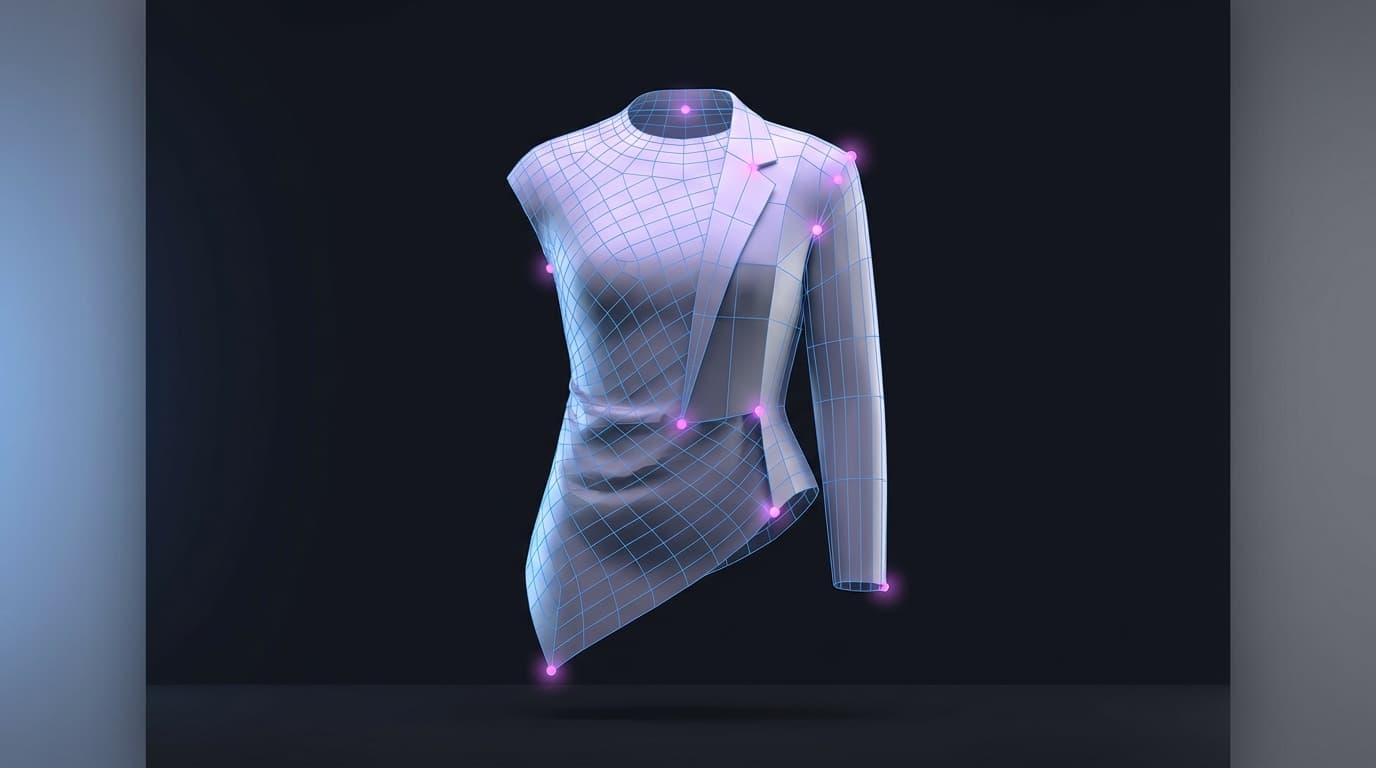
3D digital sampling: virtual fit validation replacing costly physical prototypes across the entire size run.
Teams complete 1 to 2 rounds of revisions instead of the traditional 3 to 5 rounds. This eliminates the $450 to $5,000 lost per failed sample. The Textile Research Journal confirms the massive efficiency gains associated with replacing physical iterations with digital twins.
Fashion PLM software must evolve beyond static databases. Modern fashion workflow efficiency software acts as an active participant in the design process. A single source of truth fashion PLM ensures everyone views the exact same data simultaneously. The detailed mechanics of this system manage handoffs, approvals, tooling, and version control automatically.
When a designer updates a hemline, the pattern, the tech pack, and the 3D render update instantly. There are no conflicting files saved on local hard drives. The F* Word provides this unified environment, ensuring that factories always receive the most current and accurate specifications.
AI vendor matching fashion tools analyze the technical requirements of a garment and instantly pair it with the most capable factory. This fashion production workflow software evaluates historical performance, current capacity, and material availability. Sourcing managers no longer need to send dozens of emails to determine which partner can handle a specific technical fabric.
The system routes the automated tech pack directly to the matched supplier. This smooth connection between design and production eliminates weeks of negotiation and capability verification. It ensures that the chosen factory has the exact machinery required for the job.
The ai role in changing fashion workflows extends deeply into quality assurance. Fashion product lifecycle automation catches specification errors before they reach the factory floor. To manage this transition effectively, teams rely on the Velocity Constraint Matrix.
Velocity Constraint Matrix
The Velocity Constraint Matrix is a diagnostic model that maps workflow bottlenecks against automation readiness. It categorizes manual tasks by their frequency and error rate to determine which processes require immediate agentic intervention. Design teams use this matrix to prioritize which legacy systems to replace first. By isolating high-friction handoffs, leaders can systematically dismantle the coordination tax.
How to apply it: Audit your current tech stack and plot each tool's data export frequency against the manual hours required to re-enter that data elsewhere.
Operational impact: Reduces software bloat and identifies the exact integration points where AI agents will save the most time.
Tradeoffs: Requires a temporary pause in production velocity to accurately measure current baseline metrics.
Failure modes: Teams often misclassify creative iteration as a bottleneck, leading to over-automation of the design phase rather than the technical handoff phase.
Predictive inventory signals fashion tools allow brands to gauge consumer interest early. Agile fashion production relies on generating on-model imagery directly from 3D files. This fashion lead time reduction strategy provides variant-rich content for every SKU on the same day the design is finalized.
Launching visuals before physical samples exist results in 60% lower inventory risk. Marketing teams can begin their campaigns weeks earlier. This parallel processing of production and marketing is a core benefit of The F* Word, allowing brands to monetize concepts faster than ever before.
Technical designer? Cut sampling time before first fit.
The F* Word generates the tech packs, BOMs and sampling notes your factory actually needs. Plus a brand-aligned moodboard upstream. Free to try.
The distinction between traditional software and modern agentic platforms is profound. Legacy systems act as digital filing cabinets; AI-native platforms act as digital team members.

Legacy PLM vs. AI-native platform: from fragmented filing cabinet to intelligent digital team member.
FeatureLegacy PLM (e.g., Centric, Infor)AI-Native Platform (The F* Word)Tech Pack GenerationManual data entry requiredFully automated in 15 minutes3D SamplingRequires external software integrationNative photoreal virtual fit validationAgentic AI AgentsNoneAutonomous workflow executionImplementation Time6 to 12 monthsDays to weeksTools Required6+ disconnected applications1 unified platformTarget Company SizeEnterprise onlyAgile DTC to EnterpriseLead Time ImpactMinimal reductionUp to 70% reduction (20 weeks to 4 days)
We must state the constraints clearly to maintain trust. AI-native platforms excel at technical execution and data routing; they fail when tasked with pure, unprompted creative genesis without human art direction. The model requires structured inputs to function effectively.
The era of waiting weeks for a single physical sample is over. Your design team deserves tools that match their creative velocity. Stop paying the coordination tax and start using agentic AI to dominate your market. Transform your concept-to-production cycle from 20 weeks to 4 days.
Sign up today and experience the future of fashion workflow management with The F* Word.
Ready to eliminate bottlenecks and bring your fashion collections to market faster than ever before? Centralize your design, sampling, and approval processes with an AI-powered workflow management system built for the speed of modern fashion. Start free at thefword.ai or Book a demo.
The reduction comes from several areas: replacing slow, sequential physical sampling with rapid 3D virtual prototyping, enabling parallel collaboration between design, tech, and merchandising teams in a single digital space, and automating the creation of tech packs and other documentation, which dramatically shortens the design-to-manufacturing handoff.
Photorealistic 3D visualization allows decision-makers to review designs, colorways, material drape, and even fit on a virtual avatar almost instantly. This replaces the week-long or month-long cycles of creating, shipping, and reviewing physical samples. Stakeholders can provide immediate feedback, request changes, and grant approvals in a single meeting or asynchronous thread, collapsing the approval timeline.
While they drastically reduce the number of physical samples required, often from 5-7 per style down to 1-2, most brands still opt for a final physical "salesman" or pre-production sample. The goal is to use virtual samples for all iterative development and approvals, reserving the final physical sample for ultimate confirmation before bulk production.
Integration creates a smooth, single source of truth. The design and workflow data generated (like 3D models, approved colorways, and fabric specs) automatically populates the PLM. This eliminates manual data entry, reduces errors, and ensures that the Bill of Materials (BOM) and tech pack data sent to factories are perfectly aligned with the final approved design, preventing costly miscommunications and production delays.
The F* Word Editorial · Fashion workflow team
Written by The F* Word editorial team. We build AI fashion workflow software grounded in thousands of industry-produced tech packs and proprietary garment records, so what reaches the factory is consistent, reviewed, and tied to design intent.
Once the workflow is in place, these are the steps that turn it into shipped product.
Get The F* Word workflow insights in your inbox.