
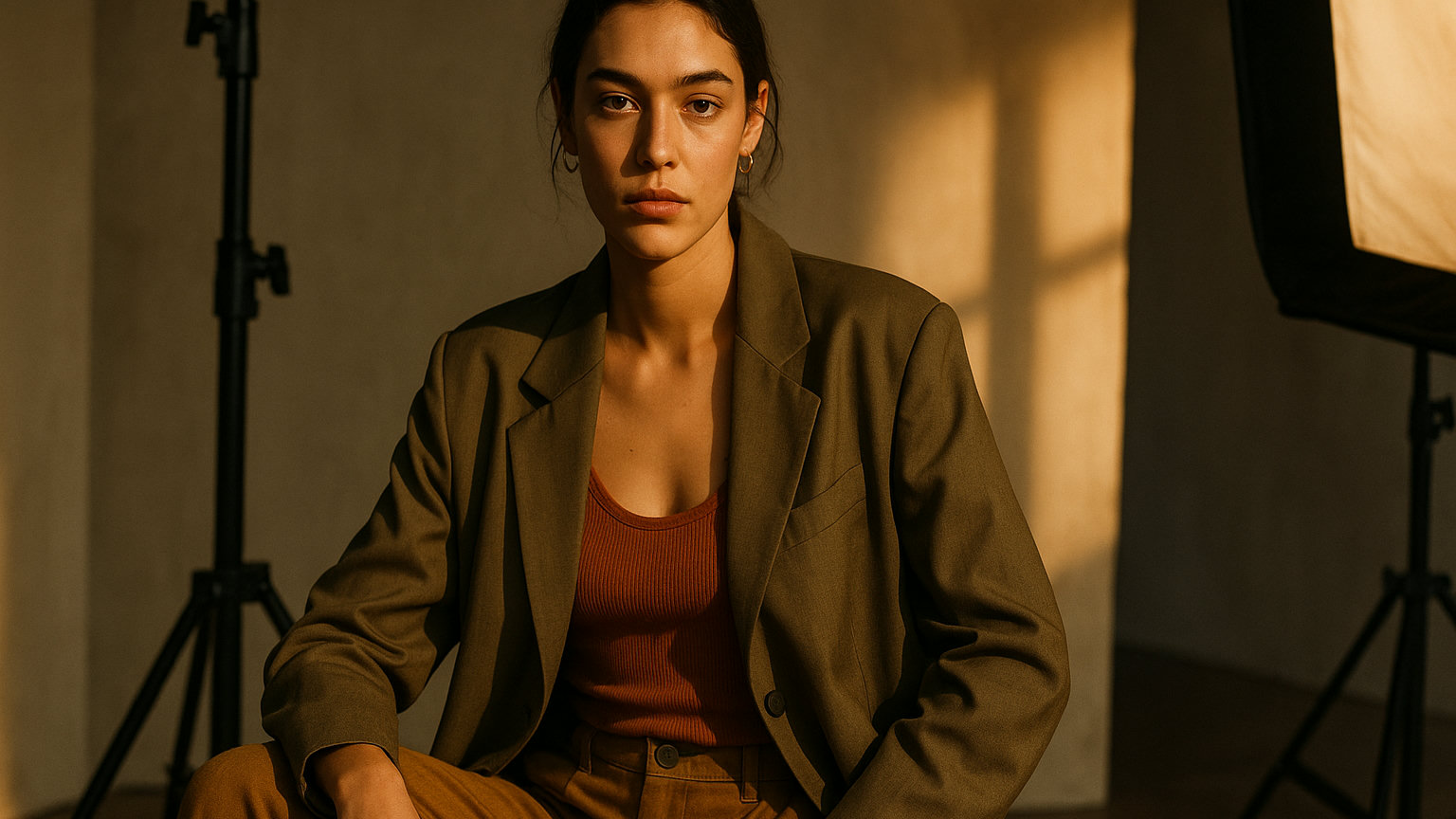
Fashion brands often grapple with the high costs and logistical challenges associated with traditional model photoshoots. Booking models, photographers, studios, and crews for a single campaign can strain budgets and timelines. An AI model photoshoot for fashion brands offers a cost-effective alternative, reducing expenses by up to 90% as reported by Vogue Business. This approach allows brands to allocate resources more strategically, focusing on creative direction rather than logistical hurdles.
What this looks like in practice: Consider a brand manager at a mid-size fashion label responsible for a seasonal campaign. Traditionally, this manager coordinates with multiple departments to organize casting calls, studio rentals, and schedule photographers, often taking three months of planning. With AI, the manager uploads design details and target demographics into an AI platform, which then generates diverse model images in days, drastically reducing prep time and cost.
Merchandiser? Ship a launch where the deck and the factory match.
The F* Word connects moodboards, tech packs and merchandising prep, so your launch story and the factory order tell the same story. Free to try.
AI-generated models offer an inclusive platform for brands to present their collections on a variety of body types, sizes, and ethnicities. As Business of Fashion highlights, this diversity is essential for brands aiming to connect with a global audience. By creating realistic and varied imagery, brands can address the demand for inclusivity without the complexities of traditional casting processes.
What this looks like in practice: A creative director at a global fashion house can select an array of AI-generated models that reflect diverse consumer demographics. This capability enables the director to depict the brand's clothing on models that represent their customer base more accurately, without the restrictions and time delays of traditional casting calls.
The use of AI in fashion marketing results in a significant increase in engagement rates, with Forbes reporting a 30% rise due to the ability to tailor content quickly for different demographics. Products can be shown on AI models that resonate with specific target audiences, enhancing customer connection and driving interaction.
What this looks like in practice: A digital marketing manager at a contemporary fashion brand uses AI to tailor campaigns to multiple audience segments. By customizing visuals to reflect local tastes and trends, the manager can deploy region-specific campaigns more effectively, seeing immediate engagement boosts as content resonates with diverse audiences.
AI models facilitate faster time-to-market for fashion collections. McKinsey & Company indicates that brands using AI models have reduced their time-to-market by 25%. This efficiency stems from AI's capacity to generate images and marketing materials rapidly, supporting agile marketing strategies and quicker launch cycles.
What this looks like in practice: A product manager at a fast-fashion label can implement AI-generated imagery to cut down the typical 8-week photoshoot timeline to just two weeks. By integrating AI-generated assets directly into digital marketing campaigns, the manager ensures that the brand stays ahead of trends without sacrificing quality or market presence.
The global AI in fashion market is poised for substantial growth. According to Grand View Research, it is expected to expand at a CAGR of 38.7% from 2021 to 2028. This growth is fueled by an increasing demand for personalized and efficient marketing solutions, making AI model photoshoots a valuable tool for future-ready brands.
Common pitfalls: Despite the advantages, some brands may face challenges in integrating AI into existing workflows. There may be initial resistance from teams unfamiliar with AI technology, or difficulty in maintaining brand consistency across AI-generated content. To mitigate these issues, brands should invest in training and ensure that AI tools are aligned with their brand guidelines.
Our proposed "AI Photoshoot Framework" involves three core steps: Selection, Generation, and Deployment. In the Selection phase, brands choose specific attributes for the AI models that align with their target demographics. During the Generation phase, AI technology creates the models and imagery based on the selected criteria. Finally, in the Deployment phase, brands use these assets in marketing campaigns across various channels, tailored to consumer preferences. This structured approach ensures a streamlined process from concept to execution, though it requires careful consideration of the initial selection criteria to maximize impact.
Expected impact metrics: Brands implementing this framework can expect engagement rates to increase by 30%, time-to-market to decrease by 25%, and overall marketing costs to drop by up to 70%. However, the success of this framework hinges on precise input during the Selection phase and continuous feedback during the Deployment phase to refine model outputs.
Tradeoffs and failure modes: While the AI Photoshoot Framework provides significant benefits, it relies heavily on the initial input quality and ongoing data feedback. Misalignment at any stage can lead to images that do not resonate with target audiences, potentially affecting campaign effectiveness.
Let's consider a mid-size fashion brand planning a seasonal campaign. Traditionally, the photoshoot budget might look like this:
Total cost: $20,000
Using AI models, the costs might be reduced to:
Total AI cost: $3,500
Calculation: Traditional cost ($20,000) - AI cost ($3,500) = $16,500 savings, which is an 82.5% reduction.
Edge-case variation: If a campaign only requires three models and simplified settings, traditional costs might drop to $15,000. AI savings would then be $11,500, maintaining a significant 76.7% reduction.

The F* Word provides a comprehensive solution for fashion brands looking to streamline their production processes. By using AI model photoshoots, brands can cut production times and costs, enabling faster trend adaptation and reducing markdowns. Our platform offers real-time trend analysis and smooth integration into existing workflows, ensuring that your brand remains competitive in the fast-moving fashion market. Explore our tools at The F* Word.
Incorporating AI model photoshoots into manufacturing workflows can further streamline operations. By aligning AI-generated imagery with manufacturing specs, product teams can ensure consistency from design to production. Visual assets generated by AI can be immediately linked with tech packs, reducing the need for last-minute adjustments that often occur due to visual mismatches.
What this looks like in practice: A technical designer at a large-scale fashion manufacturer uses AI imagery to validate garment construction details against design specs. This integration ensures that the physical product matches the digital representation, reducing errors and enhancing product quality.
Common pitfalls: One common issue is the misalignment of AI outputs with existing manufacturing processes. Brands must ensure that AI tools are compatible with their production systems to avoid costly revisions.
Adopting AI in fashion requires technological integration and team readiness. Training staff to effectively use AI tools is crucial for maximizing benefits. This involves workshops, hands-on training sessions, and continuous learning opportunities to build AI fluency across teams.
What this looks like in practice: A training manager at a luxury fashion house organizes bi-monthly AI workshops for design and marketing teams. These sessions focus on practical application, allowing team members to experiment with AI tools in simulated environments, build confidence and proficiency.
Common pitfalls: Resistance to change and lack of ongoing support can derail AI initiatives. It's important to cultivate a culture of new and provide continuous support to overcome these barriers.
An AI model photoshoot involves using AI-generated models to create fashion images. This method reduces the need for traditional photoshoots and allows for rapid generation of varied and inclusive images that align with brand aesthetics. The process involves selecting desired attributes, generating images, and deploying them across marketing channels.
AI model photoshoots significantly cut costs by eliminating expenses related to hiring models, photographers, and studio rentals. Additionally, they streamline the content creation process, allowing brands to allocate funds more effectively to other areas like marketing and design. By reducing logistical demands, brands can achieve substantial savings and redirect resources towards creative development.
Yes, AI models can be customized to represent a wide range of body types and ethnicities. This capability enhances inclusivity and enables brands to connect more authentically with their diverse customer bases without the time and cost constraints of traditional casting. Brands can dynamically adjust model attributes to reflect evolving consumer demographics and preferences.
Images can be generated rapidly, often within a few days, compared to weeks for traditional photoshoots. This speed accelerates marketing timelines and allows brands to respond swiftly to emerging trends and market demands. The ability to quickly produce content ensures brands remain agile and competitive in the fast-moving fashion industry.
Advanced AI technology creates highly realistic images that are virtually indistinguishable from those taken with human models. While some refinement may be needed to meet brand-specific standards, the quality and realism are generally high enough for most marketing needs. Brands can fine-tune images to ensure alignment with their visual identity and campaign objectives.
Related: AI fashion models
Get The F* Word workflow insights in your inbox.