

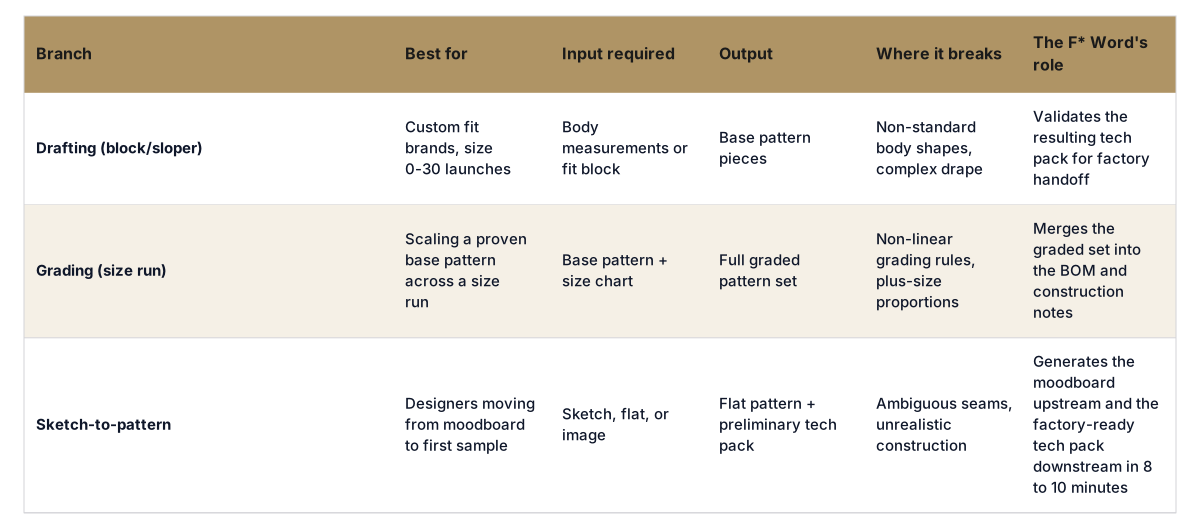
"AI pattern" searches conflate three different jobs. Pick the wrong branch and you buy the wrong tool. Use this table to sort them before you shortlist a vendor.
Fashion designers and pattern makers often face a frustrating bottleneck between initial design and production. A mid-sized fashion brand rolling out 200 styles per season might find itself losing up to three weeks per style as drafts pass back and forth between design and technical teams. This delay eats into seasonal timelines and inflates costs and stifles creativity. AI sewing pattern drafting tools are reshaping this process by providing precision and speed.

What this looks like in practice: Consider a tech designer at a contemporary brand managing 200 SKUs. By implementing AI tools, the designer swiftly translates sketches into digital patterns, reducing the back-and-forth with technical teams. The result is a streamlined process that cuts delays and enhances creative freedom.

Technical designer? Cut sampling time before first fit.
The F* Word generates the tech packs, BOMs and sampling notes your factory actually needs. Plus a brand-aligned moodboard upstream. Free to try.
AI-driven pattern drafting tools are not just about reducing time; they also enhance accuracy. By digitizing patterns, these tools allow for quick adjustments and iterations, ensuring that each draft aligns with the designer's vision and technical constraints. AI systems can analyze and adapt to silhouette data, automatically generating grading and construction details that traditionally required multiple iterations.
What this looks like in practice: For a seasoned pattern maker, AI tools offer the ability to input silhouette data and receive instant grading adjustments. This capability reduces the need for manual recalibrations, ensuring that the final pattern is both accurate and aligned with design intent, all in a fraction of the time previously required.

For creative directors, AI tools offer a way to smoothly incorporate trend analyses into the design process. By evaluating current trends and integrating moodboards, AI systems deliver a cohesive direction that aligns with market demands. In pre-production, these tools generate comprehensive AI tech packs that include spec sheets, BOMs, and detailed construction notes, significantly reducing the margin for error. For product launch, AI tools ensure that SKU readiness is achieved swiftly, supporting production-ready visuals for e-commerce platforms.
What this looks like in practice: A creative director at a leading fashion house uses AI to merge trend data with design ideas, resulting in tech packs that are ready for production in days. This rapid turnaround supports agile product launches, allowing the brand to respond to market trends in real-time.
As of 2026, the integration of AI in pattern drafting has become more sophisticated. AI tools now include predictive analytics that recommend pattern modifications based on historical data, reducing fabric waste and improving fit accuracy. Additionally, real-time collaboration features have been enhanced, allowing global teams to simultaneously work on patterns, which accelerates the design-to-shelf timeline.
Common pitfalls: Despite these advancements, some teams may struggle with the learning curve associated with new AI tools. Ensuring comprehensive training and support is crucial to fully realize the benefits of these technologies.
In quality assurance, AI tools matters in maintaining pattern integrity. By automating the inspection of digital patterns against design specifications, AI can quickly identify inconsistencies and potential errors before production begins. This proactive approach reduces the likelihood of costly post-production fixes.
What this looks like in practice: A QA manager at an upscale fashion label uses AI to cross-verify pattern data against the original design specs. This ensures that all elements, from seam allowances to grading rules, are consistently applied, maintaining design integrity while reducing error rates.
Implementing AI tools in pattern drafting processes can have a significant impact on cost structures. By reducing manual labor and decreasing the number of revisions required, brands can lower operational expenses. AI-driven precision reduces material waste, further trimming costs.
What this looks like in practice: A financial officer at a mid-sized apparel company reports a 20% reduction in labor costs and a 15% drop in material waste after adopting AI drafting tools. These savings are reinvested into the brand's creative initiatives, enhancing overall product new.
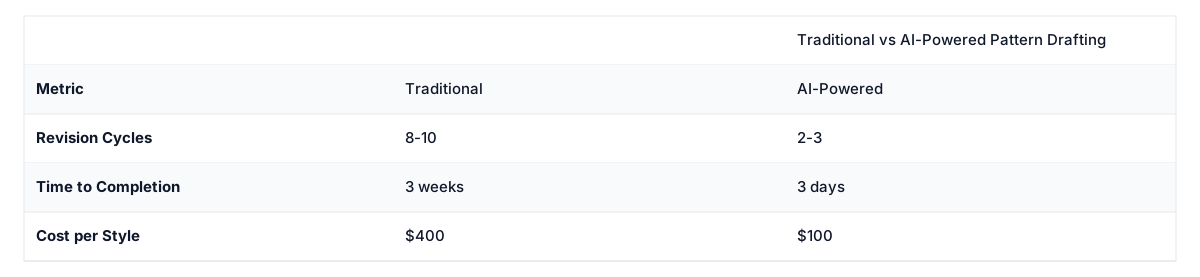
Consider a scenario where a brand employs AI tools for pattern drafting. Traditionally, each style might undergo 10 revision cycles, consuming approximately 3 weeks. By integrating AI, the brand reduces cycles to just 2, completing the process in under 3 days. Inputs: 10 cycles, 3 weeks. Calculation with AI: 2 cycles, 3 days. Result: Dramatic reduction in time and increased efficiency.
Variation example: In an edge case where a pattern requires extensive customization, AI still reduces the revision cycle to 5, completing the process in 1 week, which is a significant improvement over traditional methods.
The Speed-Accuracy Framework emphasizes the balance between rapid drafting and precision. By automating repetitive tasks, AI tools enhance the speed of pattern creation without compromising on detail. Designers can focus on creative input while AI ensures technical accuracy, reducing the need for manual revisions. While this framework significantly improves workflow efficiency, it requires initial setup and training to ensure optimal use.
How to apply: To implement this framework, teams should map out existing workflows and identify repetitive tasks that AI can automate. Setting clear KPIs for speed and accuracy ensures that the benefits of AI are measured and maximized.
Impact metrics: Brands report a 50% reduction in time-to-market and a 30% decrease in material waste, underscoring the efficiency gains from AI implementation.
Failure modes: If improperly set up, AI tools can produce inaccurate patterns, leading to costly production errors. Regular validation and calibration are necessary to maintain accuracy.
In the manufacturing handoff, AI tools are critical in ensuring that design specifications are accurately communicated to production teams. By generating detailed spec sheets and BOMs directly from design files, AI minimizes the risk of miscommunication. This precision expedites the production process and reduces errors that result in costly remakes.
What this looks like in practice: A production manager at a high-volume manufacturer uses AI-generated spec sheets to align factory outputs with design intentions. This ensures that each garment is produced to spec, reducing the need for costly adjustments post-production.
Successfully integrating AI into pattern drafting requires a focus on team adoption and training. It's crucial for all team members, from designers to production managers, to understand the capabilities and limitations of AI tools. Training sessions that focus on both technical skills and practical applications help teams fully use these technologies.
What this looks like in practice: An apparel brand invests in comprehensive training programs, ensuring that every team member can efficiently use AI tools. This investment in skills development translates into faster adoption and higher productivity across the board.
AI tools offer speed, precision, and reduced cost, allowing designers to iterate quickly and maintain accuracy. They streamline the drafting process, minimizing errors and accelerating the transition from design to production. For instance, AI can cut the time spent on revisions by up to 70%, ensuring faster completion and lower labor costs. the precision of AI-driven adjustments enhances the fit quality, reducing the chances of returns and markdowns. AI also enables designers to test multiple iterations in quick succession, ensuring the best fit and design outcome.
AI improves the process by automating repetitive tasks, generating accurate specs, and enabling real-time collaboration. This leads to fewer revision cycles, a faster time to market, and a significant reduction in production errors. By integrating AI, brands can also ensure that patterns are consistently aligned with design intent, as AI tools can automatically adjust for differences in fabric stretch or weight, which might otherwise require manual recalibration. Additionally, AI can simulate fabric behavior, providing designers with a digital preview of how patterns will behave with different fabrics.
While AI tools are powerful, they require initial training and adaptation to brand-specific needs to perform optimally. Additionally, there may be challenges in integrating these tools with existing systems and workflows. Some brands might also face resistance from team members who are used to traditional methods. Overcoming these challenges requires clear communication of the benefits and potential long-term savings AI can offer. ongoing support and updates are necessary to keep the AI tools aligned with evolving industry standards and technologies.
Yes, most AI pattern drafting tools are designed to integrate smoothly with popular design software, enhancing workflow. This compatibility ensures that design teams can smooth incorporate AI into their existing processes. However, ensuring that the integration is properly configured is crucial to avoid data loss or miscommunication between systems. Additionally, regular updates and system checks are vital to maintain smooth integration and functionality.
By reducing revision cycles and time to completion, AI tools lower production costs and minimize material waste. They enable more efficient resource allocation, reducing the overall cost per style and boosting profitability. For example, a brand might see a 20% reduction in fabric waste due to AI's precise pattern adjustments, translating into substantial cost savings over time. These savings can be redirected towards enhancing design quality and expanding product lines, offering competitive advantages in the market.
Explore The F* Word for faster tech pack creation, real-time trend insights, and to cut down on sampling rounds. Save time and reduce returns with AI-driven efficiency.
Related: AI for fashion technical design
Get The F* Word workflow insights in your inbox.