Language
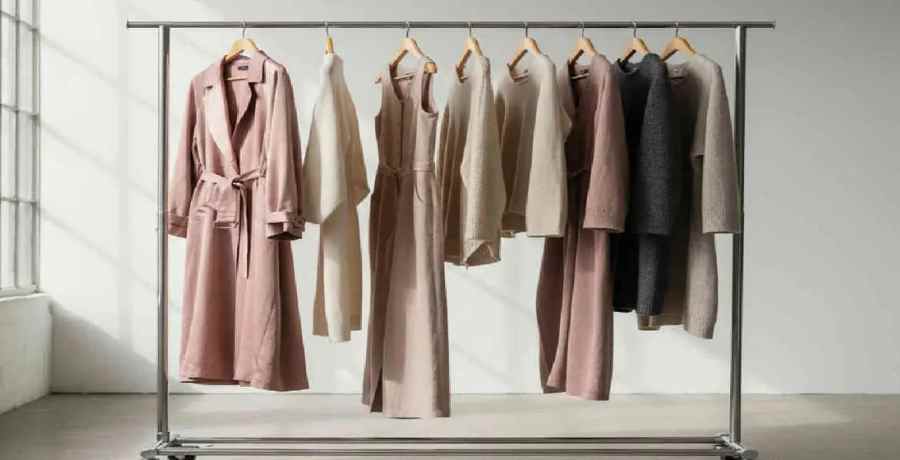
8 to 10 minutes is the window that decides if a two to five person team ships a season on time or spends another month chasing missing stitch specs and tolerance notes. For emerging brands running 20 to 200 SKUs per drop, AI tech pack automation for emerging brands is not a nice-to-have. It is the difference between getting factory acceptance with one sample round and eating the cost of three rounds and a broken delivery date.
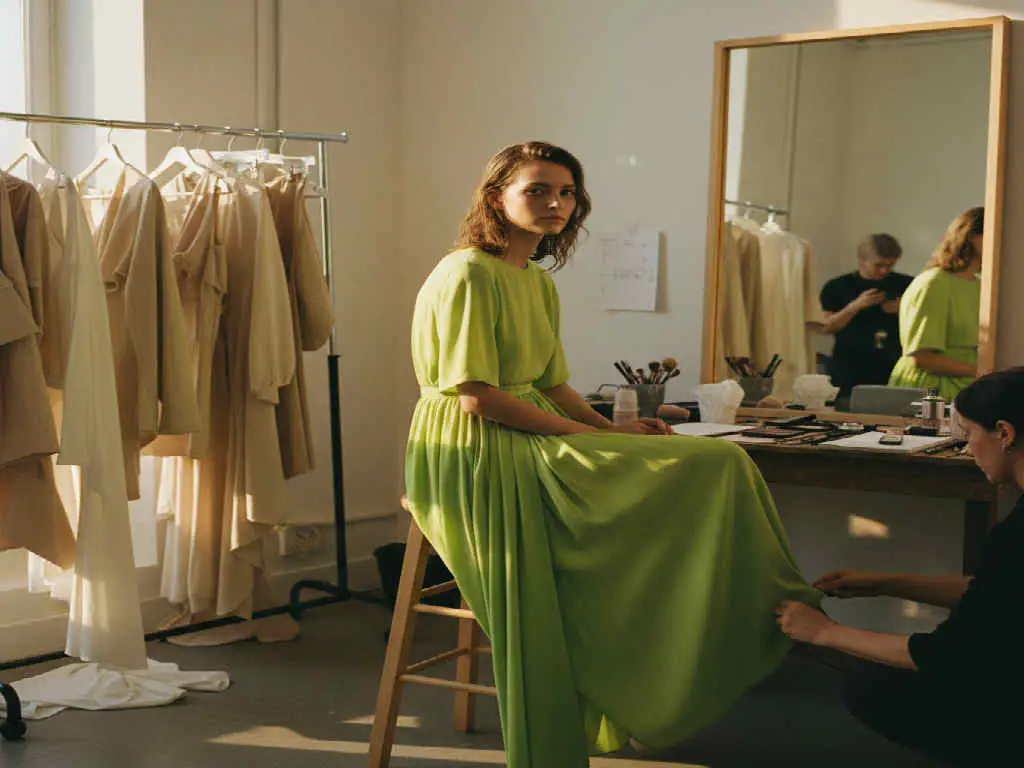
If you have ever watched Illustrator files, Google Sheets, and email chains stretch into a three week loop, you already know the tax. A designer spends 4 to 16 hours (State of AI Fashion 2026) drafting spec pages, BOM, and construction notes. A tech designer, if you have one, adds grading and tolerances. The factory returns a question because a panel measurement conflicts with the callout on the sketch. Another week slips. Multiply that by 40 styles and a small team is underwater.
AI changes the shape of the work. The F* Word generates a factory-ready tech pack in 8 to 10 minutes from a garment design, including a complete BOM and construction notes, and it can generate moodboards as the upstream half of the same workflow. It is not a PLM, not a 3D simulation tool, and not an image generator. It is the validation and orchestration layer that closes the gap between creative direction and a file the factory accepts on first pass. That matters because at 20 to 200 SKUs, speed and unit economics beat feature lists.
If you are evaluating systems, read the short overview of how AI makes tech packs intelligent at thefword.ai/ai-tech-packs-intelligent. If you want to see how pre-production orchestration fits into a small team's day, the workflow walkthrough at thefword.ai/ai-fashion-workflow-software maps the clicks.
Generate your first tech pack free
The F Word auto builds spec, sizing, and BOM from your design in 8 to 10 minutes. No template wrangling, no factory back and forth.
Most small teams build around creative direction and market timing. The weakest link is always the translation step. You have sketches, you have fabric direction, you have references. What you lack is repeatable translation into measurements, tolerances, and construction sequences the factory will not misread. Illustrator plus Sheets was fine for 5 SKUs. At 50 SKUs, every missing bar tack note or mislabeled seam becomes an email loop and a week lost.
The popular framing says you need enterprise PLM once you hit 100 SKUs. That framing is wrong for this tier. PLM is a control tower for large orgs. It is not the fastest way to get a tech pack out of a small team that lacks a dedicated tech designer. What you need is a faster loop from moodboard to factory-ready tech pack, plus enough validation to prevent the obvious errors that produce remake samples. The F* Word exists for that exact loop. It automates the heavy lift and standardizes the outputs so a two to five person team can keep moving.
Here is the cost stack no one shows you in the pitch deck. Each avoidable sample round costs 2 to 4 weeks, $80 to $180 in courier and sample fees, and another slice of your delivery buffer. If your MOQ forces you to place before perfect approval, a spec miss can lock you into 300 to 600 units with a sleeve opening off by 0.5 cm. That is markdown pain you cannot afford.
Freelance and agency tech packs run US$125 to US$1,900 per style, about US$300 on average (State of AI Fashion 2026). Worth it if you have the budget and if the freelancer knows your house constructions. Many brands in this tier do not. So they DIY and run four or more sample rounds, as 60% of brands do (State of AI Fashion 2026). AI tech pack automation for emerging brands pays back by cutting the translation failure. With The F* Word, you move from about four sample rounds to two (State of AI Fashion 2026) because tolerances, BOM items, and construction steps are complete and consistent. The 8 to 10 minute generation time plus instant validation catches the details that factories trip on.
Comparison of common approaches to tech packs for small teams
| Approach | Time per tech pack | Cost per tech pack | Factory acceptance | Best fit SKU range | Verdict for emerging brands |
|---|---|---|---|---|---|
| Illustrator + Sheets DIY | 4 to 16 hours (State of AI Fashion 2026), spread over 2 to 3 weeks | $0 direct; the hidden cost is team time | Inconsistent; 60% of brands run four or more sample rounds (State of AI Fashion 2026) | 1 to 15 SKUs | Works for very small runs, breaks at scale |
| Freelance tech designer | 3 to 7 days turnaround | US$125 to US$1,900 per style, about US$300 on average (State of AI Fashion 2026) | High if the designer knows your construction rules | 5 to 40 SKUs | Strong quality; cost and speed can bottleneck |
| Template libraries (Techpacker, Backbone) | 3 to 6 hours per style | Subscription; see vendor | Moderate; templates still need expert edits | 10 to 60 SKUs | Better than DIY, still manual and error prone |
| Enterprise PLM (Centric, PLM360) | 2 to 4 hours per style after long setup | Annual contract, quoted on request | High once data is clean; heavy admin | 200+ SKUs | Overkill for 20 to 200 SKUs, long payback |
| In-house tech designer (full-time) | 1 to 3 days per style | A full-time salary | High and brand-specific | 60 to 300 SKUs | Excellent quality; fixed cost is hard for small teams |
| The F* Word | 8 to 10 minutes | 65 credits, about $5 to $7; 75 free credits, no card | High; structured outputs cut sample rounds from about four to two (State of AI Fashion 2026) | 20 to 200 SKUs | Best speed to quality for emerging brands |
AI tech pack automation for emerging brands sits between freelancer craft and PLM control. The F* Word is not trying to be your PLM. It is the production prep and validation layer that feeds whatever file storage you use and whatever factory portal your supplier prefers.
Production-ready is not a pretty spec sheet. Factories look for four anchors. First, a complete BOM that maps fabric, trims, labels, thread types, and colorways with supplier references and substitutions. Second, construction sequencing that lists stitch classes, seam types, reinforcements, and where operations start or stop. Third, tolerances that show acceptable variance across critical points of measure and non-critical ones. Fourth, a grading logic that flows from your base size through the run without conflicting with your intended fit standard.
Small teams trip on consistency. A missing tolerance spec on sleeve opening might not matter in a hoodie but will wreck a fitted woven. A difference between a sketch callout and the measurement table will force a clarification round. The F* Word generates BOM and construction notes, checks callouts against tables, and enforces tolerance defaults by garment type. That validation catches the sloppy errors that creep in when three people are rushing across 80 styles. It also outputs in a factory-friendly structure so acceptance is cleaner on first upload.
Upstream, creative direction is part of the same chain. The same system can generate moodboards and route selected looks directly into spec generation. This keeps naming, palette, and fabric intents synced across files. Again, The F* Word is not a PLM or a 3D sim. It orchestrates the workflow so your core creative inputs are translated into a complete pack in minutes with guardrails.
What about brand-specific construction know-how. A veteran tech designer who knows your block library and how your factory operators actually stitch a tricky gusset will still write a tighter spec for that one complex style. That is real craft and still wins on edge cases. The wedge here is speed and cost at the 20 to 200 SKU tier. Let AI handle the 80 percent of styles that are standard so your human expert can spend time on the 20 percent that define the brand.
Here is a simple decision framework and plan for teams not ready for a PLM contract. Goal: compress moodboard to factory-ready tech pack from three weeks to under 15 minutes per style and cut sample rounds from about four to two. Scope: 40 to 80 SKUs across two capsules.
Decision rule at day 90. If your effective cost per tech pack is under $25, your sample rounds are down to about two, and your team has regained 100 to 200 hours, keep going without a PLM. If you cross 200 SKUs and need multi-supplier sourcing control and compliance modules, revisit PLM later. Until then, the orchestration and validation layer covers the real work you face every week.
Two supporting reads if you want more process detail. The pre-production map at thefword.ai/pre-production-workflow-software-fashion lays out the handoffs. The AI design overview at thefword.ai/ai-fashion-design-overview shows how moodboards, spec generation, and approvals stay connected.
Start free at thefword.ai or book a 15-min demo.
For 20 to 200 SKUs, AI covers the bulk work where patterns are standard and construction is known. A skilled tech designer still wins on brand-specific construction and complex garments. The practical setup is to run 70 to 90 percent of styles through AI and have a human expert review or own the edge cases.
Factories accept packs that are clear, complete, and consistent. The F* Word outputs BOM, construction notes, measurements, and tolerances in a structure factories recognize, which typically reduces clarification loops. The State of AI Fashion 2026 report puts the drop at about four sample rounds to two, with faster acceptance because there are fewer contradictions to resolve.
Freelance and agency tech packs run US$125 to US$1,900 per style, about US$300 on average (State of AI Fashion 2026), which adds up fast across 20 to 50 SKUs. On The F* Word a tech pack costs 65 credits, about $5 to $7, and you start with 75 free credits, no card needed. The bigger win is time, since each pack moves from 4 to 16 hours of team effort to 8 to 10 minutes.
Above 200 SKUs, cross-supplier sourcing, compliance, and multi-season line planning create new admin that AI tech pack automation alone does not solve. You may add a PLM to manage approvals, costing, and calendar control. The F* Word still fits as the production prep layer feeding that system with validated files.
Related: How much does a fashion tech pack cost · apparel tech pack automation software · AI tech pack automation for merchandising
Get The F* Word workflow insights in your inbox.