

An automated fashion tech pack generator turns an approved design into a factory-ready specification without manual retyping. The F* Word produces that specification in 8 to 10 minutes, with bill of materials, points of measure, construction notes, grading and tolerance checks, then validates it before the pack reaches a supplier.
A mid-size fashion brand often faces a logistical nightmare when it comes to creating and finalizing tech packs. Each season, managing 200 styles can mean getting bogged down in a three-week cycle of spec revisions between designers and technical designers. The automated fashion tech pack generator, a tool that drastically reduces this timeline by producing comprehensive tech packs in hours rather than weeks.
In a traditional setup, designers hand over sketches to technical designers, who then create detailed spec sheets, BOMs, and construction notes. This manual process is time-consuming and prone to errors, leading to delays and increased costs. A significant friction point occurs during the handoff between design and technical design, where translating creative vision into technical specifications can lose fidelity. Here, an automated solution can make a substantial difference.
What this looks like in practice: A tech designer at a 200-SKU contemporary brand receives sketches from designers and uses the automated tech pack generator to produce the initial tech pack. This tool automatically populates fields such as seam types, stitch counts, and fabric specifications, allowing the tech designer to focus on refining and approving the final details rather than manual data entry.
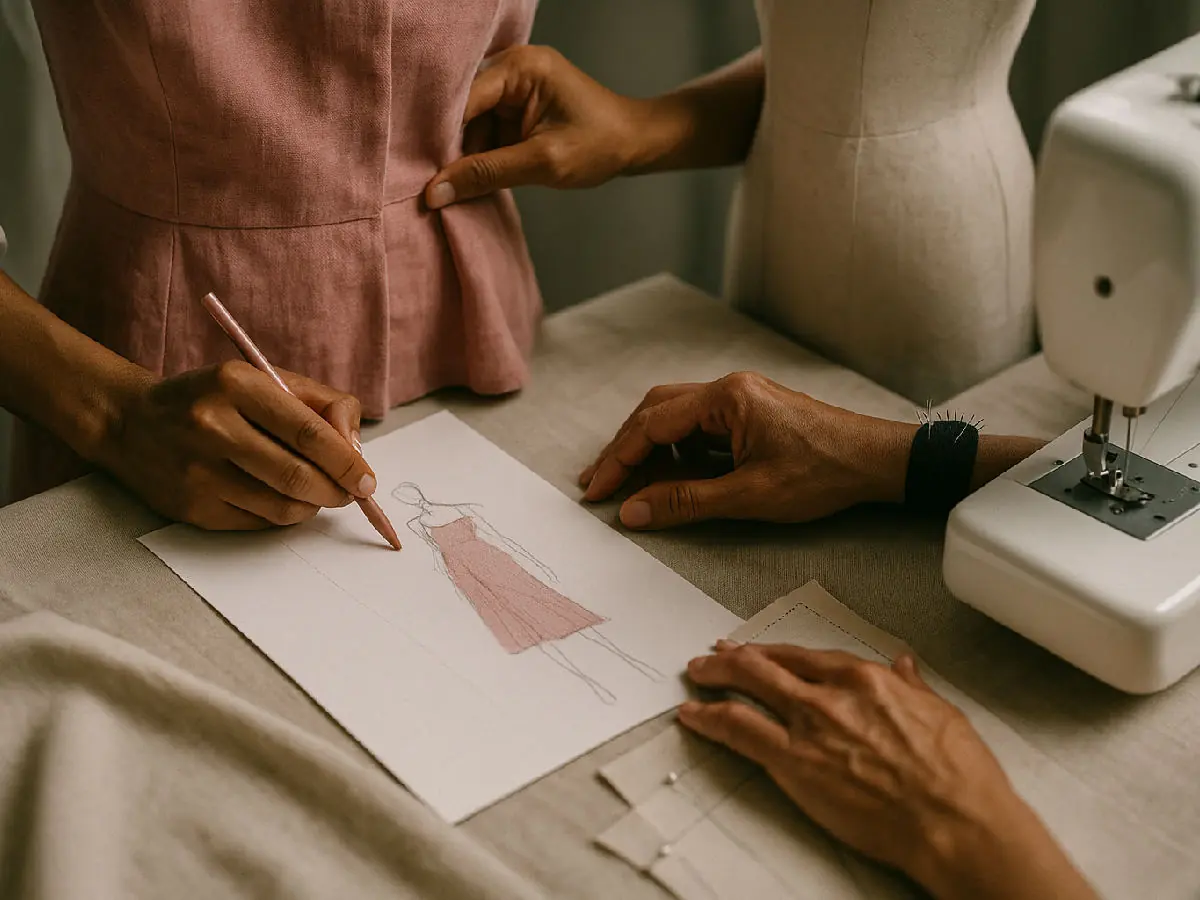
The F* Word's automated tech pack generator streamlines this process by using AI to generate complete tech packs from a designer's initial sketch. The system extracts silhouette data, aligns it with the brand's pre-defined construction library, and outputs a tech pack that includes seam allowances, stitch types, and fabric requirements. This process speeds up the workflow and keeps documentation consistent.
Common pitfalls: While the generator can handle most standard designs, it may falter with unconventional styles requiring unique construction methods. Ensuring that the system's construction library is regularly updated with the latest design innovations helps mitigate this issue.
What this looks like in practice: An assistant designer at a high-fashion label use the AI system to scan their sketches and automatically generate tech packs. The designer then reviews and adjusts the outputs for any unique embellishments, ensuring that creativity and operational efficiency coexist smooth.
In-house designer? Generate a factory-ready tech pack from your brief.
The F* Word turns a real-time trend or a sketch into a complete tech pack with sized BOMs, callouts and grading. Plus a brand-aligned moodboard. Free to try.
Generate your tech pack free →
The Precision Workflow is a structured approach to integrating automated tech pack generators into the fashion design process. By focusing on three key areas: data accuracy, process efficiency, and rapid iteration, this framework helps brands maintain high quality while reducing time-to-market. Data accuracy ensures that AI-generated outputs match the designer's vision precisely. Process efficiency is enhanced by eliminating redundant steps and reducing manual input. Rapid iteration allows designers to quickly adjust and refine designs based on real-time feedback, drastically reducing the number of revision cycles.
How to apply: Implementing this framework begins with training design teams on AI tool capabilities and aligning the tech stack with existing design processes. Regular feedback loops should be established to continuously refine outputs. Expected impact metrics: Brands can expect to cut time-to-market by 50% and see a 30% reduction in production errors.
Tradeoffs: While this approach offers significant efficiency gains, it requires an initial investment in training and tooling. Failure modes: A lack of proper change management can lead to underutilization of the tech pack generator, negating potential benefits. Anti-patterns: Over-reliance on automated outputs without human oversight can dilute creative integrity.
Consider a brand that traditionally spends 20 hours on each tech pack. With an automated system, this time is reduced to just 6 hours. For a collection of 200 styles, this means going from 4,000 hours to 1,200 hours,a reduction of 2,800 hours per season. This massive time-saving allows teams to focus more on creative tasks and less on administrative burdens.
Calculation walk-through: If 200 styles usually require 20 hours each, that totals 4,000 hours (200 x 20). By reducing the time to 6 hours per style, the total becomes 1,200 hours (200 x 6). The savings of 2,800 hours can be reallocated to creative design and marketing strategies.
Sensitivity/Edge-case variation: For styles with complex design elements, the time savings might be slightly less, perhaps reducing from 30 to 12 hours. This still represents a substantial efficiency gain, freeing up valuable resources.
Where the two production paths differ once a design is signed off.
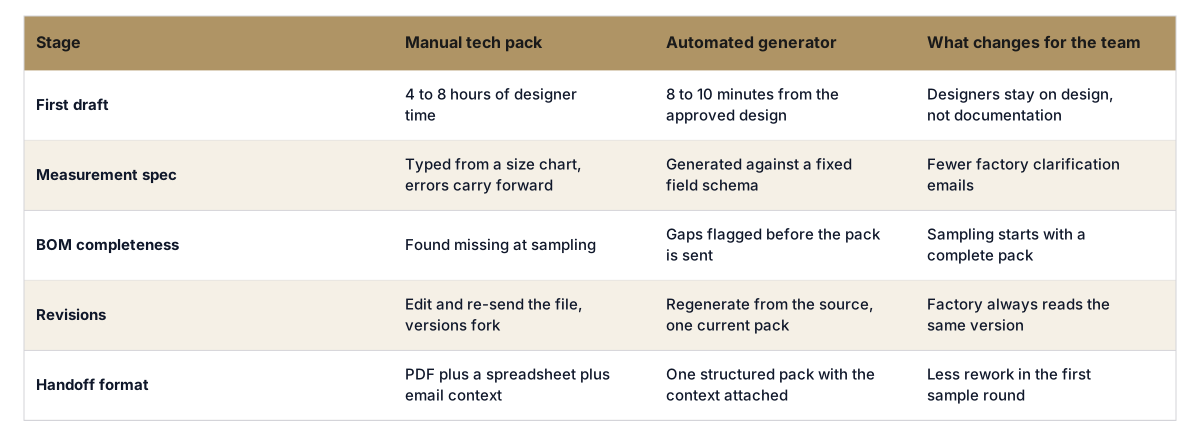

How automated tech pack tools differ:
Incorporating AI tech packs into the creative direction phase involves using trend intake and moodboards efficiently. Designers can input their ideas, and the system aligns these with current trends, suggesting optimal silhouettes and color stories. This integration ensures that creative vision aligns smoothly with technical feasibility, reducing the risk of costly redesigns.
What this looks like in practice: A creative director at a leading fashion house curates a seasonal moodboard using AI-driven insights. These insights guide the design team in creating trend-responsive collections, which are then smoothly transformed into tech packs, ensuring that the final output remains faithful to the initial creative vision.
AI-generated tech packs transition smoothly into pre-production, with all necessary details like spec sheets and BOMs ready for the manufacturing phase. By minimizing errors in design specifications, brands experience fewer production delays. As the product moves to launch, ecommerce assets and SKU readiness are handled effortlessly, supported by tech pack generation and production-ready visuals for merchandising readiness.
What this looks like in practice: A product manager overseeing a new line ensures that each tech pack contains all necessary details for the factory. The AI system updates the BOM and spec sheets in real-time, which the factory uses to commence production without delays. This smooth transition from design to production and then to market launch enables the brand to meet seasonal demand effectively.
Despite its advantages, automated tech pack generators aren't foolproof. They require precise initial data inputs and may struggle with highly creative or unconventional designs that fall outside of standard parameters. It's essential for brands to balance automation with human oversight to ensure quality and creativity are maintained.
Common pitfalls: Relying solely on automated tools without adequate human intervention can lead to generic outputs. Additionally, failing to regularly update the system's database with the latest design trends can result in outdated tech pack suggestions.
The F* Word leads the industry by offering a comprehensive automated tech pack generator that cuts time and cost while expanding creative range. By providing real-time trend insights and minimizing sample rounds, our platform ensures that brands stay ahead in a competitive market. Explore our solution at The F* Word.
One critical phase in the fashion production cycle is the manufacturing handoff, where tech packs are translated into actual garments. Automated tech packs provide precision in specifications, ensuring that manufacturers receive clear, error-free instructions. Quality Assurance (QA) workflows are also enhanced as detailed tech packs allow for thorough checks at various production stages, reducing the risk of defects and reworks.
What this looks like in practice: A QA manager at a global apparel company uses AI-generated tech packs to establish quality checkpoints throughout the production line. This ensures that each garment meets the required standards before it reaches the consumer, thereby reducing the number of returned items and boosting customer satisfaction.
Adopting an automated fashion tech pack generator requires a strong tooling stack that integrates smooth with existing systems. This includes design software, project management tools, and communication platforms. Successful team adoption hinges on comprehensive training and change management strategies to ensure that all team members are comfortable and proficient with the new technology.
What this looks like in practice: A project manager at a fast-fashion retailer leads the integration of an automated tech pack generator into the company's workflow. They organize training sessions for design and production teams, ensuring that everyone is aligned and competent in using the new system. This build a cohesive work environment where technology and creativity thrive together.
Three styles are easy to track by hand. Thirty are not. At that size, the problems stop being about one tech pack and start being about drift between them: one style uses last season's grade rule, another lists a trim the supplier discontinued, a third measures chest at a different point.
A generator helps most when every style starts from the same base. Set these once, then reuse them for the whole line:
With that base in place, The F* Word produces each pack in 8 to 10 minutes, so 30 styles is a few working sessions instead of several weeks of spec writing. The checks run on every pack, which is where most of the time savings show up at line scale: fewer sample rounds caused by one style that did not match the others.
If you are weighing whether to hire help for a bigger line, see freelance tech pack designer vs software and how much a fashion tech pack costs.
It's a tool that uses AI to create detailed tech packs from design sketches, streamlining the design-to-production process. These generators significantly reduce the workload for technical designers by automating repetitive tasks, ensuring that the transition from design to production is more efficient. With this tool, brands can maintain consistency, reduce errors, and improve communication with manufacturers.
They significantly reduce the time spent on manual tasks, allowing designers to focus more on creativity and less on administrative work. With fewer revision cycles, designers can bring more new ideas to the table and explore new design concepts without being bogged down by technical constraints. This freedom enables designers to push boundaries and innovate more confidently.
Yes, by minimizing errors in design specifications, they can lead to a 30% reduction in production delays. This is achieved by ensuring that all technical details are precise and consistent, which reduces misunderstandings and errors during the manufacturing phase. Streamlined communication between designers, technical teams, and manufacturers also contributes to a more efficient production schedule.
They might struggle with non-standard designs and require precise initial data inputs to function optimally. Additionally, while AI can handle many tasks, human creativity and oversight are still needed to ensure that the designs maintain their unique flair and do not become overly standardized. Regular updates to the AI system are crucial to keep pace with evolving fashion trends.
Our platform offers real-time trend insights, reduces sampling rounds, and integrates smoothly into the fashion workflow. By focusing on both efficiency and creativity, The F* Word's solution ensures that brands can adapt quickly to market changes while maintaining a high standard of design quality. This dual focus helps brands maintain a competitive edge in a rapidly changing industry.
The F* Word produces a validated tech pack in 8-10 minutes from an approved garment design, including BOM, construction callouts, and grading notes. Legacy PLM-based workflows still take 2-5 days per style because they require manual entry across multiple systems.
At minimum: BOM completeness, seam and stitch consistency, measurement point coverage against the size chart, colorway trim mapping, and factory-readiness flags. The F* Word runs these automatically before export; most generators output a template and leave validation to the designer.
For brand teams under 50 styles per season, an automated generator like The F* Word replaces the tech pack authoring layer of a PLM entirely. Larger brands keep PLM for costing and vendor management but pipe finished tech packs in through the API instead of authoring them there.
Related: AI Tech Pack Generation · AI Fashion Workflow Software
Generate your first tech pack free
Related: Quick answer: image to tech pack what brands must validate
Get The F* Word workflow insights in your inbox.