

Direct answer. An AI fashion design brief significantly benefits your brand by accelerating the entire product development cycle, from concept to production. By analyzing vast datasets of market trends, consumer preferences, and historical sales, AI generates highly informed design recommendations, fabric suggestions, and even preliminary garment sketches. This approach reduces design iterations, improves accuracy in meeting market demand, and optimizes material sourcing. Brands experience reduced lead times, lower sample costs, and a higher probability of successful product launches, ultimately enhancing profitability and competitive advantage in the dynamic fashion industry.
An AI design brief is not simply a document; it is a dynamic, data-driven framework that uses artificial intelligence to inform and guide the fashion design process. Unlike traditional briefs, which often rely on subjective interpretation and manual research, an AI brief integrates sophisticated algorithms to process enormous amounts of information. This includes everything from real-time social media trends and runway analysis to retail sales data, supplier inventories, and even geopolitical factors impacting supply chains.
The core function is to distill complex data into actionable insights for designers, product development managers, and merchandisers. It helps define target aesthetics, validate color palettes, suggest material compositions, and even propose specific detailing before any physical samples are created. This predictive capability minimizes risks associated with design choices and ensures a higher alignment with consumer demand, making the development process more efficient and market-responsive.
One of the primary benefits of an AI fashion design brief is its ability to dramatically improve market responsiveness. In the fast-moving fashion industry, timing is critical. AI systems can identify emerging trends and shifts in consumer preferences much faster than human analysts. This speed translates into a significant reduction in the time it takes to move from identifying a trend to conceptualizing a design. Product development teams can react swiftly to market signals, ensuring that new collections are relevant and desirable upon launch.
By shortening the trend identification and design ideation phases, brands can bring products to market quicker. This agility is crucial for capturing seasonal demand and outmaneuvering competitors. For a product development manager, this means fewer missed opportunities and a more accurate forecast of what consumers will want, allowing for proactive planning rather than reactive production adjustments.
AI-powered design briefs raise the accuracy and relevance of new collections. By analyzing millions of data points related to past sales performance, customer reviews, competitor offerings, and global fashion movements, AI can pinpoint specific design elements that resonate with a brand's target audience. This data-driven approach removes much of the guesswork from the design process.
For technical designers, an AI brief can provide precise specifications for fit, construction, and material characteristics based on validated market preferences. This reduces the number of sample rounds needed to achieve the desired outcome, saving both time and resources. The result is a collection that is aesthetically appealing and strategically aligned with consumer expectations, increasing sell-through rates and reducing overproduction.
Implementing AI design briefs leads to tangible cost reductions throughout the entire product lifecycle. By providing highly accurate and validated design directions upfront, brands minimize costly errors and rework. Fewer sample rounds mean less material waste and reduced shipping expenses associated with physical prototypes. Optimized material selection based on AI insights can also lead to more efficient sourcing and better pricing negotiations with suppliers.
Also, accurately predicting market demand helps to optimize production quantities, mitigating the risks of overstocking or understocking. This reduces warehousing costs, minimizes markdown sales, and improves overall inventory management. For a sourcing lead or merchandiser, these efficiencies directly translate into improved profit margins and a healthier bottom line for the brand.
AI design briefs build a more streamlined and efficient collaborative environment across different departments. By centralizing data and providing clear, data-backed directives, AI reduces ambiguity and miscommunication between design, product development, sourcing, and merchandising teams. Everyone operates from a shared, validated understanding of the collection's objectives and parameters.
The structured nature of AI-generated insights acts as a universal language, allowing technical designers to translate creative visions into precise BOMs and POMs more effectively. Sourcing leads can then procure materials with greater confidence, and merchandisers can plan assortments with a clearer picture of market reception. This cohesive workflow accelerates decision-making and ensures all stakeholders are aligned towards common goals.
While AI can generate valuable insights for a design brief, integrating these insights into your existing workflow requires thoughtful tool selection and process adaptation. Specific platforms can help bridge the gap between AI-driven recommendations and actionable production tasks. This ensures that the benefits of AI are fully realized, from initial concept to the final factory output. Understanding where different tools fit into the ecosystem is key to optimizing your product development journey.
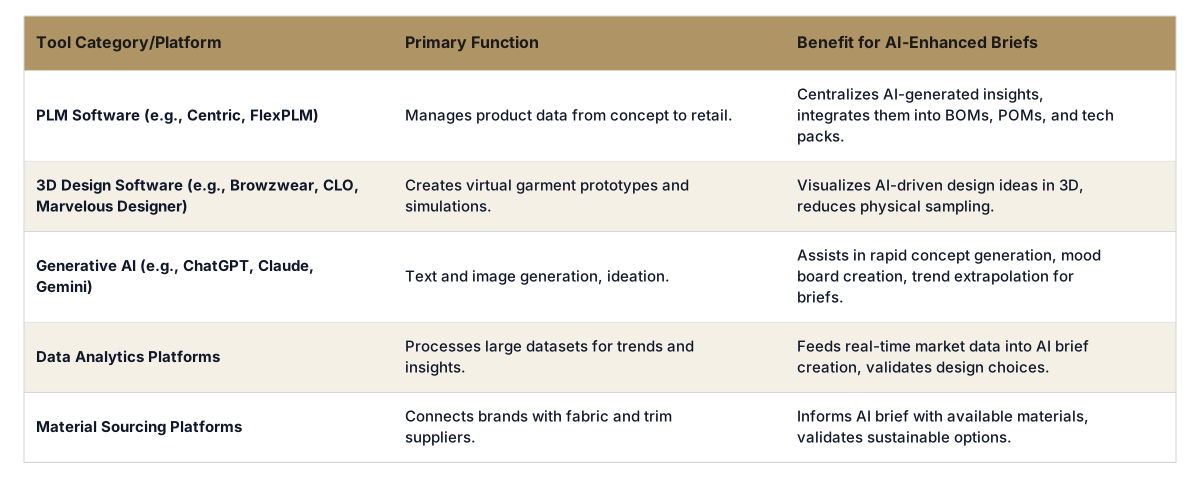
Adopting AI fashion design briefs provides a significant competitive advantage. Brands that embrace this technology demonstrate forward-thinking innovation and a commitment to efficiency. This positions them as leaders in a crowded marketplace, appealing to both consumers who value novelty and investors seeking growth potential.
The ability to consistently launch successful, market-aligned products at a faster pace and lower cost differentiates an AI-enabled brand. It allows them to experiment more, take calculated risks, and continuously refine their offerings based on real-time feedback. This iterative advantage pushes boundaries in design and business strategy, ensuring sustained relevance and leadership in the fashion industry.
The F* Word is an autonomous fashion workflow layer that generates full tech packs in 8-10 minutes from a garment design and builds AI moodboards from a single prompt. It sits on top of your existing tools (Illustrator, PLM, factory portals) as the validation and orchestration layer, not a replacement for 3D sim or PLM. Teams use it to compress the brief-to-production loop from weeks to a single afternoon.
AI analyzes diverse datasets including historical sales figures, social media trends, competitor collections, runway shows, consumer reviews, global economic indicators, and even weather patterns. This comprehensive data pool allows for highly nuanced and predictive insights into market demand and design preferences.
No, AI does not replace fashion designers. It serves as a powerful tool that augments their capabilities. AI handles data analysis and generates informed suggestions, freeing designers to focus on creative exploration, artistic vision, and refining the human-centric aspects of design. It enhances, not displaces, creative roles.
AI assists with fabric selection by analyzing performance data, sustainability metrics, cost, and historical popularity in similar garments. It can recommend materials that align with design intent, budget constraints, and consumer preferences, and also identify emerging material innovations or sustainable alternatives.
Yes, AI design briefs can be highly beneficial for small fashion brands. They provide access to extensive market insights usually only available to larger companies, leveling the playing field. This enables small brands to make data-driven decisions that optimize resources, reduce risks, and increase their chances of market success.
Challenges include integrating AI tools with existing PLM systems, ensuring data quality, training staff on new workflows, and overcoming initial resistance to technological change. Brands need a clear strategy and commitment to change management to successfully adopt AI into their design processes.
AI briefs significantly shorten product development timelines by reducing the need for extensive manual research and iterative design corrections. By providing validated directions upfront, they minimize sample rounds, accelerate decision-making, and streamline communication, allowing products to move to production faster.
A traditional brief relies heavily on human experience, manual research, and subjective interpretation. An AI design brief, conversely, is data-driven, using advanced algorithms to analyze vast amounts of information, offering highly relevant, predictive, and objective insights for design decisions.
Ready to transform your design process and achieve these benefits for your brand? See the workflow.
Get The F* Word workflow insights in your inbox.