

In the changing landscape of fashion design, artificial intelligence (AI) offers unprecedented opportunities for innovation and efficiency. However, the true power of AI in fashion isn't just about generating designs quickly; it's about generating designs that resonate deeply with your brand's core identity. Maintaining a consistent and authentic brand voice across all AI-generated outputs is crucial for building lasting customer relationships and safeguarding your brand's unique DNA. This article explores how fashion brands can effectively integrate their established brand identity into AI design processes, ensuring every AI-powered creation aligns smoothly with their aesthetic and values.
Before AI can effectively generate designs that reflect your brand, you need a precise definition of your brand's digital DNA. This goes beyond a simple mission statement or logo; it encompasses every visual, textual, and experiential element that makes your brand unique. Think of it as a comprehensive style guide for AI, detailing everything from color palettes and fabric preferences to silhouette tendencies and inspirational sources. This foundational work is critical for guiding AI algorithms.
Consider breaking down your brand's identity into tangible, measurable attributes. For instance, if your brand is known for minimalist designs, specifying preferred line weights, negative space usage, and a restricted color spectrum will be vital. Conversely, a brand celebrated for maximalism would detail rich textures, bold patterns, and layered silhouettes. This granular approach transforms subjective aesthetic principles into objective data points that AI can process and learn from.

Once your brand's digital DNA is clearly defined, the next step is to encode these elements as constraints within your AI design tools. This isn't about stifling creativity; it's about focusing AI's immense generative power within parameters that ensure brand alignment. Think of these constraints as guardrails that prevent AI from veering off-brand while still allowing for novel exploration.
Different AI tools offer various methods for incorporating these constraints. Some advanced platforms allow for direct input of stylistic parameters, while others might require training data sets that exclusively feature brand-aligned designs. The goal is to make your brand's identity an inherent part of the AI's learning process, rather than an afterthought.

The combination of these methods often yields the best results. For example, using parametric rules for structure and fit, while using prompt engineering for thematic inspiration and stylistic nuances, can create a powerful overlap that maintains brand integrity while fostering innovation.

Creative director? Go from trend signal to moodboard and tech pack.
The F* Word turns a real-time trend into a brand-aligned moodboard and the factory-readable tech pack that ships it. One workflow, free to try.
Integrating brand identity into AI is not a one-time setup; it's an ongoing, iterative process. Initial AI-generated designs may not always perfectly align with your brand's vision, highlighting the need for continuous feedback and refinement. This involves reviewing AI outputs, identifying discrepancies, and using that information to adjust your AI models or input parameters.
Establish a clear review process. This might involve your design team, brand managers, and even key stakeholders evaluating AI-generated concepts against your brand guidelines. Categorize feedback into actionable insights:
The goal is to teach the AI what "feels right" for your brand through consistent qualitative and quantitative feedback. Over time, the AI will become increasingly adept at producing designs that are innovative and undeniably "yours."
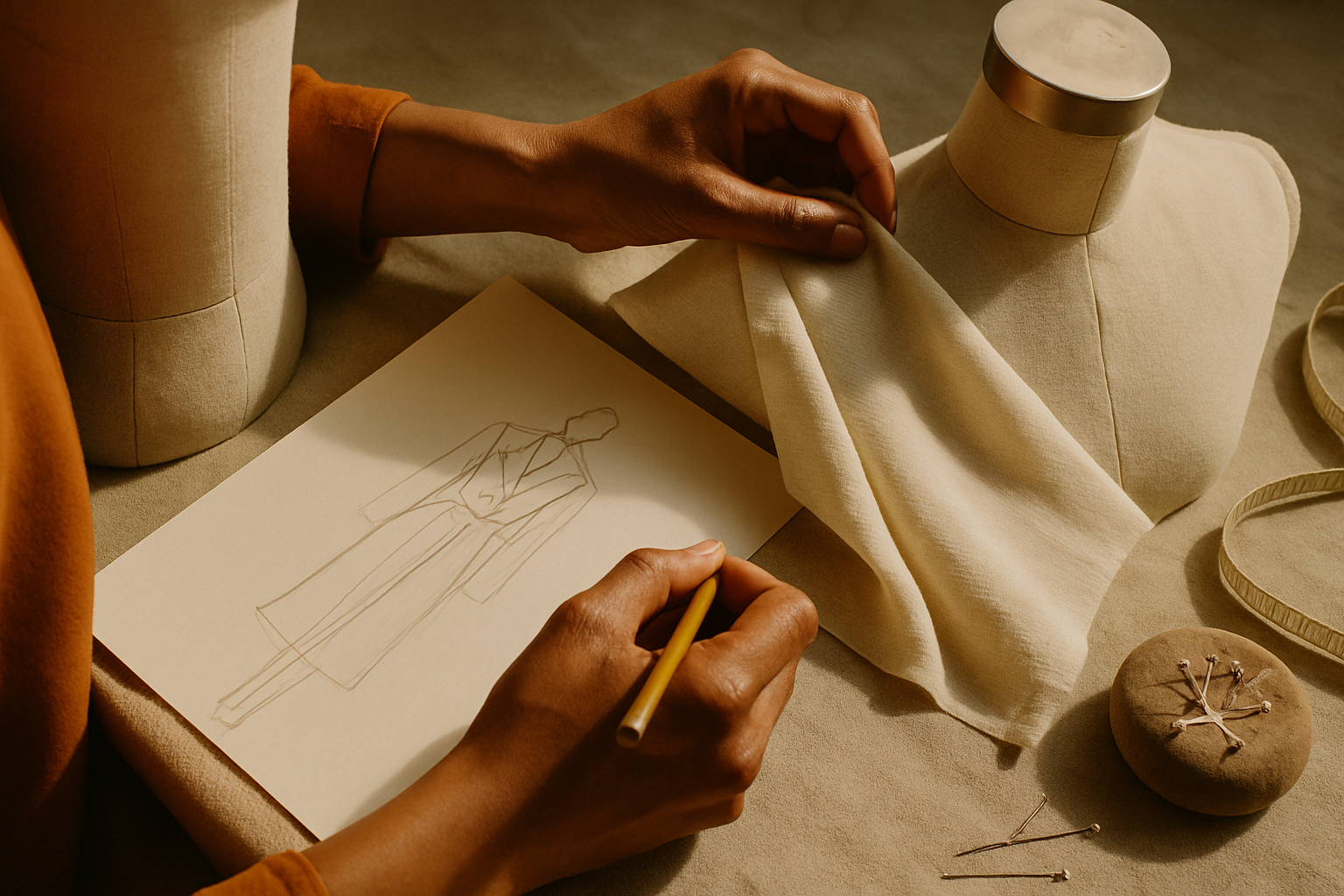
One of the most exciting aspects of using AI in fashion is its potential for innovation. However, this must be carefully balanced with the need for brand consistency. The danger lies in AI generating designs that are novel but ultimately dilute your brand's recognizable aesthetic.
Strategic implementation of AI allows for both. By setting reliable brand constraints, you ensure that the AI operates within an acceptable stylistic universe. Within those boundaries, you can then encourage the AI to explore variations, experiment with novel combinations of existing elements, or even merge influences in unique ways. This approach allows for "constrained creativity," where innovation occurs within a framework that preserves brand integrity.
Consider using AI to:
The key is to view AI not as a replacement for human creativity, but as a powerful co-creator that expands possibilities while rigorously upholding your brand's promises.
Integrating brand identity into AI design requires more than just technical adjustments; it demands a shift in organizational culture. For AI to truly flourish as a tool for brand enhancement, designers, developers, and brand managers must collaborate smoothly. This cross-functional overlap ensures that technical capabilities are always aligned with creative vision and brand strategy.
Training your design team on how to interact with AI tools, formulate effective prompts, and interpret AI outputs is paramount. Likewise, brand teams need to understand the capabilities and limitations of AI to provide realistic and actionable feedback. Establishing clear communication channels and shared objectives will dissolve potential silos and foster an environment where AI is seen as an enabler, not a threat.
Ultimately, a successful AI-integrated design strategy means empowering your human talent with modern tools. Upload brand rules, approved references, fit language, material preferences, and rejected examples before expecting AI outputs to feel like your label. This accelerates the design process and strengthens your brand's position in a competitive market.
While AI primarily deals with visual aesthetics, brand values can be subtly encoded. For instance, if sustainability is a core value, AI models can be trained on datasets of sustainable materials and production methods, or prompts can specify "eco-friendly," "ethical," or "upcycled" attributes in the design brief. AI can also analyze and suggest designs that minimize material waste or utilize specific certifications.
While AI can generate novel visual styles, creating a complete and cohesive brand identity from scratch, including values, target audience, and market positioning, still largely requires human strategic input. AI can assist by generating potential logos, color palettes, and mood boards based on textual descriptions of desired brand attributes, but the overarching strategic framework needs human direction.
This is a critical concern. To mitigate this, ensure your AI model is primarily trained on your brand's proprietary data and public domain content. Avoid feeding it copyrighted designs from competitors. human oversight and a reliable design review process are essential to flag and modify any AI-generated outputs that might inadvertently resemble existing designs too closely or infringe on intellectual property.
Integrating your brand's unique identity into AI design isn't just about efficiency; it's about safeguarding your creative essence in the digital age. By meticulously defining your brand's DNA, encoding those constraints into AI models, fostering iterative feedback, and balancing innovation with consistency, you can harness AI to produce designs that are both modern and unequivocally yours. Try The F* Word free and turn this insight into shipped product.
Once the concept is approved, the next steps move it from board to factory floor.
Related: ai fashion design branding
Get The F* Word workflow insights in your inbox.