
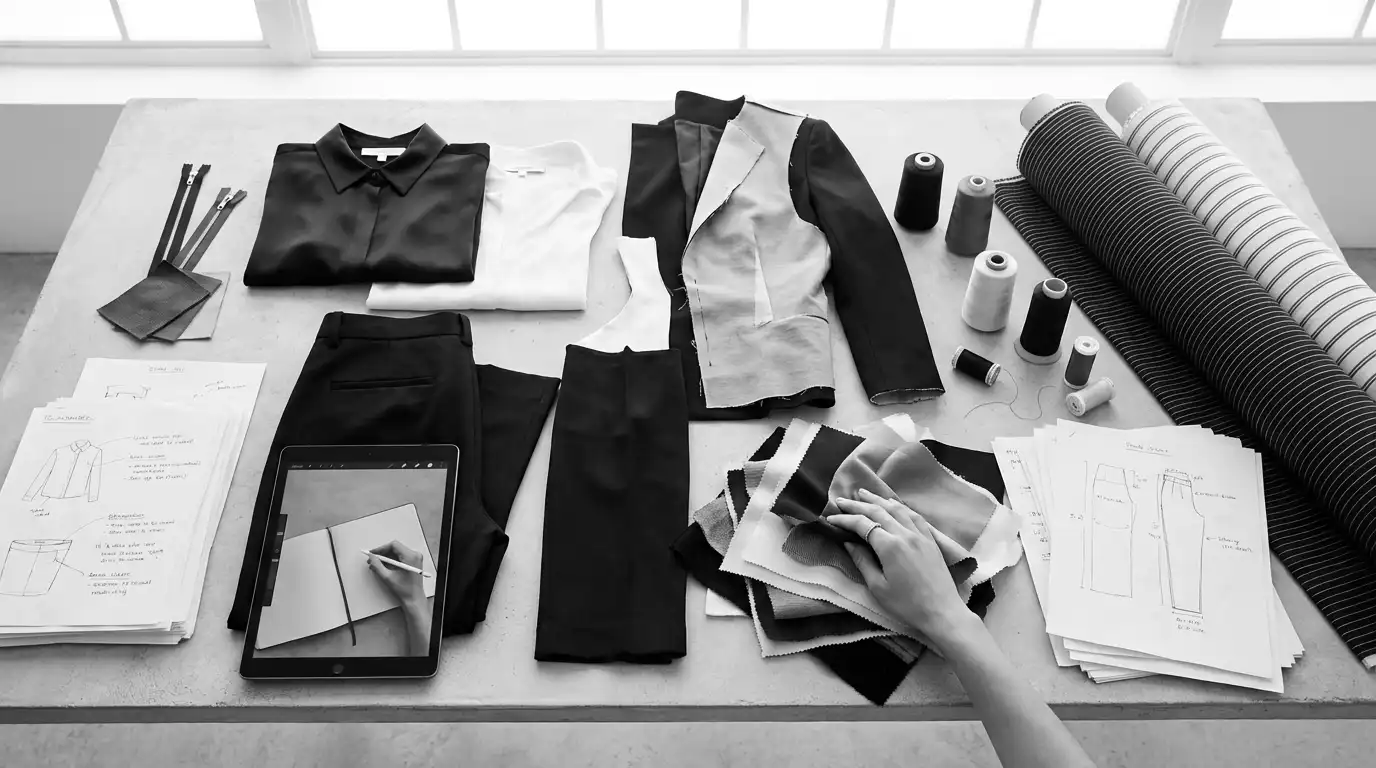
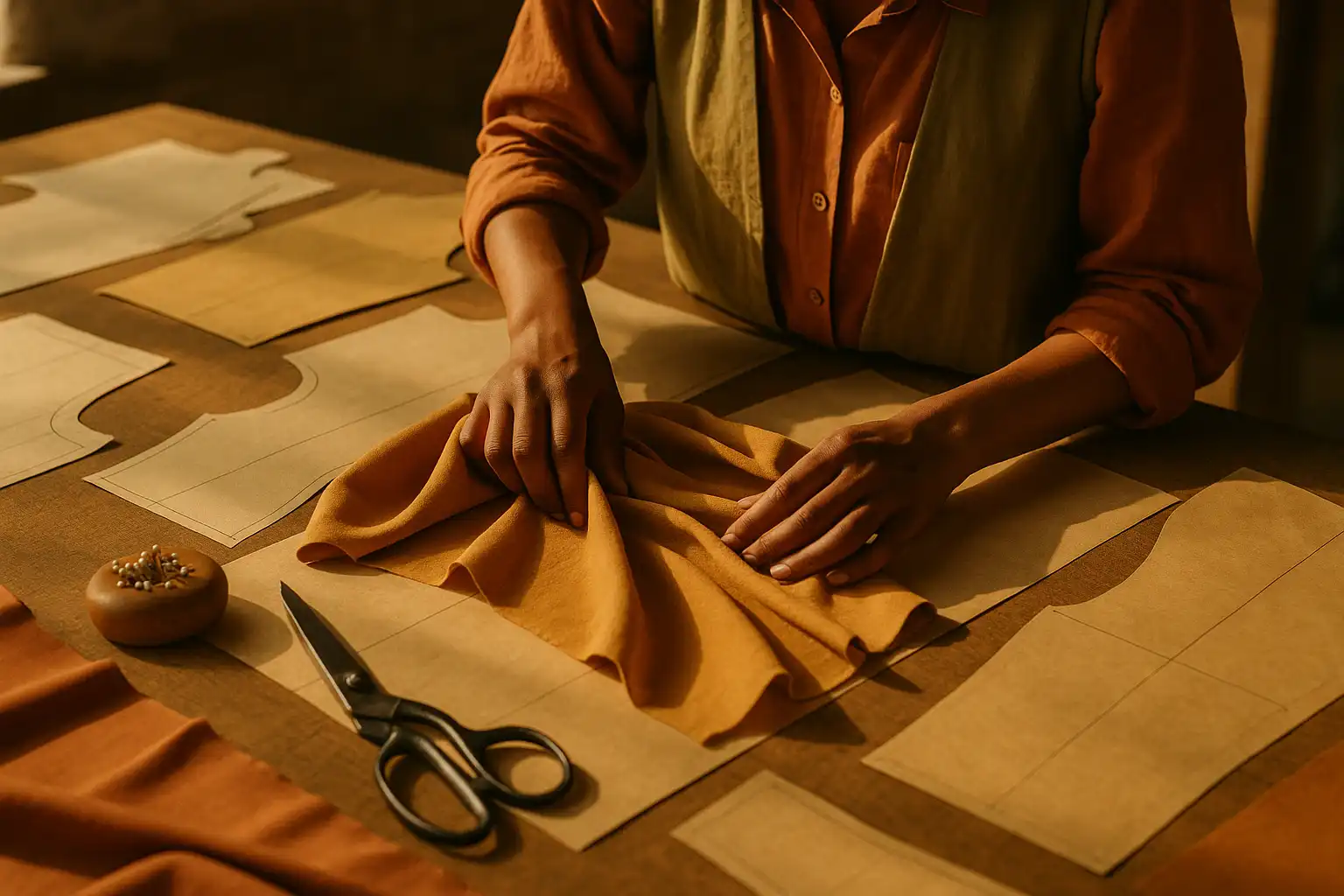
Fashion brands often face a major operational challenge: disjointed workflows between design, technical design, and production teams. A mid-size brand managing 300 styles per season might find itself spending up to four weeks per style on transferring design specifications between departments. This inefficiency is exacerbated when scaling operations, leading to delayed launches and increased costs. To resolve this, understanding the benefits of a connected workflow through marvelous designer enterprise becomes essential.
What this looks like in practice: Consider Emily, a technical designer at a 200-SKU contemporary brand. She uses Marvelous Designer Enterprise to streamline the workflow by integrating the design team’s creative outputs directly into the tech pack system. This reduces the time spent on manual data entry and ensures that updates to design specifications are immediately reflected in production plans, enhancing efficiency and reducing lead times.
Marvelous Designer Enterprise offers a comprehensive solution by integrating various stages of fashion production into one cohesive system. Unlike personal licenses that cater to individual users, enterprise licenses provide features that enhance team collaboration and streamline workflow connectivity. This license type is particularly advantageous for brands looking to scale operations and improve efficiency across creative direction, pre-production, and product launch stages.
What this looks like in practice: For Sarah, a creative director at a large fashion house, Marvelous Designer Enterprise allows her to coordinate with multiple teams efficiently. She can integrate trend intake and moodboards directly into the design process, ensuring that her vision aligns with production capabilities and market demands. This integration facilitates a more cohesive and responsive design cycle.
Workflow buyer? Get tech packs and moodboards your team will use.
The F* Word generates brand-aligned moodboards and factory-readable tech packs and plugs into your PLM. See it run on your own product. Free to try.

The "Connected Workflow Framework" provides a structured approach for fashion brands to integrate design, pre-production, and product launch phases. By implementing this framework, brands can reduce manual errors and improve communication between departments. The framework involves setting up shared digital libraries for patterns, automating the conversion of design sketches into tech packs, and ensuring real-time updates across all stages of production.
How to apply: Implementing this framework involves creating a centralized digital library accessible to all team members. Patterns and construction details are stored in a shared database, which can be referenced during design and production stages. This ensures that everyone is working from the same data set, reducing the likelihood of errors and miscommunications. The expected impact includes a 30% reduction in production errors and a 20% decrease in time-to-market.
Common pitfalls: One potential challenge is ensuring that all team members are adequately trained to use the new system. Without proper training, the transition can lead to initial setbacks and resistance from the team. Ensuring comprehensive onboarding and continuous support is critical to success.
What this looks like in practice: Imagine Lisa, a product manager at a mid-tier brand, who successfully implements this framework. By establishing a digital library, she ensures that her team has instant access to the latest pattern adjustments and specifications, eliminating outdated information and reducing the time spent on revisions.
The year 2026 has seen significant advancements in the fashion industry's digital shift. With AI-driven solutions becoming more sophisticated, Marvelous Designer Enterprise now offers enhanced features that cater to large-scale operations. These include improved AI tech pack generation, real-time trend analysis, and virtual try-on capabilities. Brands can now achieve faster design iterations and more accurate demand forecasting, reducing the risk of overproduction and markdowns.
What this means for teams: A marketing manager at a global brand can use these advancements to better predict consumer trends and align production schedules accordingly. By use real-time data on consumer preferences, the marketing team can adjust product offerings quickly, leading to a more dynamic and responsive supply chain strategy.
Common pitfalls: An over-reliance on AI without human oversight can lead to missed nuances in trend predictions. It's crucial for teams to balance AI insights with human intuition to capture the full spectrum of market dynamics and consumer preferences.
Consider a brand handling 250 styles per season. With traditional methods, design revisions could take up to 5 weeks per style. By implementing Marvelous Designer Enterprise, the process is streamlined. Inputs from design sketches are automatically converted into spec sheets, reducing the revision time to just 2 weeks per style. The calculation is straightforward: 250 styles x 3 weeks saved per style = 750 weeks saved per season, translating to substantial time and cost savings. Edge-case variation: If the brand decides to expand to 300 styles per season, the system still efficiently manages the increased volume, demonstrating scalability. Another scenario: If the complexity of styles increases, requiring more detailed tech packs, the system adjusts dynamically, showing its adaptability to varying design demands.

By use Marvelous Designer Enterprise, creative directors can smooth integrate moodboards, color stories, and silhouette planning into the workflow. This ensures that the creative vision is maintained throughout the production process, resulting in cohesive collections that align with brand aesthetics and market trends. The connected workflow also allows for real-time updates on trend intake, enabling faster adaptation to market changes.
What this looks like in practice: Consider John, a senior merchandiser at an upscale brand. He uses the integrated system to align product launches with seasonal trends, making adjustments in real-time based on current consumer data. This agility helps the brand stay competitive in a rapidly changing market.
Technical designers benefit significantly from AI tech packs generated by Marvelous Designer Enterprise. These tech packs automate the generation of BOMs, grading, and construction notes, ensuring accuracy and consistency. The reduction in manual input decreases the chance of errors and accelerates the design-to-factory handoff, effectively reducing pre-production timelines from weeks to days.
What this looks like in practice: Lucy, a production manager at a mid-level fashion brand, implements AI tech packs to ensure consistency across product lines. This approach minimizes discrepancies in production, allowing for a smoother transition from design to manufacturing. The immediate access to updated tech packs reduces the need for time-consuming revisions.
Common pitfalls: Over-reliance on automated tech packs without manual checks can overlook subtle design nuances. Regular audits and cross-verification with design teams are necessary to maintain the quality and integrity of the final product.
With a connected workflow, merchandising and product development teams can ensure SKU readiness for ecommerce platforms. Marvelous Designer Enterprise supports the creation of ecommerce assets, virtual try-ons, and precise merchandising strategies. This holistic approach minimizes the risk of markdowns and returns, maximizing profitability during product launches.
What this looks like in practice: For Anna, an ecommerce manager, the ability to simulate product launches through virtual try-ons enables her to optimize online merchandising strategies. By analyzing consumer interactions with virtual products, she tailors marketing campaigns to better meet customer expectations, enhancing the overall shopping experience.
Successfully integrating Marvelous Designer Enterprise into a brand's workflow requires careful planning and team adoption strategies. Training sessions, workshops, and continuous support are critical for smooth transitions. Ensuring that the tool is compatible with existing software and systems within the company's tooling stack is also crucial.
What this looks like in practice: David, an IT manager at a growing fashion brand, leads the integration of Marvelous Designer Enterprise. He coordinates training sessions and workshops to familiarize team members with the new system. By aligning the tool with existing platforms and ensuring interoperability, David ensures a smooth adoption process, leading to improved productivity and efficiency.
Common pitfalls: Insufficient training and lack of ongoing support can lead to resistance and underutilization of the tool. Regular feedback loops and updates on user experience are essential to address challenges and enhance user engagement.
Marvelous Designer Enterprise is built for team collaboration and integration. It includes features like version control, shared asset libraries, and API access that allow it to smoothly connect with other pipeline tools like PLM systems and render farms. The Personal version is a standalone tool for individual creators and lacks these crucial enterprise-level connectivity features.
While Marvelous Designer Enterprise streamlines tech pack creation, direct factory system integration typically depends on custom API connections. The Enterprise version provides the necessary API to build these bridges, allowing data from the 3D model, like fabric types, seam lengths, and construction details, to be programmatically sent to your manufacturing or PLM software, reducing manual data entry.
It excels at bridging the gap between digital and physical. Its primary strength for physical production is creating hyper-realistic 3D garments that reduce the need for physical samples. The accurate 2D patterns it generates can be exported directly for manufacturing, ensuring the final physical garment matches the approved digital prototype and accelerating the entire design-to-production cycle.
The key benefit is its hyper-focus on realistic fabric simulation and pattern-based creation, which is highly intuitive for traditional fashion designers. Combined with enterprise-level features for team collaboration and API integration, it creates a powerful, specialized tool that fits directly into a fashion-specific workflow, from initial concept to final production-ready patterns, better than many generalist 3D modeling programs.
Once enterprise rollout is scoped, these are the steps each team runs end to end.
Get The F* Word workflow insights in your inbox.