
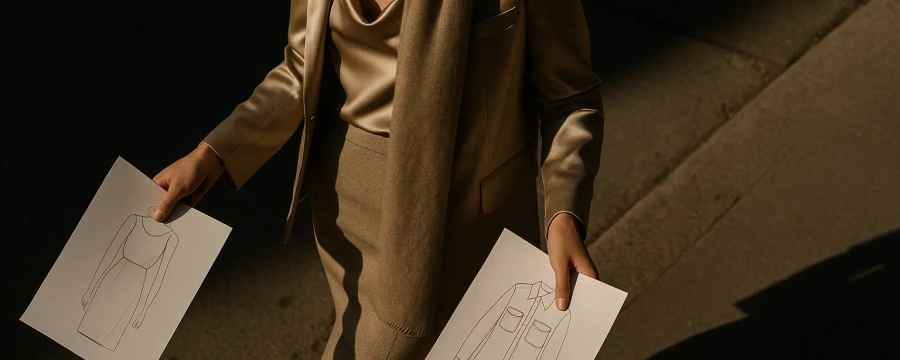
For many fashion brands, translating a designer's hand sketch into a factory-ready tech pack remains a bottleneck. This process typically involves numerous iterations between designers, technical designers, and pattern makers, each step fraught with potential miscommunications and delays. Understanding the full scope of grading, construction notes, and Bill of Materials (BOM) requirements is crucial, yet often overwhelming. With AI, brands can drastically reduce this time-consuming process by automating the conversion of sketches into detailed tech packs.

AI tech packs streamline operations by converting a hand-drawn sketch into a spec-ready document, complete with seam allowances, stitch types, and fabric needs. When a designer uploads a sketch, the system extracts silhouette data, aligns it with the brand's construction library, and generates tech packs that are ready for production handoff. This technological leap reduces the manual workload and minimizes errors, all while maintaining design integrity.
What this looks like in practice: Consider Alex, a tech designer at a 200-SKU contemporary brand. Alex receives a sketch from the design team and uploads it to the AI system. Within minutes, he gets a complete tech pack with accurate stitch and seam details, reducing his workload by 10 hours per style. This allows him to focus on more complex design elements that require human insight.
Technical designer? Cut sampling time before first fit.
The F* Word generates the tech packs, BOMs and sampling notes your factory actually needs. Plus a brand-aligned moodboard upstream. Free to try.
Consider a knit sweater design. The designer submits a sketch, and the system analyzes the knit pattern, yarn type, and gauge. By referencing the pre-set knitting templates, the AI defines the construction details, including rib placements and sleeve lengths. This information populates the tech pack, cutting out the need for back-and-forth with the technical design team.
What this looks like in practice: Emma, a knitwear specialist, uploads a new sweater design. The AI populates the tech pack with yarn metrics, eliminating 5 days of manual data entry and validation. Emma can now focus on refining the garment's aesthetic attributes, ensuring alignment with the season's theme.
In the case of a woven dress, the sketch identifies key elements such as dart placements, hem lengths, and fabric choices. The AI matches these with the brand's database of fabric types and construction techniques, providing a complete BOM and grading information. The generated tech pack outlines each piece of the garment, from lining to outer fabric, ensuring clarity for the production team.
What this looks like in practice: For Mia, a pattern maker, the AI system transforms her sketches into detailed tech packs including precise seam placements. This shift reduces her revision cycles from 10 to 2, freeing her time to experiment with new patterns and fabric drapes.
An accessory like a handbag requires detailed attention to hardware and material specifications. The designer's sketch highlights these features, which the AI uses to reference existing hardware options and material inventories. The tech pack then includes precise measurements, material lists, and construction techniques, ready for supplier review.
What this looks like in practice: Jake, an accessory designer, uses AI to generate tech packs that detail every component of a handbag. This clarity reduces supplier negotiation time by 50%, allowing for quicker prototyping and market entry.

Consider a mid-size brand managing 200 styles per season. Traditionally, each style might require 3 weeks of spec revisions involving multiple departments. With AI tech packs, this cycle can be condensed to under 4 hours per style. For a 200-style season, this means reducing 600 weeks of cumulative work to just 33.3 days, allowing teams to focus on creative tasks rather than repetitive technical adjustments.
Calculation Walk-through: For each style, a 3-week process equals 15 business days. For 200 styles, that's 3,000 business days. AI reduces this to 4 hours per style, or 100 hours total, equating to 12.5 business days. This substantial reduction highlights the efficiency gains AI introduces. As a sensitivity check, consider if a style required only half the standard revision time. Even then, AI would still cut the process from 1,500 days to 12.5 days.
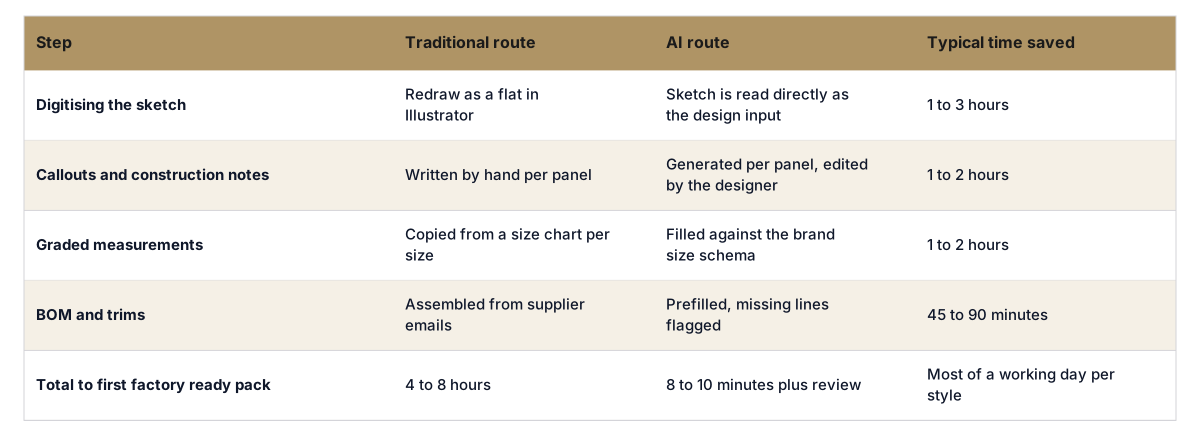
The same hand sketch taken to a factory ready pack by each route.

The "Sketch-to-Pack Framework" guides brands in optimizing their workflow with AI. It focuses on three pillars: data integration, process automation, and continuous improvement. Data integration ensures all design and production databases communicate smoothly. Process automation reduces manual input, focusing on accuracy and efficiency. Continuous improvement involves regular system updates and feedback loops to adapt to new trends and materials.
How to Apply: Brands should begin by auditing existing workflows to identify bottlenecks. Implement AI tools gradually, starting with less complex styles to refine the process. Monitor the impact using key metrics such as cycle time reduction and error rate improvements.
Tradeoffs and Failure Modes: While this framework significantly enhances efficiency, it requires upfront investment in technology and training. A common pitfall is underestimating the learning curve for teams adapting to new tools, which can initially slow down workflow. Ensuring adequate training and support is crucial to overcoming this challenge. Additionally, over-reliance on automated systems without human oversight can lead to errors in tech pack generation.
Once a tech pack is finalized, the handoff to manufacturing is a critical step. AI tech packs provide clear, standard instructions that manufacturers can easily follow, reducing the chances of misinterpretation. This clarity is crucial in maintaining quality throughout the production process. However, quality assurance workflows still require human oversight to catch any discrepancies the AI might miss.
What this looks like in practice: For a brand like Luxe Apparel, the manufacturing handoff involves a dedicated QA team that reviews AI-generated tech packs. This team ensures that the specifications align with the brand's quality standards, checking for any potential errors before production. By combining AI precision with human expertise, Luxe Apparel minimizes production errors and reduces waste.
AI tech packs have a significant impact on product costing. By reducing revision cycles and time to market, brands can decrease the overall cost of product development. However, the initial investment in AI tools and training is a consideration. Team adoption is crucial, as human expertise complements AI capabilities. Ensuring that all team members understand how to interact with AI tools can maximize the benefits.
What this looks like in practice: At TrendSetters Inc., the introduction of AI tech packs led to a 30% reduction in production costs within the first year. The key to this success was the comprehensive training program provided to all team members, from designers to production managers. This training ensured that everyone could effectively use the new tools, leading to faster adoption and improved efficiency.
Adopting AI in the fashion workflow is with some challenges. One significant pitfall is the reliance on outdated data, which can lead to suboptimal tech pack generation. Brands must regularly update their databases to reflect current trends and material availability. Another common issue is over-reliance on automated systems without adequate human oversight, which can result in errors if the AI misinterprets a design element.
AI systems can be trained to recognize unique elements by integrating design libraries that contain historical data and trend analyses. However, overly complex designs may still require manual adjustments. For instance, a bespoke evening gown might need specific hand-finishing details that AI cannot fully automate. Designers should be prepared to intervene where AI capabilities fall short. In these cases, combining AI insights with designer expertise ensures that all unique elements are accurately captured.
Although AI minimizes errors, it's vital to maintain quality checks. Technical designers should review AI outputs to ensure designs align with brand standards before production. If discrepancies are found, the tech pack can be manually adjusted. Regular audits of AI accuracy help build trust in the system while ensuring continuous improvement. This process includes analyzing error patterns and updating AI training models to prevent future issues.
AI tech packs can help smaller brands by reducing overhead costs and freeing up resources for creative processes. However, initial setup costs can be a challenge for smaller budgets. use cloud-based AI solutions can mitigate this by offering scalable pricing models that match a brand's specific needs, allowing smaller brands to gradually integrate AI without significant upfront expenses. Additionally, the efficiency gained through reduced revision cycles can lead to faster market entry, which is crucial for smaller brands competing in a fast-paced industry.
Ready to shift your sketch-to-tech pack process? Visit The F* Word for faster tech packs, fewer sampling rounds, and real-time trend integration, minimizing markdowns and returns.
Related: AI tech pack generation hub · Automated fashion tech pack generator · Technical sketch vs tech pack
Get The F* Word workflow insights in your inbox.