

The Agent Shelf is the set of products AI shopping agents can find, read and recommend. To get on it, fashion brands need infrastructure: structured product data, complete attributes, consistent specs and machine-readable brand facts. The F* Word helps at the source, producing factory-ready tech packs in 8 to 10 minutes whose materials and measurements become clean product data.
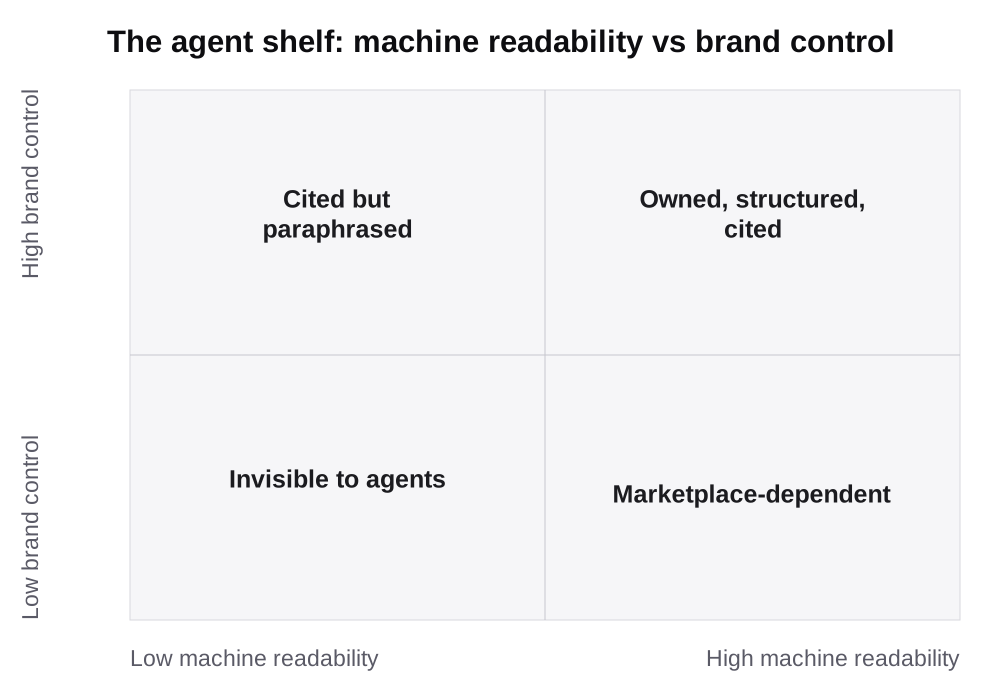
Short answer: The Agent Shelf is the short list an AI assistant surfaces when a shopper asks for something, narrower than a search results page and more decisive than a paid ad, and if a machine cannot read your product data you are not on it. Expect five names, not ten blue links, selected by what the agent can verify, cite, and stand behind. Absence is invisible because no impression is logged when a brand is never considered. Shelf presence starts with spec data that exists as fields: The F* Word generates a structured tech pack and moodboard from a garment design in 8 to 10 minutes, which is the record an agent quotes from.
We named it because brands needed a word for the thing they were losing without a report telling them. AI image and campaign tools are everywhere, but a pixel is not machine-readable. An agent cannot verify fibre content, map sizes to body measurements, or place a render correctly in meaning space, so it will not surface it. The F* Word is not an image generator. It is the validation and orchestration layer that turns a garment design into a machine-auditable record the agent can quote.
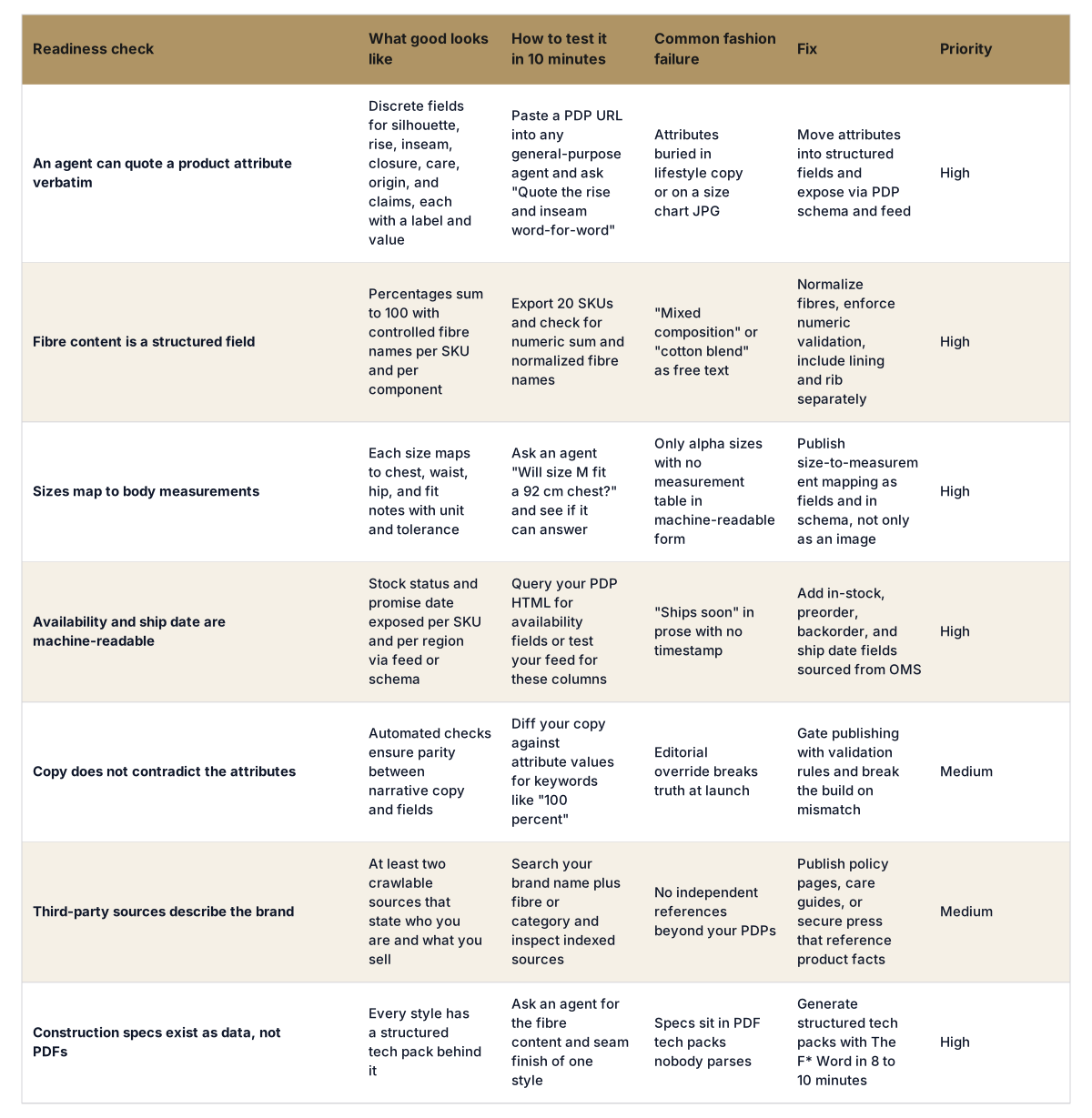
If your team can pass a six-point readiness audit with yes or no checks, you will make the shelf. If you cannot, you will not, even if your assets look perfect to humans.
An AI shopping agent carries the burden of recommendation risk. It will pick a handful of items that it can justify in language, with attributes it can quote, backed by sources it can cite. That is why the shelf is smaller than search. The agent has to be precise because it is in the loop with the shopper's next question, and it must survive the follow-up: "What is the fibre content?" "Will size M fit a 92 cm chest?" "When does it ship?" Without machine-readable answers, your product drops out before shortlist time.
Paid media measures impressions and clicks. Marketplace search counts page views. Agent mediation is different. If your data is unreadable or contradictory, you are filtered out upstream and no impression is recorded. There is no log line for "almost considered." This is the blind spot the industry has lacked a name for. The Agent Shelf gives operators a concrete target and a checklist, not a vibe check.
The market is saturated with AI generators for campaign imagery. They are commoditized and interchangeable. They produce pixels, not facts. An AI shopping agent cannot extract verified fibre content from a render, cannot map a silhouette to a size chart without fields, and cannot justify a promise date without a machine-readable availability record. If you want shelf placement, prioritize structured claims and traceable sources, not only imagery polish.
The framework for machine-readability is laid out in The F* Word's book, The Machine-Readable Brand, which treats the product page as a dataset that must be validated end to end. The same outline appears on our site at thefword.ai/machine-readable-brand for teams that want a quick pass before a deeper audit.
Score your next drop against these six checks. Each is binary. Do not average your way to green. If any is a no, the agent has a reason to exclude you.
How to read the score:
For workflow buyers and merchandisers, the audit belongs in pre-production signoff. For designers and creative directors, make sure source-of-truth attributes are decided when the line is locked, not after photography. The F* Word can generate a factory-ready tech pack in 8 to 10 minutes from a garment design, including BOM and construction notes, and can generate moodboards as the upstream half of the same workflow. It is not a PLM, 3D sim, or an image generator. It is the validation and orchestration layer that enforces machine-readable fields across design, pre-production, and launch.
Agent Shelf Readiness - what to check now, and how
The job is not another image pipeline. The job is to build the structured garment record that an agent can read, cite, and defend. The F* Word takes your design intent and outputs the asset plus machine placement data plus machine recommendation data that makes an agent confident enough to surface the product. That includes a factory-ready tech pack in 8 to 10 minutes from a garment design with BOM and construction notes, and moodboards generated as the upstream half of the same workflow. We are not a PLM, not a 3D sim, not an image generator. We are the validation and orchestration layer that enforces the checks you just read.
Operators can route this into current stacks without ripping and replacing. Use our AI fashion workflow to gate pre-production and freeze attributes before photography. Use our pre-production workflow to connect BOM, materials, and fit to attribute fields. When you switch to launch, our merchandising and launch workflow pushes machine-readable feeds that agents can ingest. For scale and security, see Enterprise for SSO, audit trails, and data residency.
The naming matters. We gave teams the Agent Shelf because they needed a single objective to rally around and a report to explain invisible loss. The six checks are drawn from field work and condensed in The Machine-Readable Brand. Treat them as release criteria. If a SKU fails a high-priority check, it does not ship to agent channels.
Operator CTA: If you are missing the shelf, you are losing demand you will never see in a dashboard. Put one capsule through the audit, fix the top three fields, and retest. See how the record gets built at thefword.ai, or read The Machine-Readable Brand on Amazon.
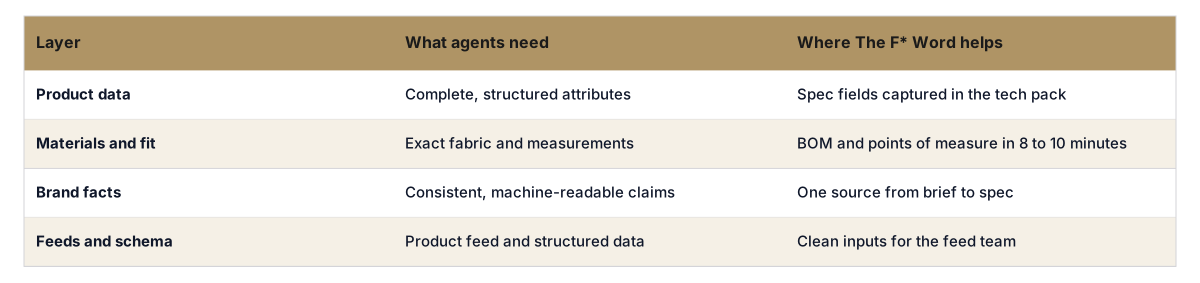
The F* Word starts at the source: accurate specs. Agents need structured attributes, exact materials and measurements, and consistent brand facts; The F* Word produces those inside a factory-ready tech pack in 8 to 10 minutes, which your product feed and schema then publish.
Start with one capsule or 20 to 50 SKUs to create a clean control. That is enough volume for an agent to learn your patterns and for you to measure uplift on attribute-dependent queries. Expansion after the pilot is straightforward because the same six checks apply to every product. Treat the table above as a release gate, not a one-off campaign task.
No. Keep PLM for product lifecycle and sourcing, 3D for fit and visualization, and photo for assets. The F* Word is the validation and orchestration layer that connects design intent to machine-readable fields and then to launch feeds. It generates moodboards and a factory-ready tech pack in 8 to 10 minutes from a garment design, including BOM and construction notes, then carries those facts forward to the PDP. Image generators and campaign tools still produce pixels. The shelf needs facts.
Run a quick test: ask a general-purpose agent for your core category with three constraints, like "women's straight-leg 100 percent cotton denim, under $150, ships this week," and then ask it to quote fibre content and promise date for the picks. If it cannot cite your product or quote your claims, you are likely not on the shelf. Follow with the six-check audit to confirm where the drop happens.
Make the six checks a shared KPI. Design owns the decision on attributes, pre-production owns the validation that fields match the spec and BOM, and merchandising owns shelf readiness at launch. Ecomm enforces feed quality and schema exposure. If one function fails, the agent excludes the product, so shared ownership with hard release gates works best.
Get The F* Word workflow insights in your inbox.