Language
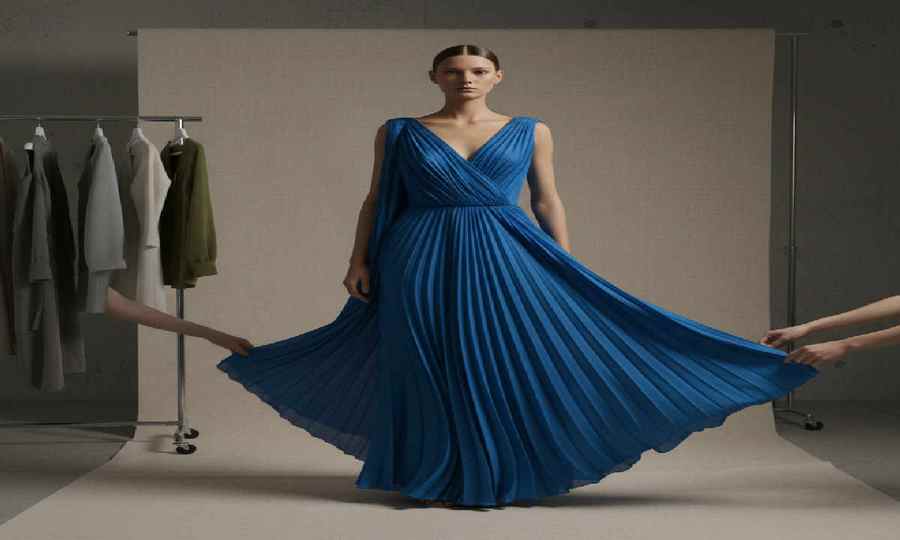
Virtual model clothing means garments built and fit as digital clothing on 3D human avatars so design, fit, and merch teams can review before any sample is cut. The F* Word covers the next mile: it turns those virtual looks, sketches, or photos into a factory-ready tech pack draft in 8 to 10 minutes, validates specs and BOM, and produces on-model and launch visuals tied to the same spec.
Teams use virtual model clothing to test drape, fit, and motion on size-accurate avatars, then pick trims and colorways with fewer physical rounds. That upstream work pays off only when it flows into a clean spec that a factory can make. The F* Word sits at that handoff and keeps design intent intact while you move to approvals and launch.
Virtual model clothing takes your pattern or block, simulates fabric physics, and fits the result on a 3D avatar. A denim team can swap washes, tweak yokes, and see pocket pull before cutting a single toile. A knitwear team can preview rib density and neck recovery in motion to catch stress points early.
Use cases span design, technical design, and merchandising. Designers assess silhouette and proportion, then hand clips and stills to merch for color reads in lookdowns. Technical designers check POMs against graded size sets and flag problem seams. Merchandisers build on-model boards for a faster line review. This upstream accuracy matters because, per WP04 Real Results From AI, about 38% of shoppers frequently return apparel for poor fit, 91% report inconsistent sizing, and about 44% of returns trace to fit. Better fit calls in 3D reduce guesswork that feeds those returns.
Virtual model clothing also helps you plan sell-in and launch content. You can lock styling and pose at the same time you lock the spec. That creates one source for design truth and sell-in visuals, which cuts back-and-forth later.
Physical sampling drives time and spend. The F* Word's State of AI Fashion 2026 reports that 60% of teams run four or more sample rounds per style, and a single round costs $200 to $1,500 (State of AI Fashion 2026). Adopters move from four sample rounds to two, which cuts lead time and lowers risk on trims and fabric commitments (State of AI Fashion 2026). Reducing two rounds on a style also avoids two rounds of freight and fit room time.
Spec creation is another bottleneck. The same report shows 75% of practitioners spend more than an hour per tech pack by hand and 45% spend more than four hours (State of AI Fashion 2026). An autonomous first draft completes in 8 to 10 minutes, then full reviewed-and-released tech packs take 45 to 90 minutes end to end against a 4 to 16 hour manual baseline, a 24x to 96x speed range (State of AI Fashion 2026). That velocity lets you run more viable options through fit and line review in the same calendar window.
Handoffs are the hidden tax. Teams run an average of nine separate applications per collection (State of AI Fashion 2026). As The Machine-Readable Brand notes, "Artifact liquidity is the degree to which such an object can move between people, systems, and partners without getting scrambled, outdated, stripped of context, or separated from its approvals". Better liquidity across the stack protects your 3D work as it turns into a make-ready document.
Virtual model clothing sits in a stack with clear jobs. 3D garment simulation tools like CLO 3D, Browzwear VStitcher, Style3D, and Marvelous Designer create and simulate digital garments. PLM or ERP systems such as Centric Software, Lectra Kubix Link, Infor, Backbone PLM, OnBrand PLM, and ApparelMagic track product data. AI image tools like The New Black, NewArc.ai, Resleeve, Refabric, Midjourney, and FashionISTA help with concepts. Model and photo tools like Botika, Lalaland.ai, Veesual, Claid.ai, Modelia, ZMO.ai, Vue.ai, and Flair.ai support ecommerce imagery. The F* Word turns designs into factory-ready specs, runs validation checks, and outputs on-model and campaign visuals tied to the same spec.
Handoff defines success. As The Machine-Readable Brand states, "the tech pack is a living record: versioned, approved, linked to its BOM and size chart. The PDF export freezes it and severs every link". The F* Word reduces that break with validation before samples are cut and with outputs that stay tied to the same spec.
How virtual model clothing tools map to the work and where factory readiness comes in
| Primary job | What it creates | Validation and factory readiness | Typical handoff to | |
|---|---|---|---|---|
| CLO 3D, Browzwear, Style3D, Marvelous Designer | 3D garment simulation and digital sampling | Avatars, garments, drape sims, stills, turntables | No spec validation; exports images or meshes | Tech pack, PLM, or The F* Word |
| Centric, Lectra Kubix Link, Infor, Backbone, OnBrand, ApparelMagic | PLM or ERP system of record | Product data, BOM, milestones, supplier records | Records data; validation depends on process rules | Factories, sourcing partners |
| NewArc.ai, Resleeve, Refabric, Midjourney, FashionISTA | AI concept or image generation | Mood and style images | Not a spec; no tolerances or POM checks | 3D tools, The F* Word, or design decks |
| Botika, Lalaland.ai, Veesual, Claid.ai, Modelia, ZMO.ai, Vue.ai, Flair.ai | AI model and product photography | Ecommerce-ready imagery | Not a spec; no factory checks | PIM, ecommerce CMS, or DAM |
| FASHN.ai | Virtual try-on and image API | On-body try-on visuals | Not a spec; no BOM or tolerance rules | Merch decks, product pages |
| Adobe Illustrator, Canva, Figma | Flats, layouts, lookbooks | Vector flats, decks | No automated spec validation | Tech pack or PLM |
| Google Drive, Notion, Miro, Slack | File share and team collaboration | Comments, links, screenshots | Context loss risk at export or copy | Factories via email or portal |
| The F* Word | Factory-ready spec and launch pipeline | Tech pack draft in 8 to 10 minutes, moodboards, on-model and photoshoot launch visuals | Spec validation, tolerances and BOM checks before samples are cut | Factories, PLM, merchandising and launch |
The F* Word does not simulate 3D and it is not a PLM or a general image generator. It turns your design inputs into a factory-ready tech pack draft in 8 to 10 minutes, then checks specs, tolerances, and BOM before you spend on samples. It also creates moodboards as the upstream half of the same workflow and on-model and photoshoot launch visuals that stay tied to the spec shown on thefword.ai.
This closes the gap between 3D and the factory. Teams often share frozen PDFs or screenshots that strip context. The Machine-Readable Brand calls the hidden penalty the coordination tax. The F* Word reduces that tax by keeping design, spec, validation, and launch outputs linked.
For merchandising and ecommerce teams, The F* Word also helps turn virtual garments into clear launch assets that match the spec. See AI-Powered Fashion Product Launch at thefword.ai and AI Ghost Mannequin for Ecommerce Merchandising Teams at thefword.ai. That tie-back to the spec matters when you plan buy depths in a world where 10 to 40% of production does not sell at full price, out of 80 to 150 billion garments a year (WP01 Fashion's Digital Crisis).
Ready to link your virtual looks to factory-ready specs and launch content that holds up in approvals and on-site? Start free at thefword.ai or book a demo.
It is clothing built as a digital garment and worn by a 3D avatar so teams can judge fit, drape, and style before a sample exists. You review stills and short motion clips, then change patterns, fabrics, or trims without sewing. It cuts waste and tightens decisions early.
Virtual fit catches POM and graded size problems early, which reduces bad guesses. WP04 Real Results From AI reports that about 38% of shoppers frequently return apparel for poor fit and about 44% of returns trace to fit. Better upstream calls reduce the chance you ship inconsistent sizing that drives those returns.
The F* Word can start from sketches or photos and draft factory-ready tech packs in 8 to 10 minutes, so you can speed sampling even before you roll out 3D. If you ship drape-critical categories like bias satin or down outerwear, add a 3D simulator next for better fabric calls. Many teams do both in a pilot to lock ROI.
The State of AI Fashion 2026 found teams run an average of nine applications per collection, which creates handoff loss. The Machine-Readable Brand warns that a PDF "freezes it and severs every link". Use The F* Word's validation and spec-linked visuals to protect that context at the factory handoff.
Get The F* Word workflow insights in your inbox.